ART WIKI32.963 en sala
MapaColecciónArtistasMuseosExposicionesRevista
Acceder

ART WIKI

Dónde cuelga la obra maestra y cuándo le dejan pasar.

Colecciones: Galería Nacional de Arte, Galería Nacional de Dinamarca, Galería Nacional de Retratos, Galería Tretiakov, Harvard Art Museums, Instituto de Arte de Chicago, Instituto de Artes de Mineápolis, MoMA, Museo de Arte de Cleveland, Museo de Victoria y Alberto, Museo del Hermitage, Museo del Louvre, Museo Estatal Ruso, Museo Hirshhorn y Jardín de Esculturas, Museo J. Paul Getty, Museo Metropolitano de Arte, Museo Pushkin, Museo Smithsoniano de Arte Americano, Museo Whitney de Arte Estadounidense, National Museum of Asian Art, Rijksmuseum, Villa Getty, Catálogo Estatal del Fondo Museístico de Rusia (274 museos), Europeana (19 museos), Wikidata (6 museos), Paris Musées (12 museos) y Joconde, la base de museos del Ministerio de Cultura de Francia (495 museos). Las imágenes pertenecen a sus titulares de derechos.

Secciones

  • Mapa
  • Búsqueda
  • Colección
  • Obras maestras
  • Expuestas ahora
  • Artistas

Más

  • Museos y galerías
  • Exposiciones
  • Revista
  • De dónde salen los datos
  • Privacidad y cookies
InicioMapaCatálogo
  1. Colección/
  2. Museo de Arte de Cleveland/
  3. Animal-Headed Figure Pendant
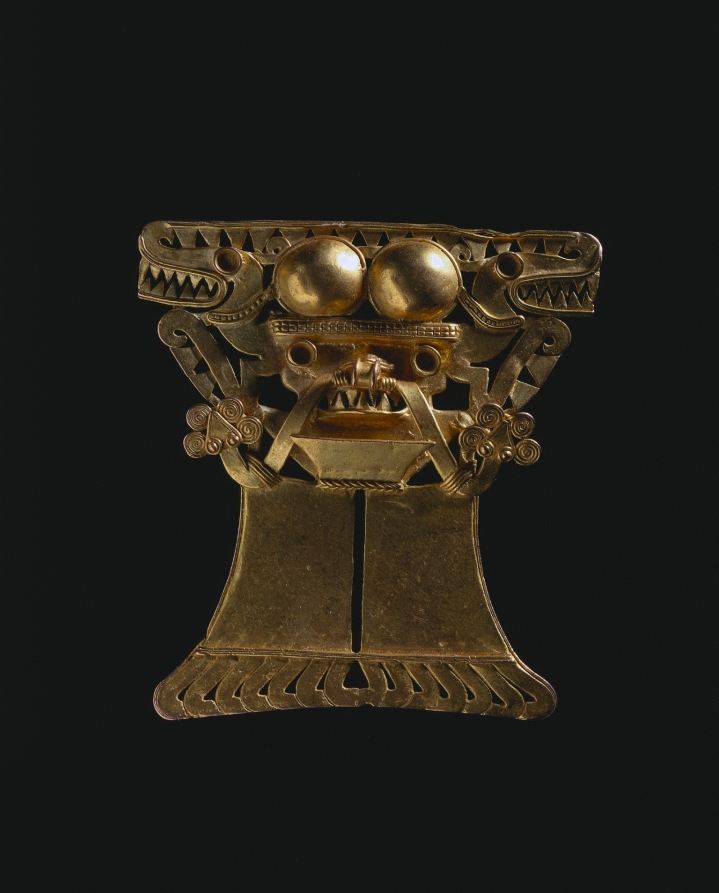
Animal-Headed Figure Pendant, c. 1000–1550

Animal-Headed Figure Pendant

c. 1000–1550 · Metalwork

¿Se puede contemplar?

Sí, recibe visitas

Museo de Arte de Cleveland

Cleveland, Estados Unidos

Sala233 Mesoamerican and Intermediate Region

Expuesta al público. Quién lo avala figura más abajo.

Comprobado
hace 3 días
En este estado desde
19 ago 2026
Fuente
El museo
En el mapaPágina del museo

Sobre la escultura

The culture area that extends from southern Central America to northern South America is generally referred to as the Intermediate Region because of its location between the two high culture zones of Mesoamerica and the central Andes. Research to date indicates that the pre-Columbian peoples of the Intermediate Region were organized into small, competitive chiefdoms, rather than large-scale states or empires. Despite political competition and warfare, trade in prestige goods such as jade and gold was common. Gold, obtained through panning and mining, was worked by hammering and lost-wax casting to produce intricate and showy personal ornaments.

Seguir leyendo

The pendant represents a supernatural being, perhaps a fantastic crocodilian. It has projecting, tubelike eyes, a snout full of sharp teeth, and snake-headed streamers emanating from the nostrils. The simplified lower body consists of broad, flat legs, with large, curved talons at the ends of the feet. The elaborate headdress includes two central semidomes, flanked by fierce-looking profile crocodilians.

Museo de Arte de Cleveland

Ficha

Número de inventario
1998.1

En el catálogo

EsculturaMetalPanama, Veraguas or Parita style, c. 1000-1550

Fuentes

  • Museo de Arte de Cleveland
  • Imagen: Museo de Arte de Cleveland — Museum open access
Bajo el mismo techo: Museo de Arte de Cleveland

Página del museo
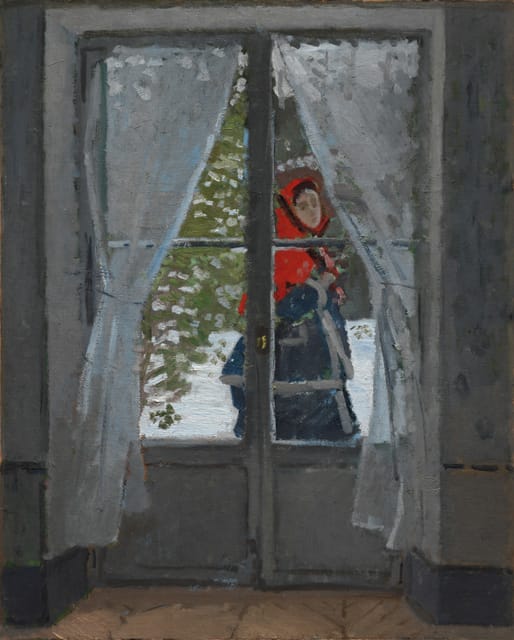
The Red Kerchief, Claude Monet, c. 1868–73

Claude Monet

The Red Kerchief, c. 1868–73

Melencolia I, Albrecht Dürer, 1514

Albrecht Dürer

Melancolía I, 1514

The Virgin and Child with the Pear, Albrecht Dürer, 1511

Albrecht Dürer

The Virgin and Child with the Pear, 1511

The Nativity, Albrecht Dürer, probably c. 1509/1510

Albrecht Dürer

The Nativity, probably c. 1509/1510

The Virgin and Child on a Crescent with a Starry Crown, Albrecht Dürer, 1508

Albrecht Dürer

The Virgin and Child on a Crescent with a Starry Crown, 1508

The Lamentation, Albrecht Dürer, 1507

Albrecht Dürer

The Lamentation, 1507

Large Horse, Albrecht Dürer, 1505

Albrecht Dürer

Large Horse, 1505

Nemesis (The Great Fortune), Albrecht Dürer, c. 1501/1502

Albrecht Dürer

Nemesis (The Great Fortune), c. 1501/1502