R. Buckminster FullerEstados Unidos, 1895–1983
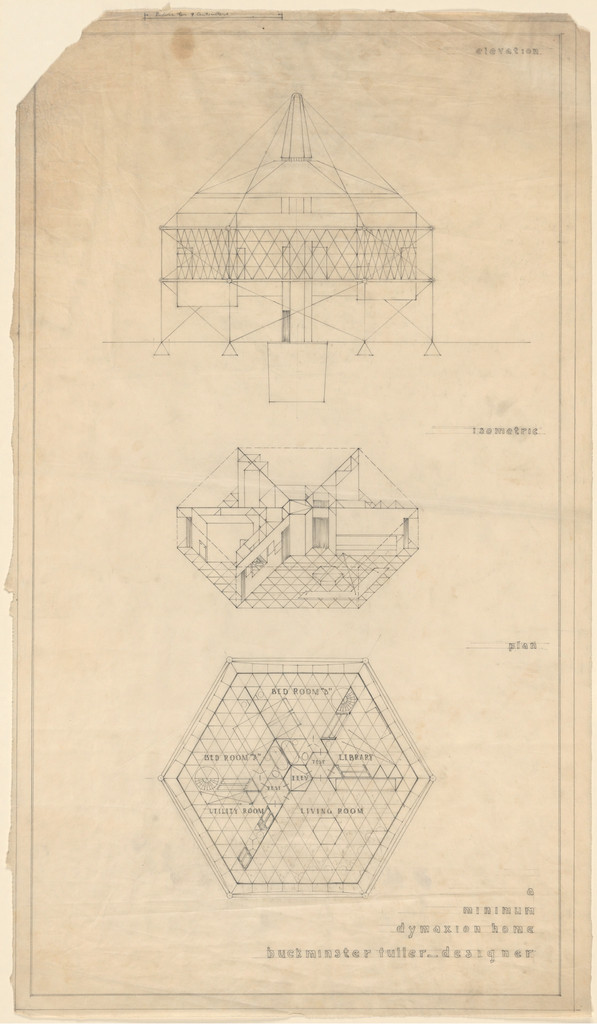
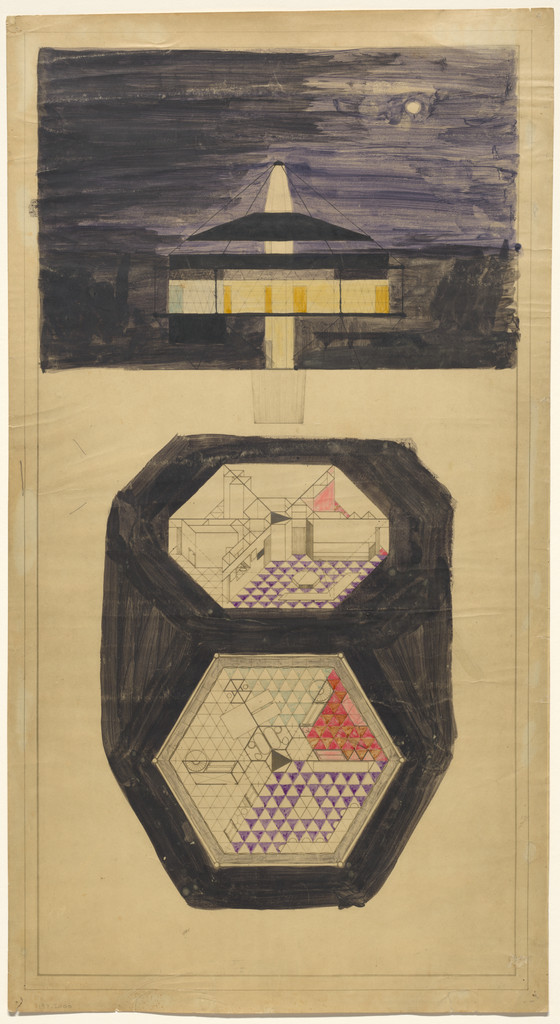
A Minimum Dymaxion Home, Elevation
¿Se puede contemplar?
Por ahora no recibe

Chicago, Estados Unidos
Pertenece a la colección, pero ahora mismo no está expuesta.
- Comprobado
- En este estado desde
- Fuente
- El museo
Sobre la obra
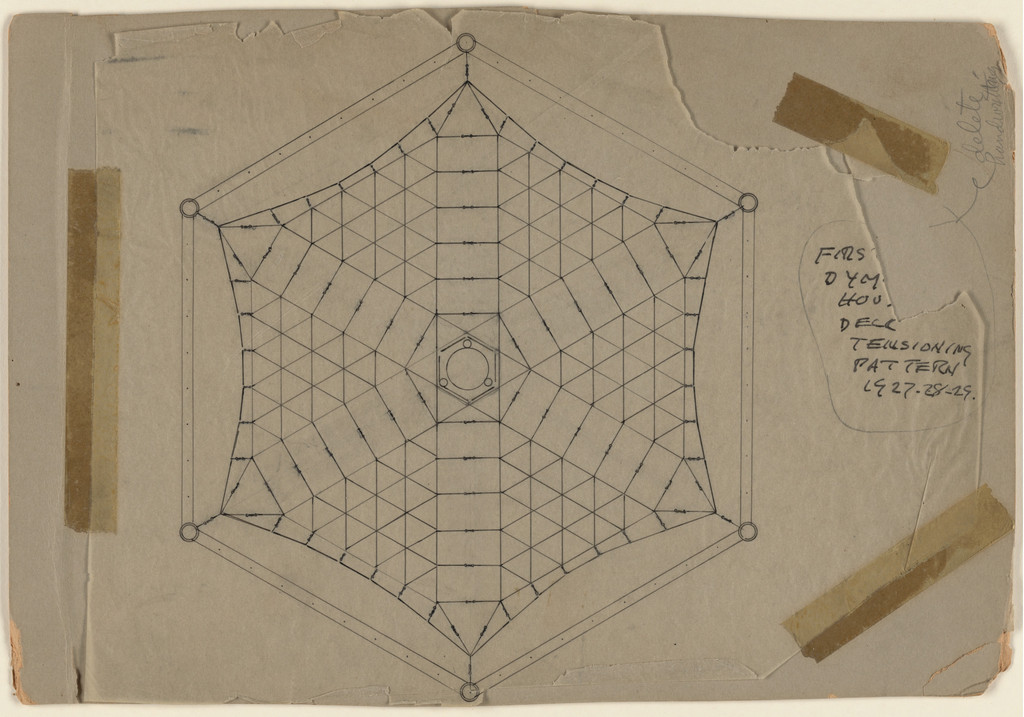
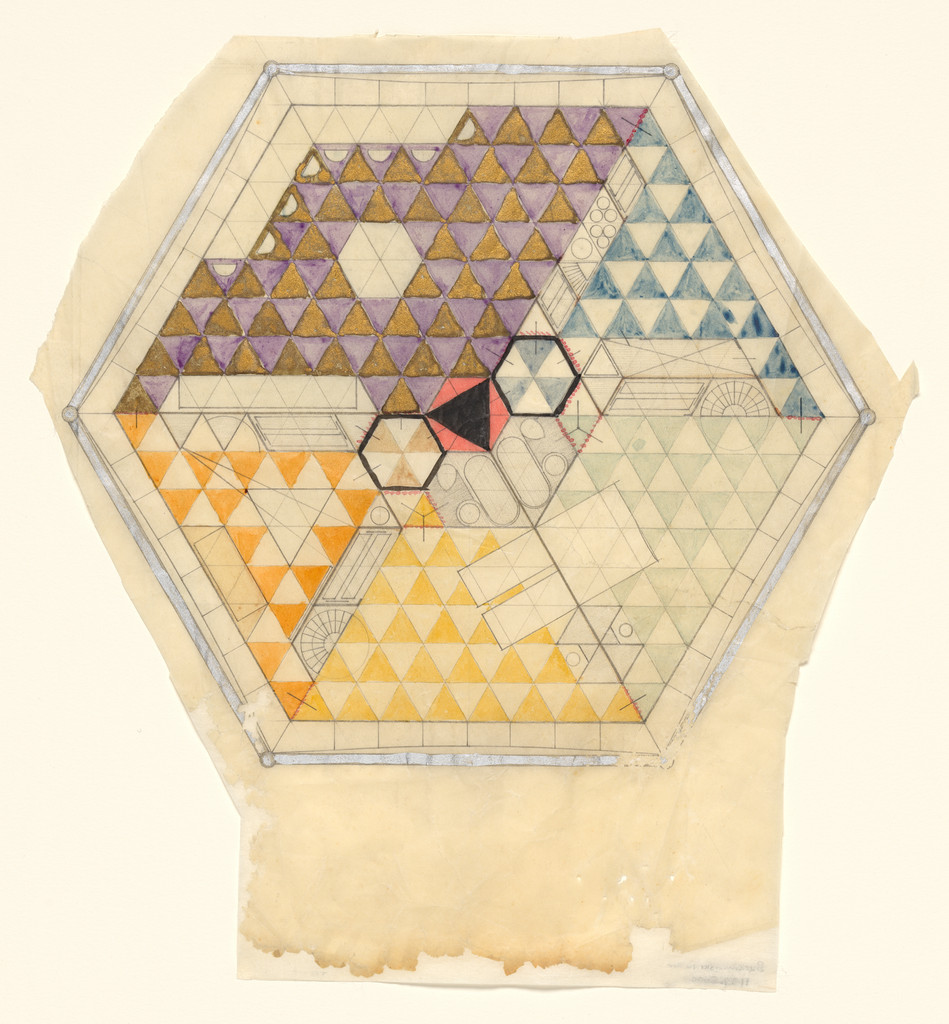
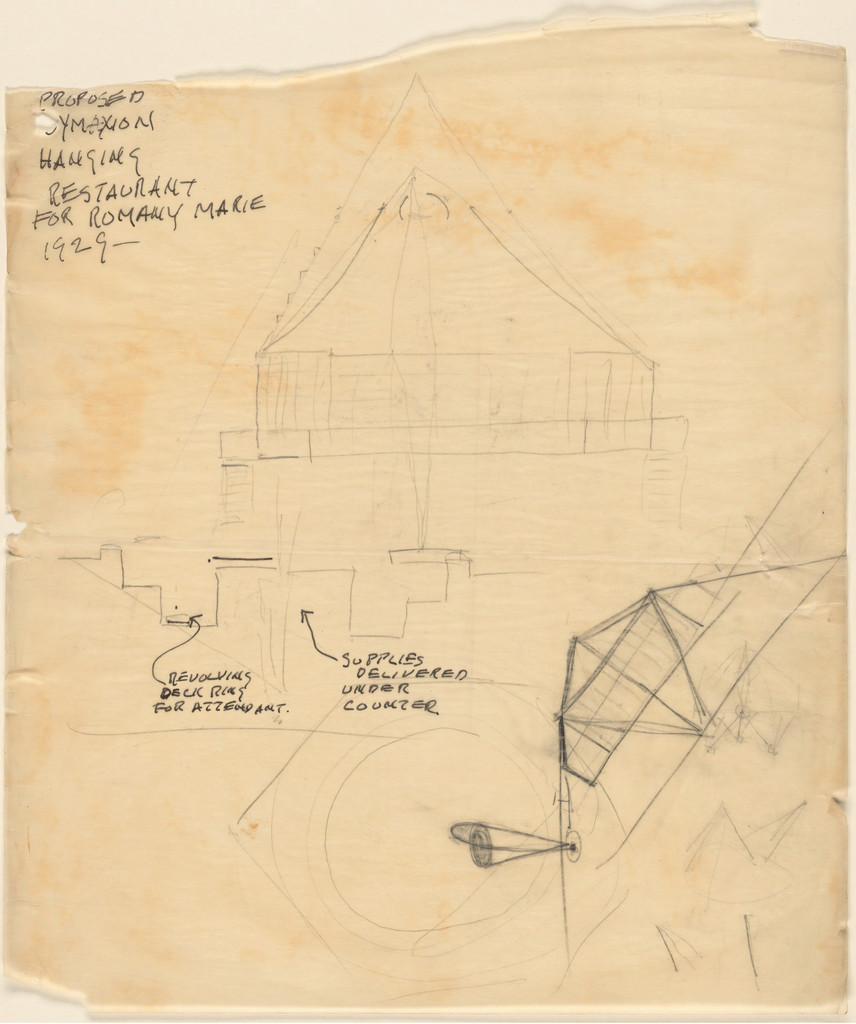
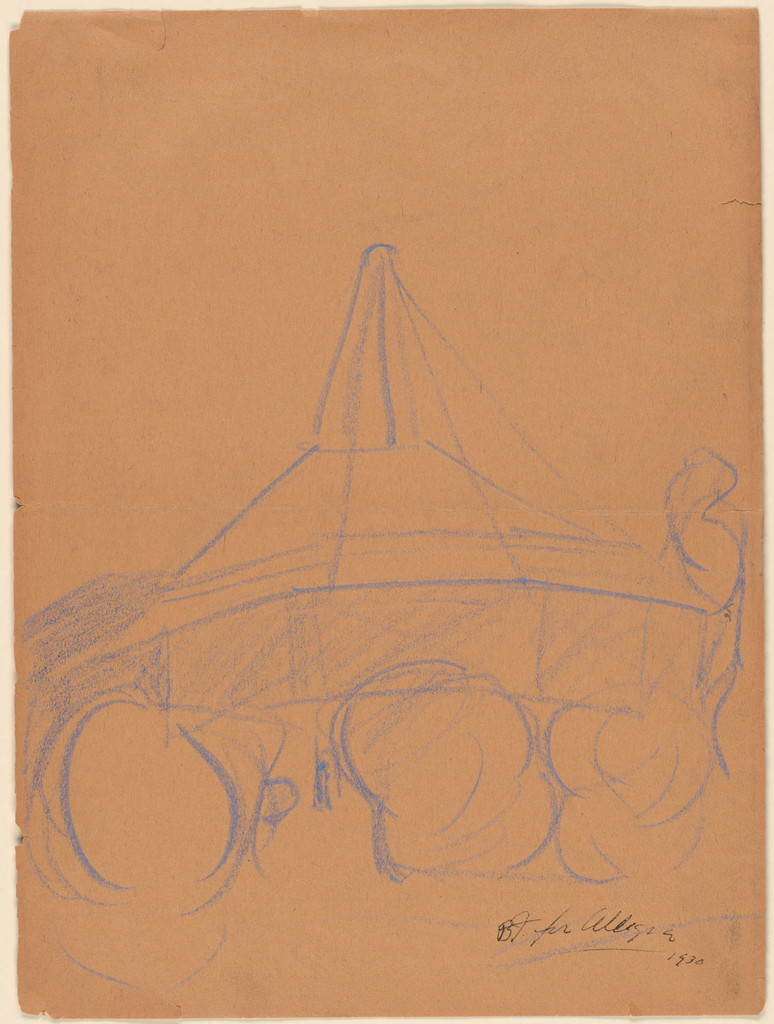
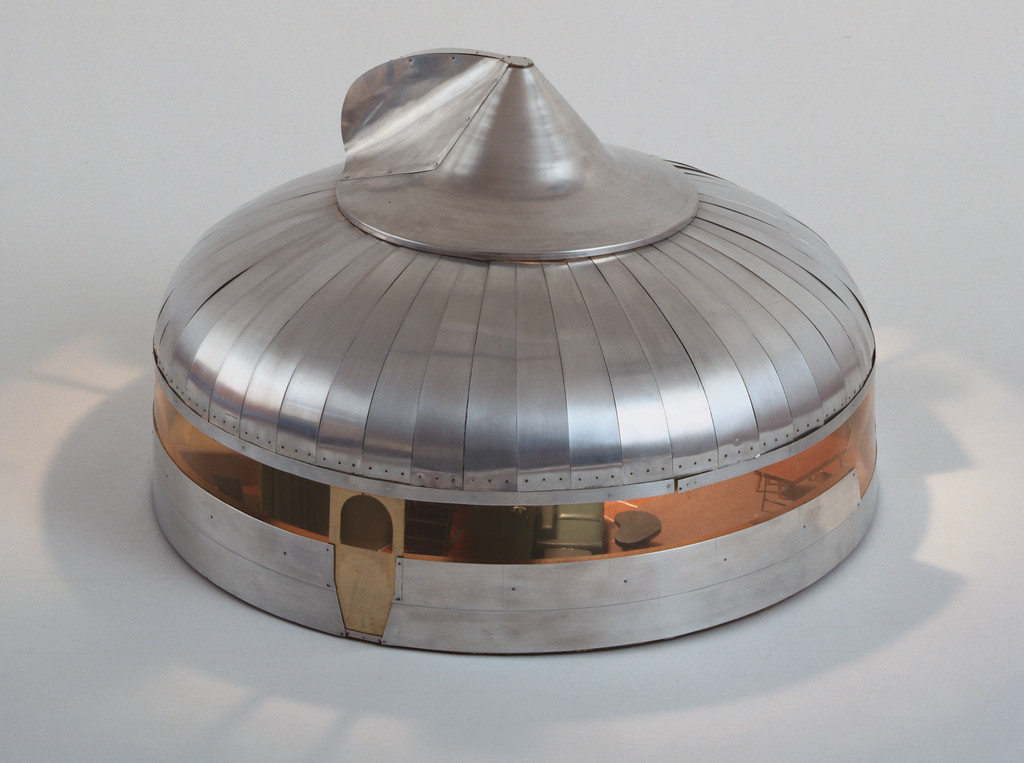
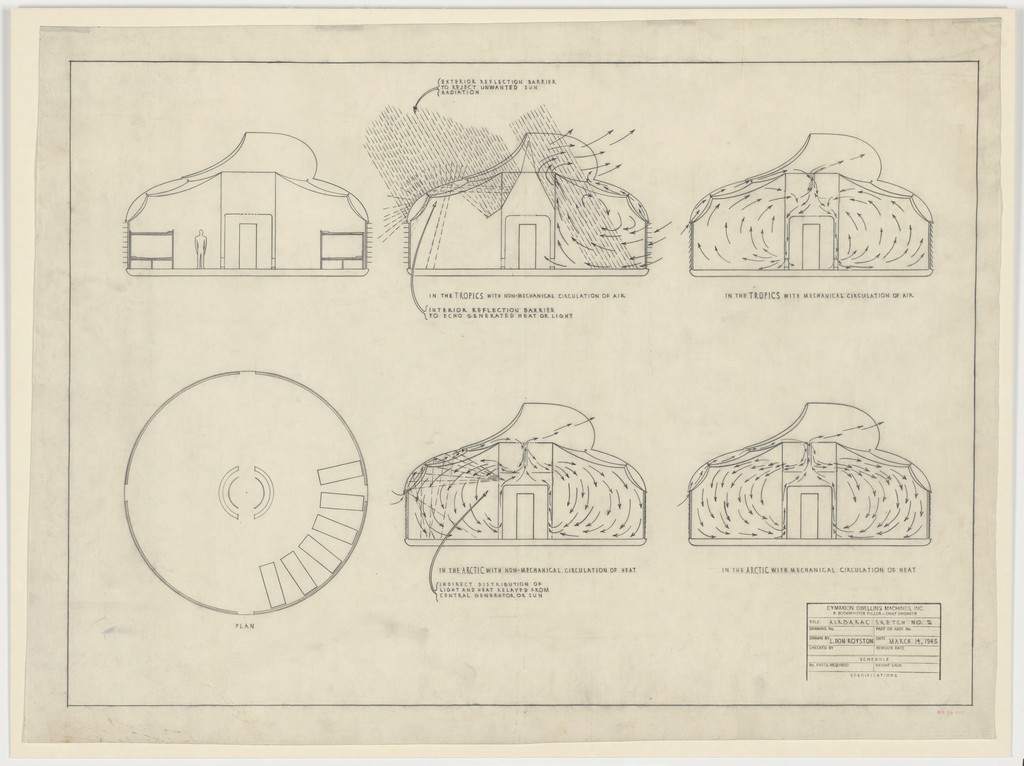
Perhaps the most famous design for a prefabricated house, Buckminster Fuller’s Dymaxion House design consumed him for over 30 years. Unlike other period references to the minimal home, Fuller’s idea was less related to space than to efficiency. In the hopes of obtaining “the maximum gain” from the minimum use of material and energy, the Dymaxion was modeled on the streamlined factory production of the automobile. This simplification extended to a centralized core housing that held all mechanical equipment while providing structural support for the mast-hung, lightweight hexagonal building. Although this design was never realized, Fuller included many of the innovative aspects of his Dymaxion House into his aluminum-clad Wichita house or Dymaxion Dwelling Machine, which was produced as a prototype in 1948.
Instituto de Arte de ChicagoCC BY 4.0
Ficha
- Número de inventario
- 1990.172
En el catálogo
Fuentes
- Instituto de Arte de Chicago
- Imagen: Instituto de Arte de Chicago — © the artist or rights holder
Mientras tanto, en la vida de R. Buckminster Fuller
La vida entera1920s
“Dymaxion sleep”: half an hour every six hours
Inspired by the sleep habits of dogs and cats, Fuller worked until he was tired and then took short naps, generally 30 minutes every six hours, which gave him “twenty-two thinking hours a day”. He gave up the routine after two years because it clashed with his business associates' habits; in 1943 he suggested that the United States adopt Dymaxion sleep as a strategy to win the Second World War.
1929
Friendship with Isamu Noguchi
Isamu Noguchi arrived at Romany Marie's café in 1929, directed there by Constantin Brâncuși, an old friend of Marie's. The two soon collaborated on several projects, including the modelling of the Dymaxion car based on recent work by Aurel Persu; it was the beginning of their lifelong friendship.
1933
A Dymaxion prototype crashes
Shortly after the launch a prototype rolled over and crashed, killing the driver and seriously injuring its passengers. Fuller blamed a second car, but eyewitnesses reported that it hit the Dymaxion only after it had begun to roll over. In the end Fuller sold all three prototypes and dissolved the company, maintaining that the car was never intended as a commercial venture.