ART WIKI33.040 en sala
MapaColecciónArtistasMuseosExposicionesRevista
Acceder

ART WIKI

Dónde cuelga la obra maestra y cuándo le dejan pasar.

Colecciones: Galería Nacional de Arte, Galería Nacional de Dinamarca, Galería Nacional de Retratos, Galería Tretiakov, Harvard Art Museums, Instituto de Arte de Chicago, Instituto de Artes de Mineápolis, MoMA, Museo de Arte de Cleveland, Museo de Victoria y Alberto, Museo del Hermitage, Museo del Louvre, Museo Estatal Ruso, Museo Hirshhorn y Jardín de Esculturas, Museo J. Paul Getty, Museo Metropolitano de Arte, Museo Pushkin, Museo Smithsoniano de Arte Americano, Museo Whitney de Arte Estadounidense, National Museum of Asian Art, Rijksmuseum, Villa Getty, Catálogo Estatal del Fondo Museístico de Rusia (274 museos), Europeana (19 museos), Wikidata (6 museos), Paris Musées (12 museos) y Joconde, la base de museos del Ministerio de Cultura de Francia (495 museos). Las imágenes pertenecen a sus titulares de derechos.

Secciones

  • Mapa
  • Búsqueda
  • Colección
  • Obras maestras
  • Expuestas ahora
  • Artistas

Más

  • Museos y galerías
  • Exposiciones
  • Revista
  • De dónde salen los datos
  • Privacidad y cookies
InicioMapaCatálogo
  1. Colección/
  2. Museo Metropolitano de Arte/
  3. A Matador
A Matador, Edouard Manet, 1866–67
Édouard Manet, retratoÉdouard ManetFrancia, 1832–1883

A Matador

1866–67 · Painting

¿Se puede contemplar?

Sí, recibe visitas

Museo Metropolitano de Arte

Nueva York, Estados Unidos

Sala810

Expuesta al público. Quién lo avala figura más abajo.

Comprobado
hace 9 días
En este estado desde
26 sept 2026
Fuente
El museo
En el mapaPágina del museo

Sobre el cuadro

Saludo de torero es una pintura al óleo sobre lienzo, realizada por Édouard Manet entre 1866 y 1867 (113 x 171,1 cm). Es una de las obras de Manet que le rechazaron en el Salón de París en 1866.​ El artista fue autorizado por el prefecto para exponer en su taller bajo la condición formal no abrir por largo tiempo sus puertas.​ Se expone en el Museo Metropolitano de Arte de Nueva York.​

Wikipedia · CC BY-SA

Ficha

1866–67
18321883
Número de inventario
29.100.52

Mientras tanto, en la vida de Édouard Manet

La vida entera
  1. 1865

    “Olympia” at the Salon: a scandal

    In 1865 the Salon accepted “Olympia”, and the frank depiction of a self-assured prostitute created a scandal; according to Antonin Proust, only the precautions taken by the administration prevented the painting from being punctured and torn. The popular press caricatured it, while the avant-garde, including Courbet, Cézanne and Monet, championed it.

  2. after 1865

    Café Guerbois and the Batignolles group

    After returning from Spain Manet became a regular at the Café Guerbois in the Batignolles quarter, where Fantin-Latour, Whistler, Duranty, Degas, Renoir, Monet and Pissarro gathered, with Émile Zola as Manet's ardent defender. After harsh reproaches from Duranty, Manet challenged him to a duel and wounded him, but they made up and remained good friends until Manet's death.

  3. 1865

    Flight to Spain: El Greco, Velázquez, Goya

    The persecution after “Olympia” forced Manet to flee, almost literally, to Spain, where he spent his time to good purpose, getting to know the works of El Greco, Velázquez and Goya and finding in them a justification of his own aesthetic taste.

  4. 1867

    His own pavilion near the Pont de l'Alma

    In 1867, during the World's Fair in Paris, Manet set up his own pavilion near the Pont de l'Alma and showed fifty of his best works of the past ten years. Possibly this step led to his works being accepted at the next two Salons.

  5. 1867

Más obras de Édouard Manet

Todas las obras

En la misma sala · Gallery 810, Museo Metropolitano de Arte

Página del museo

Sobre el mismo tema · Varón

Todas las obras sobre el tema

Zola defends Manet in print

In 1867 Émile Zola, who supported Manet publicly in the press, wrote that the public was not accustomed to such simple and direct translations of reality and that this luminous and serious painting interprets nature with a gentle brutality.

  • 1868

    Friendship with Berthe Morisot

    In 1868 Manet became a friend and colleague of Berthe Morisot; she is credited with convincing him to attempt plein air painting, to which Camille Corot had introduced her. Through Morisot, Manet became friends with Degas, Monet, Renoir, Sisley, Cézanne and Pissarro.

  • Lo que muestra

    VarónRetrato

    En el catálogo

    PinturaÓleoPintura francesaRealismoImpresionismoSiglo XIX

    Fuentes

    • Museo Metropolitano de Arte
    • Imagen: Museo Metropolitano de Arte — Open Access (CC0)
    The Spanish Singer, Edouard Manet, 1860

    El cantante español

    1860 · Museo Metropolitano de Arte

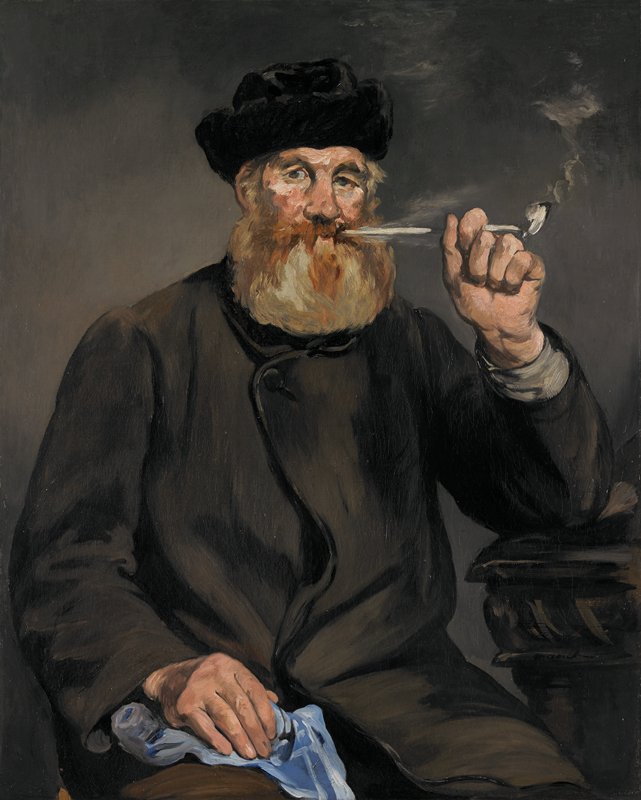
    The Smoker, Édouard Manet, 1866

    The Smoker

    1866 · Instituto de Artes de Mineápolis

    Young Lady in 1866, Edouard Manet, 1866

    Young Lady in 1866

    1866 · Museo Metropolitano de Arte

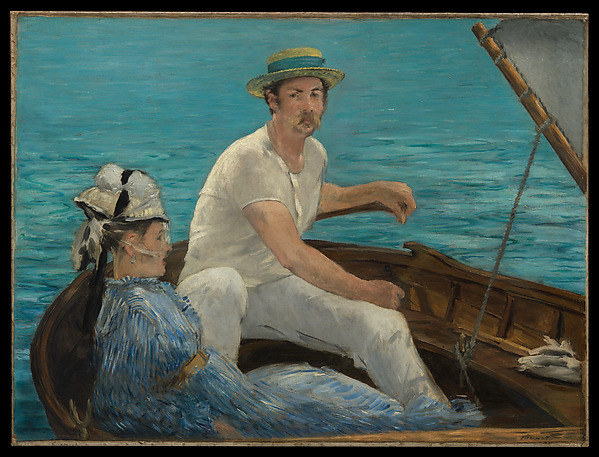
    Boating, Edouard Manet, 1874

    En un bote en Argenteuil

    1874 · Museo Metropolitano de Arte

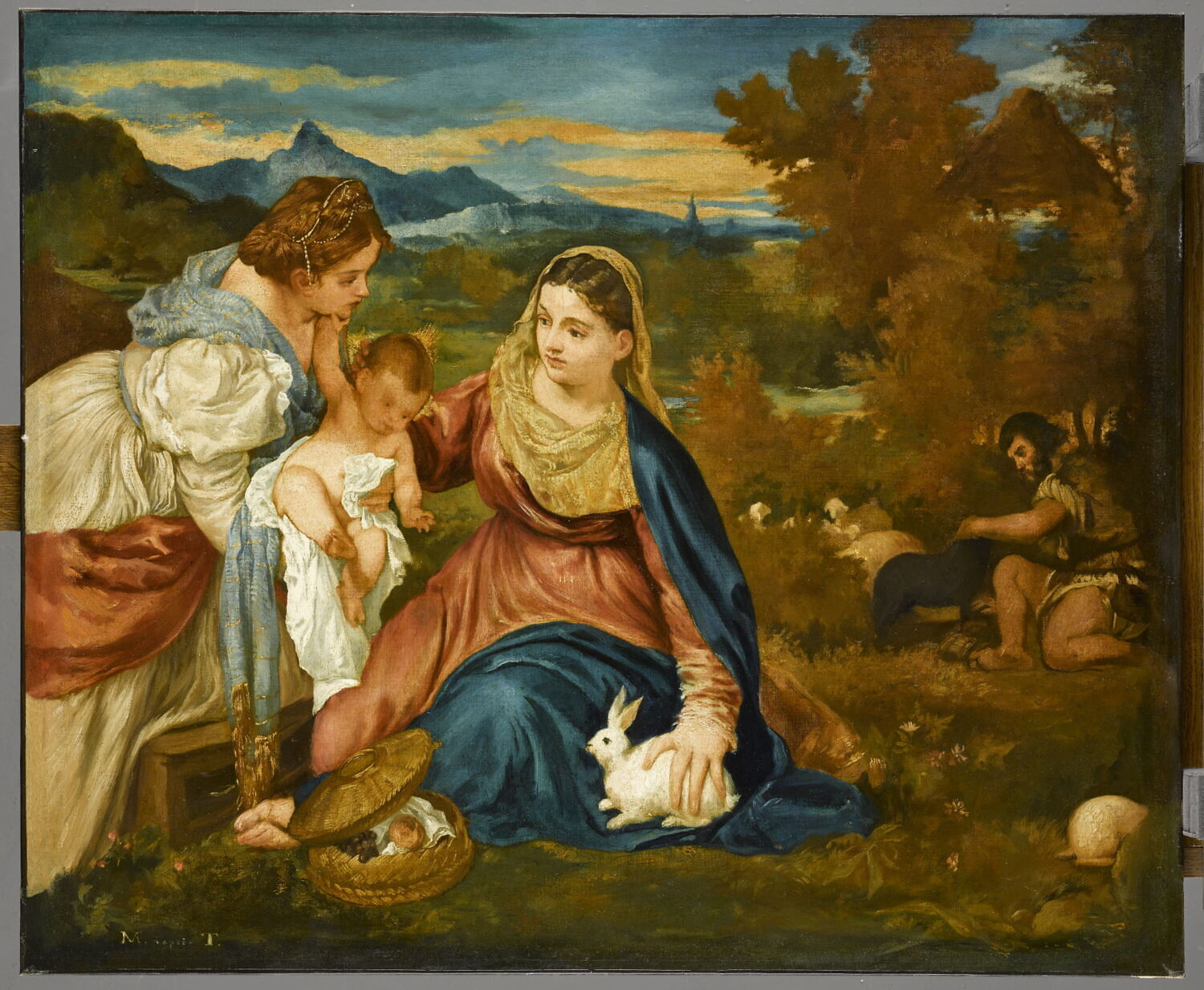
    La Vierge au lapin, Manet, Édouard, Milieu du XIXe siècle (1840 - 1860)

    La Vierge au lapin

    Milieu du XIXe siècle (1840 - 1860) · Museo del Louvre

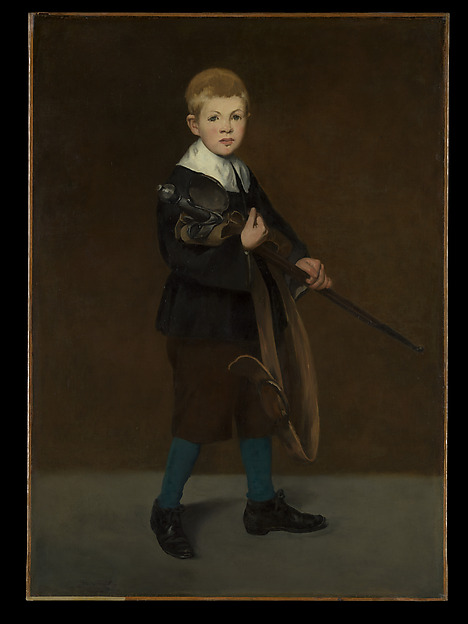
    Boy with a Sword, Edouard Manet, 1861

    Boy with a Sword

    1861 · Museo Metropolitano de Arte

    Portrait of Madame Brunet, Édouard Manet, about 1861–1863, reworked by 1867

    Portrait of Madame Brunet

    about 1861–1863, reworked by 1867 · Museo J. Paul Getty

    The Old Musician, Edouard Manet, 1862

    El viejo músico

    1862 · Galería Nacional de Arte

    Young Lady in 1866, Edouard Manet, 1866

    Édouard Manet

    Young Lady in 1866, 1866

    The Spanish Singer, Edouard Manet, 1860

    Édouard Manet

    El cantante español, 1860

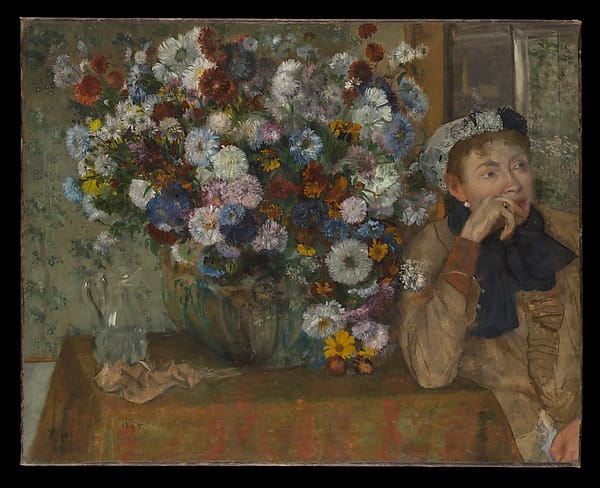
    A Woman Seated beside a Vase of Flowers (Madame Paul Valpinçon?), Edgar Degas, 1865

    Edgar Degas

    A Woman Seated beside a Vase of Flowers (Madame Paul Valpinçon?), 1865

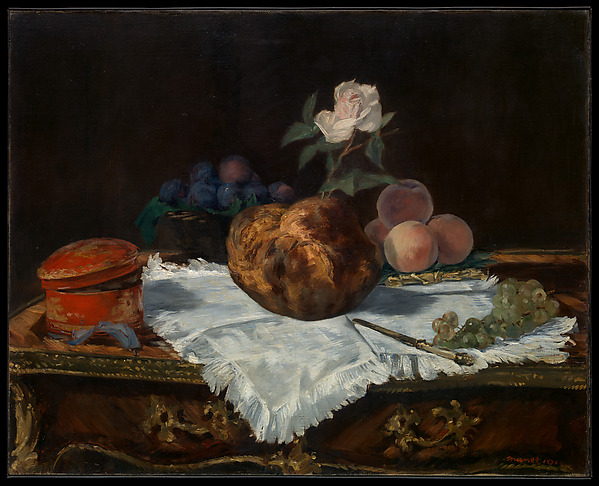
    The Brioche, Edouard Manet, 1870

    Édouard Manet

    The Brioche, 1870

    The Funeral, Edouard Manet, ca. 1867

    Édouard Manet

    The Funeral, ca. 1867

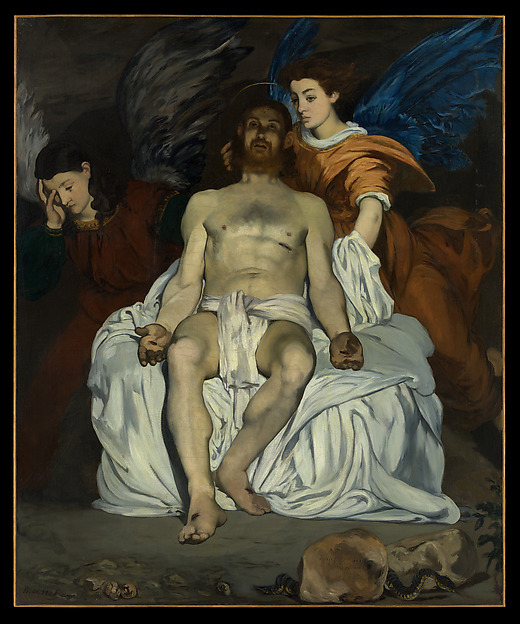
    The Dead Christ with Angels, Edouard Manet, 1864

    Édouard Manet

    The Dead Christ with Angels, 1864

    Young Man in the Costume of a Majo, Edouard Manet, 1863

    Édouard Manet

    Young Man in the Costume of a Majo, 1863

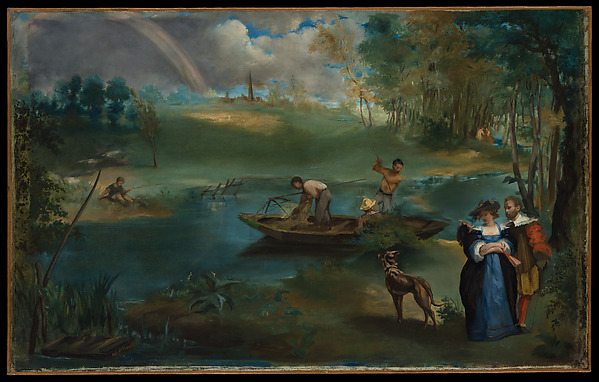
    Fishing, Edouard Manet, ca. 1862–63

    Édouard Manet

    Fishing, ca. 1862–63

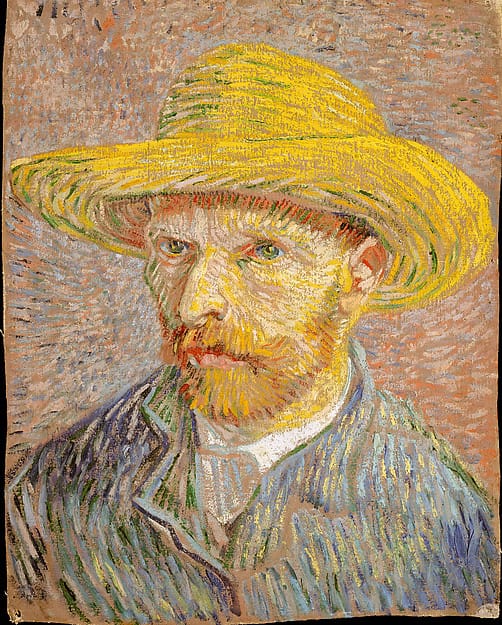
    Self-Portrait with a Straw Hat (obverse: The Potato Peeler), Vincent van Gogh, 1887

    Vincent van Gogh

    Self-Portrait with a Straw Hat (obverse: The Potato Peeler), 1887

    Museo Metropolitano de Arte

    Garden at Sainte-Adresse, Claude Monet, 1867

    Claude Monet

    La terraza de Sainte-Adresse, 1867

    Museo Metropolitano de Arte

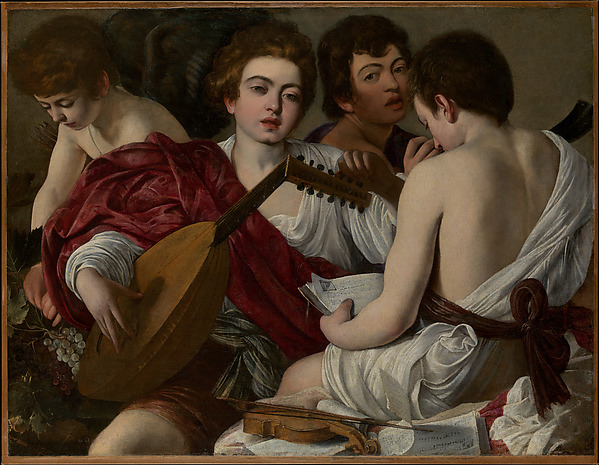
    The Musicians, Caravaggio, 1597

    Caravaggio

    Los músicos, 1597

    Museo Metropolitano de Arte

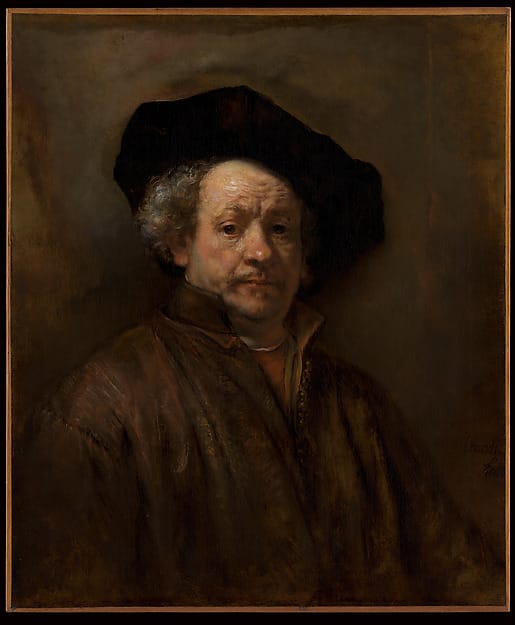
    Self-Portrait, Rembrandt van Rijn, 1660

    Rembrandt van Rijn

    Self-Portrait, 1660

    Museo Metropolitano de Arte

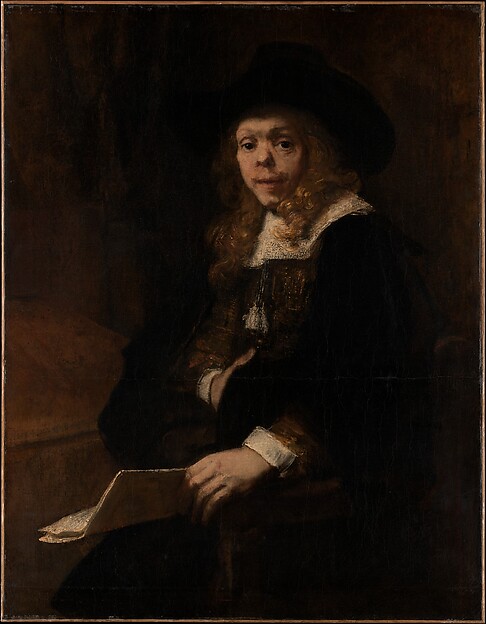
    Portrait of Gerard de Lairesse, Rembrandt van Rijn, 1665–67

    Rembrandt van Rijn

    Portrait of Gerard de Lairesse, 1665–67

    Museo Metropolitano de Arte

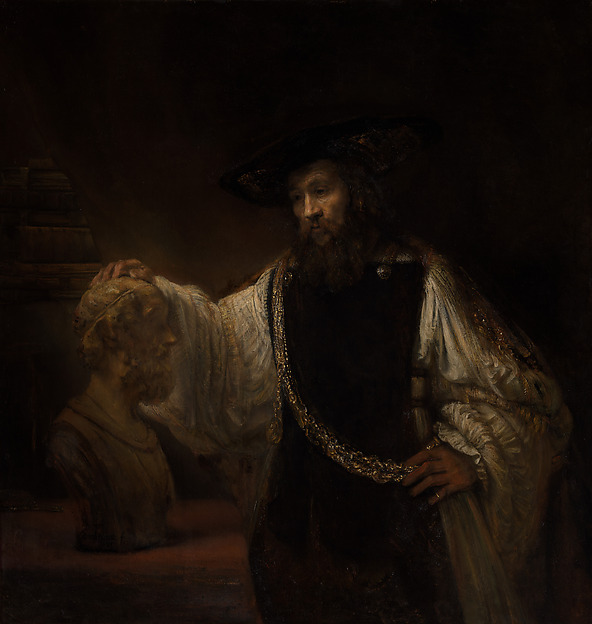
    Aristotle with a Bust of Homer, Rembrandt, 1653

    Rembrandt van Rijn

    Aristóteles contemplando el busto de Homero, 1653

    Museo Metropolitano de Arte

    Young Sailor II, Henri Matisse, 1906

    Henri Matisse

    Young Sailor II, 1906

    Museo Metropolitano de Arte

    Rubens, Helena Fourment (1614–1673), and Their Son Frans (1633–1678), Peter Paul Rubens, ca. 1635

    Peter Paul Rubens

    Rubens, Helena Fourment (1614–1673), and Their Son Frans (1633–1678), ca. 1635

    Museo Metropolitano de Arte