 Mikhail Vrubel1856–1910
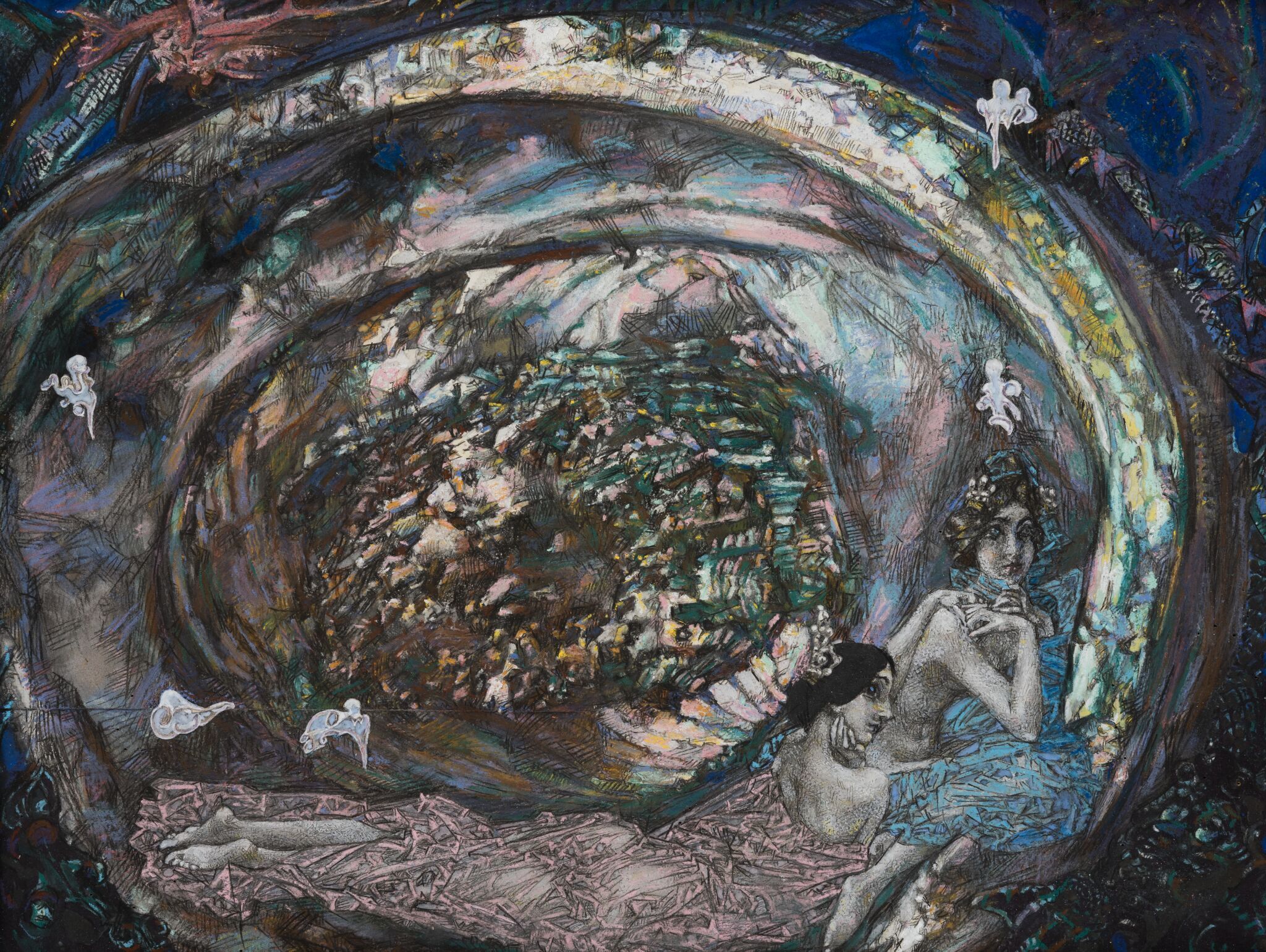
Жемчужина
Can I see it?
Unknown
Where is “Жемчужина” now? Collection: Tretyakov Gallery, Moscow. Unknown.

Moscow, Russia
The owner is known; whether it is on view today is not.
- In this state since
- Source
- The museum
About the work
Museum text in Russian
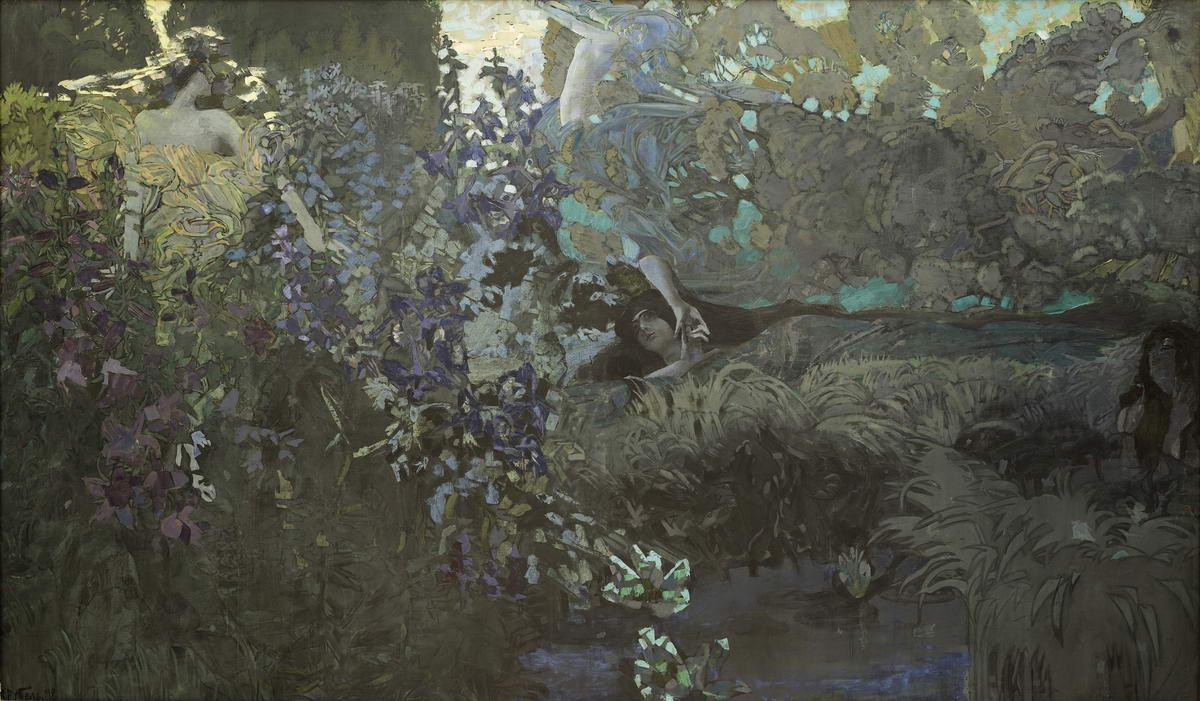
Зимой 1904 – 1905 годов, живя в Петербурге, Михаил Врубель работал над автопортретами, костюмами для постановки опер П.И. Чайковского «Иоланта» и Н.А. Римского-Корсакова «Снегурочка». «В это же время, – вспоминала Е.И. Ге, – он стал писать перламутровую раковину или, как он сам говорил: “Это волшебство” . Картина называлась «Жемчужиной» и была удивительно красива по волшебным переливам красок».
Н.А. Прахов в своем очерке «Михаил Александрович Врубель» так со слов художника излагает историю создания произведения: «Ведь я совсем не собирался писать «морских царевен» в своей «Жемчужине» . Я хотел со всей реальностью передать рисунок, из которого слагается игра перламутровой раковины, и только после того как сделал несколько рисунков углем или карандашом, увидел этих царевен, когда начал писать красками».
Read on
Работа над этим листом и над эскизом «Тени лагун», первым вариантом картины «Жемчужина» (1905, Третьяковская галерея), привела художника к выводу, что «блеск перламутровой раковины настоящей, а не написанной, не в красках, а в рисунке и что углем он берется сделать такое волшебное произведение» (Е.И. Ге. «Последние годы жизни Врубеля»). Тема «Жемчужины» стала началом создания целого цикла рисунков раковин (в Третьяковской галерее хранится один из них: «Раковина», 1904–1905).
Н.А. Прахов так описывает первое впечатление от этих рисунков: «С поразительным, свойственным только ему одному мастерством был передан рисунок отдельных планов, сочетание разнообразных форм и силы которых создавало иллюзию перламутра. Женских фигур в них не было ни на одном наброске. Раскидывая по полу один рисунок за другим – в лист или по пол-листа ватмана, – Михаил Александрович стал уверять меня, что краски вовсе не нужны для передачи цвета предмета – все дело в точности передачи рисунка тех мельчайших планов, из которых создается в нашем воображении форма, объем предмета и цвет». В этих рисунках Врубель одним из первых в мире начинает разрабатывать формы искусства, не зависимые от подчеркнуто сюжетного начала. Следующим шагом станет открытие беспредметности в русской живописи.
Tretyakov Gallery
Details
- Accession number
- 5291
In the catalog
Sources
- Tretyakov Gallery
- Image: Tretyakov Gallery — © State Tretyakov Gallery
In the life of Mikhail Vrubel
The whole life1902
Bekhterev’s diagnosis
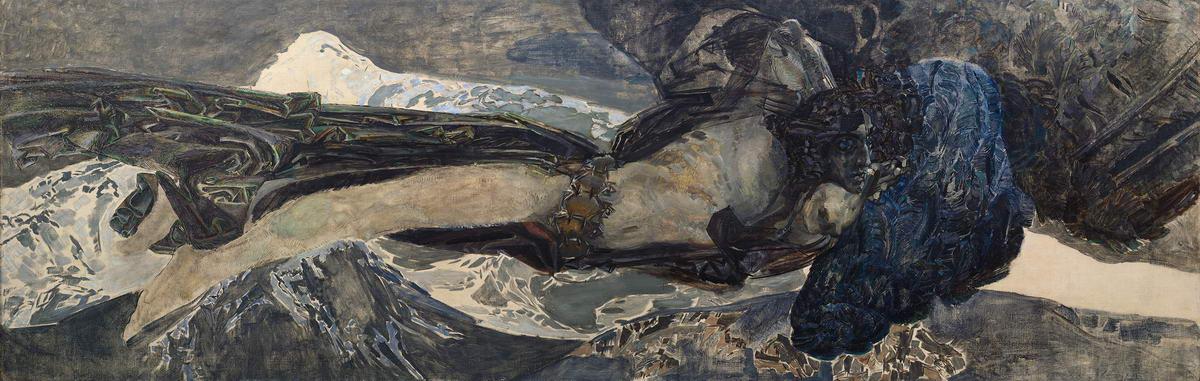
In St Petersburg Vrubel went on repainting the “Demon” without pause, ruining it in his friends’ view, and his family took him to the psychiatrist Vladimir Bekhterev, who diagnosed “incurable progressive paralysis” — tertiary syphilis; the artist himself was told nothing. In Moscow, although the collector Vladimir von Meck bought the painting for 3,000 roubles, he grew worse still: he drank and squandered money, and his wife and son tried to take refuge from him with relatives in Ryazan.
2 February 1902
“The Demon Downcast” fails in Moscow
The painting went on show in Moscow a day before the “Group of 36” exhibition closed; Vrubel hoped it would be bought for the Tretyakov Gallery. The failure coincided with news of the suicide of Alexander Rizzoni after unfair criticism in the journal Mir iskusstva.
April 1902
First hospitalisation
In early April, with symptoms of acute mental disorder, Vrubel was admitted to F. A. Savey-Mogilevich’s private clinic; until August his condition was so grave that even his wife and sister were not allowed to see him. In September he was moved to Vladimir Serbsky’s clinic at Moscow University, and Serbsky confirmed the diagnosis, establishing that the infection dated back to 1892.
November 1902
An exhibition of 36 works turns the tide
The papers greeted Vrubel’s illness with articles such as “Mentally Ill Decadents” in Russky Listok, so Benois and Diaghilev, set on proving the artist’s sanity to the public, mounted an exhibition of thirty-six of his works, including all three painted “Demons”. It marked a turning point in how critics and the public saw Vrubel, though few believed he would recover, and Mir iskusstva wrote of him in the past tense.
3 May 1903
Death of his son Savva
Vrubel had been discharged from the clinic in February, and von Meck invited the family to spend the summer on his estate in Kiev province, but on the eve of departure two-year-old Savva fell ill, and in Kiev the child died. Vrubel at once shook off his apathy, busied himself with the funeral and supported his wife, who would not say a word; their son was buried on Baikove Hill.
February 1906
Total blindness
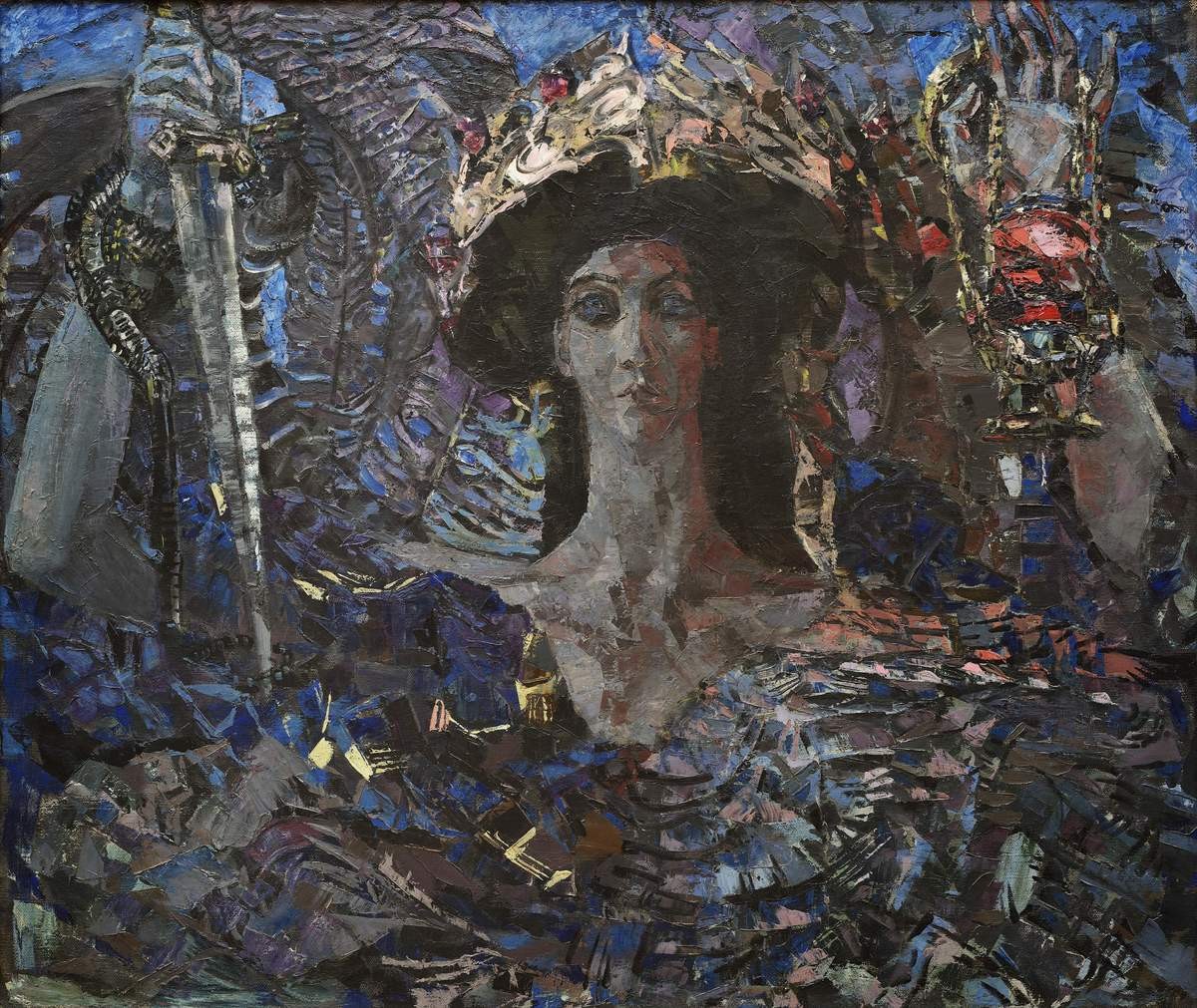
Despite the “voices” that tormented him, Vrubel returned to the theme of the Prophet — he began painting a six-winged seraph and took up the visions of Ezekiel — but the picture was never finished: his sight began to fail catastrophically, and atrophy of the optic nerve set in. On 12 February 1906 he complained in a letter to his wife that he could neither read nor draw, and a few days later he was completely blind.