 Utagawa KuniyoshiJapanese, 1797–1861
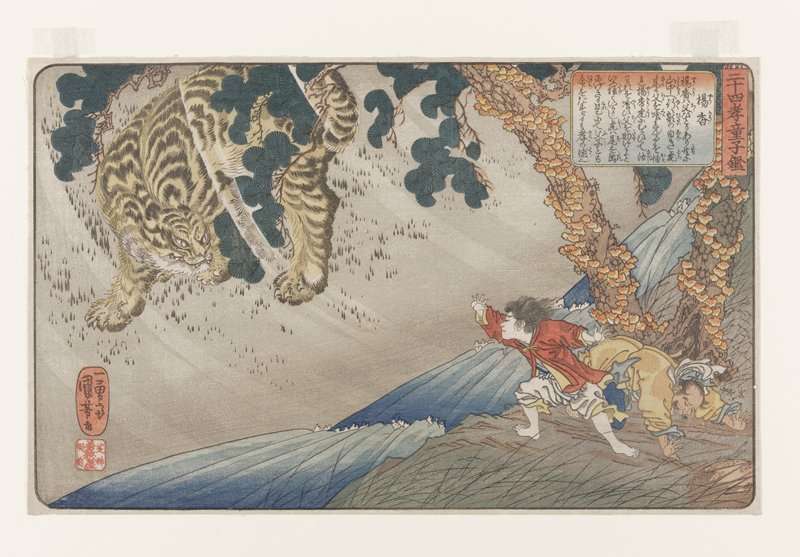
Yōkō
May one see it?
Not receiving at present

Minneapolis Institute of Art
Minneapolis, United States
It belongs to the collection, but is not on display at present.
- Checked
- In this state since
- Source
- The museum
About the work
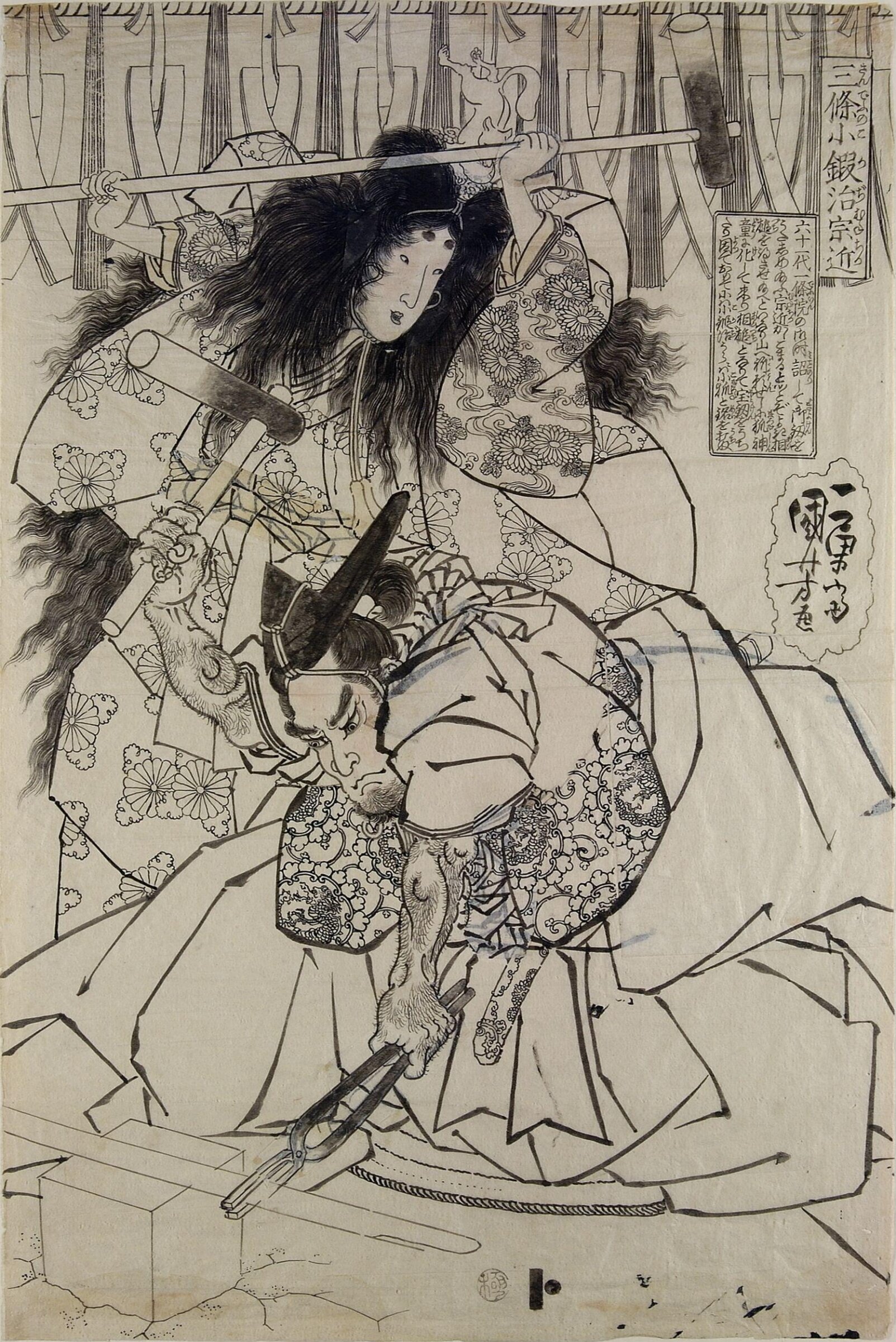
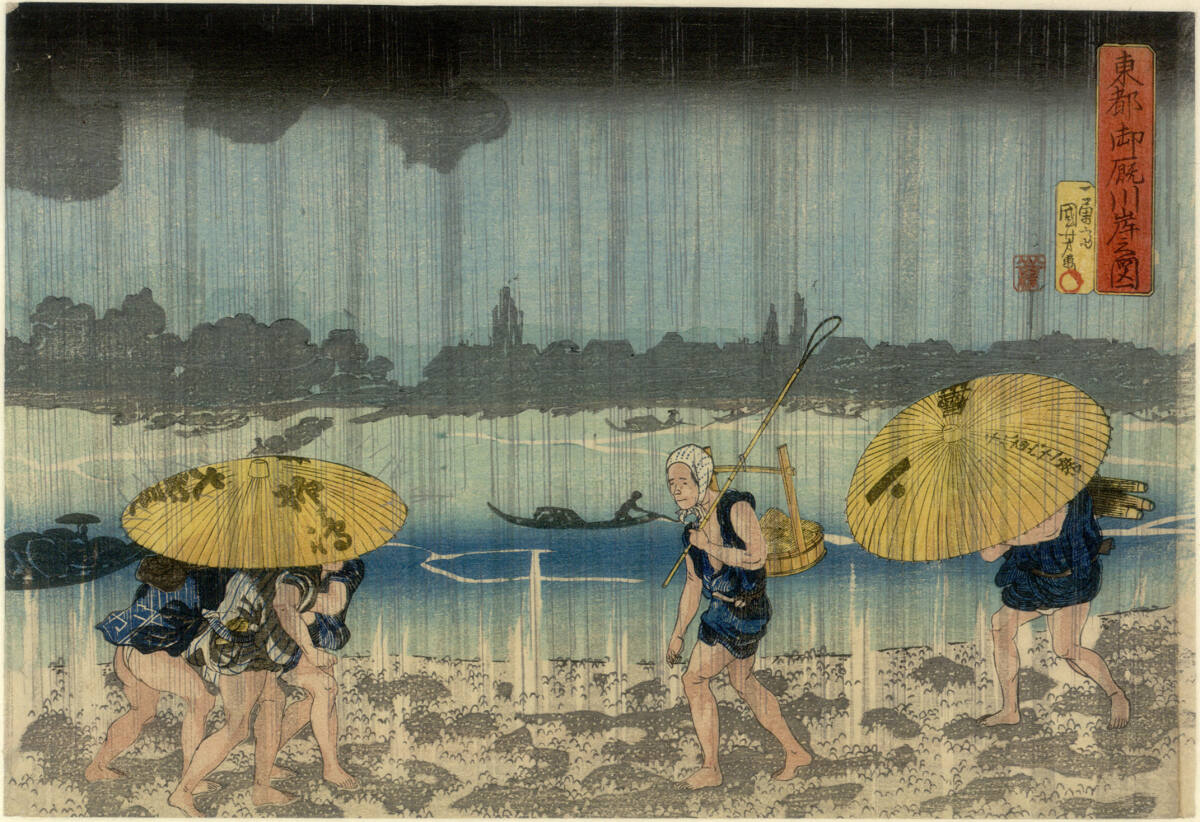
Paragons of filial piety have been an enduring theme in Chinese art and literature since the time of the famous sage Confucius (551–479 b.c.), whose teachings stressed the importance of absolute devotion to one’s parents and elders. Japan’s Tokugawa leaders frequently commissioned painters to render the filial subjects, thereby helping to establish this tradition in Japan. Ukiyo-e artists also picked up the theme, and Utagawa Kuniyoshi featured the twenty-four paragons on several occasions.
The subject here is the story of Yōkō (Yang Xiang, in Chinese) and his father. These two were attacked by a fierce tiger in the mountains. Without thinking of his own safety, Yōkō shielded his father with his own body while demanding that the tiger devour him rather than his father. Impressed with the youth’s bravery, the tiger retreated into the forest, sparing both father and son.
Minneapolis Institute of Art
Particulars
- Accession number
- P.78.65.60
In the catalog
Sources
- Minneapolis Institute of Art
- Image: Minneapolis Institute of Art — public domain
Meanwhile, in the life of Utagawa Kuniyoshi
The whole life1841–1843
Tenpo Reforms: actors and courtesans banned
The Tenpo Reforms, meant to ease an economic crisis, curb displays of luxury and officially ban the depiction of courtesans and actors. Kuniyoshi answers with caricature prints and comic pictures (giga) that disguise real actors and courtesans; many allegorically criticize the shogunate — for example a 1843 design of Minamoto no Yorimitsu asleep, haunted by the Earth Spider and his demons — and become popular among a politically dissatisfied public.
by 1842
Joins the top three ukiyo-e masters
By 1842 he holds an honored place among the ukiyo-e masters, counted among its three best artists alongside Utagawa Hiroshige and Utagawa Kunisada.
1842
The cat series and prints for housewives
After the ban on theater scenes, actors, geisha and courtesans he makes his “cat” series, prints from an educational series for housewives and children, and portrays national heroes in the series “Tradition, Morality and Decorum”.
1842
Daughter born: Utagawa Yoshi-jo
1843
A warning from the authorities and destroyed blocks
The authorities warn him for making caricatures of the shogun and his chief minister, and his printing blocks are confiscated and destroyed.
late 1840s
Actors return — in a “childish” manner
He returns to actor prints (other accounts say by the early 1850s), evading censorship with childish, cartoon-like portraits of kabuki actors; the best known is “Scribbling on the storehouse wall”, where kana are sloppily written in a childlike hand under the faces. He also puts cats in the place of humans in kabuki and satirical prints and experiments with wide composition and magnified details, as in “Masakado's daughter the princess Takiyasha, at the old Soma palace”.