ART WIKI32,963 on view
MapCollectionArtistsMuseumsExhibitionsJournal
Sign in

ART WIKI

Where the masterpiece hangs, and when they let you in.

Collections: Art Institute of Chicago, Getty Villa, Harvard Art Museums, Hirshhorn Museum and Sculpture Garden, J. Paul Getty Museum, Minneapolis Institute of Art, Musée du Louvre, National Gallery of Art, National Museum of Asian Art, National Portrait Gallery (Smithsonian), Pushkin State Museum of Fine Arts, Rijksmuseum, Smithsonian American Art Museum, SMK — National Gallery of Denmark, State Hermitage Museum, State Russian Museum, The Cleveland Museum of Art, The Metropolitan Museum of Art, The Museum of Modern Art, Tretyakov Gallery, Victoria and Albert Museum, Whitney Museum of American Art, State Catalogue of the Museum Fund of Russia (274 museums), Europeana (19 museums), Wikidata (6 museums), Paris Musées (12 museums), and Joconde, the French Ministry of Culture's museum database (495 museums). Images belong to their rights holders.

Sections

  • Map
  • Search
  • Collection
  • Masterpieces
  • On view now
  • Artists

More

  • Museums & galleries
  • Exhibitions
  • Journal
  • Where the data comes from
  • Privacy & cookies
HomeMapBrowse
  1. Collection/
  2. Smithsonian American Art Museum/
  3. Will o' the Wisp
Will o' the Wisp, Harriet Hosmer, modeled 1858

Will o' the Wisp

modeled 1858 · Sculpture · 82.5 × 42.5 cm

About the sculpture

Harriet Hosmer created Will o’ the Wisp as a companion piece to the highly successful statue of Puck, the bawdy clown from Shakespeare’s play A Midsummer Night’s Dream. Will o’ the Wisp is based on the folktale of a fairy who turns into a phosphorescent glow, covering the marshes at night to mislead travelers. The pointed ears and horns allude to his mischievous character, and his bat wings and the owl atop his head refer to his nocturnal nature. The torch cradled in his right arm symbolizes his ability to assume a glowing form. Despite its appeal, Will o’ the Wisp---nicknamed “my daughter” by the artist---was not as popular as Puck.

Smithsonian American Art Museum

Particulars

modeled 1858 · aged 28
18301908
Accession number
1987.3

More by Harriet Goodhue Hosmer

All works

Neighbors at Smithsonian American Art Museum

Museum page

On the same theme · Winged being

All works on the theme
Harriet Goodhue Hosmer, portraitHarriet Goodhue HosmerAmerican, 1830–1908

May one see it?

Unknown

Smithsonian American Art Museum

Washington, D.C., United States

The owner is known; whether it is on view today is not.

In this state since
Sep 25, 2026
Source
The museum
On the mapMuseum page

What it shows

Winged beingReptileAnimalFantasyTurtlesBirdTorch

In the catalog

SculptureMarbleRealism19th century

Sources

  • Smithsonian American Art Museum
  • Image: Smithsonian American Art Museum — CC0
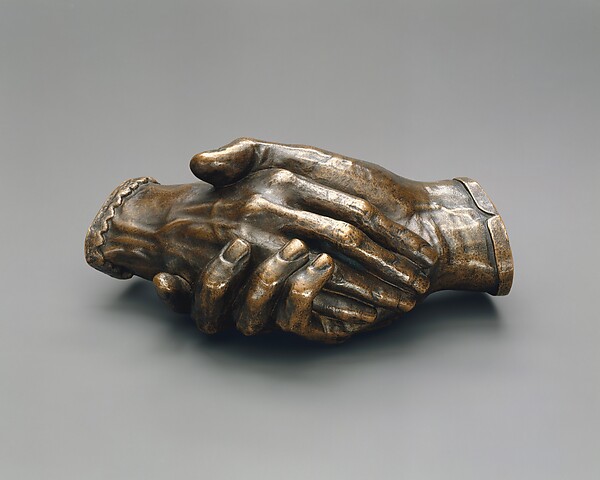
Clasped Hands of Robert and Elizabeth Barrett Browning, Harriet Goodhue Hosmer, 1853, cast after 1853

Clasped Hands of Robert and Elizabeth Barrett Browning

1853, cast after 1853 · The Metropolitan Museum of Art

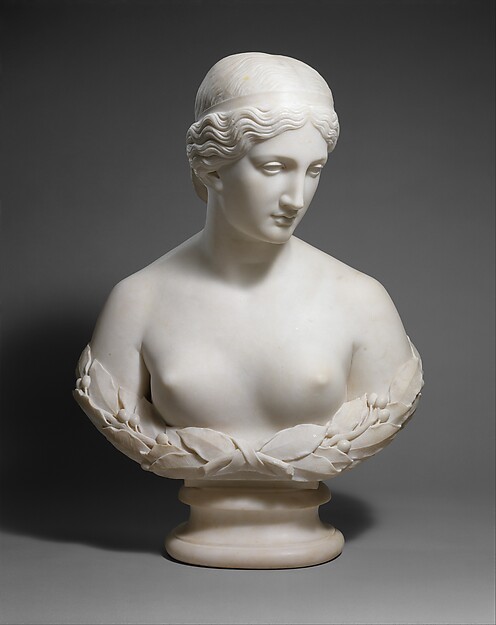
Daphne, Harriet Goodhue Hosmer, 1853, carved 1854

Daphne

1853, carved 1854 · The Metropolitan Museum of Art

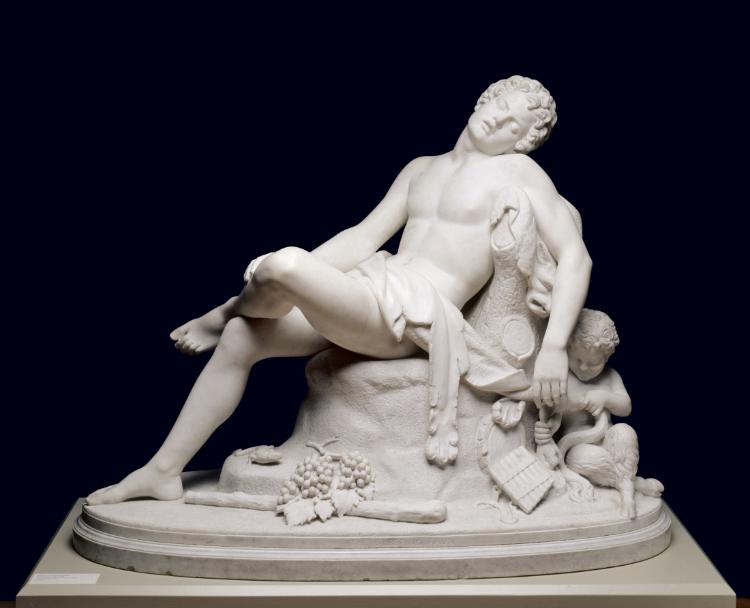
The Sleeping Faun, Harriet Goodhue Hosmer, modeled 1864, carved c. 1870

The Sleeping Faun

modeled 1864, carved c. 1870 · The Cleveland Museum of Art

Clasped Hands of Robert Browning and Elizabeth Barrett Browning, Harriet Goodhue Hosmer, model 1853

Clasped Hands of Robert Browning and Elizabeth Barrett Browning

model 1853 · Not on view · National Gallery of Art

Puck, Harriet Goodhue Hosmer, c. 1856

Puck

c. 1856 · Not on view · National Gallery of Art

Puck, Harriet Hosmer, modeled 1854, carved 1856

Puck

modeled 1854, carved 1856 · Smithsonian American Art Museum

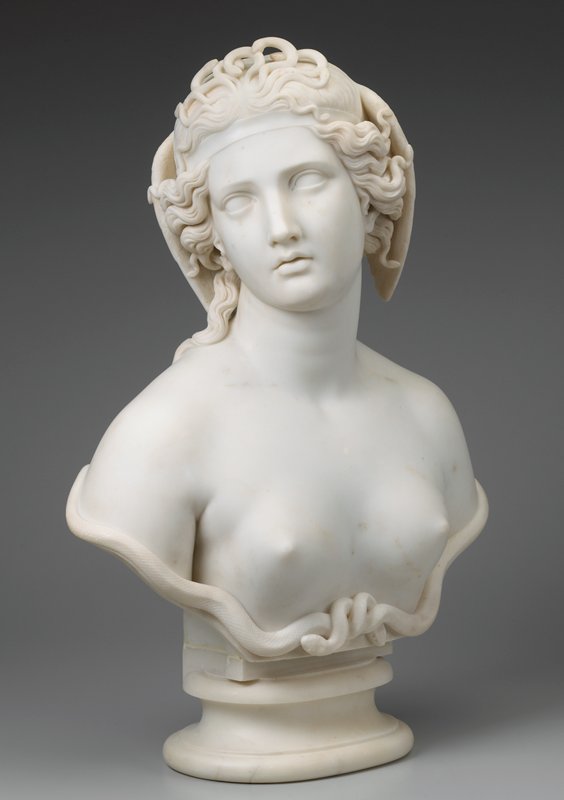
Medusa, Harriet Goodhue Hosmer, c. 1854

Medusa

c. 1854 · Not on view · Minneapolis Institute of Art

Zenobia, Queen of Palmyra, Harriet Hosmer, modeled c. 1859; carved after 1859

Zenobia, Queen of Palmyra

modeled c. 1859; carved after 1859 · Not on view · Art Institute of Chicago

Muskrat, Unidentified, before 1997

Unidentified

Muskrat, before 1997

Bright Light at Russell's Corners, George Ault, 1946

George Ault

Bright Light at Russell's Corners, 1946

Fish Decoy, Unidentified, ca. 1940

Unidentified

Fish Decoy, ca. 1940

(Lobster on Black Background), Marsden Hartley, 1940-1941

Marsden Hartley

(Lobster on Black Background), 1940-1941

May Snow, Torvald Arnst Hoyer, 1937

Torvalt Arnt Hoyer

May Snow, 1937

San Diego Mission, Josephine Joy, ca. 1935-1939

Josephine Joy

San Diego Mission, ca. 1935-1939

Industry, Arthur Durston, 1934

Arthur Durston

Industry, 1934

Employment of Negroes in Agriculture, Earle Richardson, 1934

Earle Richardson

Employment of Negroes in Agriculture, 1934

The Editor's Reward, José Guadalupe Posada, published 1947

José Guadalupe Posada

The Editor's Reward, published 1947

Smithsonian American Art Museum

(Untitled) (Mansfield 1907), George Grey Barnard, ca. 1907

George Grey Barnard

(Untitled) (Mansfield 1907), ca. 1907

Smithsonian American Art Museum

God's Idea, Da Loria Norman, n.d.

Da Loria Norman

God's Idea, n.d.

Smithsonian American Art Museum

Easter Cover, Henry Wolf, 1891

Henry Wolf

Easter Cover, 1891

Smithsonian American Art Museum

This Was a Spray the Bird Clung To, John La Farge, 1861

John La Farge

This Was a Spray the Bird Clung To, 1861

Smithsonian American Art Museum

Eros et Musa, Henry O. Walker, 1903

Henry O. Walker

Eros et Musa, 1903

Smithsonian American Art Museum

(Illustration for Rubáiyát of Omar Khayyám) The Throne of Saturn, Elihu Vedder, 1883-1884

Elihu Vedder

(Illustration for Rubáiyát of Omar Khayyám) The Throne of Saturn, 1883-1884

Smithsonian American Art Museum

The Cup of Death, Elihu Vedder, 1885 and 1911

Elihu Vedder

The Cup of Death, 1885 and 1911

Smithsonian American Art Museum