 Karl Bryullov1799–1852
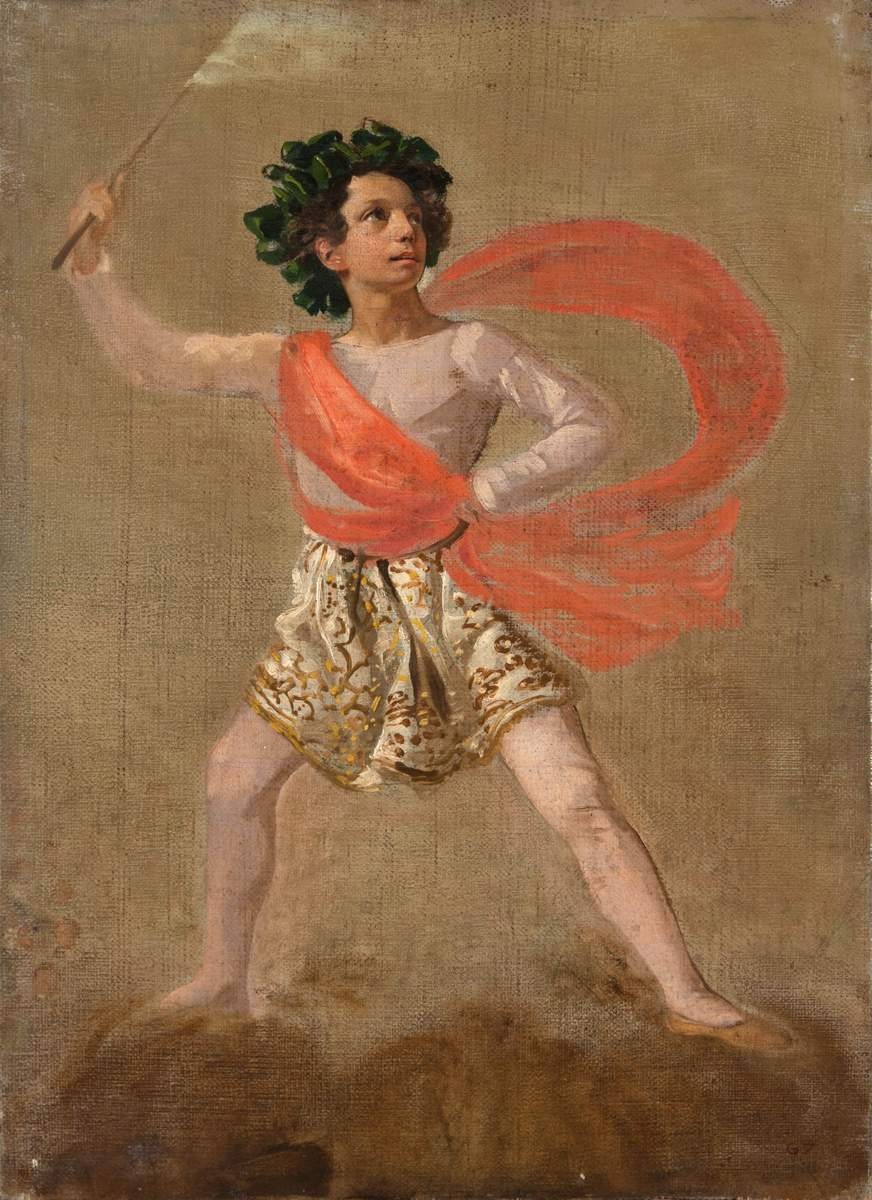
Вольтижер
Can I see it?
Unknown
Where is “Вольтижер” now? Collection: State Russian Museum, Saint Petersburg. Unknown.

Saint Petersburg, Russia
The owner is known; whether it is on view today is not.
- In this state since
- Source
- The museum
About the painting
Museum text in Russian
В Кат. 1980 не датирован. Этюд, по всей вероятности, написан художником в Италии и датируется временем пребывания там.
Вольтижер — цирковой акробат, исполнитель акробатических трюков на бегущей по арене лошади во время циркового представления. Г. Н. Голдовский // Великий Карл. К 225-летию со дня рождения К. П. Брюллова. СПб, 2024. С. 317.
На раме была голубая этикетка с печатным текстом: Аничковскiй Дворецъ и надписью чернилами: Соб: Госуд: Имп: А III №111/ 169 Ц.С. Д. ; на лицевой стороне справа внизу красной краской: 67 ., на подрамнике: мелом: 19 , тушью: 35 , штамп: Г.Р.М. инв. № 67 (номер зачеркнут).
State Russian Museum
Details
- Accession number
- Ж-3362
What it shows
In the catalog
Sources
- State Russian Museum
- Image: State Russian Museum — © State Russian Museum
In the life of Karl Bryullov
The whole life1821
Turns down the pensioner’s trip
The Academy’s president, A. N. Olenin, insisted that Bryullov stay for three more years under A. I. Ermolaev, a mentor who had little authority among the students; his request for another teacher was refused, and Karl gave up the pensioner’s trip.
16 August 1822
Leaves for Italy with his brother Alexander
On 16 August 1822 Karl left for Italy with his brother Alexander as a pensioner of the Society for the Encouragement of Artists.
May 1823
Arrival in Rome
In May 1823 the Bryullov brothers reached Rome, having visited Riga, Königsberg, Berlin, Dresden, Munich, Venice, Padua, Verona, Mantua and Bologna on the way.
1829
Breaks with the Society for the Encouragement of Artists
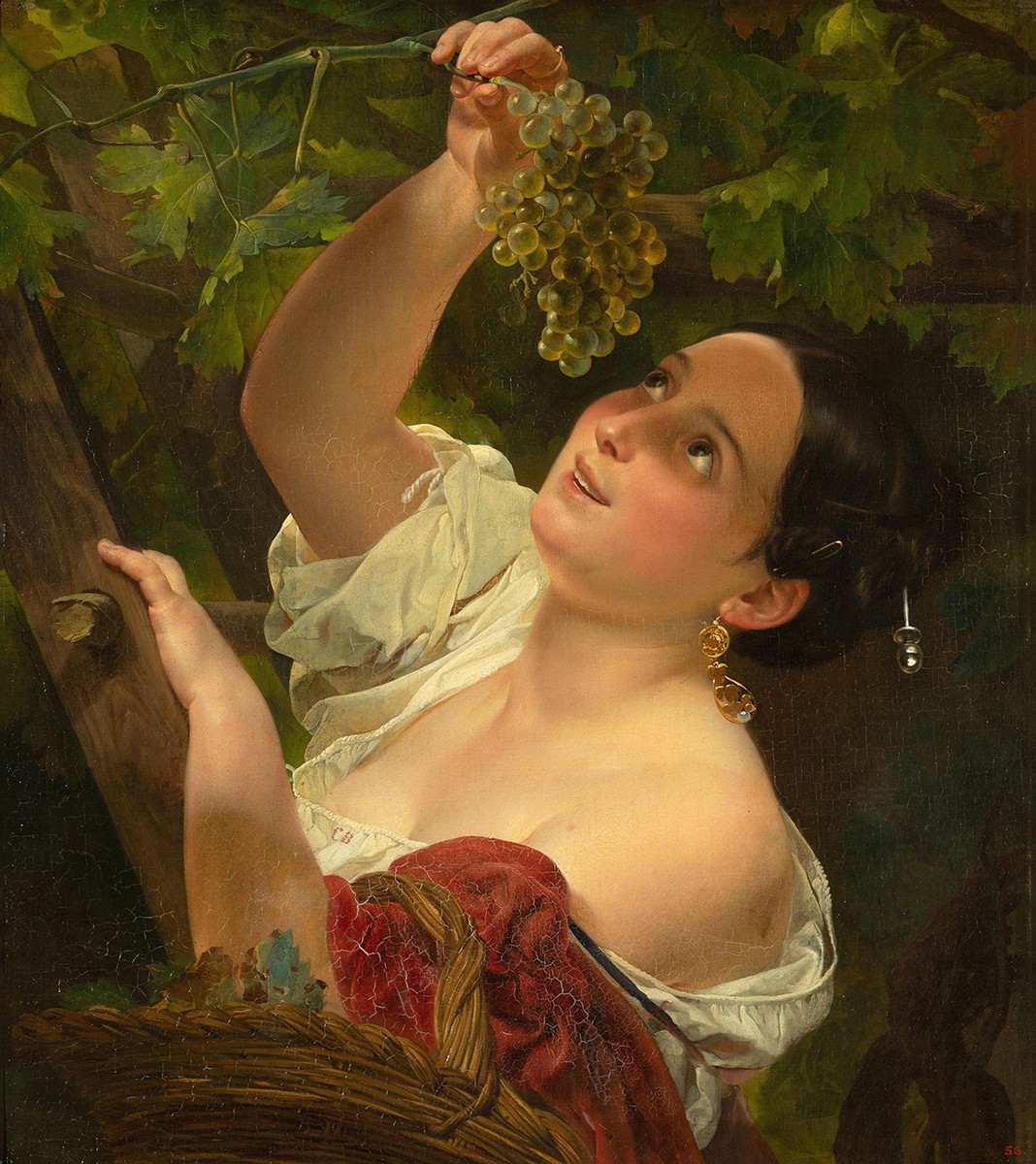
In response to the criticism of “Italian Noon” Bryullov broke with the Society in 1829; the many commissions that let him do without its support played no small part.
c. 1830
Meets Countess Yulia Samoilova
The time of his work on “Pompeii” is when Bryullov met Yu. P. Samoilova, an aristocrat of the Skavronsky family; for many years she was his muse and model.
1833
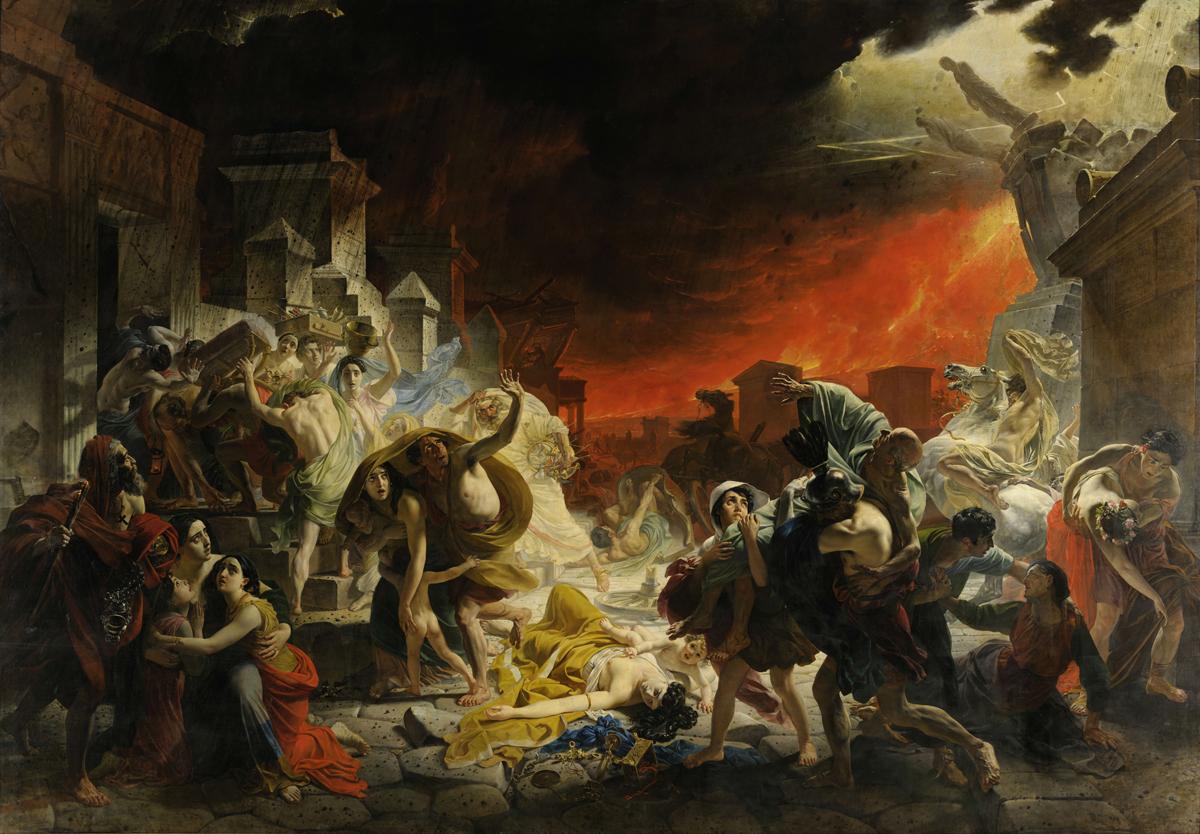
“The Last Day of Pompeii” causes a sensation in Europe and Russia
Completed in 1833, the painting caused a real sensation. What was new for Russian painting was the subject itself: not an outstanding individual but a whole people in the hours of tragedy.