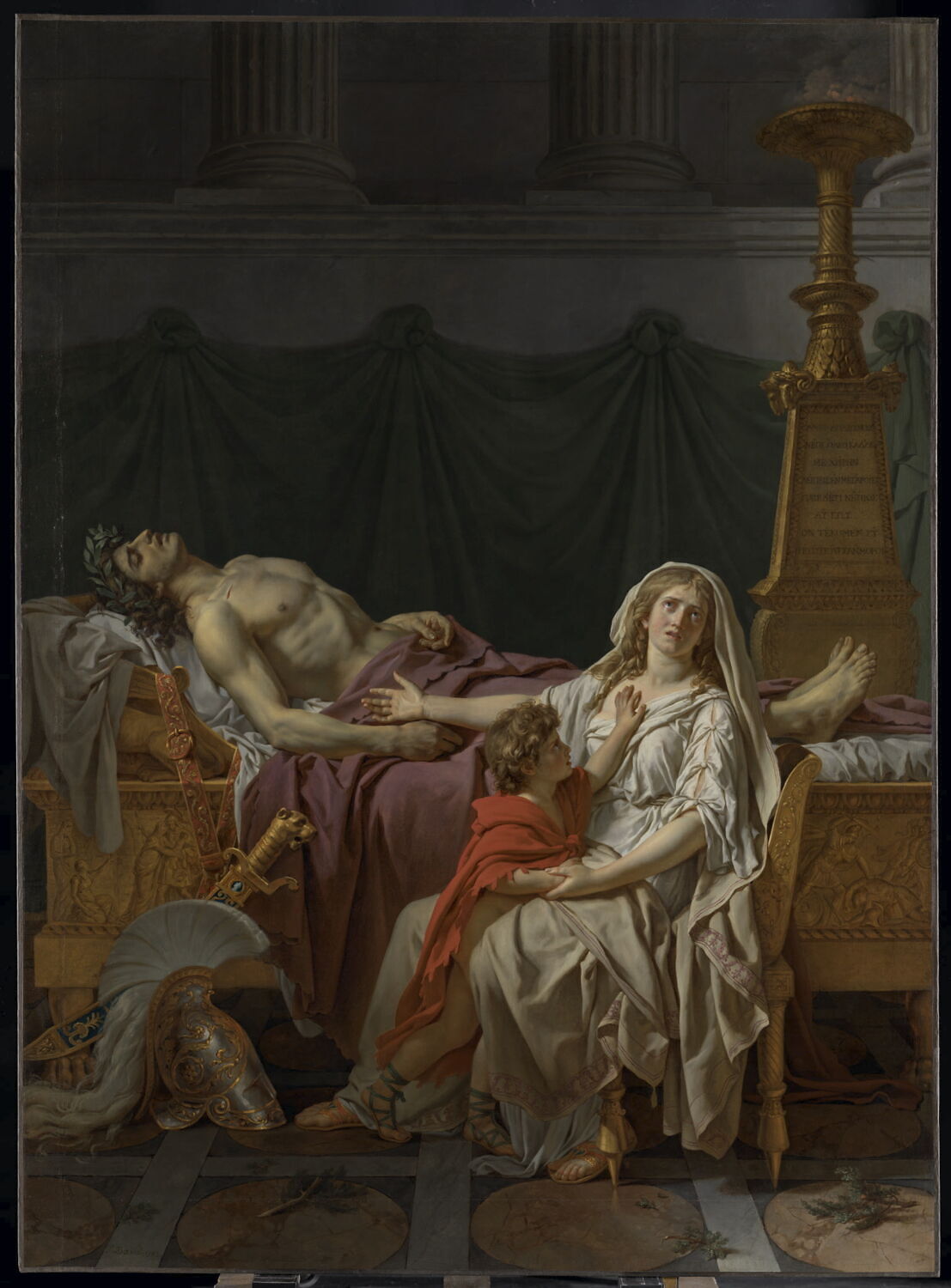
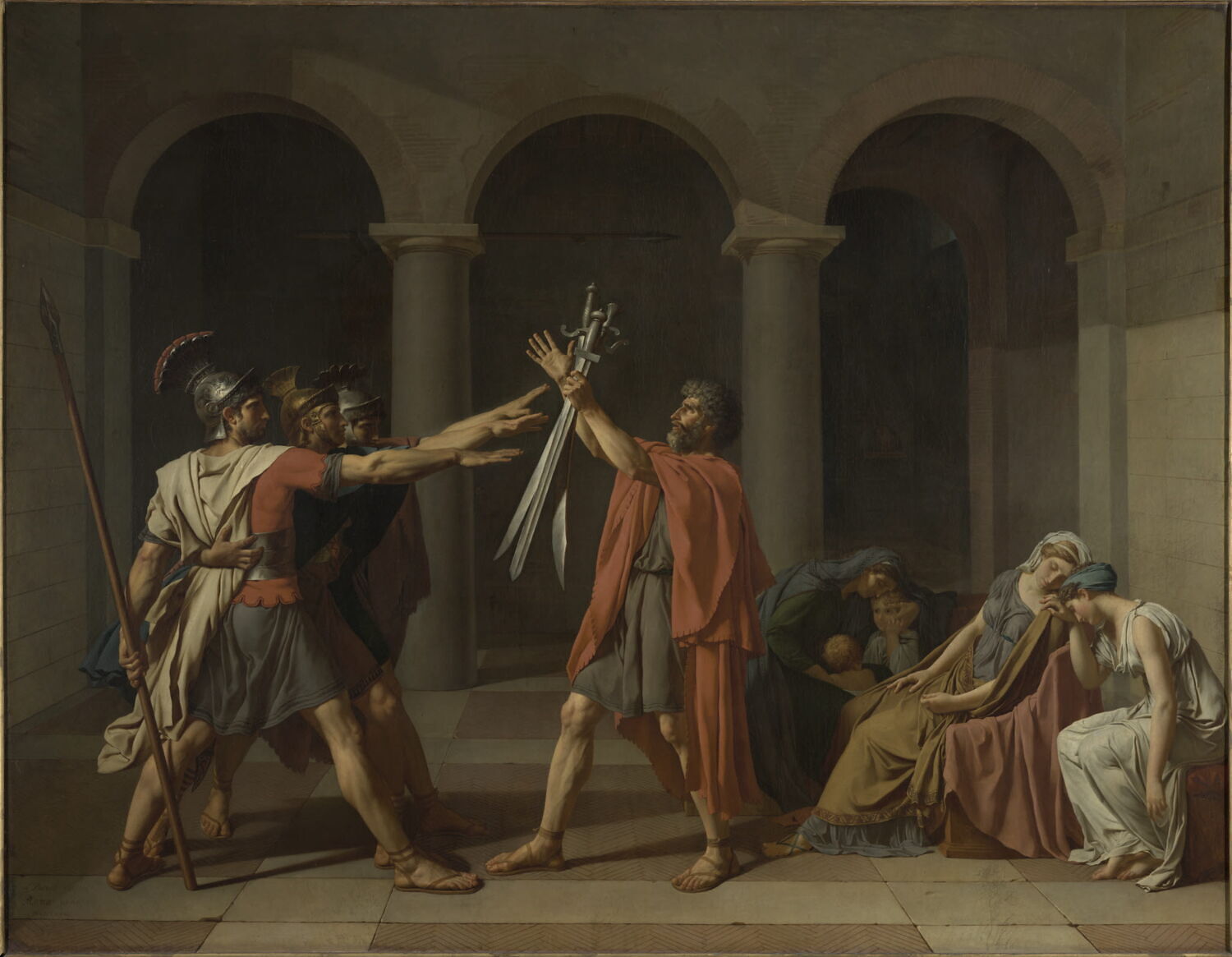
Jacques-Louis DavidFrench, 1748–1825
Villa in the Campagna
Can I see it?
Not on view at present
Where is “Villa in the Campagna” now? Collection: Art Institute of Chicago, Chicago. Not on view at present. Checked October 12, 2026.

Chicago, United States
It belongs to the collection, but is not on display at present.
- Checked
- In this state since
- Source
- The museum
About the work
After several unsuccessful attempts, Jacques-Louis David finally won the highly coveted Prix de Rome in 1774. The award subsidized his first trip to the city in 1775 to study Classical art and architecture, a necessity for any ambitious painter of the period. Over the next five years, David absorbed and recorded everything he saw in hundreds of drawings, principally in black chalk, sometimes heightened with wash. He copied ancient Greek and Roman art as well as work by Old Masters such as Raphael, Correggio, and Michelangelo, and he studied the architecture and landscape of Rome and its surrounding area (often called la campagna, or the countryside). After his return to France, he assembled these sheets into two albums, which his sons, Eugène and Jules, later divided into twelve parts. The present sheet comes from the tenth album, which remained with David’s heirs until the 1950s.
Read on
That David preserved the sketches from his Italian sojourn suggests the important role they played in his oeuvre, serving as a kind of visual encyclopedia of motifs and ideas. This sheet, like his other Italian sketches, fueled and invigorated David’s mature artistic production, underpinning the evolution of his signature Neoclassical style.
Art Institute of ChicagoCC BY 4.0
Details
- Accession number
- 1998.122
What it shows
In the catalog
Sources
- Art Institute of Chicago
- Image: Art Institute of Chicago — CC0
In the life of Jacques-Louis David
The whole life1771–1773
Three failed attempts at the Prix de Rome
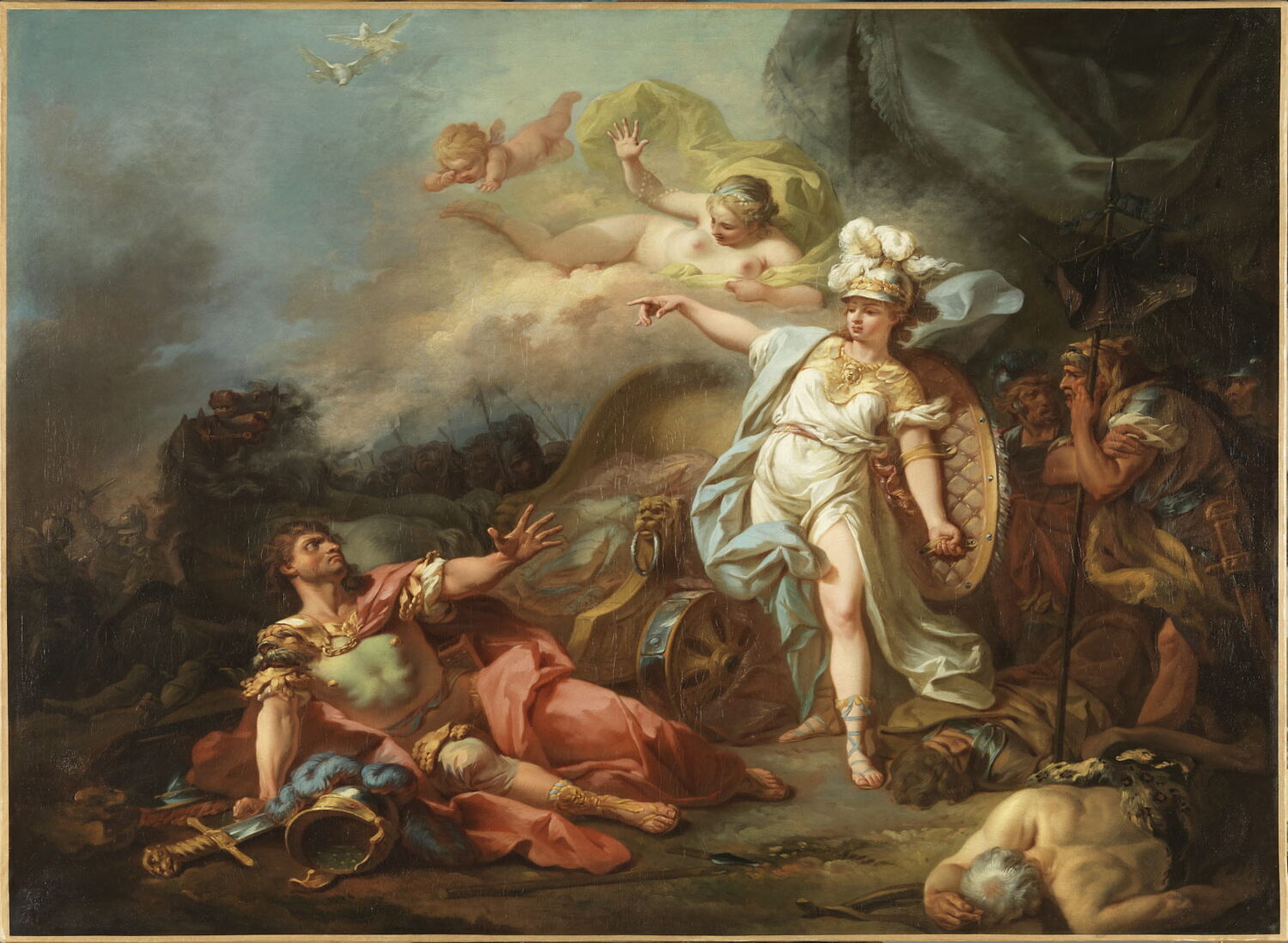
He competed three years running — with “Minerva Fighting Mars,” “Diana and Apollo Killing Niobe’s Children” and “The Death of Seneca” — and lost each time; after the 1772 defeat he went on a hunger strike that lasted two and a half days, until Michel-Jean Sedaine and Gabriel-François Doyen urged him to keep drawing.
1775–1780
Meets Mengs and encounters Winckelmann’s ideas
In Italy he met Anton Raphael Mengs, an advocate of the careful study of classical sources, who also introduced him to the theoretical writings of his friend Winckelmann; Mengs shaped David’s pre-revolutionary paintings, such as “The Vestal Virgin.”
October 1775 – July 1780
Pensionnaire at the French Academy in Rome
In October 1775 he left for Italy with his mentor Vien, who had just been appointed director of the French Academy in Rome; he studied Poussin, Caravaggio and the Carracci, filled twelve sketchbooks, and in July 1780, after his stay was extended by a year, returned to Paris.
1781
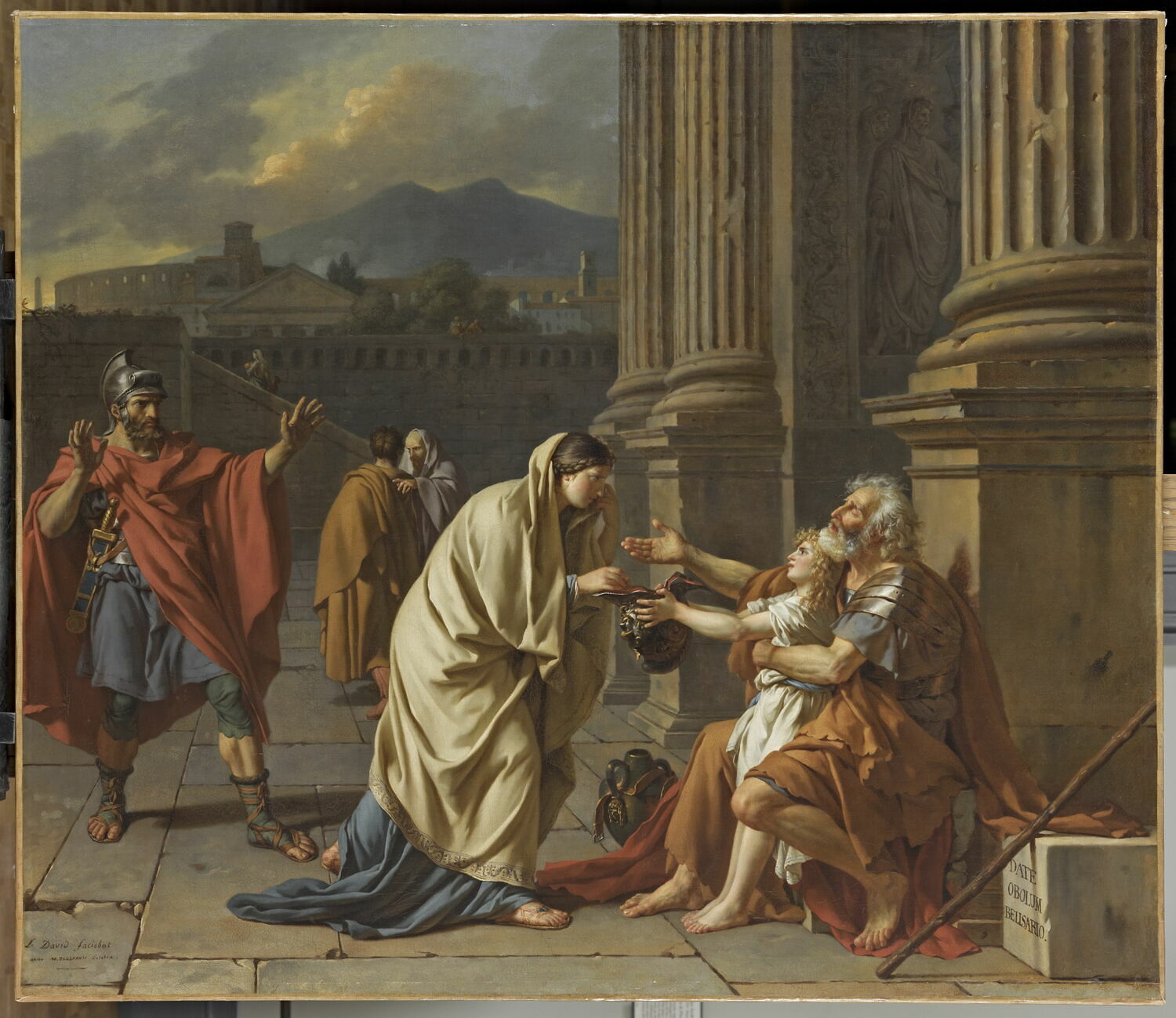
First Salon: “Belisarius Begging for Alms”
For “Belisarius” he was admitted on 24 August 1781 as an associate of the Academy of Painting and Sculpture; after the Salon the King granted him lodgings in the Louvre, a prized privilege of great artists.
16 May 1782
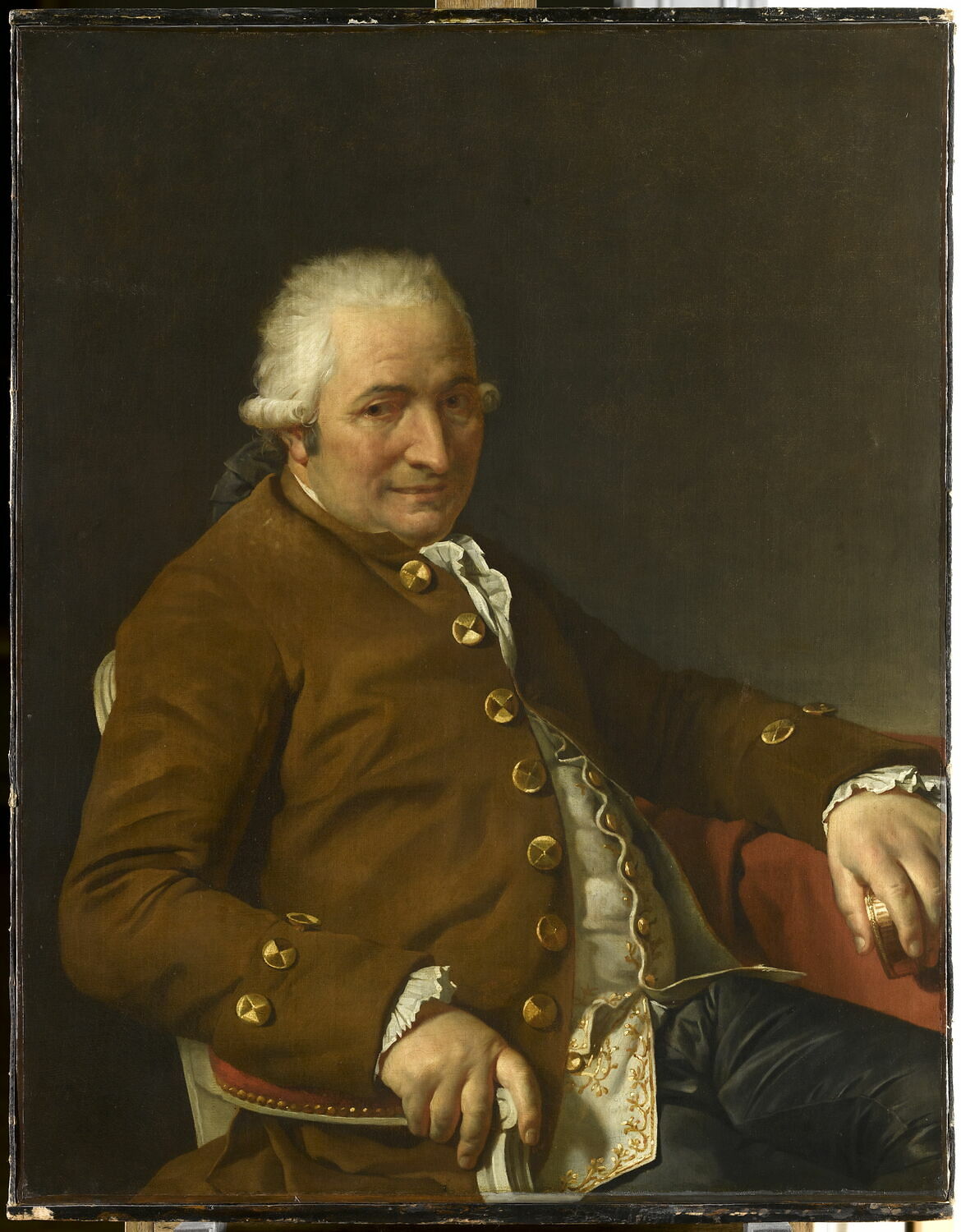
Marries Charlotte Pécoul
He married Charlotte Pécoul, daughter of Charles-Pierre Pécoul, overseer of the Royal Buildings; the couple had four children.
16 May 1782
Married: Charlotte David