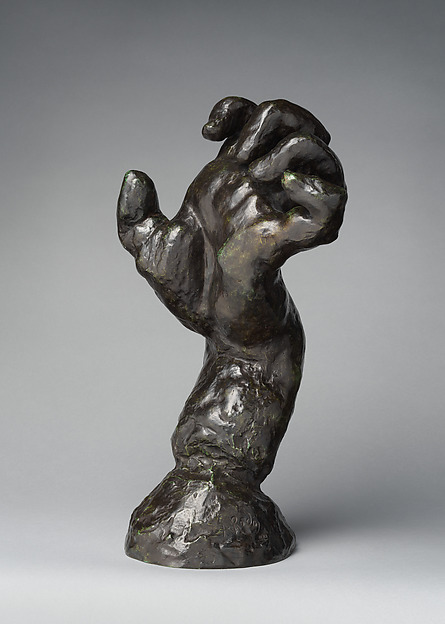
Auguste RodinFrench, 1840–1917
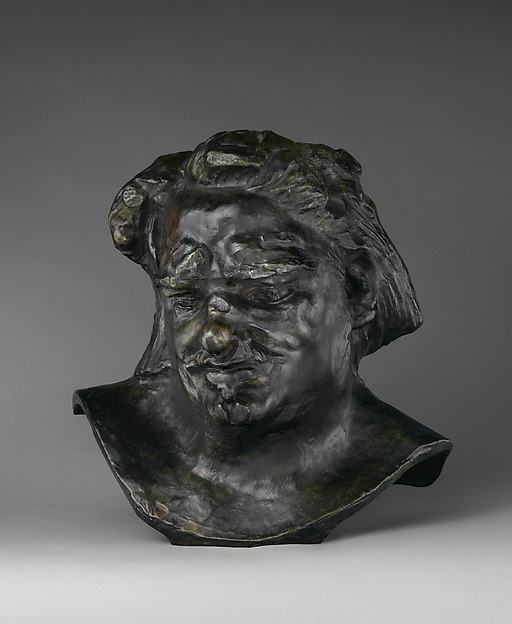
Victor Hugo (1883)
Can I see it?
Not on view at present
Where is “Victor Hugo (1883)” now? Collection: Nationalmuseum, Stockholm. Not on view at present. Checked October 9, 2026.

Stockholm, Sweden
It belongs to the collection, but is not on display at present.
- Checked
- In this state since
- Source
- The museum's website
About the sculpture
In his portraits, Rodin sought to capture the model’s inner qualities. The bare, unadorned shape puts focus on the facial expressions. The writer Victor Hugo (1802–1885) refused to model for him, but Rodin was permitted to portray him when he was speaking or eating with friends. The bust was favourably received, especially after Hugo’s death. A large number of copies were made in different materials. This portrait later served as a starting point for the Hugo monument intended for the Panthéon in Paris.
Nationalmuseum
Details
In the catalog
Display history
Not on view at present
Nationalmuseum · Oct 9, 2026 — now · Verified
Whether it was on view is unknown
Nationalmuseum · Sep 27, 2026 — Oct 9, 2026 · Unconfirmed
Sources
- Nationalmuseum
- Image: Nationalmuseum — CC BY-SA 4.0
In the life of Auguste Rodin
The whole lifec. 1880 – 1881
Juliette Adam's salon and first recognition
Rodin was received at the salon of the writer Juliette Adam, where he was presented to Gambetta; Gambetta recommended him to Antonin Proust, the minister of fine arts, who bought “St. John the Baptist” for the state. It was the first recognition to reach a sculptor who was already forty.
1881
London: meeting William Ernest Henley
Rodin's friend Alphonse Legros introduced him in London to the poet William Ernest Henley, who did more than anyone to win him a British audience. Through Henley Rodin met Robert Louis Stevenson and Robert Browning.
1882
“St. John the Baptist” at the Royal Academy
A bust of St. John the Baptist, a version of the statue bought by the French government, was shown with success at the Royal Academy. A year earlier Henley, who had become editor of the Magazine of Art, had published several articles on Rodin there.
1883
Meets Camille Claudel
Standing in for Alfred Boucher, who was away, Rodin supervised his students' course and met the eighteen-year-old Camille Claudel. She became his assistant, model, lover and creative rival.
1884
Commission for “The Burghers of Calais”
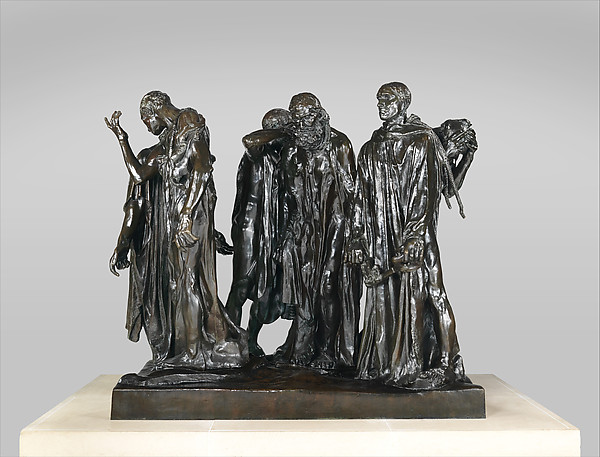
Rodin pursued the commission for a monument to the town of Calais, but instead of a lone hero, Eustache de Saint-Pierre, he conceived six citizens, each with his own emotions. A year later the committee was unimpressed with his progress; Rodin was ready to abandon the project rather than change his design, and the town told him to carry on.
1885
Camille Claudel: assistant and lover
From 1885 Claudel worked as an assistant in Rodin's studio and posed for him, and soon they became lovers. The affair lasted nine years, and Rodin did not break with Rose Beuret, who knew her role as “the other woman”.