 Boris Kustodiev1878–1927
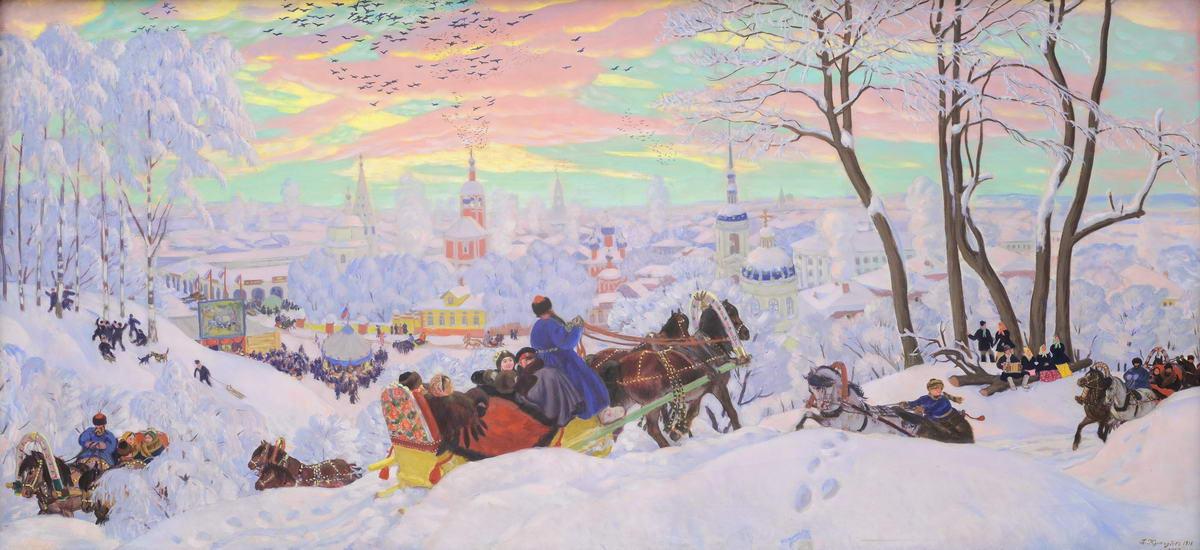
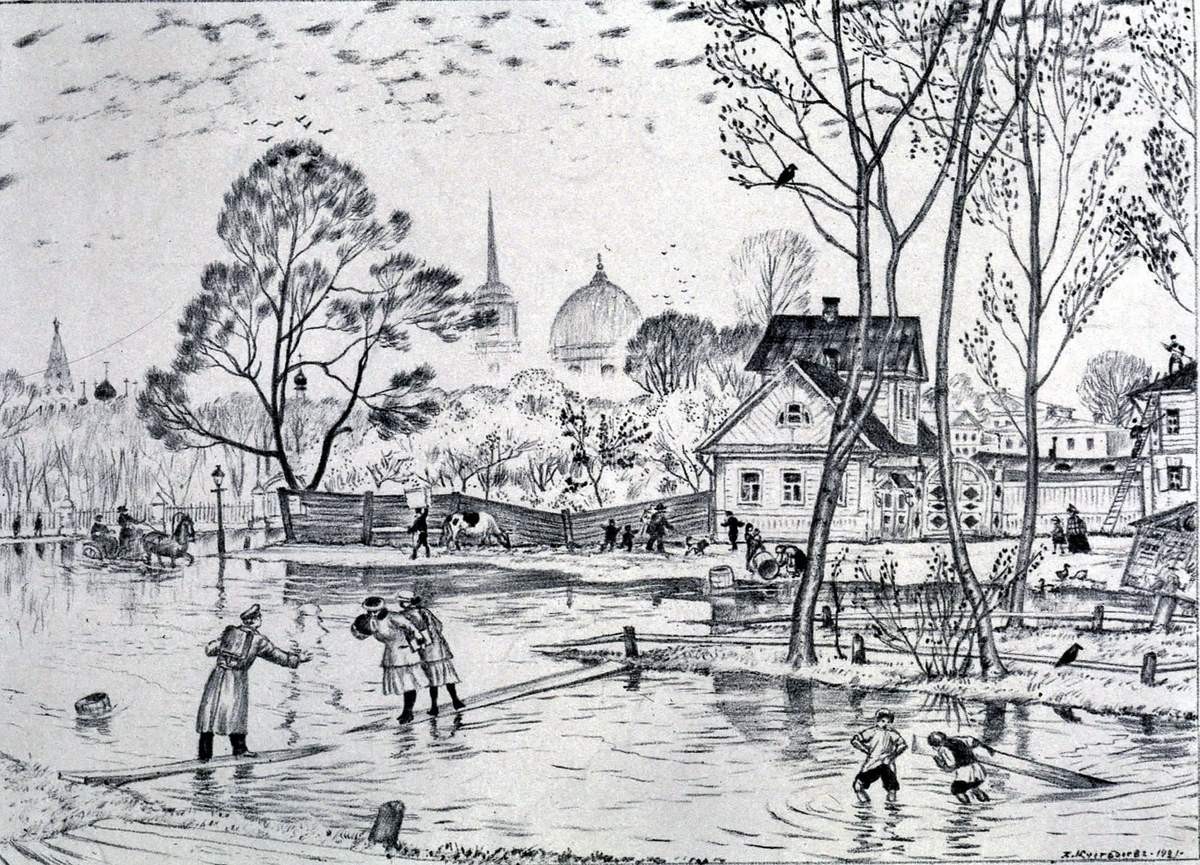
Весна
Can I see it?
Unknown
Where is “Весна” now? Collection: State Russian Museum, Saint Petersburg. Unknown.

Saint Petersburg, Russia
The owner is known; whether it is on view today is not.
- In this state since
- Source
- The museum
About the work
Museum text in Russian
Живописный вариант «Весна» (1921) – частное собрание.
С начала 1920-х художник интенсивно занимается новой для него техникой литографии, оценив эффект воздушности и живописности, который она дает. В 1921 году им был выпущен альбом «Шестнадцать автолитографий», воспроизводящий мотивы его картин на темы русской провинции. Круглов В.Ф. Кустодиев: между лирикой и гиперболой // Борис Михайлович Кустодиев. К 125-летию со дня рождения. СПб, 2003. С. 33.
Read on
Альбом «Шестнадцать автолитографий Б. М. Кустодиева» (Пг: Издание Комитета популяризации художественных изданий, 1921) отпечатан в 15 Государственной типографии (бывшей Голике и Вильборг) тиражом 300 нумерованных экземпляров, сброшюрован. Содержит иллюстрированные титульный лист и оглавление, 14 листов с сюжетными изображениями. Часть сюжетов является графическим повторением ранних живописных работ Кустодиева, некоторые были повторены в живописи позднее. Имеются раскрашенные автором экземпляры и отдельные оттиски. Борис Михайлович Кустодиев. К 125-летию со дня рождения. СПб, 2003. С. 227.
State Russian Museum
Details
- Accession number
- С.Гр.-2719
What it shows
In the catalog
Sources
- State Russian Museum
- Image: State Russian Museum — © State Russian Museum
In the life of Boris Kustodiev
The whole life1918–1921
Opera designs: “The Snow Maiden”, “The Tsar's Bride”
His opera designs were a success: “The Snow Maiden” for the Bolshoi Theatre (1918, never staged), “The Tsar's Bride” at the Bolshoi Opera Theatre of the People's House (1920), and set and costume designs for Serov's “The Power of the Fiend” at the former Mariinsky Theatre (1921).
1922
Illustrates Zamyatin's “How the Monk Erasmus Was Healed”
Kustodiev designed a separate illustrated edition of Yevgeny Zamyatin's story “How the Monk Erasmus Was Healed”. Zamyatin recalled that a seemingly insoluble task was solved with remarkable elegance, tact and a great sense of humour.
1922–1923
Illustrates Leskov
With his fine feeling for line, Kustodiev illustrated Leskov's “The Darner” (1922) and “Lady Macbeth of the Mtsensk District” (1923); he also worked in lithography and linocut.
1923
Joins the Association of Artists of Revolutionary Russia
Kustodiev joined the Association of Artists of Revolutionary Russia, and continued to paint, make engravings, illustrate books and design for the theatre until his death.