Anton Raphael MengsGerman, 1728–1779
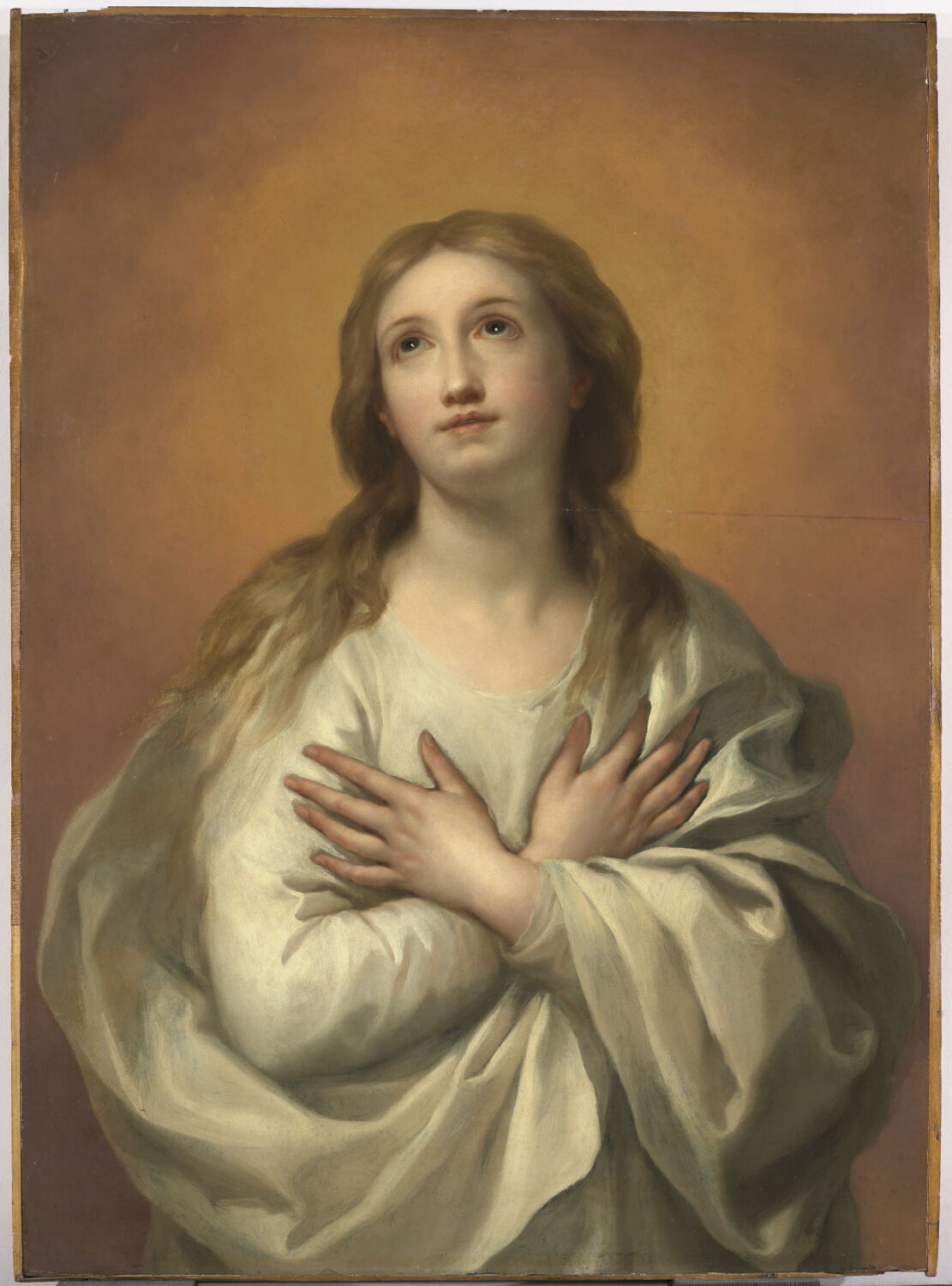
Verkündigung Mariae
Can I see it?
Unknown
Where is “Verkündigung Mariae” now? Collection: Kunsthistorisches Museum, Vienna. Unknown.

Vienna, Austria
The owner is known; whether it is on view today is not.
- In this state since
- Source
- The museum
Details
In the catalog
Sources
- Kunsthistorisches Museum
- Image: Kunsthistorisches Museum — CC BY-NC-SA 4.0
In the life of Anton Raphael Mengs
The whole life1751–1754
Back in Italy: the road to directing the academy
In 1751 Mengs returned to Italy; after a brief stay in Venice and Florence he became a member in 1752 and in 1754 director of the Roman academy of painting.
late 1755
Meeting Johann Joachim Winckelmann
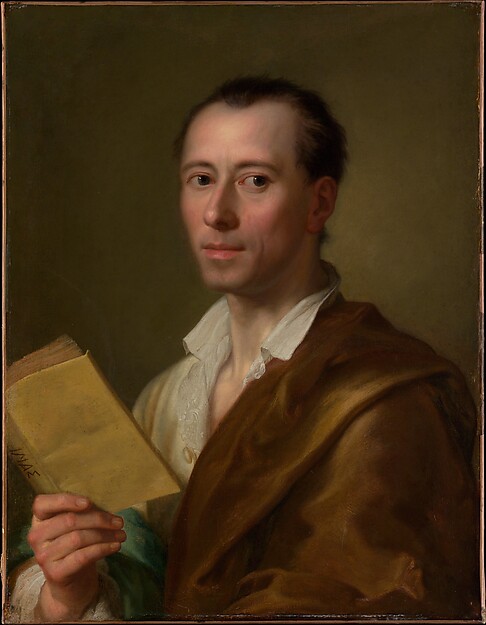
At the end of 1755 Mengs met the archaeologist and art historian Johann Joachim Winckelmann, who soon became one of his closest friends and opened his eyes to a new understanding of ancient art. Winckelmann strongly shaped Mengs's views on painting: in his work Mengs turned from the fashionable Rococo to early Neoclassicism.
late 1759
Naples: an altarpiece for Caserta and royal portraits
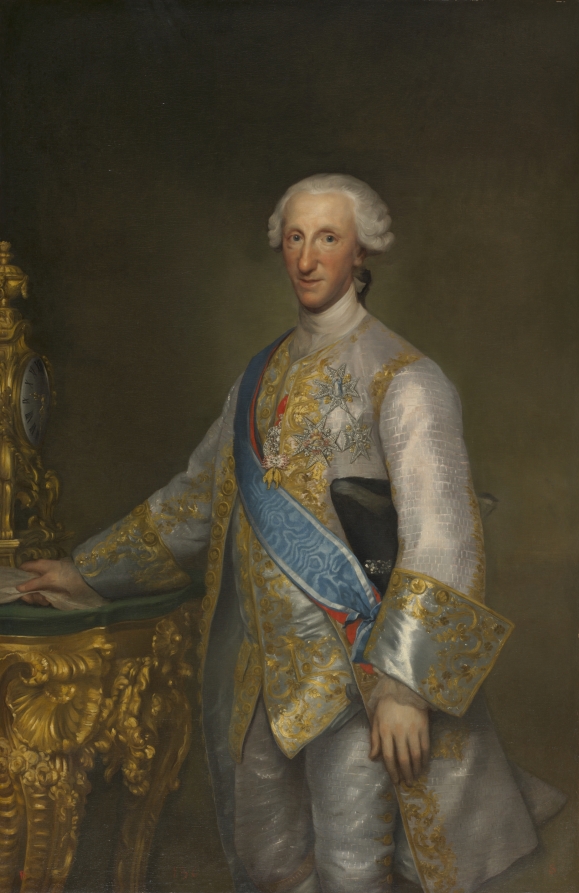
At the end of 1759 Mengs came to Naples to paint the altarpiece “The Presentation of the Virgin in the Temple” for the Royal Chapel at Caserta and portraits of the royal family, among them a portrait of Ferdinand I (1759). When the King of Naples left the city to take the Spanish throne in Madrid, Mengs returned to Rome.
1761
To Madrid at Charles III's invitation: working with Tiepolo
In 1761 Mengs went to Madrid at the invitation of Charles III, where together with Giovanni Battista Tiepolo he decorated the New Royal Palace and also worked at Aranjuez and La Granja; the fees of both masters at the Spanish court were unusually high. He was supported in Madrid and Rome by his friend, the Spanish diplomat and patron José Nicolás de Azara.
1761 · Workplace
Madrid
1762
“Thoughts on Beauty and Taste in Painting”
The book, dedicated to Winckelmann, was among the first to formulate the principles of the “new classical style”: in place of traditional styles Mengs spoke of “taste” — high, sweet or middle — with high taste marked by the selection of the best of everything in the best proportion. Published in Zurich, it was reprinted in the author's lifetime in 1765 and 1774 and served as a textbook in many academies.