Hendrick GoltziusDutch, 1558–1617
Venus en Cupido
Can I see it?
Unknown
Where is “Venus en Cupido” now? Collection: Rijksmuseum, Amsterdam. Unknown.

Amsterdam, Netherlands
The owner is known; whether it is on view today is not.
- Source
- The museum
About the work
Museum text in Dutch
Ronde voorstelling van Venus en Cupido bij een boom. Venus heeft een tros druiven in de hand, Cupido geeft haar een bundel graan aan. Op de achtergrond Ceres temidden van graanoogsters en Bacchus temidden van druivenplukkers. Rond de voorstelling een lege marge, bedoeld voor een randschrift.
Rijksmuseum
Details
- Accession number
- RP-P-OB-10.207
What it shows
In the catalog
Sources
- Rijksmuseum
- Image: Rijksmuseum — public domain
In the life of Hendrick Goltzius
The whole life1579–1587
Pupil: Jan Saenredam
late 1580s
Depression and consumption
From the late 1580s he suffered from depression and consumption; his family life was unhappy.
1587
Founding of the Haarlem Academy
Together with Cornelis van Haarlem and Karel van Mander he founded an academy of art in Haarlem, later known as the Haarlem Mannerist Academy (some sources give 1583 or 1600). There, for the first time in the Netherlands, systematic study of anatomy and drawing from the nude model were introduced.
1590
Departure for Italy
He fled from his wife and, despite his illnesses, set out for Italy — via Hamburg and Munich to Venice, Bologna and Florence. Part of the way he traveled on foot, passing himself off as a commoner, "partly out of a love of mystification."
January 1591
Eight months in Rome
He arrived in Rome in January 1591 and stayed eight months (with a brief sojourn in Naples). He discovered Raphael, was especially impressed by Michelangelo and Giambologna, and studied art from classical sculpture to the masters of the Renaissance.
August 1591
Return to Haarlem with a collection of drawings
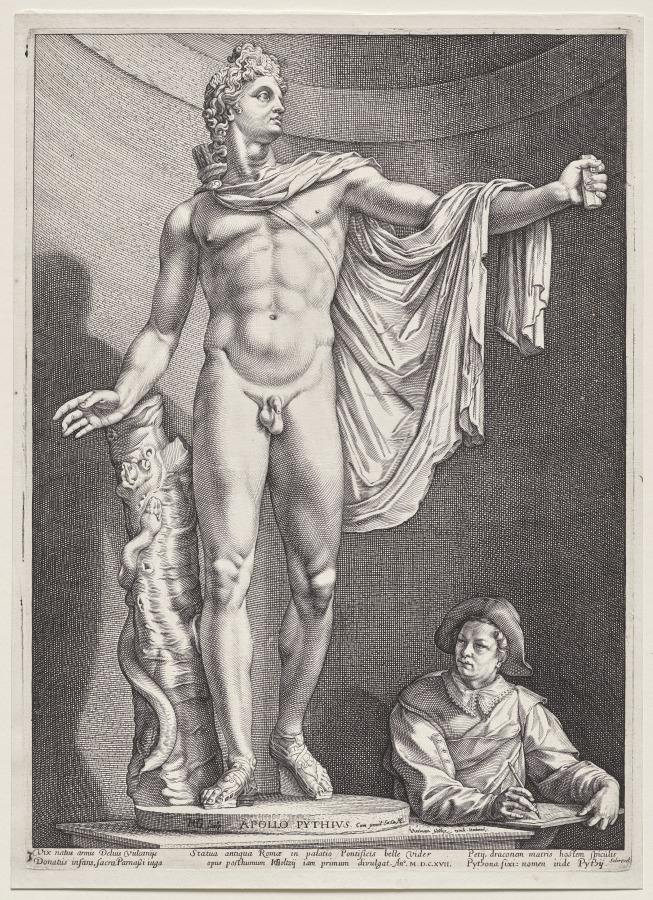
He returned to Haarlem, bringing from Italy a large collection of drawings that he used for the rest of his life; from the Roman material three engravings of classical statues are known, including the Farnese Hercules.