 Martin SchongauerGerman, 1440–1491
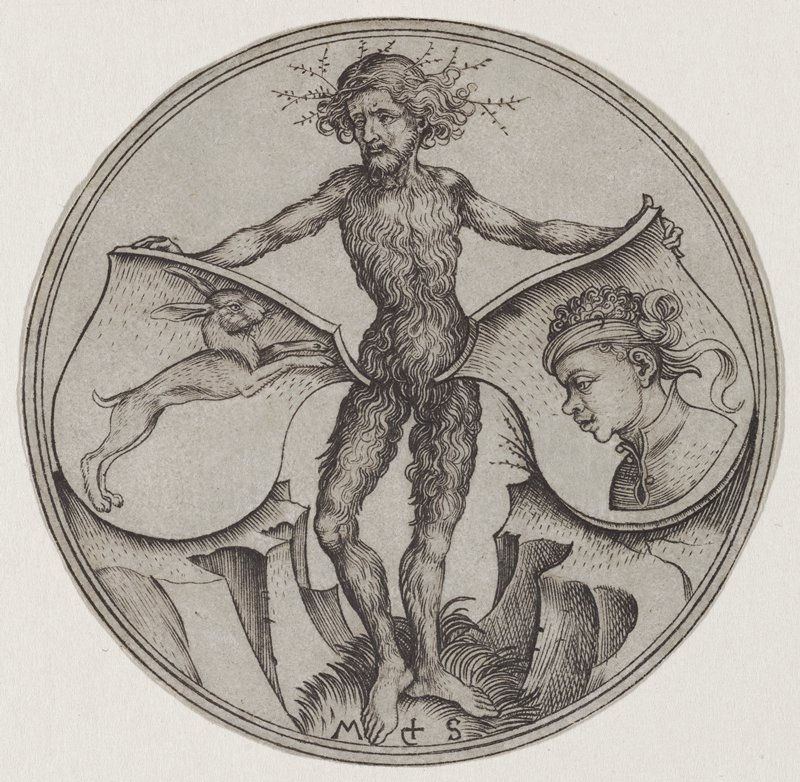
Two Shields Supported by a Wild Man
Can I see it?
Not on view at present
Where is “Two Shields Supported by a Wild Man” now? Collection: Minneapolis Institute of Art, Minneapolis. Not on view at present. Checked September 29, 2026.

Minneapolis, United States
It belongs to the collection, but is not on display at present.
- Checked
- In this state since
- Source
- The museum
About the work
This furry fellow crowned with a wreath of vines is a wild man, a creature from just beyond the fringes of civilization. He holds two shields like the symbols that families used to mark their property and their station in life in the late 1400s. Attempts have been made to connect the the hare and the bust of the African youth to specific families, but the results have been inconclusive.
Heads of Black youths frequently appeared on European crests from the 1200s on, with associations to Christian crusades against Islam, slave trading, the Magi (the three kings or wise men who visited the baby Jesus), certain saints (especially Maurice), and general fascination with “exotic” foreigners. He could also be seen as an emblem of bravery contrasted with the skittish hare.
Read on
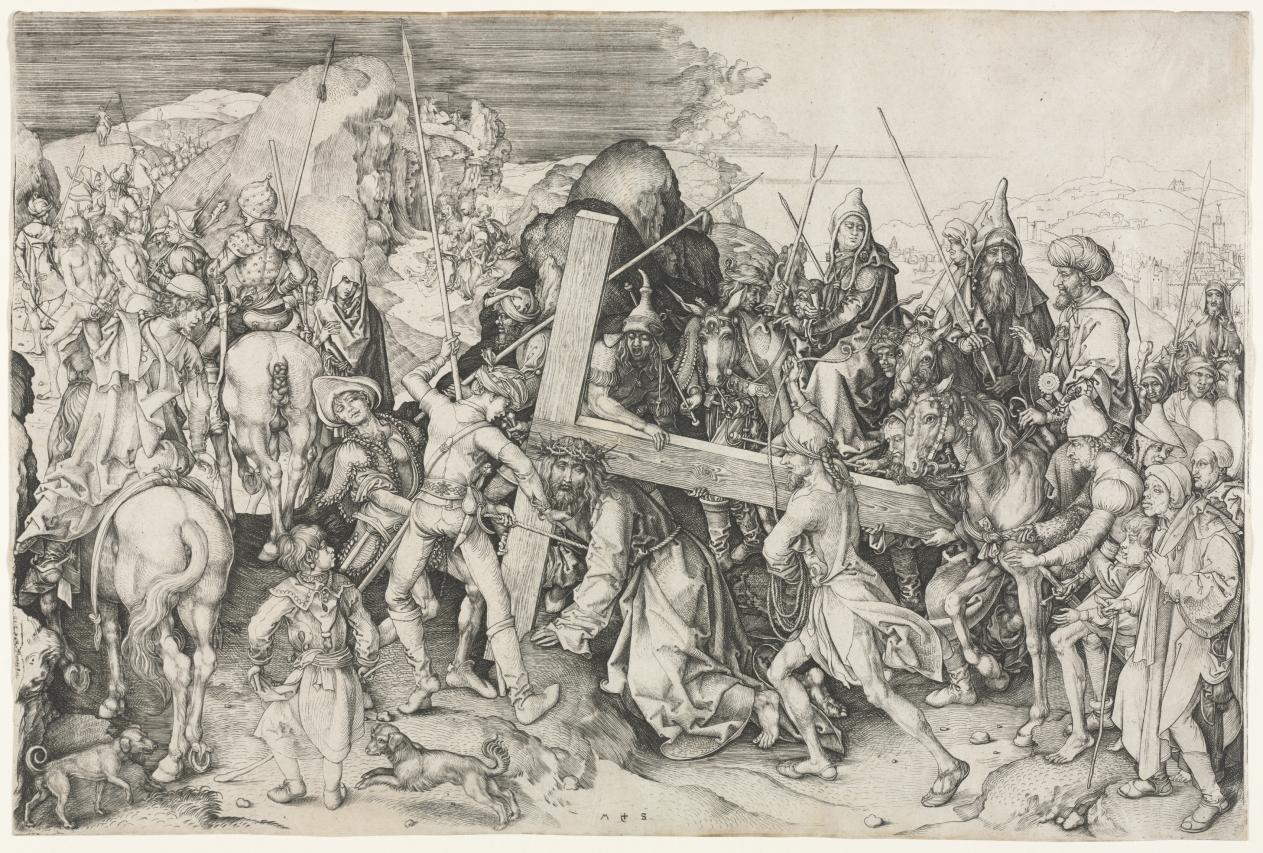
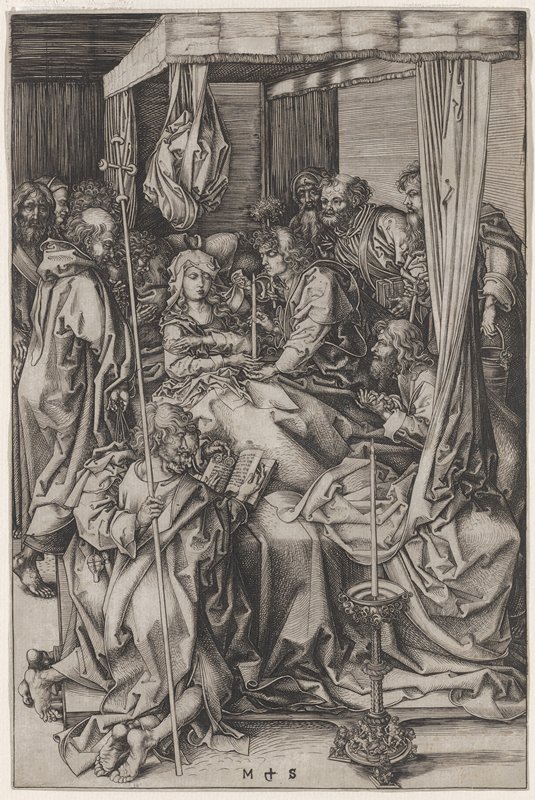
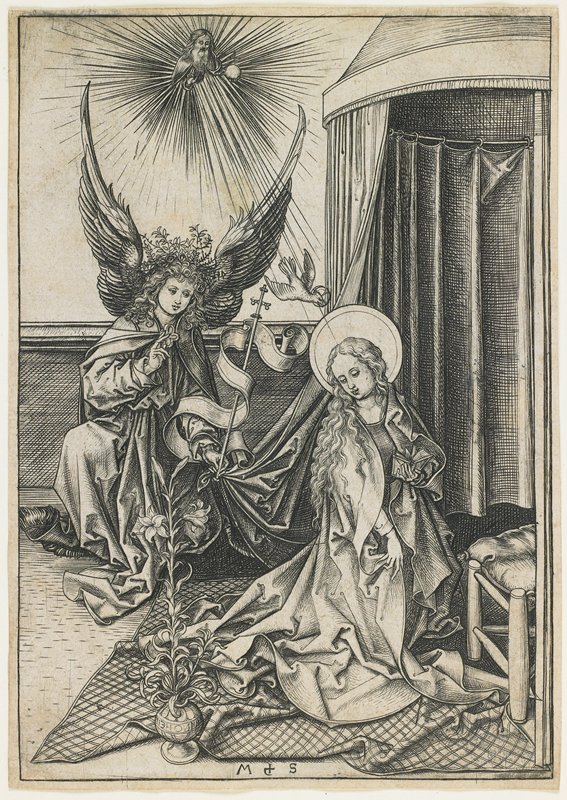
Martin Schongauer made engravings such as this to offer inspiration to silversmiths, painters, and other craftsmen who needed ideas for their own designs.
Minneapolis Institute of Art
Details
- Accession number
- 2019.31
In the catalog
Sources
- Minneapolis Institute of Art
- Image: Minneapolis Institute of Art — public domain
In the life of Martin Schongauer
The whole life1440
Born
c. 1466 – 1469
Learns painting from Caspar Isenmann
After early training in his father’s goldsmith workshop, he is thought to have learned painting from Colmar’s leading master Caspar Isenmann, a neighbour of his parents and a follower of Early Netherlandish painting. The older view that Master E. S. taught him engraving is now doubted by scholars.
not after 1469
Journeyman travels through Burgundy and the Netherlands
He makes the journeyman’s tour expected of artists of his time, begun by 1469 at the latest: he visits Burgundy and the Netherlands and gets to know the work of Rogier van der Weyden, Dirk Bouts, the Cologne school around Stefan Lochner and the Flemish school of Jan van Eyck. He is thought to have worked for a time with Hans Pleydenwurff in Nuremberg, and some scholars believe he also visited Spain, perhaps Portugal.
1471
Sets up his own workshop in Colmar
By 1471 he has his own workshop: that year payments are made for an altarpiece for the Dominican church in Colmar, now in the museum and regarded as a workshop production.
c. 1471 – 1491
Twenty years at the head of German engraving
He dominates German engraving for about twenty years: his 116 engravings are known in Germany and Italy, reach England and Spain, and in Italy their maker is nicknamed “Beautiful Martin”; according to Vasari, Michelangelo copied his Temptation of St Anthony.
2 February 1491
Died