 Caspar David FriedrichGerman, 1774–1840
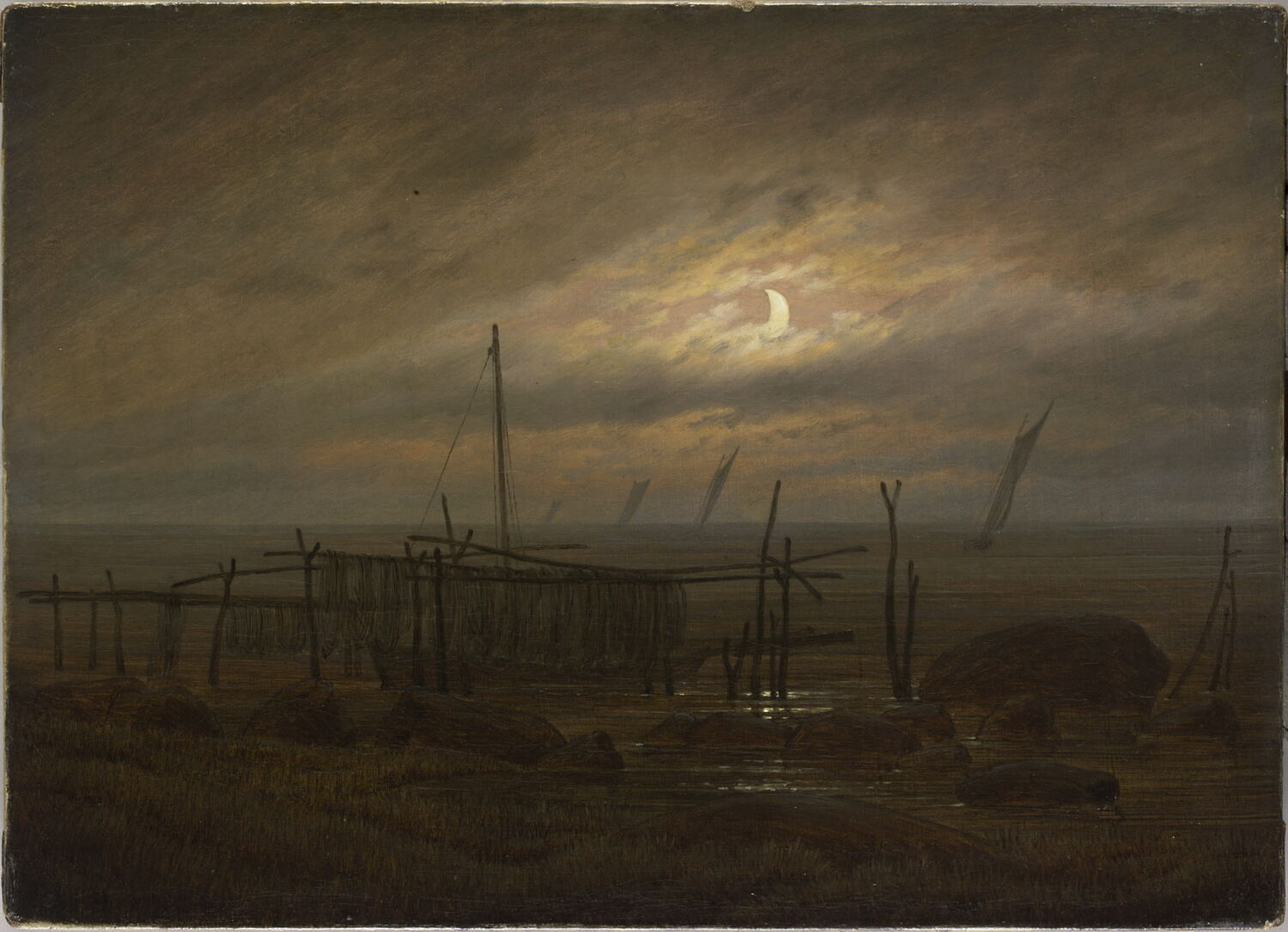
Bord de mer au clair de lune
May one see it?
Yes, receiving visitors

Musée du Louvre
Room863, Aile Richelieu, Niveau 2Paris, France
On public display.
- Checked
- 7 days ago
- In this state since
- Sep 26, 2026
- Source
- The museum's own collection data
About the painting
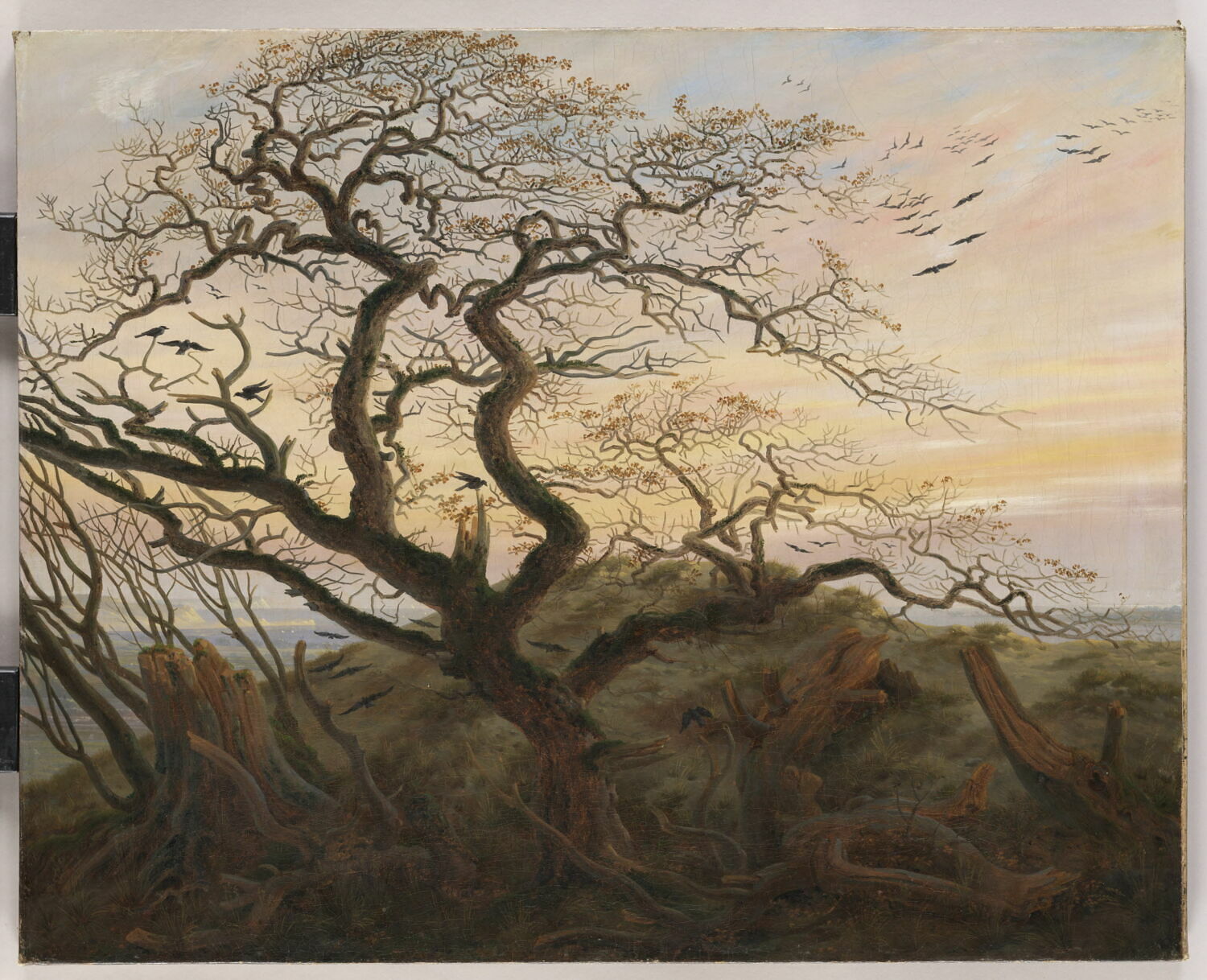
Seaside by Moonlight is an 1818 oil on canvas painting by Caspar David Friedrich. It is now in the Louvre Museum (RF 2000-3), to which it was given by the Société des Amis du Louvre in 2000, and now hangs in Room E on the second floor of the Aile Richelieu. It was the second Friedrich work acquired by the museum after The Tree of Crows in 1975.
The work was produced in late August 1818 after the artist returned to Dresden, where he was living, from his honeymoon on the German Baltic coast, where he had grown up. It drew on landscape studies he had made there, particularly in Greifswald and Rügen. During that stay he also produced the drawing Study of Ships near Vierow on 31 July, which fed directly into the painting.
Particulars
- Accession number
- RF 2000 3
Sources
- Musée du Louvre: the museum's own open data · fetched 7 days ago
- Image: Musée du Louvre — © 2021 GrandPalaisRmn (musée du Louvre) / Thierry Ollivier
Meanwhile, in the life of Caspar David Friedrich
The whole lifeJune 1816
Applies for Saxon citizenship
Wishing to distance himself from Prussian authority, Friedrich applies for Saxon citizenship in June 1816. The move is unexpected, since the Saxon government is pro-French and his paintings are seen as patriotic and distinctly anti-French, but with the help of his Dresden friend Graf Vitzthum von Eckstädt he obtains it.
1818
The Saxon Academy — but no professorship
In 1818 Friedrich becomes a member of the Saxon Academy with a yearly dividend of 150 thalers. He had hoped for a full professorship, but it is never awarded: his painting is felt to be too personal, and his point of view too individual, to serve as a fruitful example to students.
21 January 1818
Marries Caroline Bommer
Friedrich marries Caroline Bommer, the twenty-five-year-old daughter of a Dresden dyer. According to Carl Gustav Carus the marriage did not significantly change his life or personality, yet the canvases of this period, including “Chalk Cliffs on Rügen”, painted after his honeymoon, show a new levity and a brighter palette, and human figures appear ever more often.
1820
Grand Duke Nikolai Pavlovich in his studio
At the behest of his wife Alexandra Feodorovna, Grand Duke Nikolai Pavlovich visits Friedrich’s studio and returns to Saint Petersburg with a number of paintings, beginning a patronage that continues for many years.
by 1820
A recluse, “the most solitary of the solitary”
By 1820 Friedrich is living as a recluse, described by friends as the most solitary of the solitary.
1820
The birth of his daughter Emma
The Friedrichs’ first child, a daughter named Emma, is born; they will have three children. The third, Gustav Adolf, is named after the Swedish king Gustavus Adolphus and becomes a notable painter in his own right.