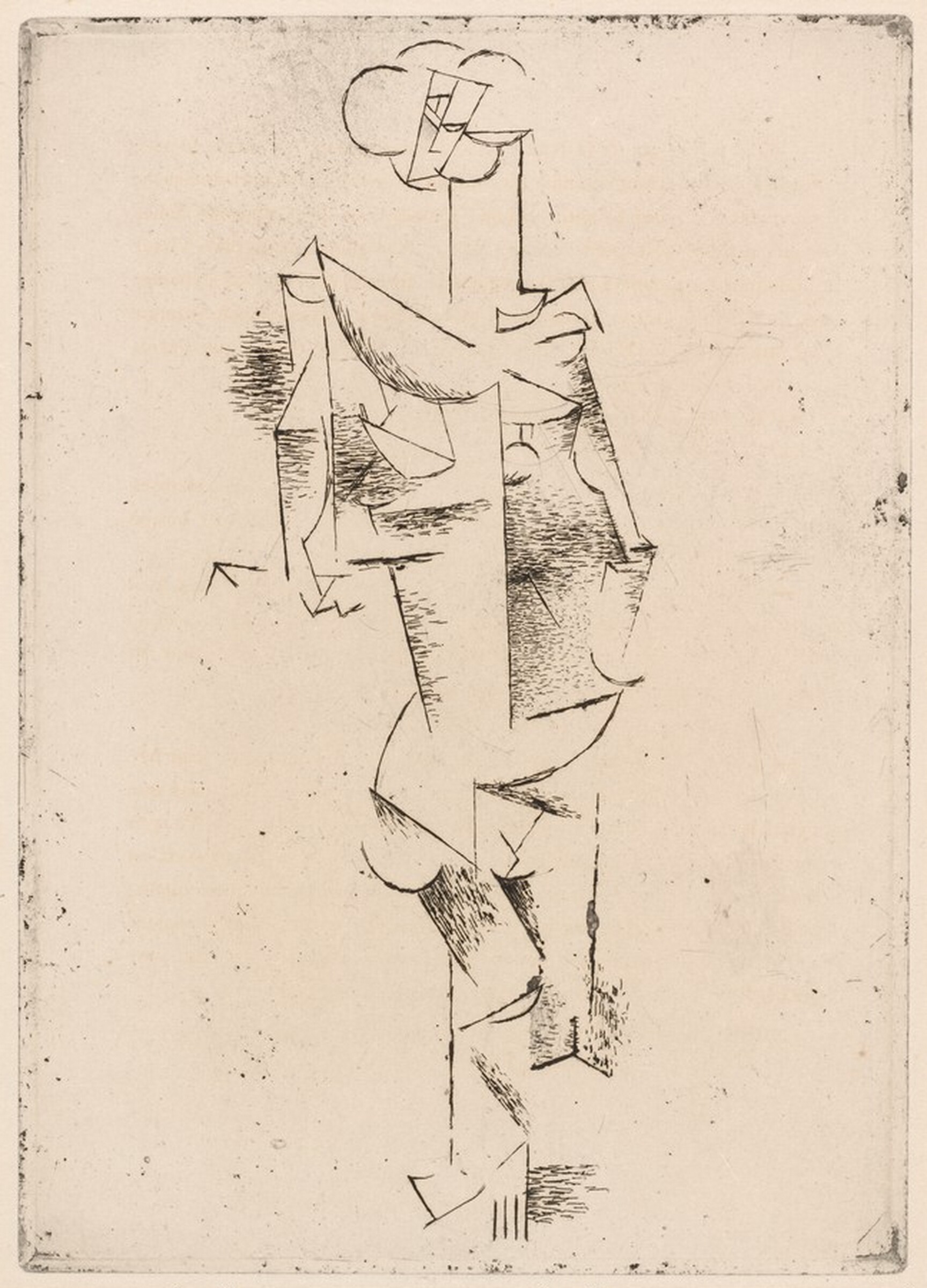
Käthe KollwitzGerman, 1867–1945
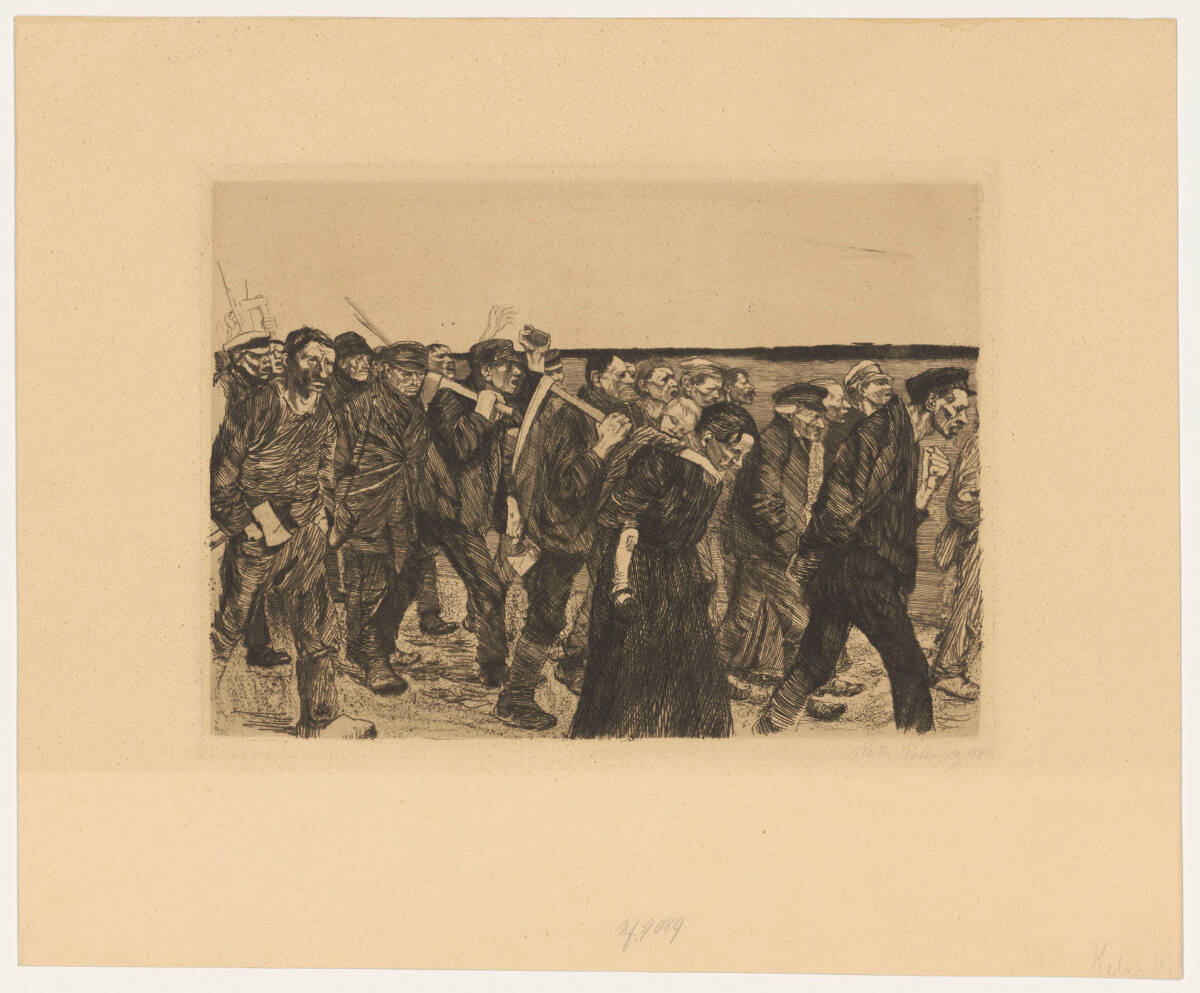
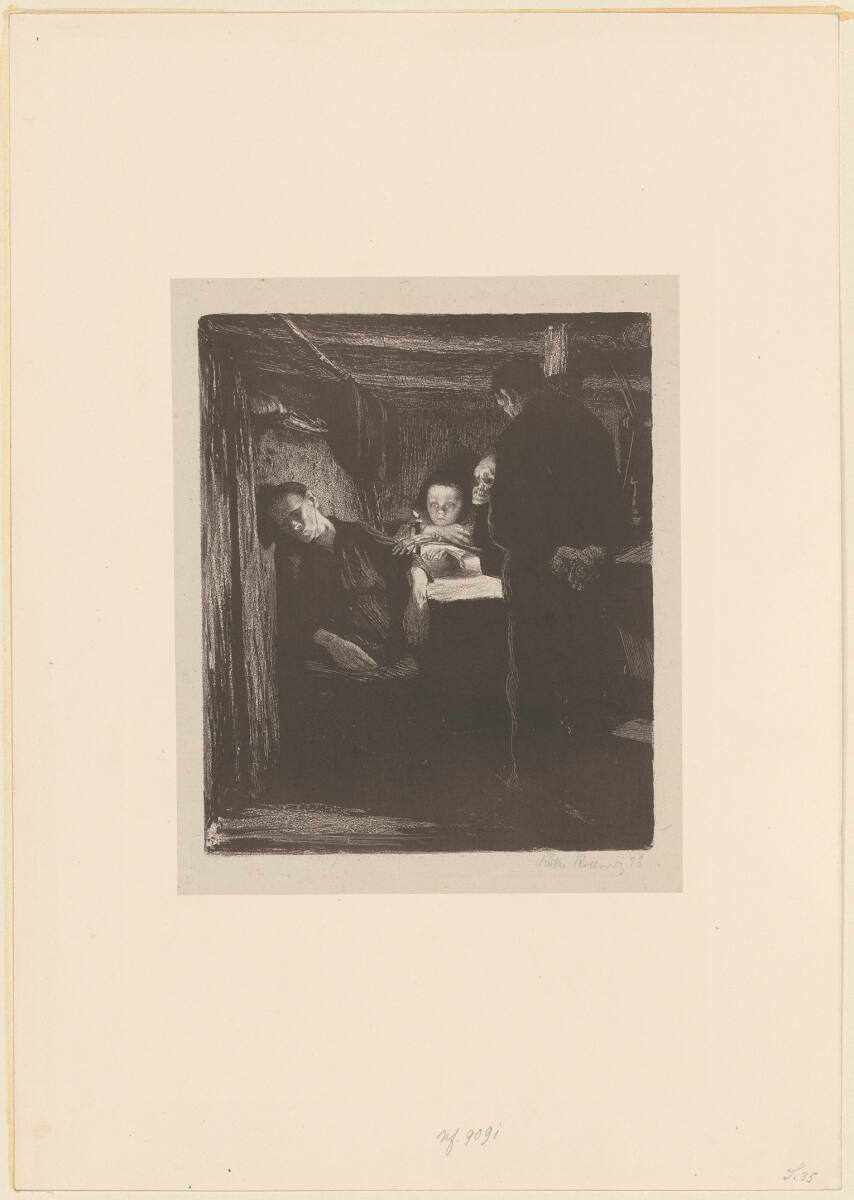
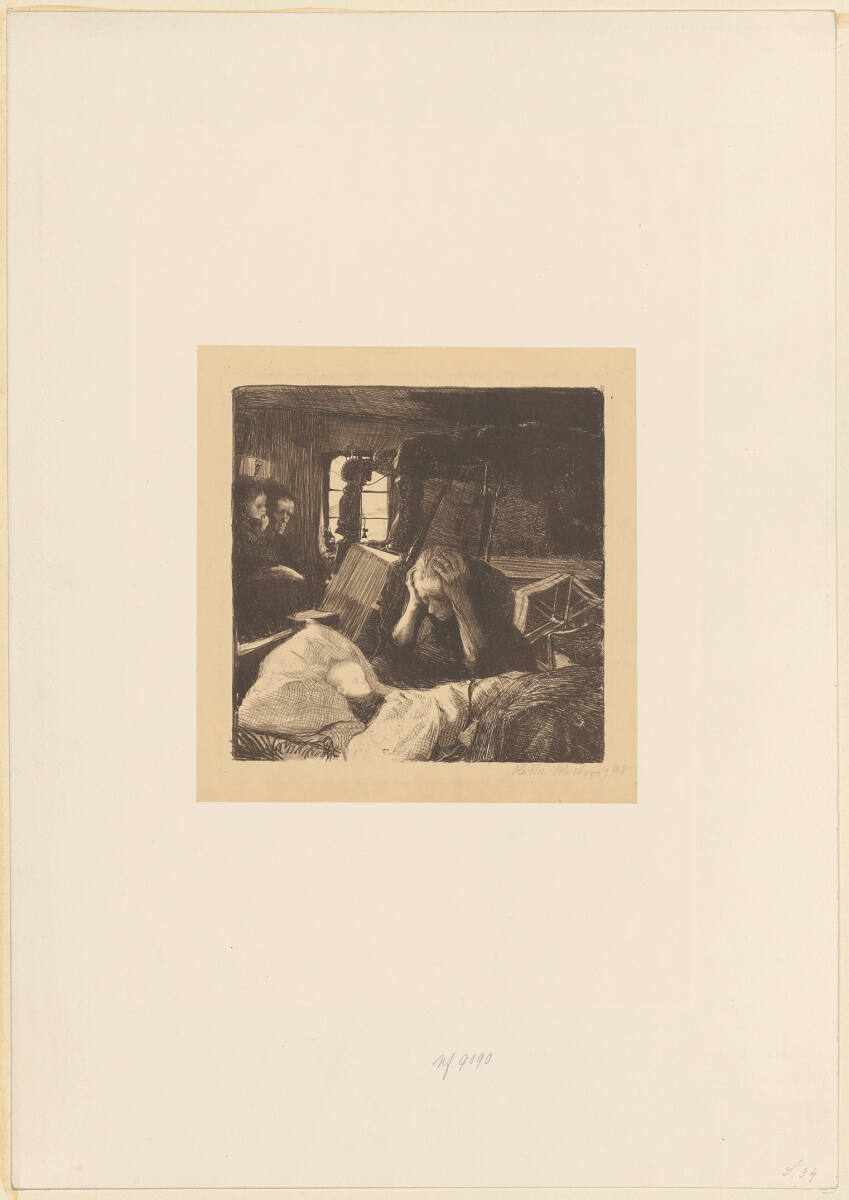
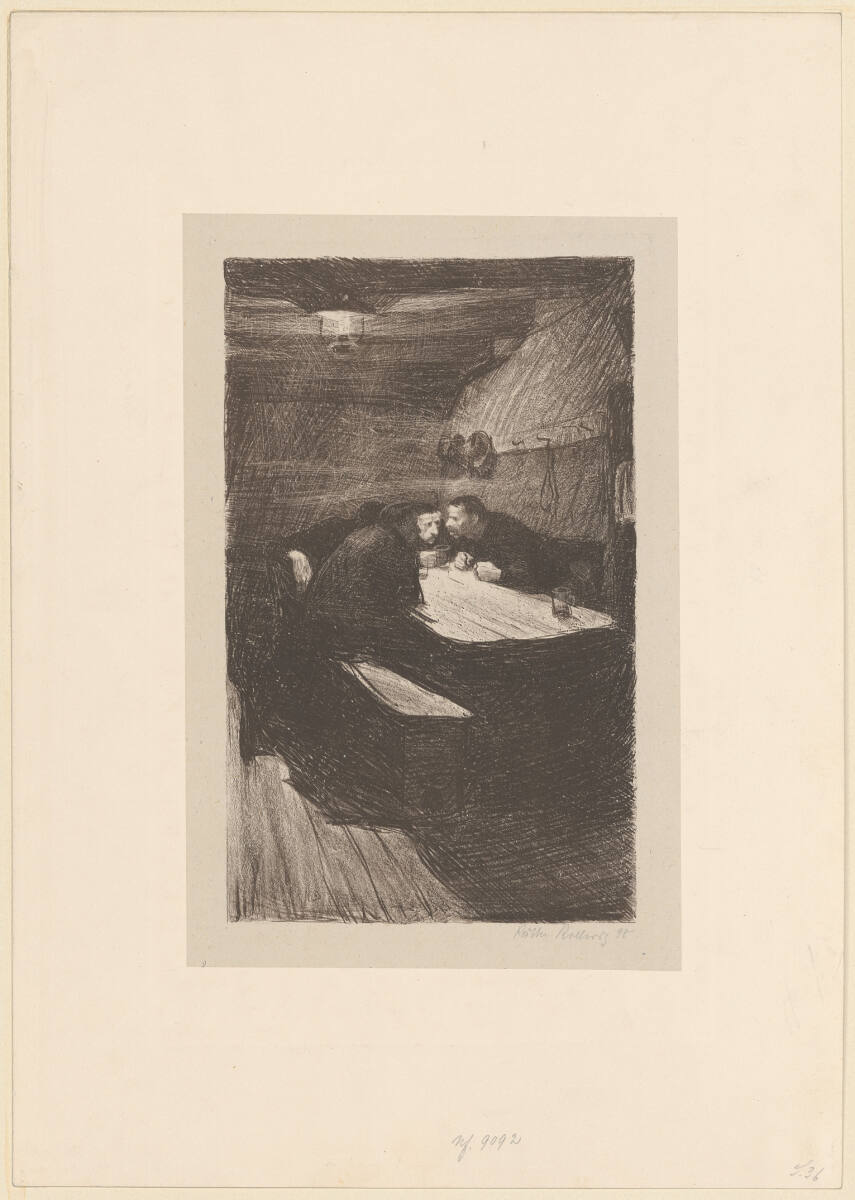
The Wait (Das Warten)
May one see it?
Not receiving at present

Washington, D.C., United States
It belongs to the collection, but is not on display at present.
- Checked
- In this state since
- Source
- The museum
Particulars
- Accession number
- 1946.21.125
What it shows
In the catalog
Sources
- National Gallery of Art
- Image: National Gallery of Art — © the artist or rights holder
Meanwhile, in the life of Käthe Kollwitz
The whole life1910–1912
Simplifies her language under the influence of younger artists
Back in Germany she continued to exhibit and was impressed by her younger compatriots: the Expressionists, and after the war the Bauhaus artists, inspired her to simplify her means of expression. The new direction shows in works such as Runover (1910) and Self-Portrait (1912).
October 1914
A long depression after the loss of her son
The loss of her child began a stage of prolonged depression in her life.
22 October 1914
Her son Peter is killed at the front
Her younger son, Peter, was killed on the battlefield of the First World War. He is buried in Belgium, in the Vladslo German war cemetery.


![Ginevra de' Benci [obverse], Leonardo da Vinci, c. 1474/1478](https://api.nga.gov/iiif/8f29e3c9-a289-4d53-abf0-31a66e9e98fa/full/!2400,2400/0/default.jpg)
![Wreath of Laurel, Palm, and Juniper with a Scroll inscribed Virtutem Forma Decorat [reverse], Leonardo da Vinci, c. 1474/1478](https://api.nga.gov/iiif/ff62e8d0-45c4-498f-ad36-6358de827e04/full/!2400,2400/0/default.jpg)