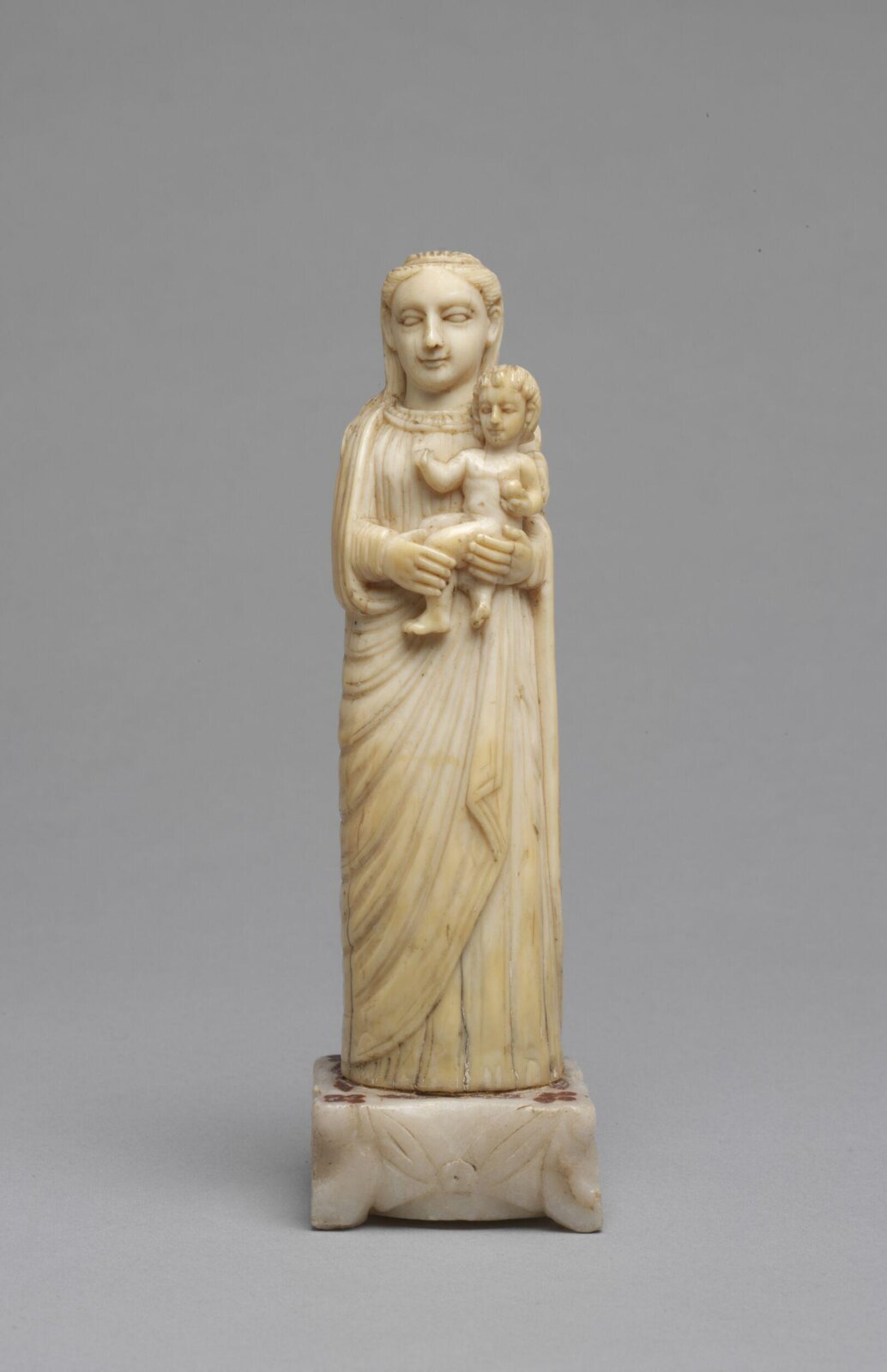
The Virgin and Child
May one see it?
Not receiving at present

Victoria and Albert Museum
London, United Kingdom
It belongs to the collection, but is not on display at present.
- Checked
- In this state since
- Source
- The museum
About the sculpture
This ivory statuette, representing the Virgin and Child, bears analogies with Cingalo-Portuguese (Sri Lanka) works, and is likely to date from the mid-seventeenth century.
Ivory sculptures were produced in large numbers in Portuguese Sri Lanka (formerly called Ceylon). From the sixteenth century onwards, the four main missionary Orders, the Augustinians, Jesuits, Dominicans and Franciscans, built churches and aimed to convert the inhabitants of India. The ivories would assist in the presentation of Christian imagery, as well as being exported back to churches, convents and private collectors in Europe.
Victoria and Albert Museum
Particulars
- Accession number
- A.59-1927
What it shows
In the catalog
Sources
- Victoria and Albert Museum
- Image: Victoria and Albert Museum — © Victoria and Albert Museum, London
![Te Atua (The Gods) Small Plate [recto], Paul Gauguin, in or after 1895](https://api.nga.gov/iiif/2161a4cc-0d34-4773-9a95-960e228082c5/full/!2400,2400/0/default.jpg)