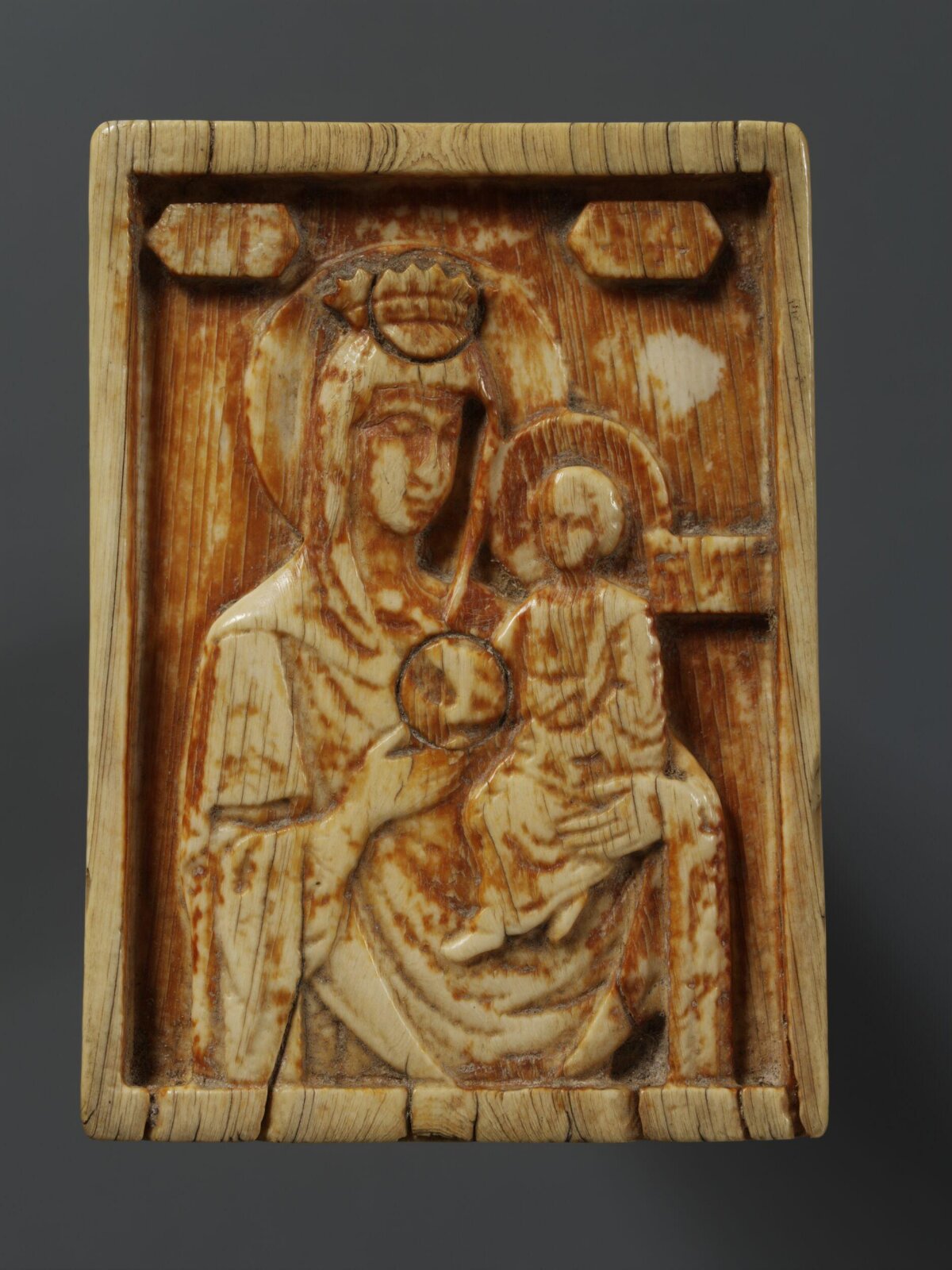
The Virgin and Child
May one see it?
Not receiving at present

Victoria and Albert Museum
London, United Kingdom
It belongs to the collection, but is not on display at present.
- Checked
- In this state since
- Source
- The museum
About the sculpture
This is a relief, made probably in Greece, in the seventeenth to nineteenth century. The hieratical composition of this piece suggests it is based on an icon, that of the Theotokos Hodegetria, 'the Mother of God showing the Way' (by gesturing towards the Christ Child), ultimately derived from the celebrated miracle-working icon originally kept in the Hodegon Monastery in Constantinople. This was one of the most copied icons of the Byzantine world and version of it were - and are - ubiquitous around the Mediterranean, both in painted and sculpted form. Ivory plaques with the subject were often employed as the centres of triptychs in the middle Byzantine period. The present plaque, however, may have been made to function as an enkolpion, to be worn around the neck (although it would have needed a frame to allow this); or there is the possibility that it was simply held in the hand for personal devotion, being repeatedly kissed and worn down. The carving is relatively coarse.
Victoria and Albert Museum
Particulars
- Accession number
- A.36-1940