
 Alfred StieglitzAmerican, 1864–1946
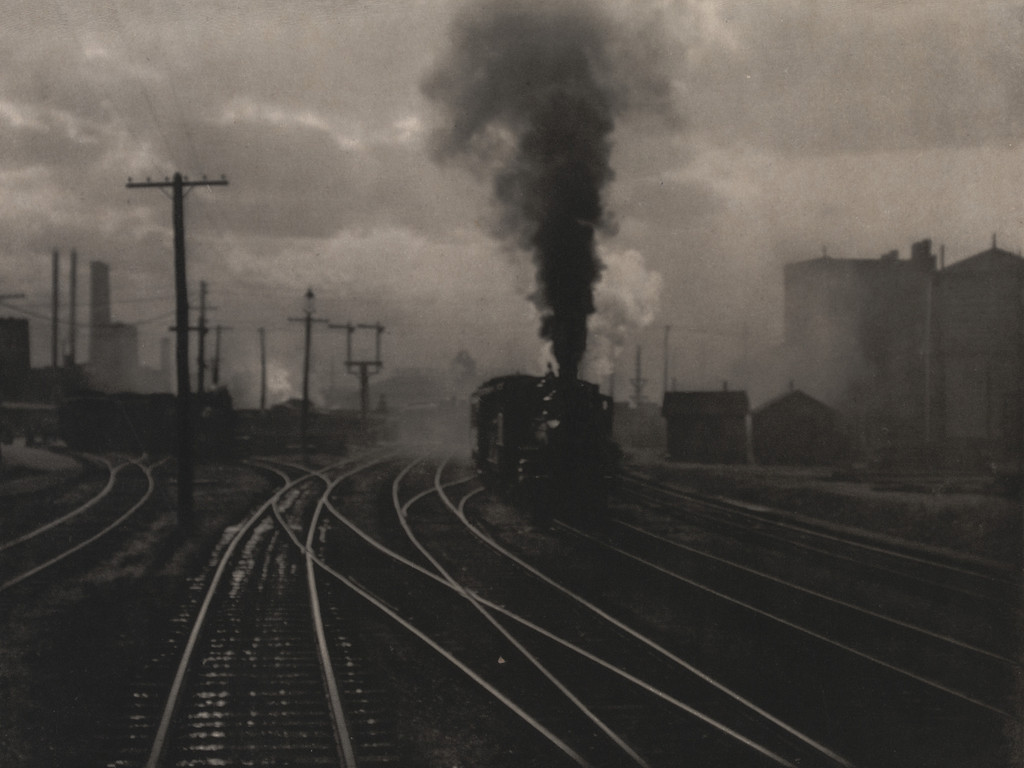
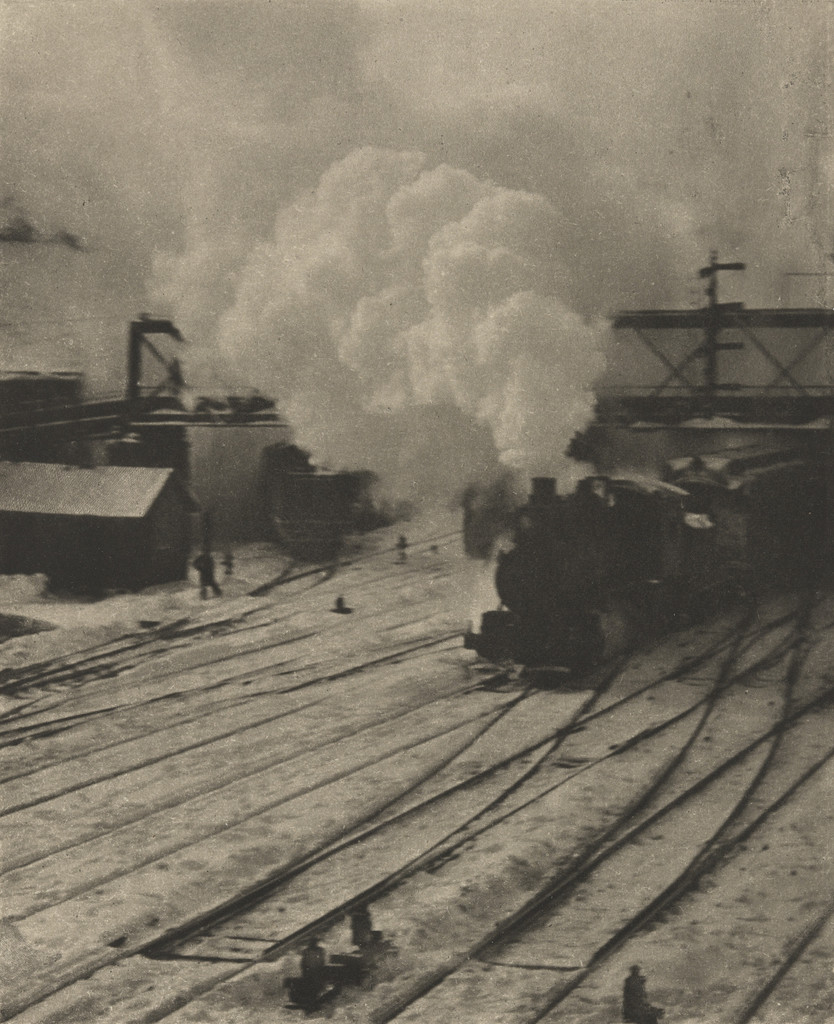
The Terminal
Can I see it?
Not on view at present
Where is “The Terminal” now? Collection: National Gallery of Art, Washington, D.C. Not on view at present. Checked September 29, 2026.

Washington, D.C., United States
It belongs to the collection, but is not on display at present.
- Checked
- In this state since
- Source
- The museum
Details
- Accession number
- 1949.3.74
What it shows
In the catalog
Sources
- National Gallery of Art
- Image: National Gallery of Art — © the artist or rights holder
In the life of Alfred Stieglitz
The whole lifeJuly 1897
First issue of Camera Notes
Stieglitz turned the Camera Club's newsletter into a magazine, Camera Notes, with full control over it; the first issue appeared in July 1897, and it was soon considered the finest photographic magazine in the world. The critic Sadakichi Hartmann wrote that artistic photography, the Camera Club and Alfred Stieglitz seemed to him three names for one and the same thing.
May 1899
A one-man show of 87 prints
In May 1899 the Camera Club gave Stieglitz a one-man exhibition of eighty-seven prints. Preparing it while producing Camera Notes took a toll on his health; he brought in his friends Joseph Keiley and Dallet Fuguet, who were not Club members, as associate editors, and older members began campaigning against him, embroiling him throughout 1900 in protracted administrative battles.
1901
Breakdown and resignation from Camera Notes
Worn down by the strain of managing the Camera Club, in 1901 Stieglitz collapsed in the first of several mental breakdowns and spent much of the summer recuperating at Oaklawn, the family home on Lake George. Back in New York, he announced his resignation as editor of Camera Notes.
1902
Founds the Photo-Secession
In December 1901 Charles DeKay of the National Arts Club invited Stieglitz to put together an exhibition with “full power to follow his own inclinations”. Within two months he had assembled prints from a close circle of friends and, in homage to the Munich photographers, called the group the Photo-Secession, a secession not only from the artistic restrictions of the era but from the official oversight of the Camera Club.
25 November 1905
The 291 gallery opens on Fifth Avenue
On November 25, 1905, the Little Galleries of the Photo-Secession opened at 291 Fifth Avenue with one hundred prints by thirty-nine photographers; Edward Steichen had encouraged Stieglitz to lease the three rooms across from his own apartment. The gallery was an instant success, with almost fifteen thousand visitors in its first season and print sales of nearly $2,800, more than half of them Steichen's work.
1907
Paris: Gertrude Stein and a turn to painting
In Paris in 1907 Stieglitz met Gertrude Stein and was captivated by Rodin, Matisse, Toulouse-Lautrec, Cézanne and Rousseau. He decided to turn his photography gallery into a full art gallery to introduce the conservative American public to the newest European art.


![Ginevra de' Benci [obverse], Leonardo da Vinci, c. 1474/1478](https://api.nga.gov/iiif/8f29e3c9-a289-4d53-abf0-31a66e9e98fa/full/!2400,2400/0/default.jpg)
![Wreath of Laurel, Palm, and Juniper with a Scroll inscribed Virtutem Forma Decorat [reverse], Leonardo da Vinci, c. 1474/1478](https://api.nga.gov/iiif/ff62e8d0-45c4-498f-ad36-6358de827e04/full/!2400,2400/0/default.jpg)


