 Alfred StieglitzAmerican, 1864–1946
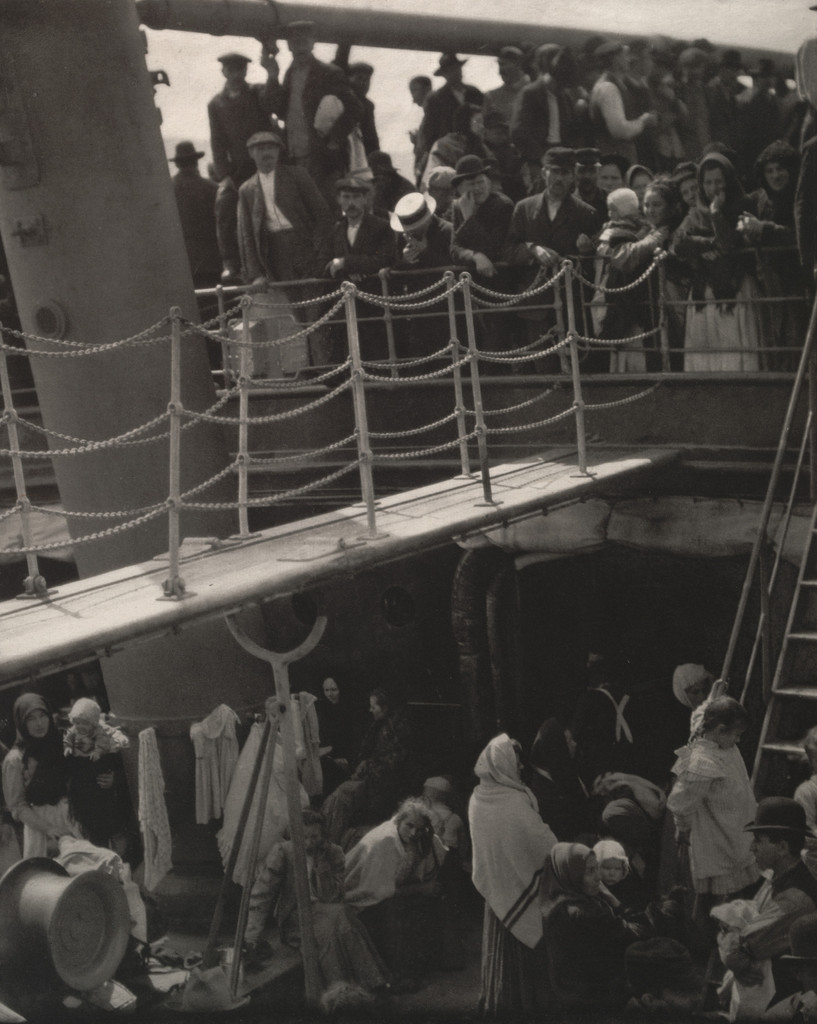
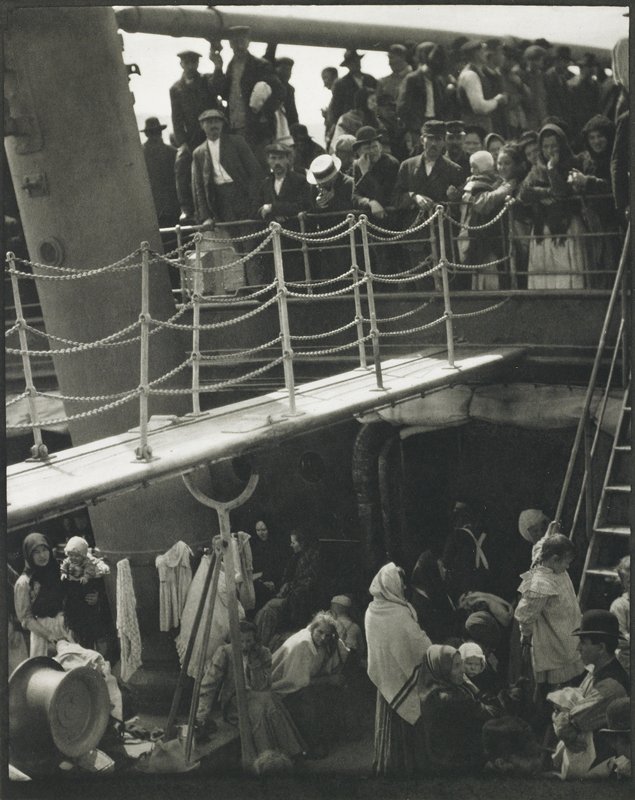
The Steerage
Can I see it?
Not on view at present
Where is “The Steerage” now? Collection: Minneapolis Institute of Art, Minneapolis. Not on view at present. Checked September 29, 2026.

Minneapolis, United States
It belongs to the collection, but is not on display at present.
- Checked
- In this state since
- Source
- The museum
About the work
The Steerage captures in a single image both one of the first works of artistic modernism and a formative document of its time. In the early 20th-century, many highly skilled workers came to America to work in the booming construction trade of the time. After their jobs were completed they returned to their homelands to share the newly earned riches of the New World.
Read on
Often assumed to be an image of immigrants traveling to America, the scene actually depicts a variety of men and women traveling in the lower-class section of a steamer going from America back to Europe. Yet, it bears a striking similarity to any number of images of migrant workers who leave their homelands in search of work. Whether traveling to work in a foreign household or to labor in a factory half way around the world, they are willing to travel and live abroad where they can earn better wages for their families at home.
Minneapolis Institute of Art
Details
- Accession number
- 84.37.6a
In the catalog
Sources
- Minneapolis Institute of Art
- Image: Minneapolis Institute of Art — © Minneapolis Institute of Art
In the life of Alfred Stieglitz
The whole life25 November 1905
The 291 gallery opens on Fifth Avenue
On November 25, 1905, the Little Galleries of the Photo-Secession opened at 291 Fifth Avenue with one hundred prints by thirty-nine photographers; Edward Steichen had encouraged Stieglitz to lease the three rooms across from his own apartment. The gallery was an instant success, with almost fifteen thousand visitors in its first season and print sales of nearly $2,800, more than half of them Steichen's work.
1907
Paris: Gertrude Stein and a turn to painting
In Paris in 1907 Stieglitz met Gertrude Stein and was captivated by Rodin, Matisse, Toulouse-Lautrec, Cézanne and Rousseau. He decided to turn his photography gallery into a full art gallery to introduce the conservative American public to the newest European art.
January 1907
Pamela Colman Smith's drawings at 291
In December 1906 Stieglitz met the 28-year-old artist Pamela Colman Smith and decided to show her drawings and watercolours, thinking it “highly instructive to compare drawings and photographs”. Her show, which opened in January 1907, drew far more visitors than any previous photography show, and all her works were sold.
January – April 1908
Rodin and Matisse at 291
In January 1908 Stieglitz showed drawings by Rodin at his gallery, and in April an exhibition of Matisse, beginning his campaign to introduce the American public to the newest European art.
1909
Death of his father, Edward Stieglitz
His father, Edward Stieglitz (1833–1909), who had once taken the family to Europe for the children's education, died; as he would later do after his mother's death, Alfred buried his grief in his work.
December 1909 – 1910
Toulouse-Lautrec, Rousseau and Cézanne lithographs
In December 1909 Stieglitz showed paintings by Toulouse-Lautrec at his gallery, and in 1910 works by Matisse, Rodin and Rousseau and lithographs by Cézanne.