 Albrecht DürerGerman, 1471–1528
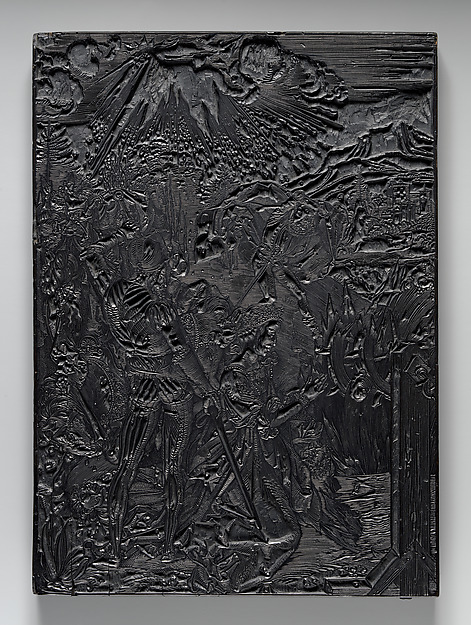
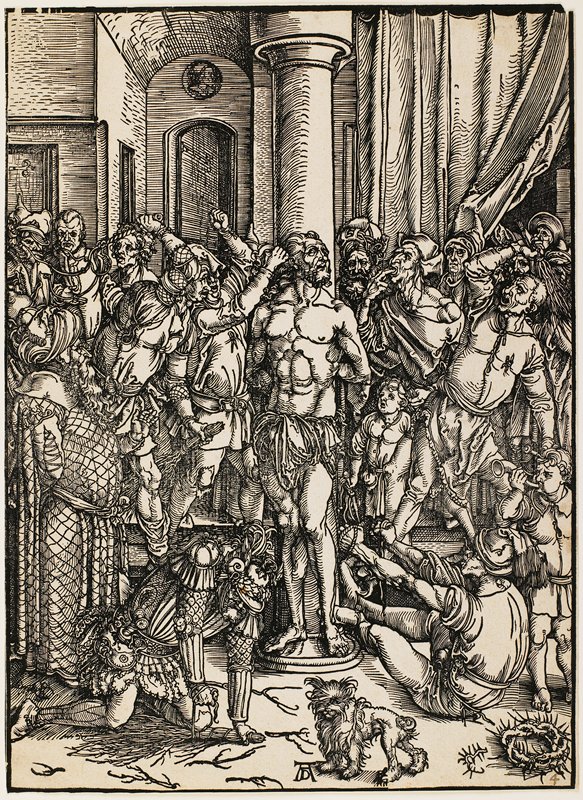
The Flagellation
May one see it?
Not receiving at present

Minneapolis, United States
It belongs to the collection, but is not on display at present.
- Checked
- In this state since
- Source
- The museum
About the work
Northern artists around 1500 had a fondness for the grotesque, particularly as a metaphor for evil. This indigenous fascination with ugliness found full expression in Christ's enemies. Albrecht Dürer's woodcut is a masterful display of jeering, scowling derision. He likened the mob to animals, as indicated by the men on the ground, one of whom is posed like the mangy dog. The Passion tracts concocted many tales around the theme of hair-pulling, a detail Dürer could not resist.
Minneapolis Institute of Art
Particulars
- Accession number
- P.181
In the catalog
Sources
- Minneapolis Institute of Art
- Image: Minneapolis Institute of Art — public domain
Meanwhile, in the life of Albrecht Dürer
The whole life1505
Second journey to Italy
Dürer set off for Italy again — perhaps not only to earn money but also to stop Marcantonio Raimondi from copying his prints. His stay in Venice is known from ten surviving letters to Pirckheimer.
1511
Publishes the Great Passion and the Life of the Virgin
Dürer published two woodcut series as books, the Great Passion and the Life of the Virgin, with a second edition of the Apocalypse and the 37 woodcuts of the Little Passion. His post-Venetian woodcuts developed chiaroscuro modelling.
1512
Emperor Maximilian I becomes his chief patron
From 1512 Emperor Maximilian I was Dürer's chief patron. For him Dürer and his workshop produced the Triumphal Arch, a giant woodcut 295 × 357 cm printed from 192 blocks and modelled on the triumphal arches of ancient Rome.
1519
Death of Emperor Maximilian
Maximilian, Dürer's chief patron, died just as the artist feared he was losing “my sight and freedom of hand” (perhaps from arthritis) and was increasingly drawn to Luther's writings. Shortly before the emperor's death Dürer had made his portrait.
July 1520
Journey to the Netherlands with his wife
To renew his imperial pension and win the patronage of the new emperor, Charles V, Dürer travelled with his wife and her maid down the Rhine via Cologne to Antwerp, where he was warmly received. He attended the coronation at Aachen and saw van Eyck's Ghent Altarpiece and Michelangelo's Madonna of Bruges.
6 April 1528
Died
![Madonna and Child [obverse], Albrecht Dürer, c. 1496/1499](https://api.nga.gov/iiif/878db7e6-10ae-4cae-ba5d-6d6f5c413ae8/full/!2400,2400/0/default.jpg)
![Lot and His Daughters [reverse], Albrecht Dürer, c. 1496/1499](https://api.nga.gov/iiif/7565a449-f82a-414b-9bda-c93f55a51b4d/full/!2400,2400/0/default.jpg)