ART WIKI32,963 on view
MapCollectionArtistsMuseumsExhibitionsJournal
Sign in

ART WIKI

Where the masterpiece hangs, and when they let you in.

Collections: Art Institute of Chicago, Getty Villa, Harvard Art Museums, Hirshhorn Museum and Sculpture Garden, J. Paul Getty Museum, Minneapolis Institute of Art, Musée du Louvre, National Gallery of Art, National Museum of Asian Art, National Portrait Gallery (Smithsonian), Pushkin State Museum of Fine Arts, Rijksmuseum, Smithsonian American Art Museum, SMK — National Gallery of Denmark, State Hermitage Museum, State Russian Museum, The Cleveland Museum of Art, The Metropolitan Museum of Art, The Museum of Modern Art, Tretyakov Gallery, Victoria and Albert Museum, Whitney Museum of American Art, State Catalogue of the Museum Fund of Russia (274 museums), Europeana (19 museums), Wikidata (6 museums), Paris Musées (12 museums), and Joconde, the French Ministry of Culture's museum database (495 museums). Images belong to their rights holders.

Sections

  • Map
  • Search
  • Collection
  • Masterpieces
  • On view now
  • Artists

More

  • Museums & galleries
  • Exhibitions
  • Journal
  • Where the data comes from
  • Privacy & cookies
HomeMapBrowse
  1. Collection/
  2. Harvard Art Museums/
  3. The Entombment
The Entombment, Théodore Géricault, 1816-1817
Théodore Géricault, portraitThéodore GéricaultFrench, 1791–1824

The Entombment

1816-1817 · Drawing

May one see it?

Not receiving at present

Harvard Art Museums

Cambridge, United States

It belongs to the collection, but is not on display at present.

Checked
3 days ago
In this state since
Sep 27, 2026
Source
The museum
On the mapMuseum page

Particulars

1816-1817
17911824
Accession number
1943.826

In the catalog

Drawings & watercolorsChalkNeoclassicismRomanticism19th centuryFrench

Sources

  • Harvard Art Museums
  • Image: Harvard Art Museums — © President and Fellows of Harvard College

Meanwhile, in the life of Théodore Géricault

The whole life
  1. 1814

    Salon of 1814: “Wounded Cuirassier” and cold reviews

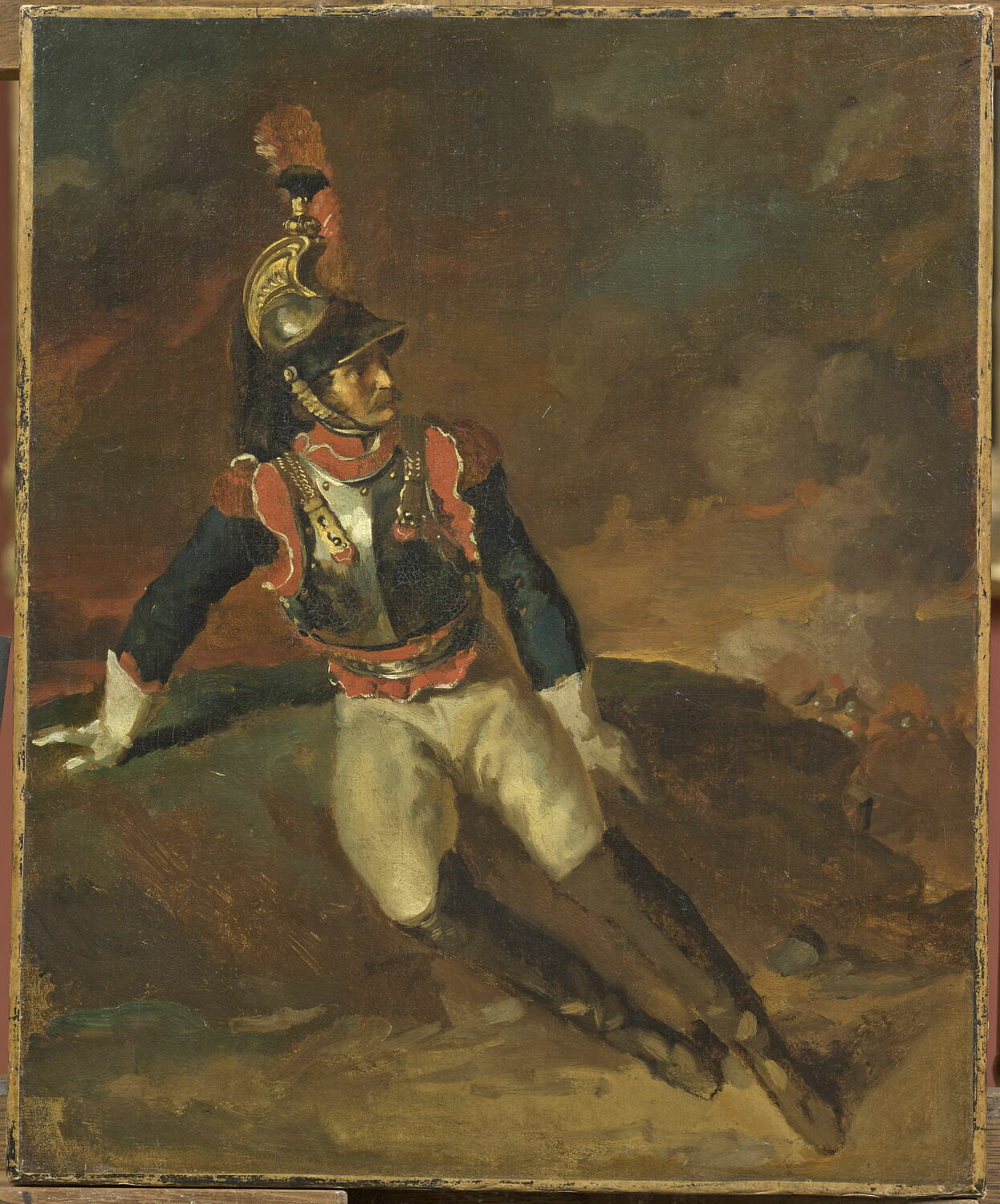
    At the Salon of 1814, held after Napoleon's fall, the “Officer” was shown paired with “Wounded Cuirassier Leaving the Field of Battle”, the only reminder of a passing tragic and glorious era among the neutral subjects chosen by other artists. Critics either said nothing of Géricault's pictures or received them unfavorably.

  2. December 1814

    He buys a commission as a musketeer

    Having recently evaded military service, in December 1814 Géricault, with the help of his father and uncle, bought a commission in the musketeer company commanded by Lauriston, a privileged military unit. His biographers find it hard to explain what motivated him.

  3. 1815

    The Hundred Days: Louis XVIII's escort and flight to Normandy

    During the Hundred Days Géricault was in the escort of the fleeing Louis XVIII and then, disguised as a peasant, made his way to Normandy, where he probably stayed until the middle of the summer of 1815.

  4. autumn 1817

    The book on the wreck of the Méduse reaches Géricault

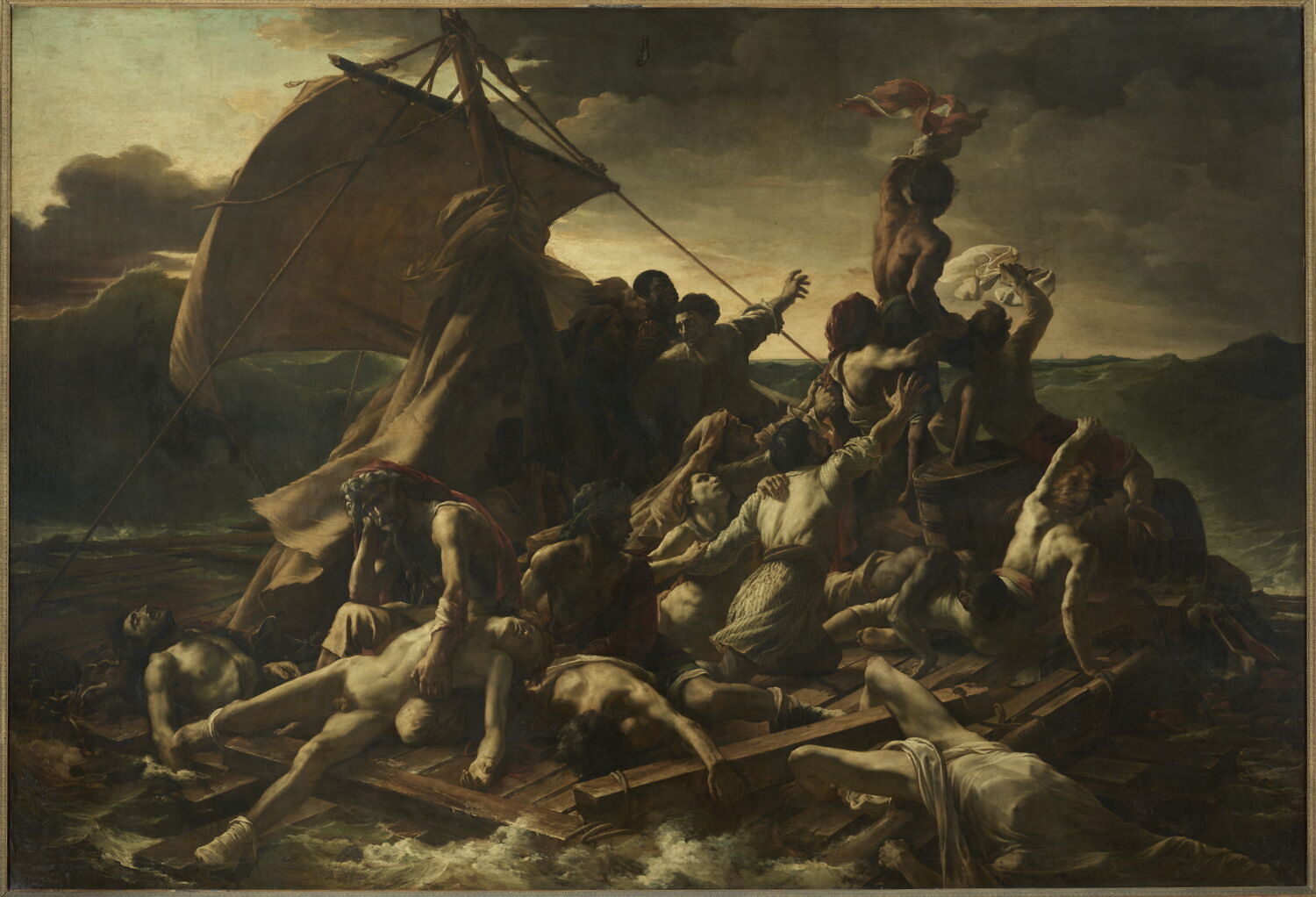
    In the autumn of 1817 the book “The Wreck of the Frigate Medusa” appeared, in which the eyewitnesses, the geographer-engineer Alexandre Corréard and the physician Henri Savigny, described the thirteen-day drift of the raft after the ship ran aground off the coast of Mauritania. The book reached Géricault, who saw in it the subject for the large painting he had long dreamed of.

  5. 1817–1818

    Investigating the disaster: survivors, a model raft, morgues

    Géricault re-created the event by studying the available materials and meeting witnesses: he got to know Corréard and Savigny, a carpenter from the Méduse made a scale model of the raft for him, and the artist modelled wax figures himself. He visited hospital morgues, drawing dead heads, emaciated bodies and severed limbs, and the preparation ended with a trip to Le Havre, where he painted studies of sea and sky.

  6. 1819

    “The Raft of the Medusa” sparks a political controversy at the Salon

    When first exhibited at the Paris Salon of 1819, “The Raft of the Medusa” ignited political controversy: it indicted a corrupt establishment, in which the captain had left the crew and passengers to die, but also dramatized the eternal struggle of man against nature.
More by Théodore Géricault

All works
Le radeau de la Méduse, Géricault, Théodore, 1e quart du XIXe siècle (1818 - 1819)

The Raft of the Medusa

first quarter of the 19th century (1818–1819) · Musée du Louvre

Flayed Horse III, Théodore Gericault, model c. 1820/1824, cast 1959-1960

Flayed Horse III

model c. 1820/1824, cast 1959-1960 · National Gallery of Art

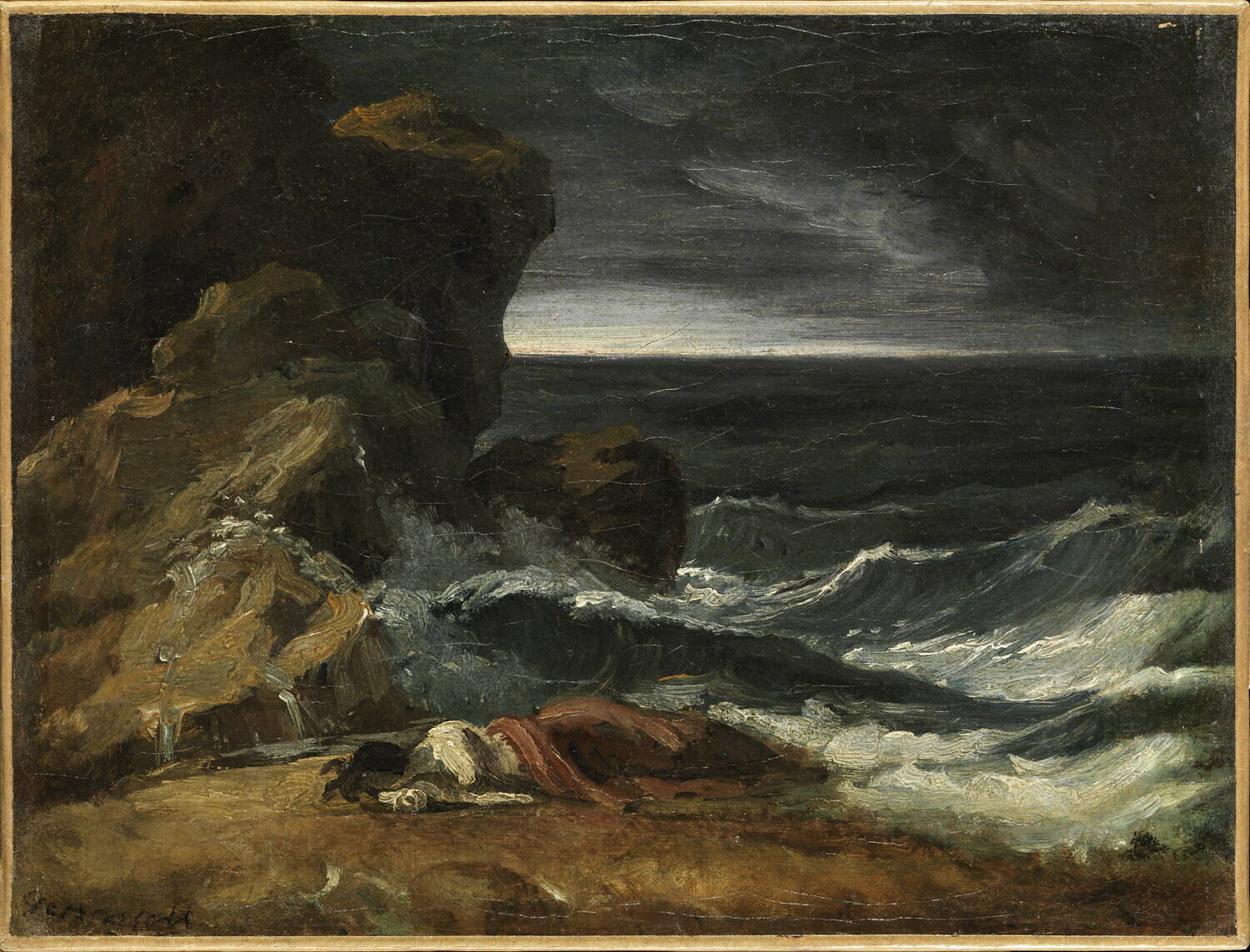
La tempête ou L'épave, Géricault, Théodore, 1e quart du XIXe siècle (1800 - 1825)

La tempête ou L'épave

first quarter of the 19th century (1800–1825) · Musée du Louvre

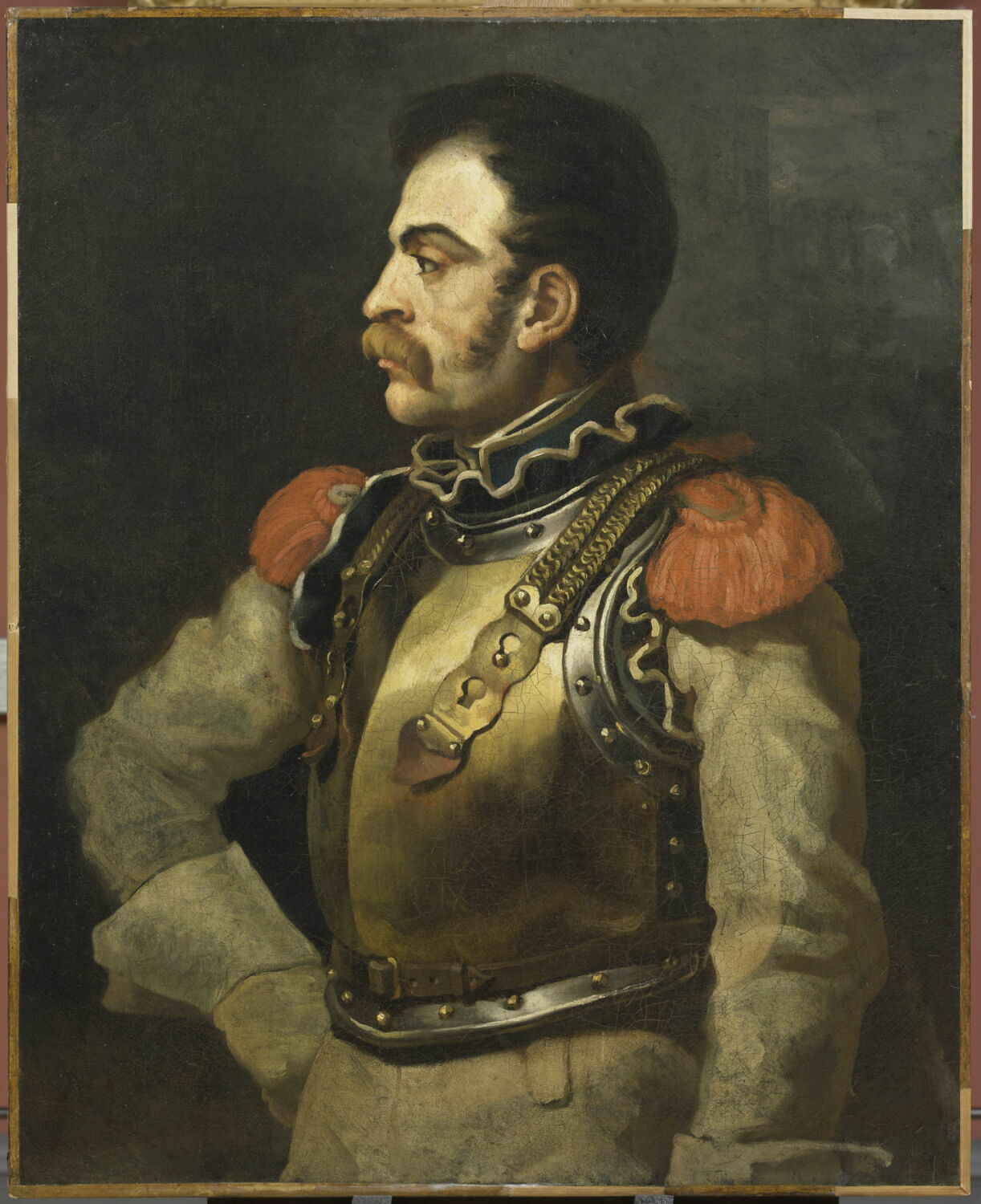
Un carabinier, vu à mi-corps., Géricault, Théodore, 1e quart du XIXe siècle (1800 - 1825)

Un carabinier, vu à mi-corps.

first quarter of the 19th century (1800–1825) · Musée du Louvre

Cuirassier blessé, Géricault, Théodore, 1e quart du XIXe siècle (1800 - 1825)

Cuirassier blessé

first quarter of the 19th century (1800–1825) · Musée du Louvre

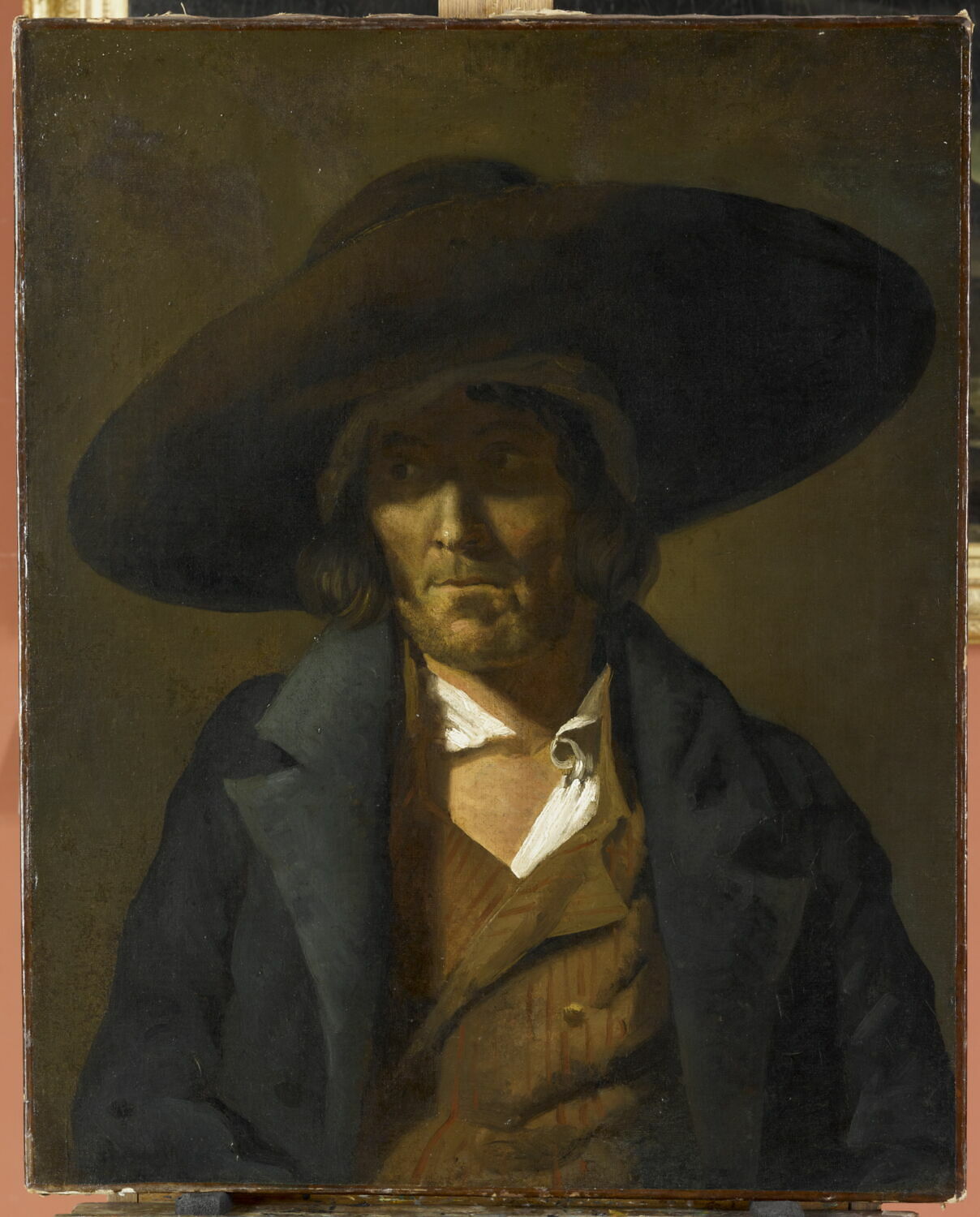
Portrait d'homme, dit le Vendéen, Géricault, Théodore, 1e quart du XIXe siècle (1800 - 1825)

Portrait d'homme, dit le Vendéen

first quarter of the 19th century (1800–1825) · Musée du Louvre

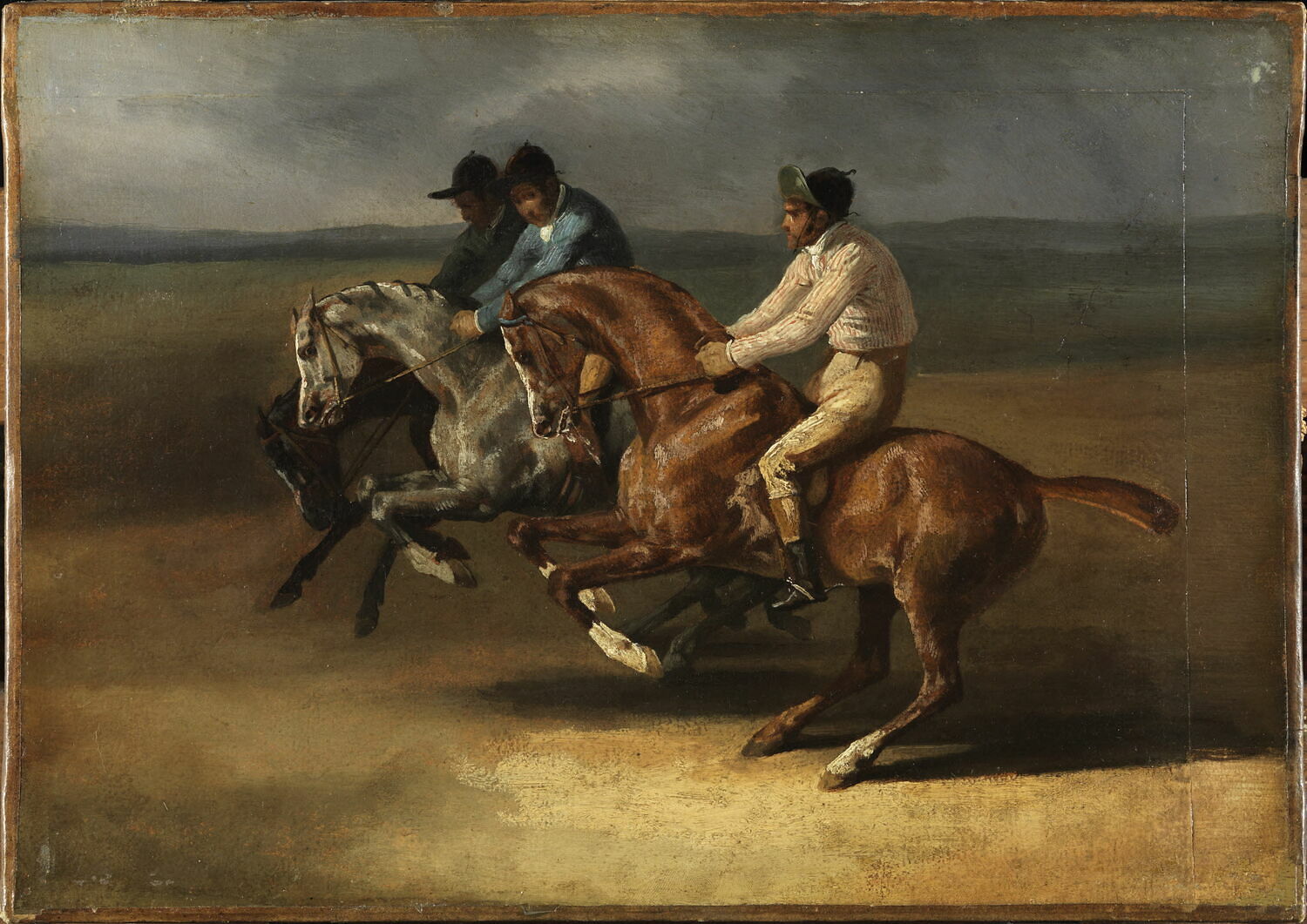
Course de Chevaux montés allant à gauche, au moment du départ., Géricault, Théodore, 1e quart du XIXe siècle (1800 - 1825)

Course de Chevaux montés allant à gauche, au moment du départ.

first quarter of the 19th century (1800–1825) · Musée du Louvre

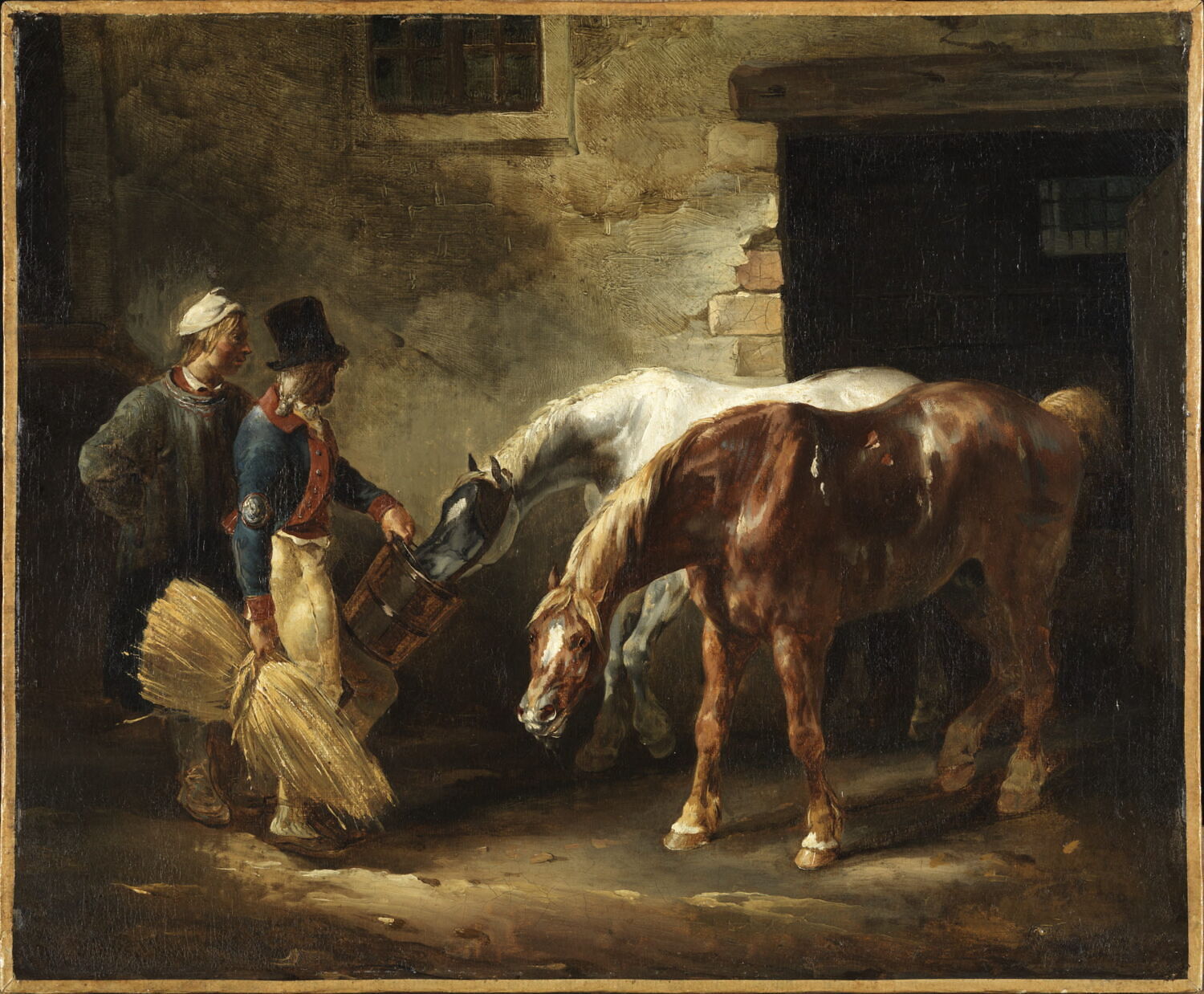
Deux chevaux de poste à la porte d'une écurie, Géricault, Théodore, 1e quart du XIXe siècle (1800 - 1825)

Deux chevaux de poste à la porte d'une écurie

first quarter of the 19th century (1800–1825) · Musée du Louvre

Neighbors at Harvard Art Museums

Museum page
Glück auf in Deutschland (N:4), Pınar Öğrenci, 2024

Pınar Öğrenci

Glück auf in Deutschland (N:4), 2024

Glück auf in Deutschland (N:10), Pınar Öğrenci, 2024

Pınar Öğrenci

Glück auf in Deutschland (N:10), 2024

Glück auf in Deutschland (N:7b), Pınar Öğrenci, 2024

Pınar Öğrenci

Glück auf in Deutschland (N:7b), 2024

Glück auf in Deutschland (N:6), Pınar Öğrenci, 2024

Pınar Öğrenci

Glück auf in Deutschland (N:6), 2024

Glück auf in Deutschland (N:11), Pınar Öğrenci, 2024

Pınar Öğrenci

Glück auf in Deutschland (N:11), 2024

Dwarpalika (Temple Guardian), Sneha Shrestha, 2023

Sneha Shrestha

Dwarpalika (Temple Guardian), 2023

The Eternal Pond of the Universe, Bingyi 冰逸, 2022-2024

Bingyi 冰逸

The Eternal Pond of the Universe, 2022-2024

Head from a Statue of Ur-Ningirsu, Ruler of Lagash, c. 2113 BCE-2017 BCE

Head from a Statue of Ur-Ningirsu, Ruler of Lagash, c. 2113 BCE-2017 BCE