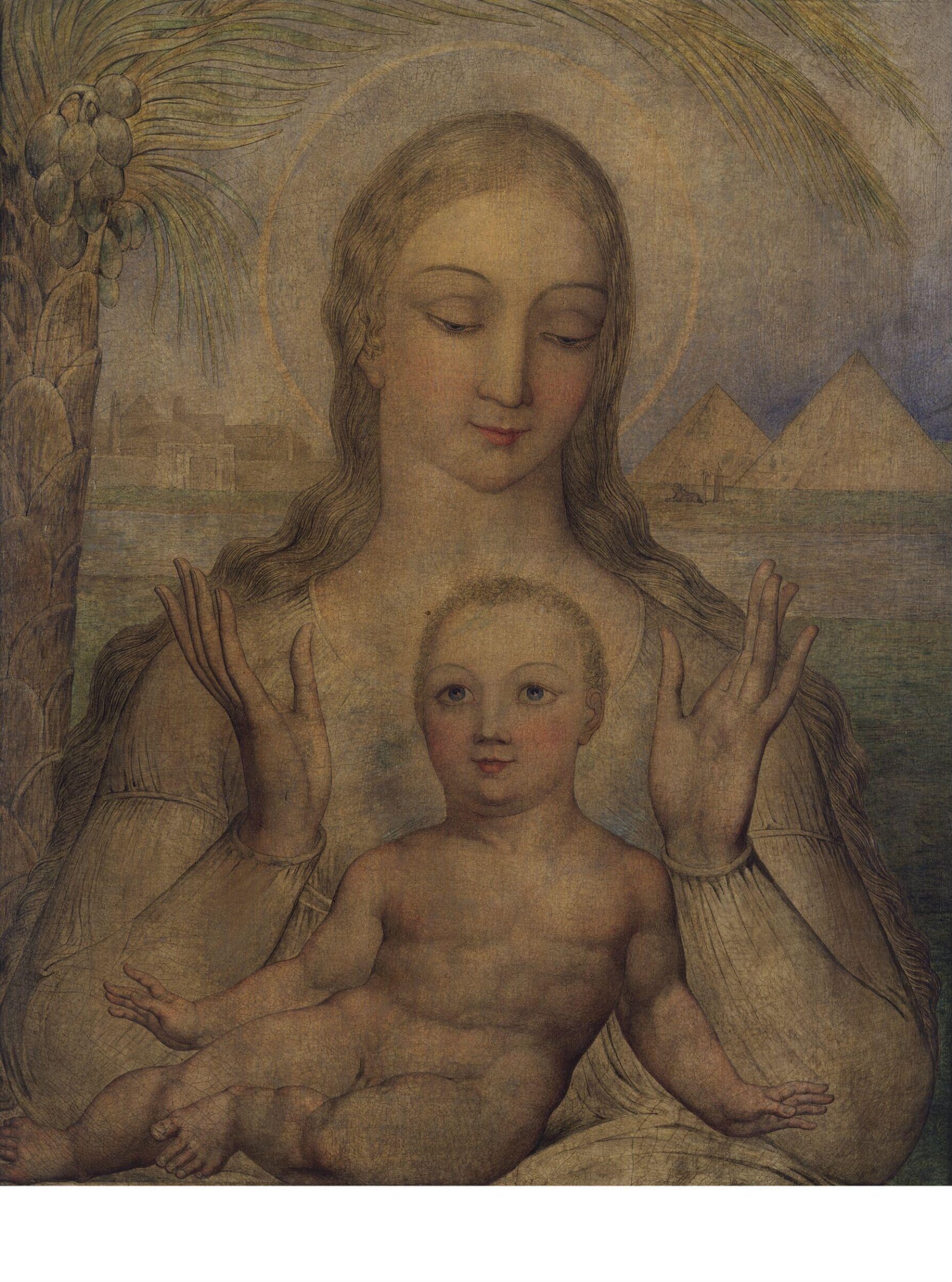
William BlakeBritish, 1757–1827
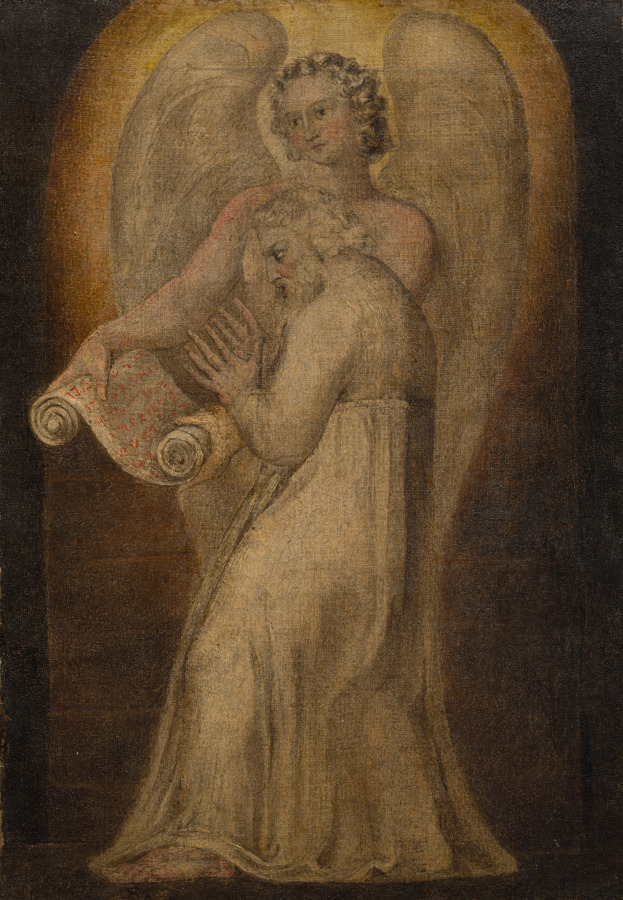
The Death Chamber, possible sketch for "Jerusalem"
Can I see it?
Not on view at present
Where is “The Death Chamber, possible sketch for "Jerusalem"” now? Collection: Harvard Art Museums, Cambridge. Not on view at present. Checked September 29, 2026.

Cambridge, United States
It belongs to the collection, but is not on display at present.
- Checked
- In this state since
- Source
- The museum
Details
- Accession number
- 1959.162
In the catalog
Sources
- Harvard Art Museums
- Image: Harvard Art Museums — © President and Fellows of Harvard College
In the life of William Blake
The whole life1800
Moves to Felpham for his patron Hayley
In 1800 Blake moved to a cottage at Felpham, in Sussex, to take up a job illustrating the works of William Hayley, a minor poet.
August 1803
A fight with the soldier Schofield and a trial at Chichester
In August 1803 Blake was involved in a physical altercation with a soldier, John Schofield, and was charged not only with assault but with uttering seditious and treasonable expressions against the King; Schofield claimed that Blake had exclaimed “Damn the king. The soldiers are all slaves.” Blake was cleared at the Chichester assizes.
September 1803 – October 1803 · Residence
Broadwick Street
October 1803 – 1820 · Residence
South Molton Street
1804
Returns to London and begins “Jerusalem”
In 1804 Blake returned to London and began to write and illustrate “Jerusalem: The Emanation of the Giant Albion” (1804–20), his most ambitious work.
1809
An exhibition in his brother's shop: nothing sold
Blake set up an independent exhibition in his brother's haberdashery shop at 27 Broad Street in Soho to market his version of “The Canterbury Pilgrims” along with other works. It was very poorly attended, sold none of the temperas or watercolours, and its only review, in The Examiner, was hostile.