Théodore GéricaultFrench, 1791–1824
The Coal Waggon
May one see it?
Not receiving at present

Cambridge, United States
It belongs to the collection, but is not on display at present.
- Checked
- In this state since
- Source
- The museum
Particulars
- Accession number
- G8361
In the catalog
Sources
- Harvard Art Museums
- Image: Harvard Art Museums — © President and Fellows of Harvard College
Meanwhile, in the life of Théodore Géricault
The whole lifec. 1818 – 1819
Delacroix poses for a dying figure
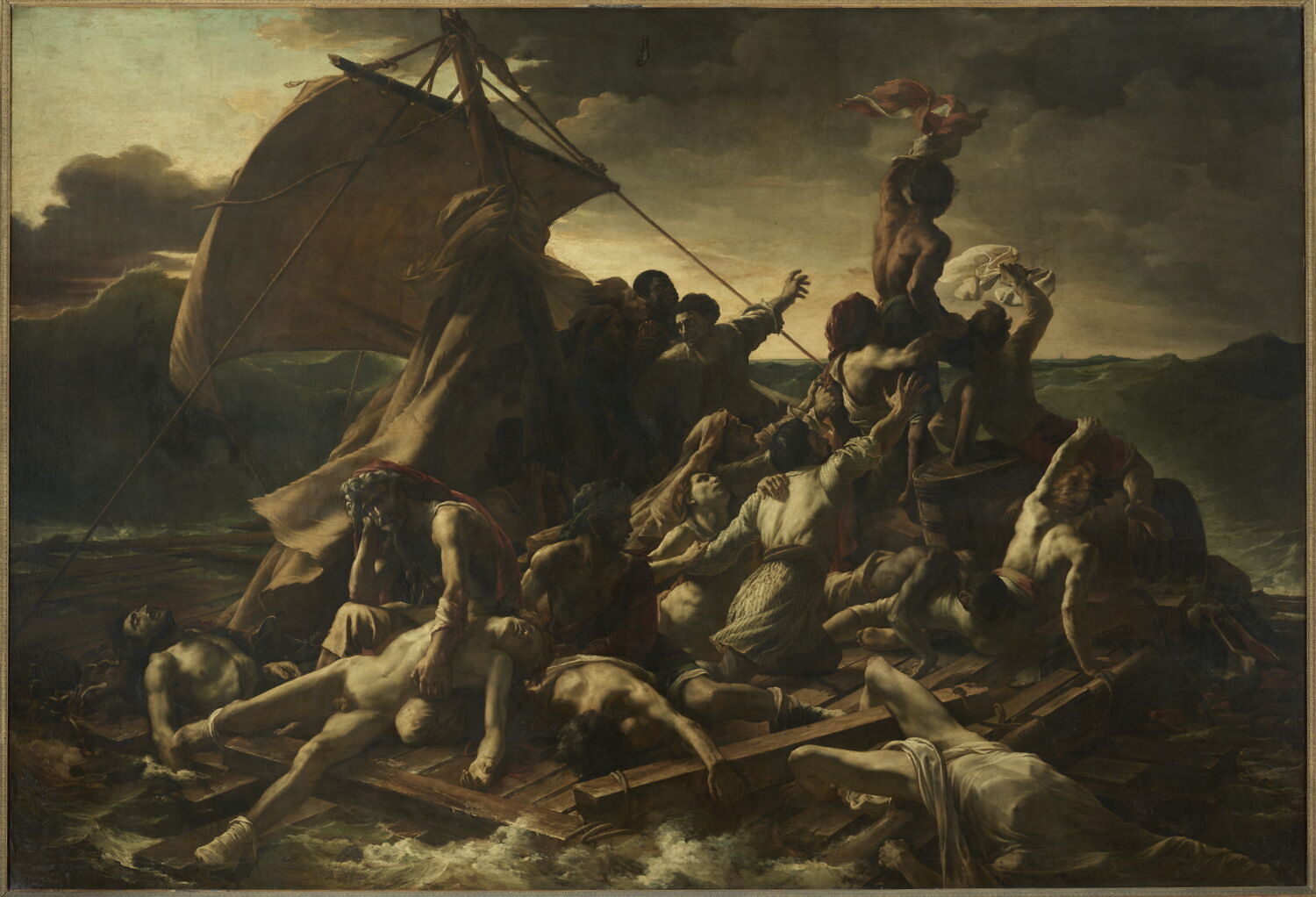
The painter Eugène Delacroix posed for one of the dying figures in “The Raft of the Medusa”.
1819
“The Raft of the Medusa” sparks a political controversy at the Salon
When first exhibited at the Paris Salon of 1819, “The Raft of the Medusa” ignited political controversy: it indicted a corrupt establishment, in which the captain had left the crew and passengers to die, but also dramatized the eternal struggle of man against nature.
12 June – 30 December 1820
London: 50,000 visitors and 20,000 francs
The entrepreneur Bullock exhibited “The Raft of the Medusa” in London from 12 June to 30 December 1820; about 50,000 people saw it, critics called it a masterpiece, and its author was compared to Michelangelo and Caravaggio. Géricault was entitled to a third of the ticket receipts and received 20,000 francs.
1820–1821
London: urban poverty and friendship with Charlet
In London Géricault witnessed urban poverty, made drawings of his impressions and published lithographs based on these observations, free of sentimentality. He associated much there with Charlet, the lithographer and caricaturist.
1821–1824
Illness and falls from horses after his return from England
After returning to Paris from England Géricault was often ill, and his condition was made worse by several falls during horseback rides.