ART WIKI32,963 on view
MapCollectionArtistsMuseumsExhibitionsJournal
Sign in

ART WIKI

Where the masterpiece hangs, and when they let you in.

Collections: Art Institute of Chicago, Getty Villa, Harvard Art Museums, Hirshhorn Museum and Sculpture Garden, J. Paul Getty Museum, Minneapolis Institute of Art, Musée du Louvre, National Gallery of Art, National Museum of Asian Art, National Portrait Gallery (Smithsonian), Pushkin State Museum of Fine Arts, Rijksmuseum, Smithsonian American Art Museum, SMK — National Gallery of Denmark, State Hermitage Museum, State Russian Museum, The Cleveland Museum of Art, The Metropolitan Museum of Art, The Museum of Modern Art, Tretyakov Gallery, Victoria and Albert Museum, Whitney Museum of American Art, State Catalogue of the Museum Fund of Russia (274 museums), Europeana (19 museums), Wikidata (6 museums), Paris Musées (12 museums), and Joconde, the French Ministry of Culture's museum database (495 museums). Images belong to their rights holders.

Sections

  • Map
  • Search
  • Collection
  • Masterpieces
  • On view now
  • Artists

More

  • Museums & galleries
  • Exhibitions
  • Journal
  • Where the data comes from
  • Privacy & cookies
HomeMapBrowse
  1. Collection/
  2. Minneapolis Institute of Art/
  3. The Battlefield
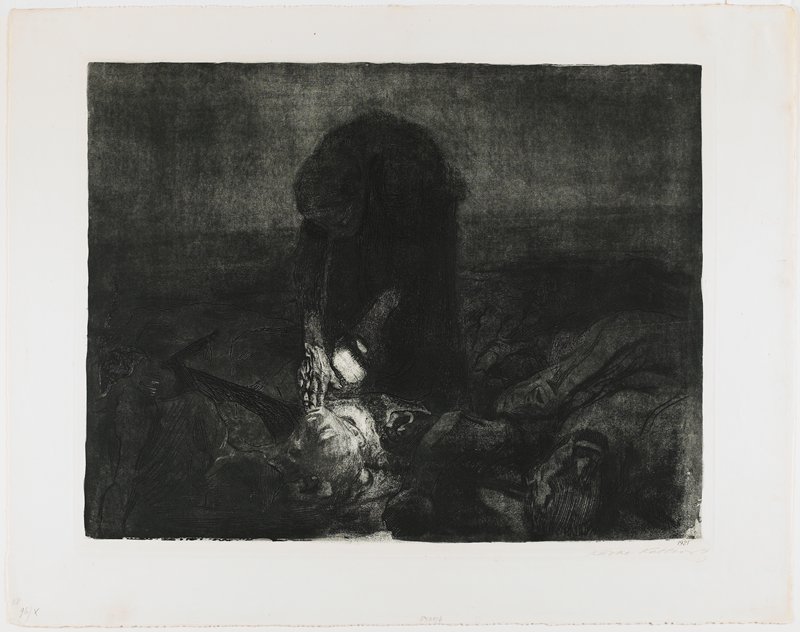
The Battlefield, Käthe Kollwitz, 1907 (1921 edition)
Käthe Kollwitz, portraitKäthe KollwitzGerman, 1867–1945

The Battlefield

1907 (1921 edition) · Print · 41.28 × 53.02 cm

May one see it?

Not receiving at present

Minneapolis Institute of Art

Minneapolis, United States

It belongs to the collection, but is not on display at present.

Checked
3 days ago
In this state since
Sep 25, 2026
Source
The museum
On the mapMuseum page

About the work

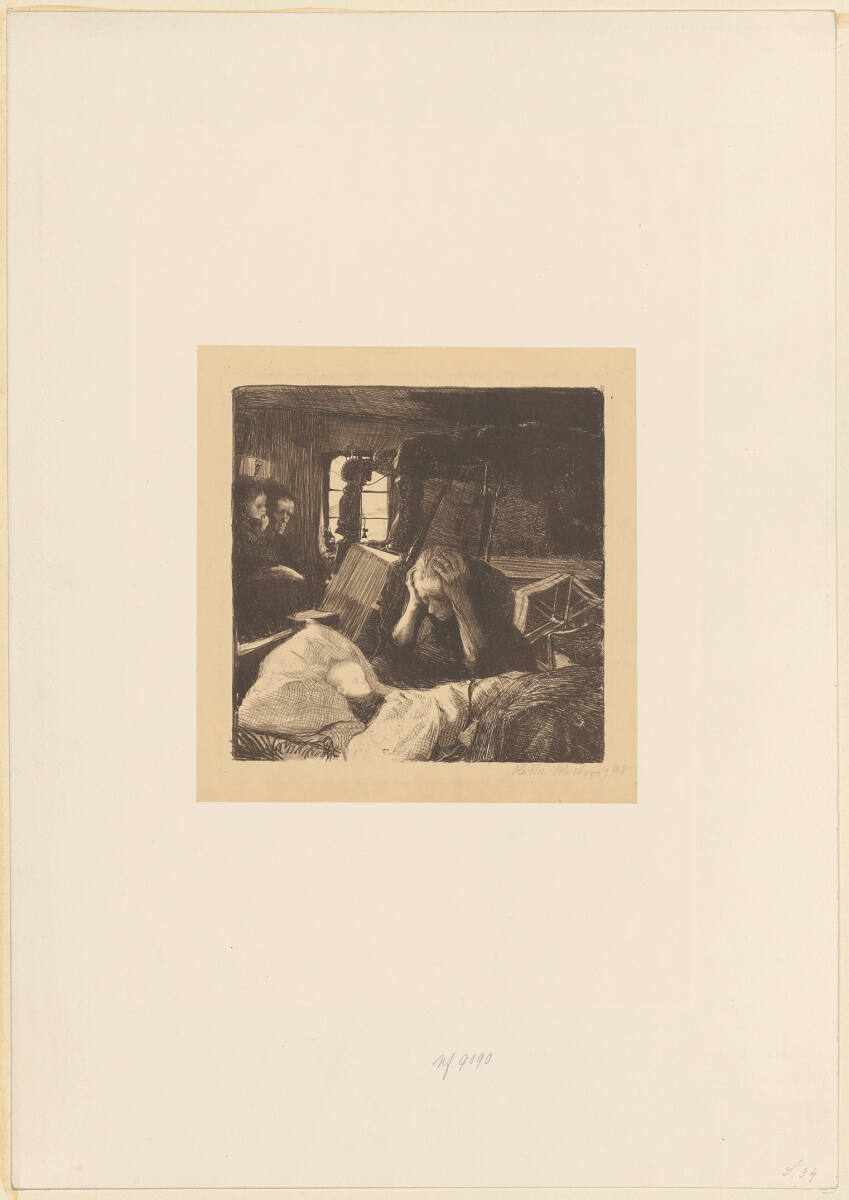
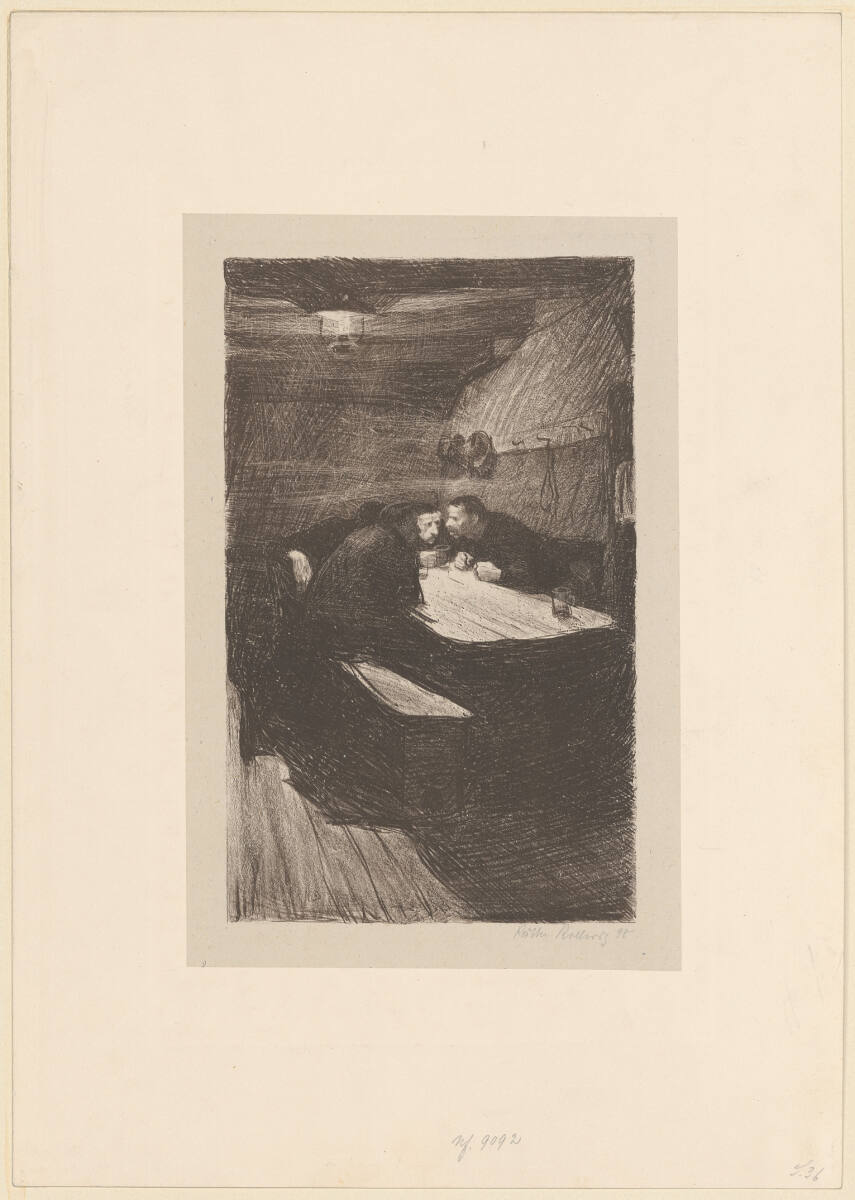
Käthe Kollwitz is acclaimed for her poignant scenes of human suffering, especially the tragic consequences of poverty and disease among women and children. A consummate draftsman, she relied on the graphic arts-in the form of prints, illustrations, and posters-as a powerful instrument of political allegiance to her left-leaning social agenda. She was anti-war, anti-violence, and a believer in the resilience of the human spirit.

Read on

Kollwitz's dramatic night scene, part of her Peasant War print cycle, depicts a mother searching for her dead son among a field of corpses. In the soft light of the lantern, her weathered hand is illuminated as she touches the chin of a young man, perhaps her own child. Rather than portray the chaos and brutality of battle, Kollwitz shows us the agonizing aftermath of the fighting when the bodies of the dead were claimed by their loved ones. Though the scene alludes to the atrocities of a 16th-century workers revolt, it stands as a universal statement of a mother's love for her son, made more heartbreaking in that it foreshadows the death of Kollwitz's own son, Peter, who was killed in battle shortly after the start of the First World War (1914-1918).

Minneapolis Institute of Art

Particulars

1907 (1921 edition)
18671945
Accession number
P.12, 818

In the catalog

PrintsEtchingModernism20th centuryGermany

Sources

  • Minneapolis Institute of Art
  • Image: Minneapolis Institute of Art — © Minneapolis Institute of Art

Meanwhile, in the life of Käthe Kollwitz

The whole life
  1. 1906 · Award

    Villa Romana Prize

  2. 1907

    The Villa Romana Prize: a studio in Florence

    Her etching Outbreak won the Villa Romana Prize, which gave her a studio in Florence for 1907. She completed no work there but later recalled the impact of early Renaissance art.

  3. 22 October 1914

    Her son Peter is killed at the front

    Her younger son, Peter, was killed on the battlefield of the First World War. He is buried in Belgium, in the Vladslo German war cemetery.

  4. 1917

    A jubilee exhibition at Paul Cassirer’s

    On her fiftieth birthday the galleries of Paul Cassirer mounted a retrospective of one hundred and fifty of her drawings.

  5. 1918

    An open letter against Dehmel’s call to arms

    When Richard Dehmel called for more soldiers to fight in 1918, she wrote an impassioned letter to the newspaper that printed his call, arguing that there should be no more war and that “seed corn must not be ground”. As the war wound down and old men and children were summoned to fight, she also implored in a published statement that enough had died and that not another man should fall.

  6. 1919

    The first woman professor at the Prussian Academy of Arts

    In 1919 she was appointed professor and elected a member of the Prussian Academy of Arts, the first woman to hold the post. Membership brought a regular income, a large studio and a full professorship.
More by Käthe Kollwitz

All works
Weberzug (Ein Weberaufstand, Blatt 4), Käthe Kollwitz

Weberzug (Ein Weberaufstand, Blatt 4)

Albertina

Tod (Ein Weberaufstand; Blatt 2), Käthe Kollwitz

Tod (Ein Weberaufstand; Blatt 2)

Albertina

Not (Ein Weberaufstand; Blatt 1), Käthe Kollwitz

Not (Ein Weberaufstand; Blatt 1)

Albertina

Beim Arzt (Drei Flugblätter gegen den Wucher, Blatt 3), Käthe Kollwitz

Beim Arzt (Drei Flugblätter gegen den Wucher, Blatt 3)

Albertina

Beratung (Ein Weberaufstand; Blatt 3), Käthe Kollwitz

Beratung (Ein Weberaufstand; Blatt 3)

Albertina

Die Carmagnole, Käthe Kollwitz

Die Carmagnole

Albertina

Zertretene, Käthe Kollwitz

Zertretene

Kupferstich-Kabinett Dresden

Selbstbildnis und Studie zu einer Szene aus Germinal, Käthe Kollwitz

Selbstbildnis und Studie zu einer Szene aus Germinal

Kupferstich-Kabinett Dresden

Neighbors at Minneapolis Institute of Art

Museum page
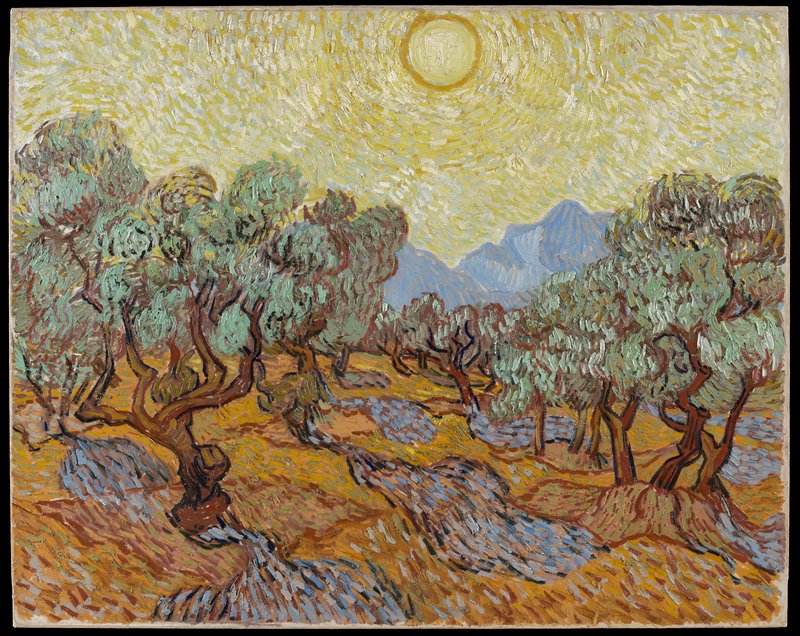
Olive Trees, Vincent van Gogh, 1889

Vincent van Gogh

Olive Trees, 1889

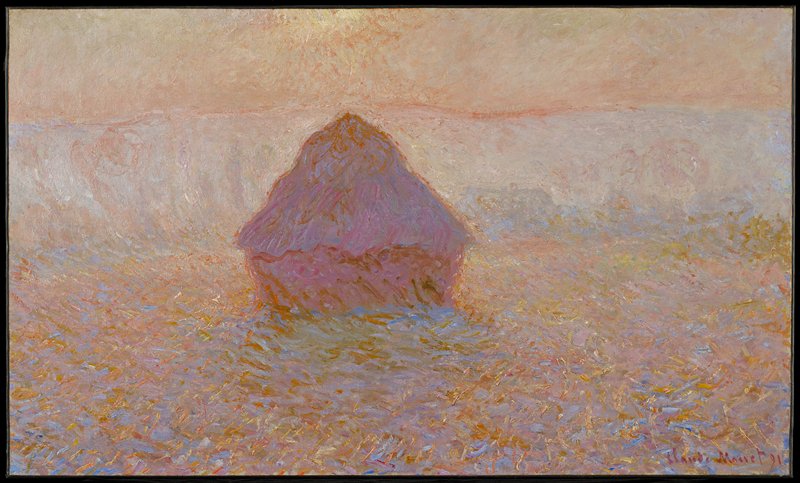
Grainstack, Sun in the Mist, Claude Monet, 1891

Claude Monet

Grainstack, Sun in the Mist, 1891

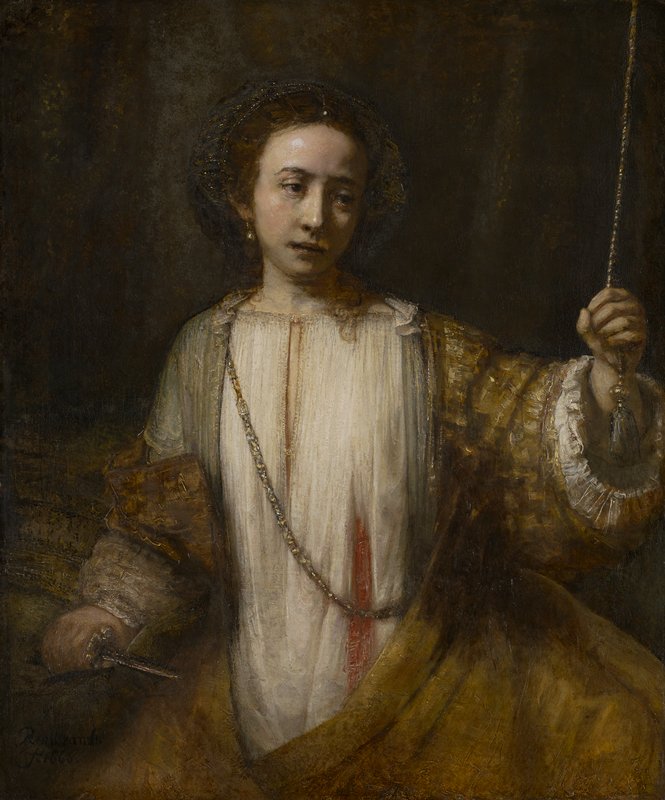
Lucretia, Rembrandt van Rijn, 1666

Rembrandt van Rijn

Lucretia, 1666

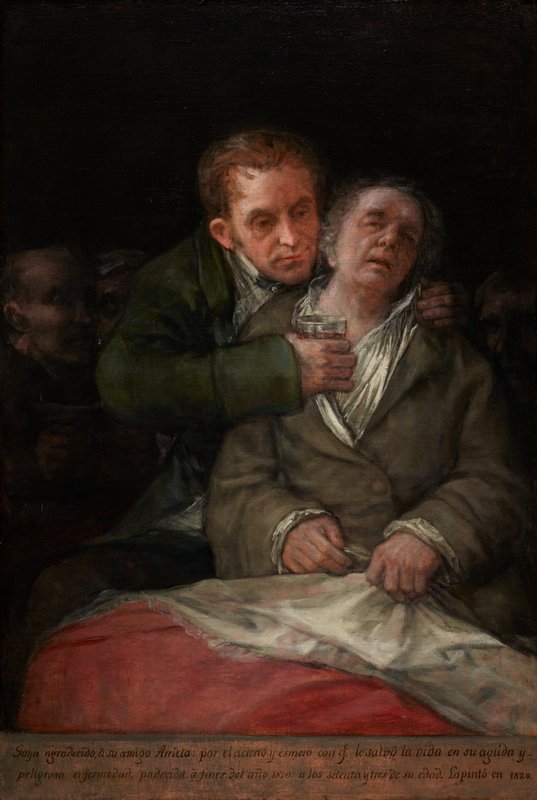
Self-Portrait with Dr. Arrieta, Francisco José de Goya y Lucientes, 1820

Francisco de Goya

Self-Portrait with Dr. Arrieta, 1820

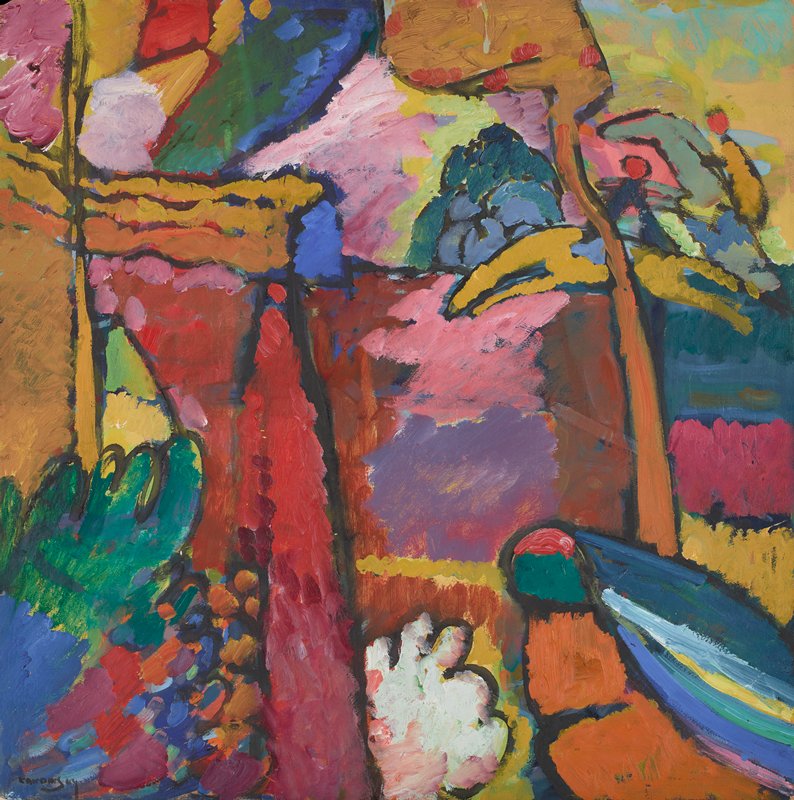
Study for Improvisation V, Vassily Kandinsky, 1910

Vasily Kandinsky

Study for Improvisation V, 1910

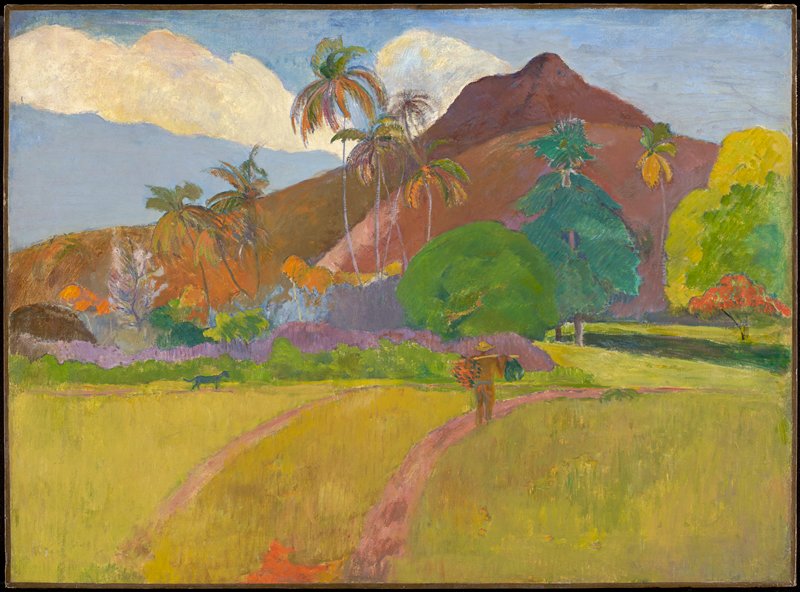
Tahitian Landscape, Paul Gauguin, 1891

Paul Gauguin

Tahitian Landscape, 1891

Chestnut Trees at Jas de Bouffan, Paul Cézanne, c. 1885–86

Paul Cézanne

Chestnut Trees at Jas de Bouffan, c. 1885–86

The Union of England and Scotland (Charles I as the Prince of Wales), Peter Paul Rubens, 1633–34

Peter Paul Rubens

The Union of England and Scotland (Charles I as the Prince of Wales), 1633–34