 George BellowsAmerican, 1882–1925
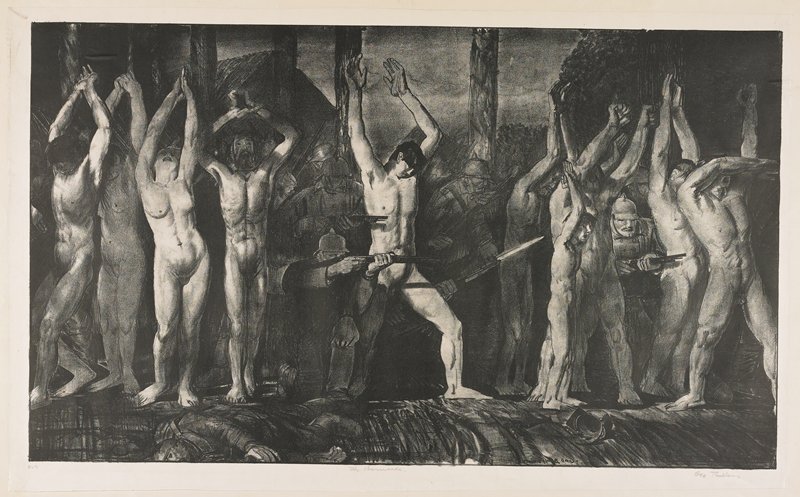
The Barricade No. 2
Can I see it?
Not on view at present
Where is “The Barricade No. 2” now? Collection: Minneapolis Institute of Art, Minneapolis. Not on view at present. Checked September 29, 2026.

Minneapolis, United States
It belongs to the collection, but is not on display at present.
- Checked
- In this state since
- Source
- The museum
About the work
Along with many other Americans, George Bellows was outraged by published reports of German brutality toward civilian populations in occupied Belgium during the First World War (1914-18). Chief among these accounts was the Bryce Report, a British government sponsored effort to turn public and political opinion against Germany. The report's credible, but lurid eyewitness accounts of atrocities stirred anger and indignation that ultimately contributed to America's entry into the war in 1917.
Read on
In 1918, Bellows created a series of provocative lithographs detailing German war crimes described in Bryce's report. The prints reflect Bellow's changing attitude toward the war. Though fervently anti-war at the start of hostilities, Bellows openly supported the American war effort by the time he began his lithographic series and even enlisted to fight in the tank corps, but never served. The Barricade, No. 2 recounts one of the more gruesome episodes of degradation and violence instigated by German troops who used Belgian civilians as human barricades to suppress civil resistance.
Minneapolis Institute of Art
Details
- Accession number
- P.97.14
In the catalog
Sources
- Minneapolis Institute of Art
- Image: Minneapolis Institute of Art — public domain
In the life of George Bellows
The whole life1916
A lithography press in his studio
He installs a lithography press in his studio and makes a significant contribution to establishing lithography as a fine art in the United States.
1918
The quarrel with Pennell: who may paint a war
The artist Joseph Pennell argues that, since Bellows did not witness the events he painted, he has no right to paint them; Bellows replies that he had not known Leonardo da Vinci “had a ticket to paint the Last Supper”.
1919
Teaches at the Art Institute of Chicago
In 1919 he teaches at the Art Institute of Chicago.
1920
Builds a house in Woodstock
From 1920 he spends nearly half of each year in Woodstock, New York, where he builds a home for his family.
1920
“Men of the Docks” bought for the Maier Museum
Students and locals raise $2,500 to buy “Men of the Docks” for the Maier Museum of Art, the first masterpiece in its collection (now at Randolph College).


.jpg?width=1280)