ART WIKI32,963 on view
MapCollectionArtistsMuseumsExhibitionsJournal
Sign in

ART WIKI

Where the masterpiece hangs, and when they let you in.

Collections: Art Institute of Chicago, Getty Villa, Harvard Art Museums, Hirshhorn Museum and Sculpture Garden, J. Paul Getty Museum, Minneapolis Institute of Art, Musée du Louvre, National Gallery of Art, National Museum of Asian Art, National Portrait Gallery (Smithsonian), Pushkin State Museum of Fine Arts, Rijksmuseum, Smithsonian American Art Museum, SMK — National Gallery of Denmark, State Hermitage Museum, State Russian Museum, The Cleveland Museum of Art, The Metropolitan Museum of Art, The Museum of Modern Art, Tretyakov Gallery, Victoria and Albert Museum, Whitney Museum of American Art, State Catalogue of the Museum Fund of Russia (274 museums), Europeana (19 museums), Wikidata (6 museums), Paris Musées (12 museums), and Joconde, the French Ministry of Culture's museum database (495 museums). Images belong to their rights holders.

Sections

  • Map
  • Search
  • Collection
  • Masterpieces
  • On view now
  • Artists

More

  • Museums & galleries
  • Exhibitions
  • Journal
  • Where the data comes from
  • Privacy & cookies
HomeMapBrowse
  1. Collection/
  2. National Gallery of Art/
  3. Tampa 5
Tampa 5, Robert Rauschenberg, 1972
Robert Rauschenberg, portraitRobert RauschenbergAmerican, 1925–2008

Tampa 5

1972 · Print

May one see it?

Not receiving at present

National Gallery of Art

Washington, D.C., United States

It belongs to the collection, but is not on display at present.

Checked
3 days ago
In this state since
Aug 19, 2026
Source
The museum
On the mapMuseum page

Particulars

1972 · aged 47
19252008
Accession number
1986.26.88

What it shows

Non-representational

In the catalog

PrintsLithographPost-war art20th centuryAmerican

Sources

  • National Gallery of Art
  • Image: National Gallery of Art — © the artist or rights holder

Meanwhile, in the life of Robert Rauschenberg

The whole life
  1. autumn 1970

    Moves to Captiva for good

    From the autumn of 1970 the Captiva house became Rauschenberg's permanent home and studio. The first works made there were the “Cardboards” (1971–72) and “Early Egyptians” (1973–74) series, from locally sourced cardboard and sand: instead of urban imagery he now favoured the natural fibres of fabric and paper.

  2. 1970

    Sets up Change, Inc. to help artists

    Rauschenberg created Change, Inc., a programme awarding one-time emergency grants of up to $1,000 to visual artists in financial need.

  3. 1970

    Helps create the Pepsi Pavilion at Expo '70 in Osaka

    Rauschenberg took part in creating the Pepsi Pavilion for the 1970 World Exposition in Osaka; the opening was directed by the choreographer and artist Remy Charlip.

  4. 1973

    The Scull auction and the fight for artists' royalties

    In 1973 the taxi baron Robert Scull sold Rauschenberg's paintings “Thaw” and “Double Feature”, bought for $900 and $2,500, for $85,000 and $90,000 at Sotheby Parke Bernet. The artist took up the fight for resale royalties for artists (droit de suite), lobbying the US Congress for a law.
More by Robert Rauschenberg

All works
Untitled, Robert Rauschenberg, c. 1953

Untitled

c. 1953 · The Museum of Modern Art

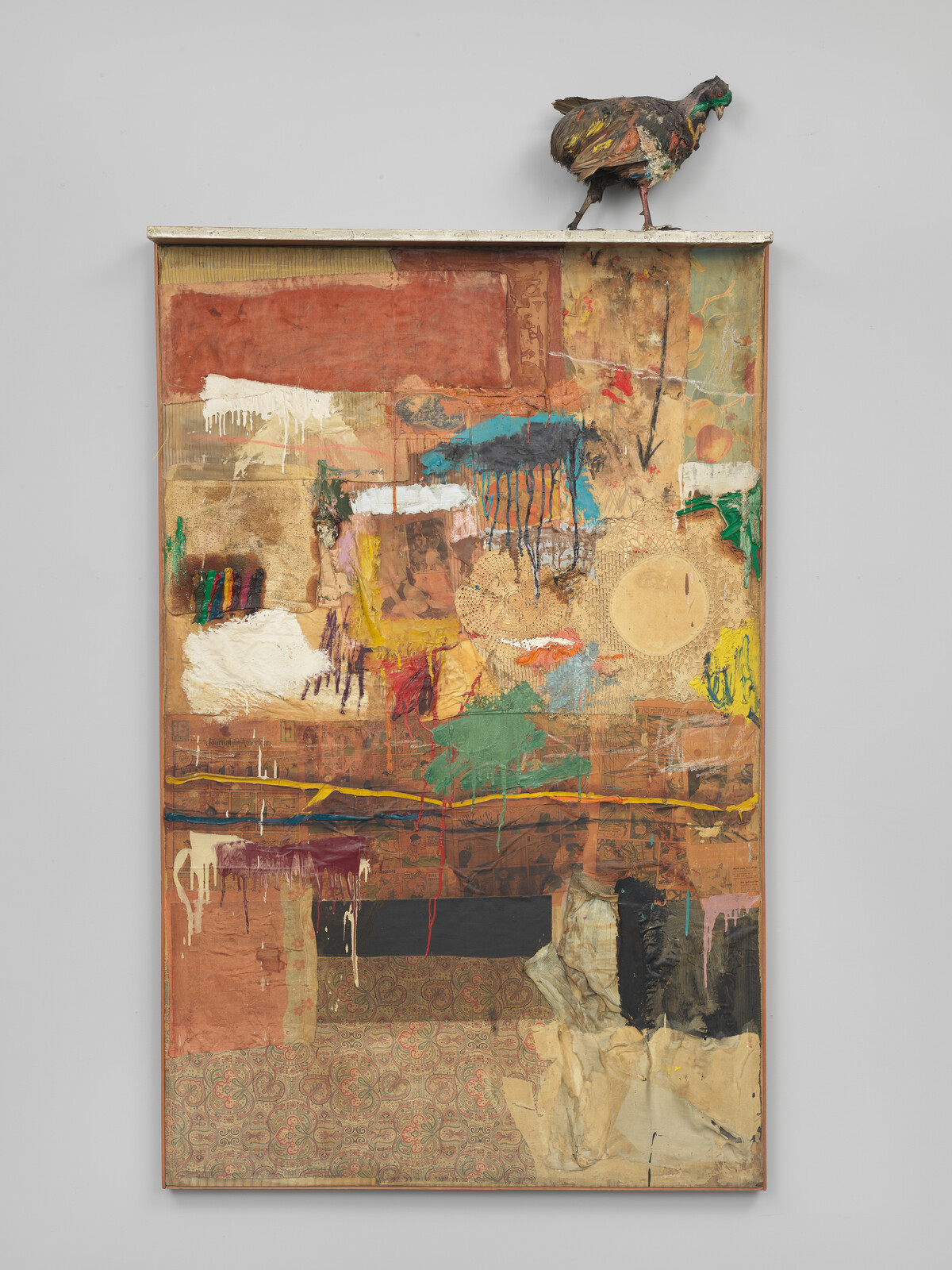
Canyon, Robert Rauschenberg, 1959

Canyon

1959 · The Museum of Modern Art

Untitled, Robert Rauschenberg, c. 1955

Untitled

c. 1955 · Art Institute of Chicago

Satellite, Robert Rauschenberg, 1955

Satellite

1955 · Whitney Museum of American Art

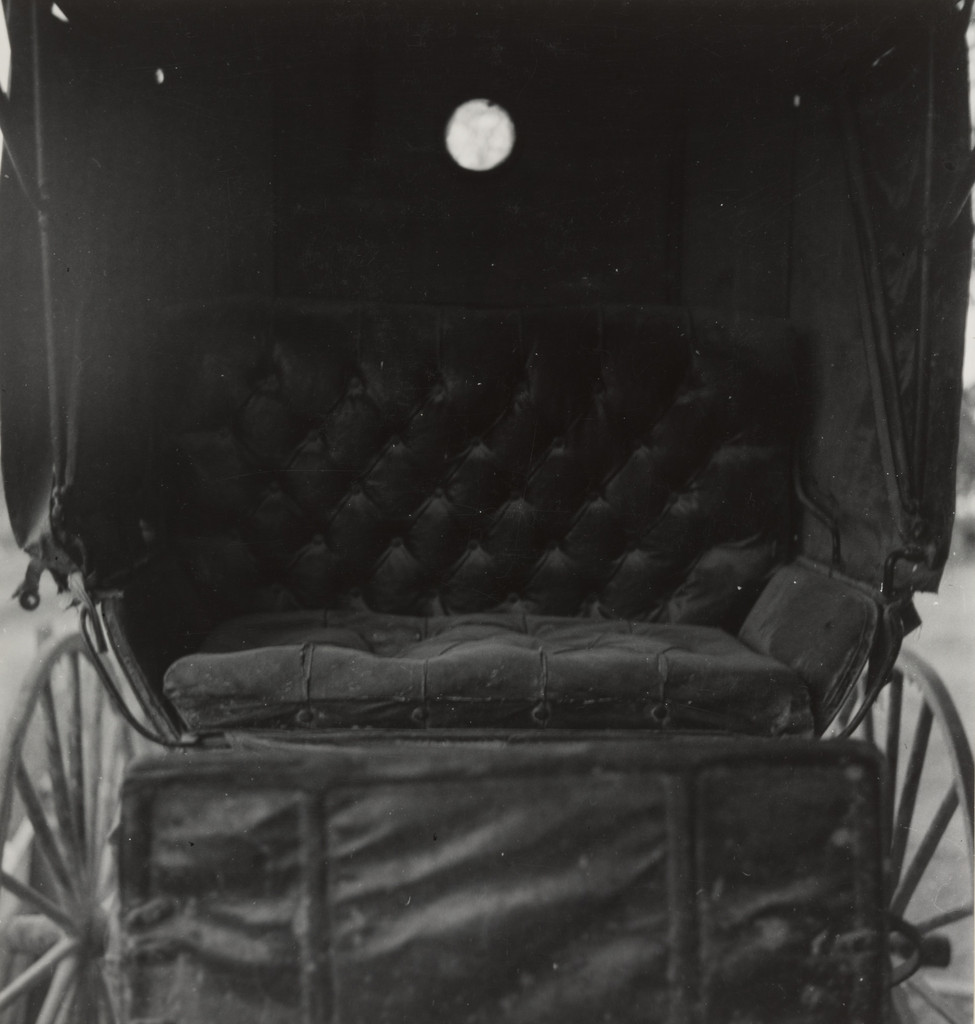
Untitled, Robert Rauschenberg, 1949

Untitled

1949 · Not on view · The Museum of Modern Art

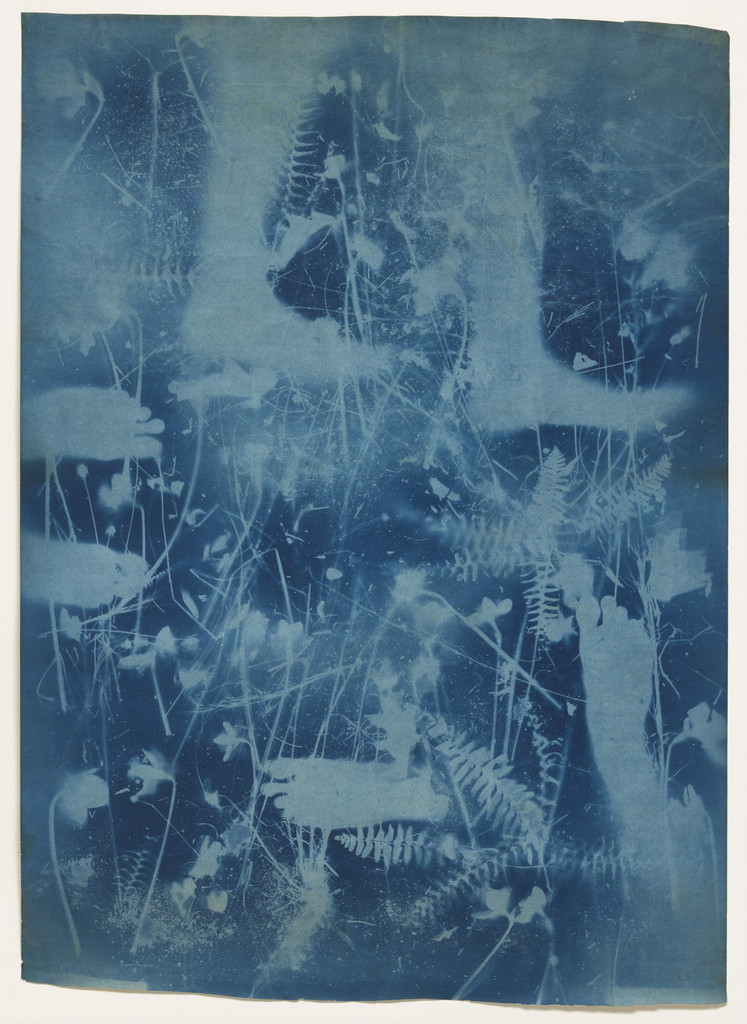
Untitled, Robert Rauschenberg, Susan Weil, c. 1950

Untitled

c. 1950 · Not on view · The Museum of Modern Art

Black Painting, Robert Rauschenberg, 1952

Black Painting

1952 · Not on view · National Gallery of Art

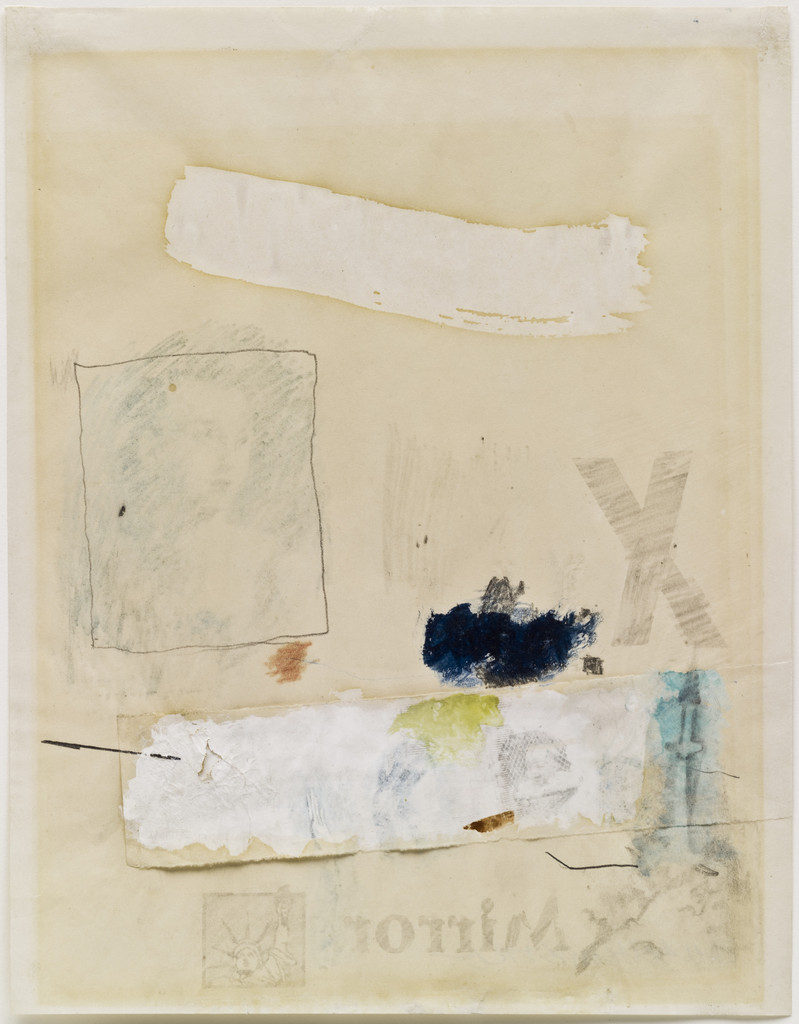
Untitled (Mirror), Robert Rauschenberg, (1952)

Untitled (Mirror)

(1952) · Not on view · The Museum of Modern Art

Neighbors at National Gallery of Art

Museum page
Ginevra de' Benci [obverse], Leonardo da Vinci, c. 1474/1478

Leonardo da Vinci

Ginevra de' Benci [obverse], c. 1474/1478

Wreath of Laurel, Palm, and Juniper with a Scroll inscribed Virtutem Forma Decorat [reverse], Leonardo da Vinci, c. 1474/1478

Leonardo da Vinci

Wreath of Laurel, Palm, and Juniper with a Scroll inscribed Virtutem Forma Decorat [reverse], c. 1474/1478

Green Wheat Fields, Auvers, Vincent van Gogh, 1890

Vincent van Gogh

Green Wheat Fields, Auvers, 1890

Girl in White, Vincent van Gogh, 1890

Vincent van Gogh

Girl in White, 1890

Roses, Vincent van Gogh, 1890

Vincent van Gogh

Roses, 1890

Self-Portrait, Vincent van Gogh, 1889

Vincent van Gogh

Self-Portrait, 1889

Farmhouse in Provence, Vincent van Gogh, 1888

Vincent van Gogh

Farmhouse in Provence, 1888

La Mousmé, Vincent van Gogh, 1888

Vincent van Gogh

La Mousmé, 1888

On the same theme · Non-representational

All works on the theme
Sixth Knot, after Leonardo da Vinci, c. 1490/1500

Leonardo da Vinci

Sixth Knot, c. 1490/1500

Not on view · National Gallery of Art

Composition en trois couleurs (Composition in Three Colors), Pablo Picasso, 1947

Pablo Picasso

Composition en trois couleurs (Composition in Three Colors), 1947

Not on view · National Gallery of Art

A Glass on a Table, Pablo Picasso, 1913

Pablo Picasso

A Glass on a Table, 1913

Not on view · National Gallery of Art

Composition, Pablo Picasso, 1946

Pablo Picasso

Composition, 1946

Not on view · National Gallery of Art

Mao, Andy Warhol, 1973

Andy Warhol

Mao, 1973

Not on view · National Gallery of Art

The Heart, Henri Matisse, published 1947

Henri Matisse

The Heart, published 1947

Not on view · National Gallery of Art

The Nightmare of the White Elephant, Henri Matisse, published 1947

Henri Matisse

The Nightmare of the White Elephant, published 1947

Not on view · National Gallery of Art

The Codomas, Henri Matisse, published 1947

Henri Matisse

The Codomas, published 1947

Not on view · National Gallery of Art