 Arkhip KuindzhiUkrainian, 1842–1910
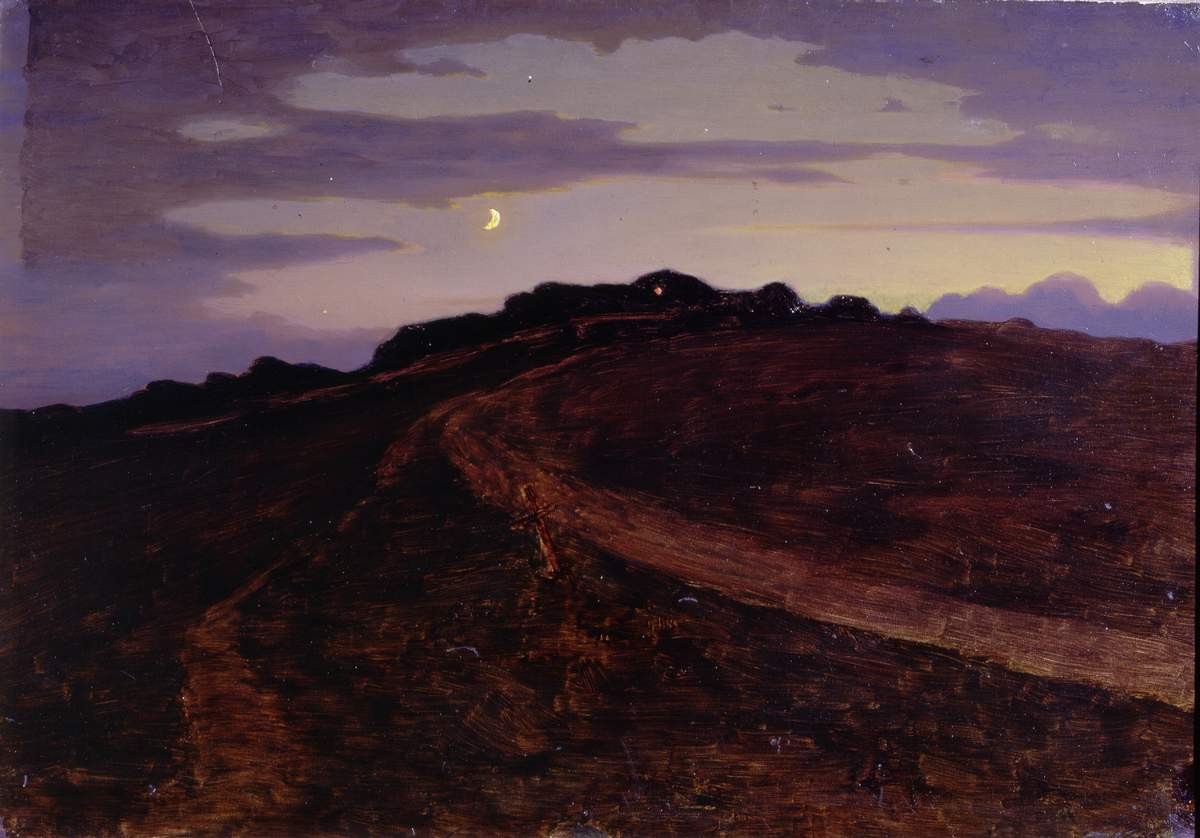
Сумерки
Can I see it?
Unknown
Where is “Сумерки” now? Collection: State Russian Museum, Saint Petersburg. Unknown.

Saint Petersburg, Russia
The owner is known; whether it is on view today is not.
- In this state since
- Source
- The museum
About the painting
Museum text in Russian
Таинственная и сокровенная жизнь природы, погруженной в полутьму, – близкий символистам мотив одного из самых проникновенных пейзажей Куинджи поздних лет „Сумерки“ (1890—1895). Декоративность художественного строя усиливает выразительность произведения. Темный холм с еле видимым во мгле покосившимся крестом и змеящимися дорогами, обобщенные пятна хат, причудливым силуэтом выступающие на фоне оливкового звездного неба, тонкий лунный серп среди лиловых туч – все это полно меланхолической поэзии. Пронизанный пантеистическим чувством пейзаж несет философскую мысль о бренности человеческой жизни, мерцающей маленьким огоньком рядом с великим миром Природы.
Ирина Шувалова. Куинджи в Русском музее // Архип Куинджи. СПб, 2010. С.20.
State Russian Museum
Details
- Accession number
- Ж-1521
What it shows
In the catalog
Sources
- State Russian Museum
- Image: State Russian Museum — © State Russian Museum
In the life of Arkhip Kuindzhi
The whole life1882–1901
Twenty years of seclusion
The reasons for the seclusion are unknown; he was probably tired of the fuss and of accusations of cheap effects. The public thought he had exhausted himself, but he worked tirelessly, searching for pigments and grounds resistant to the air, and created about five hundred sketches and finished works and about three hundred graphic works.
1888
To the Caucasus with Yaroshenko: the Brocken spectre
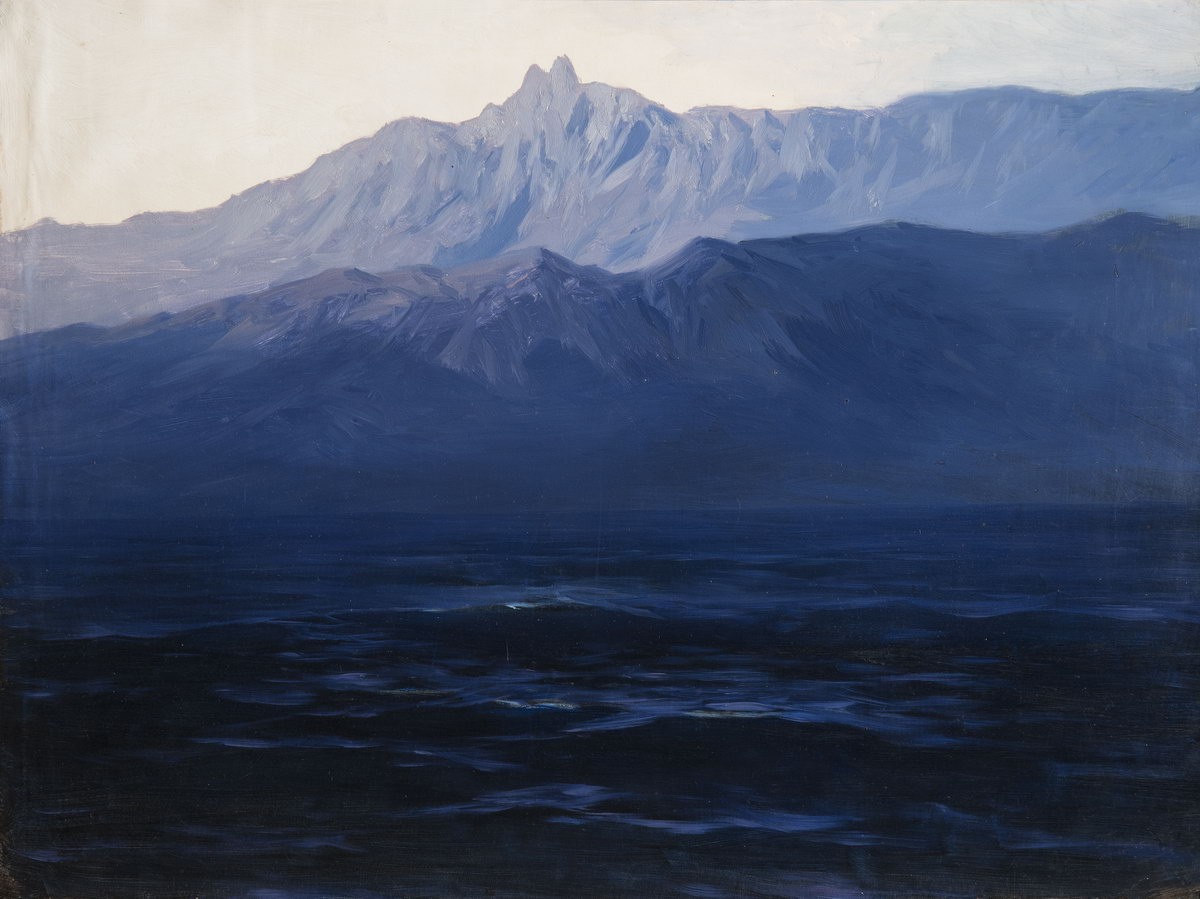
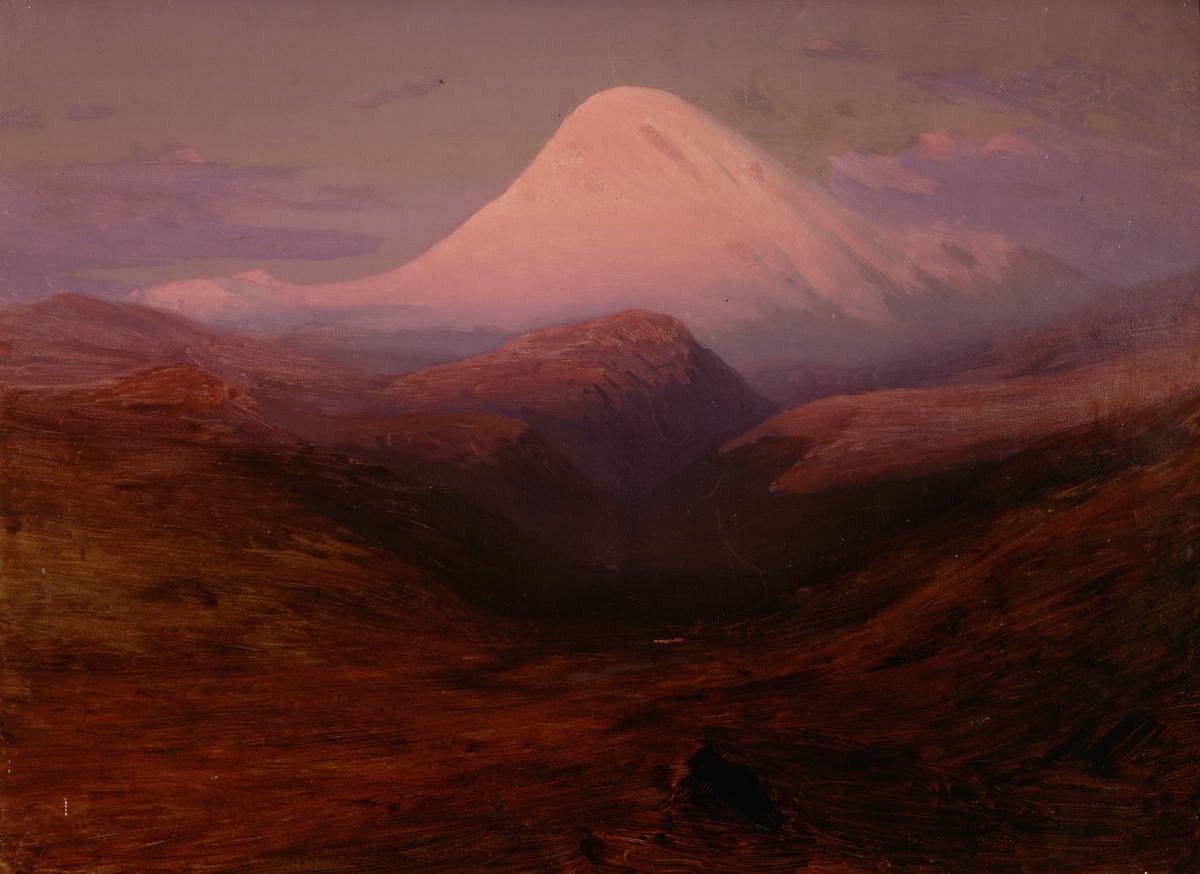
In 1888, at the invitation of Nikolai Yaroshenko, Kuindzhi visited the Caucasus, where they witnessed the very rare mountain phenomenon of the Brocken spectre. Inspired by the trip, he painted a series of mountain landscapes in which the Caucasus is a symbol of an ideal, unattainable land; some researchers think they inspired Roerich’s Himalayan landscapes.
1891
Buys an apartment house on Vasilievsky Island
When fame came to Kuindzhi and his paintings were bought for large sums, in 1891 he acquired an apartment house on Vasilievsky Island and drew a profit from it for the rest of his life. He and his wife lived very modestly, and he gave most of his fees and profits to charity.
1892–1893
Professor and full member of the Academy
In 1892 Kuindzhi became a professor at the Imperial Academy of Arts and in 1893 its full member (under the new statute).
1894–1897
Heads the landscape studio of the Higher Art School
From 1894 to 1897 Kuindzhi was professor-head of the landscape studio of the Higher Art School at the Academy of Arts.
1897
Dismissed for supporting his students’ protests
In 1897 Kuindzhi was dismissed from the Academy for supporting the students’ protests.

![[Der Dreikönigsabend. Nachtstück; The Star of the Kings. A Night Piece; L'étoile des Rois], Rembrandt, 1651](https://diglib.hab.de/varia/haum/rembrandt-ab3-0138/max/000001.jpg)
![[Ein Drehorgelspieler mit Kindern an der Tür eines Hauses (Der Schulmeister); A Hurdy-Gurdy Player Followed by Children at the Door of a House (The Schoolmaster); Le maître d'école], Rembrandt, 1641](https://diglib.hab.de/varia/haum/rembrandt-ab3-0156/max/000001.jpg)