 Walker EvansAmerican, 1903–1975
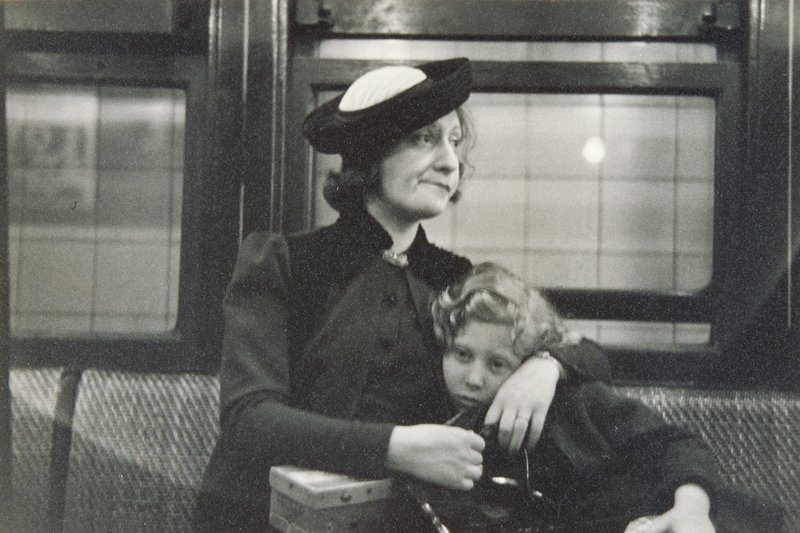
Subway Portrait
May one see it?
Not receiving at present

Minneapolis Institute of Art
Minneapolis, United States
It belongs to the collection, but is not on display at present.
- Checked
- 2 days ago
- In this state since
- Sep 25, 2026
- Source
- The museum's own collection data
About the work
From 1938 to 1941, Walker Evans photographed New Yorkers in the subway by hiding his camera inside his coat and running the shutter trigger down his sleeve to his hand. He traveled with a friend of his, fellow photographer Helen Levitt, because he felt that it would make the picture-taking less conspicuous. By doing so, he removed any ability of the subjects to “pose” for the camera, and instead captured them as they were, lost in their moods, the newspaper, or the people they were traveling with. “The guard is down and the mask is off, ” Evans says, “Even more than in lone bedrooms… People’s faces are in naked repose down in the subway.” Evans’ technique created unique images, but raise questions about the ethics of photographing people without their knowledge or consent.
Minneapolis Institute of Art
Particulars
- Accession number
- 75.25.13
In the catalog
Sources
- Minneapolis Institute of Art: the museum's own open data · fetched 5 days ago
- Image: Minneapolis Institute of Art — © Walker Evans Archive, The Metropolitan Museum of Art
Meanwhile, in the life of Walker Evans
The whole lifesummer 1936
Hale County with James Agee, on assignment for Fortune
In the summer of 1936, while on leave from the FSA, Evans and the writer James Agee are sent by Fortune to Hale County, Alabama, for a story the magazine subsequently opts not to run.
1938
“Walker Evans: American Photographs” at MoMA
The Museum of Modern Art in New York holds “Walker Evans: American Photographs”, the museum's first exhibition devoted to the work of a single photographer; the catalogue includes an essay by Lincoln Kirstein, whom Evans befriended in his early days in New York.
until 1938
The end of his FSA work
Evans continues to work for the Farm Security Administration until 1938.
1938–1939
Working with and mentoring Helen Levitt
In 1938 and 1939 Evans works with and mentors Helen Levitt.
1940 · Award
Guggenheim Fellowship
1940–1959
Three Guggenheim Fellowships in twenty years
Between 1940 and 1959 Evans is awarded three Guggenheim Fellowships in Photography to continue his work of making record photographs of contemporary American subjects.