 Auguste RodinFrench, 1840–1917
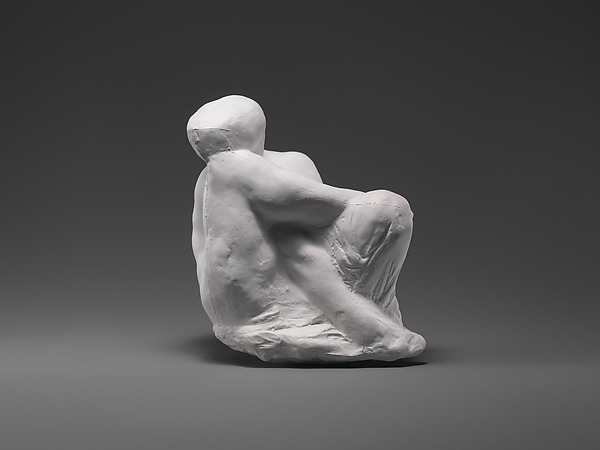
Study for Obsession
Can I see it?
Yes, on view now
Where is “Study for Obsession” now? The Metropolitan Museum of Art, Gallery 800, New York. Yes, on view now. Checked November 16, 2026.

New York, United States
Closed· opens tomorrow at 10:00 AM
On public display.
- Checked
- In this state since
- Source
- The museum
About the sculpture
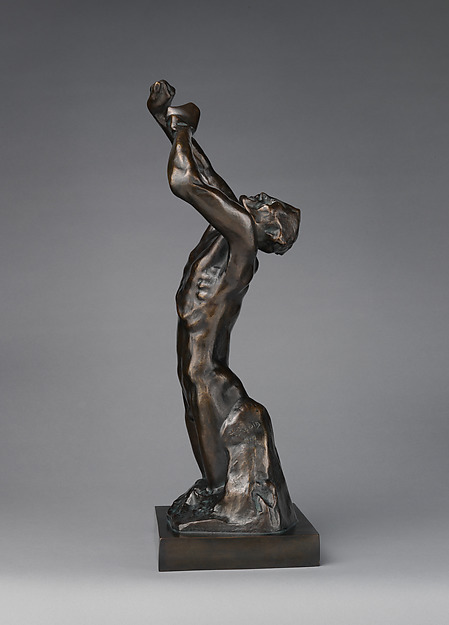
Study for Obsession is a plaster by Auguste Rodin at the Met in New York, modelled around 1896 and cast before 1912. The enclosed pose of the nude woman compresses her body into an almost abstract form. At only 14 cm high, the study was among Rodin's gifts to the collection in 1912. Visitors can see it in Gallery 800.
Details
- Accession number
- 12.12.4
What it shows
In the catalog
Sources
- The Metropolitan Museum of Art
- Image: The Metropolitan Museum of Art — Open Access (CC0)
In the life of Auguste Rodin
The whole life1895
Buys the Villa des Brillants at Meudon
Rodin bought the Villa des Brillants estate near Paris and moved his studio there, but there was not enough room and two years later it went back to Paris. His income let him collect: Egyptian, Greek and Roman sculpture, Persian miniatures and paintings by his contemporaries, including Van Gogh's “Portrait of Père Tanguy”.
1898
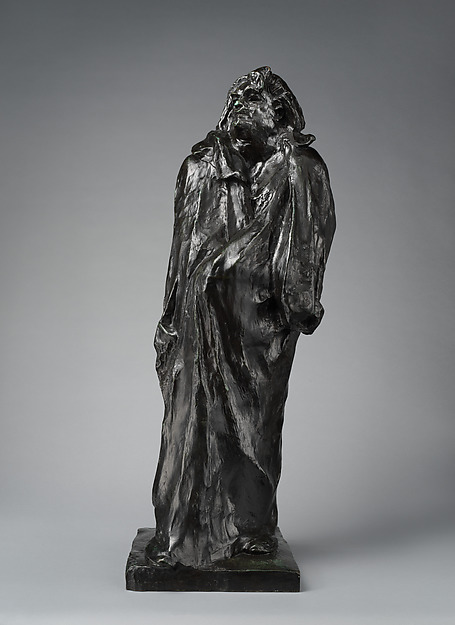
The scandal over “Balzac”
The monument's showing in 1898 caused a storm: the Société des Gens de Lettres rejected it, the press ran parodies, and Monet, Debussy and the future premier Clemenceau signed a manifesto in Rodin's defence. Rodin repaid the commission and moved the statue to his garden; he never completed another public commission.
1898
Parts from Camille Claudel
Rodin never gave up Rose Beuret, his companion of the lean years and the mother of his son; in 1898 he and Claudel parted. A few years later Claudel suffered what is called a nervous breakdown, and her family confined her to an institution for thirty years.
1900
Rodin's pavilion at the World's Fair
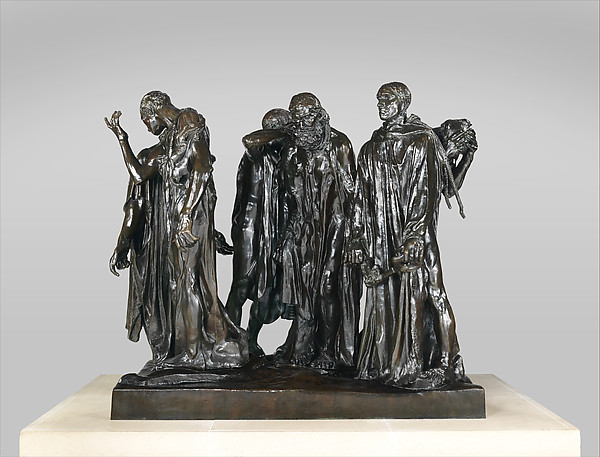
The French government gave him an entire pavilion: a retrospective of 136 sculptures and 14 unfinished works showed “The Gates of Hell” for the first time. The exhibition brought sales of sculptures to museums around the world worth about 200,000 francs.
1905–1906
Rilke as Rodin's secretary
In 1905–1906 the sculptor's private secretary was the German poet Rainer Maria Rilke, who later wrote an admiring monograph on Rodin.
1908
Moves into the Hôtel Biron
Rilke invited Rodin to the eighteenth-century mansion where he rented rooms; Rodin liked it so much that he took the ground floor, moved his studio there and lived there for his last years.