ART WIKI32,979 on view
MapCollectionArtistsMuseumsExhibitionsJournal
Sign in

ART WIKI

Where the masterpiece hangs, and when they let you in.

Collections: Art Institute of Chicago, Getty Villa, Harvard Art Museums, Hirshhorn Museum and Sculpture Garden, J. Paul Getty Museum, Minneapolis Institute of Art, Musée du Louvre, National Gallery of Art, National Museum of Asian Art, National Portrait Gallery (Smithsonian), Pushkin State Museum of Fine Arts, Rijksmuseum, Smithsonian American Art Museum, SMK — National Gallery of Denmark, State Hermitage Museum, State Russian Museum, The Cleveland Museum of Art, The Metropolitan Museum of Art, The Museum of Modern Art, Tretyakov Gallery, Victoria and Albert Museum, Whitney Museum of American Art, State Catalogue of the Museum Fund of Russia (274 museums), Europeana (19 museums), Wikidata (6 museums), Paris Musées (12 museums), and Joconde, the French Ministry of Culture's museum database (495 museums). Images belong to their rights holders.

Sections

  • Map
  • Search
  • Collection
  • Masterpieces
  • On view now
  • Artists

More

  • Museums & galleries
  • Exhibitions
  • Journal
  • Where the data comes from
  • Privacy & cookies
HomeMapBrowse
  1. Collection/
  2. Victoria and Albert Museum/
  3. Shiva Ardhanarishvara
Shiva Ardhanarishvara, Late 2nd century

Shiva Ardhanarishvara

Late 2nd century · Sculpture · 27 × 10.5 cm

May one see it?

Not receiving at present

Victoria and Albert Museum

London, United Kingdom

It belongs to the collection, but is not on display at present.

Checked
13 days ago
In this state since
Sep 25, 2026
Source
The museum
On the mapMuseum page

About the sculpture

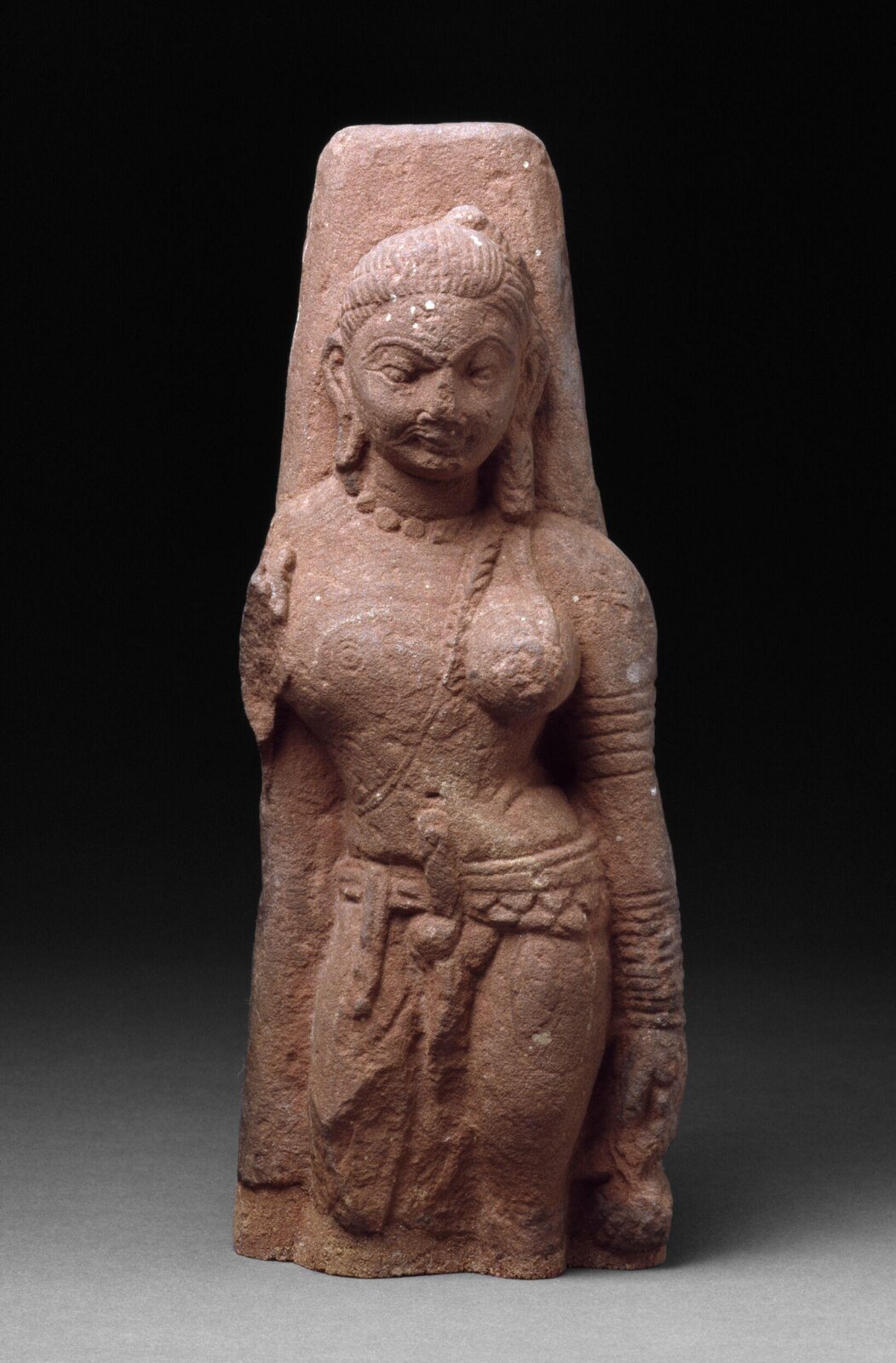
This red sandstone carving shows a knee-length composite figure in high relief. It represents Shiva in the Ardhanarishvara Murti, the name of the androgynous form in which Shiva is depicted as 'the Lord who is Half-woman'. This form was among the earliest anthropomorphic sculptures of Shiva to appear. In this manifestation, Shiva reveals himself in a form that is both male and female, divided vertically, with his consort Parvati occupying his left-half. This example, from the early Kushan period, is amongst the earliest known occurrences of this subject. In addition to these all too rare examples of Kushan period Ardhanarishvara figures, this subject also appears as one of the Shiva’s faces on some of the earliest caturmukhalinga (‘four-faced linga’). These depictions, important from the beginnings of anthropomorphic representation of the Brahmanical gods, give form to concepts already expressed in the most ancient compendium of Indian religious thought, the Rigveda.

Read on

Carved in high relief, the composite figure stands in a relaxed manner, with a vertical division separating the two entities. Shiva’s form is on the right, distinguished by a taut muscular and ‘masculine’ form and the aroused penis which projects upwards from his waist-cloth. Shiva’s third eye is vertically divided and only half represented; similarly, the hair styles differ, set apart by this vertical divide. Parvati’s half is more rounded and ‘feminine’ in its form, and displays a single breast, long tresses of hair and a decorated girdle, clearly distinguished from Shiva’s simple waist cord. Parvati’s hand appears to hold a flower; the missing arm of Shiva presumably was gesturing protection (abhayamudra), as seen on other surviving examples of this subject.

The figure stands against a linga, Shiva’s emblem. It is trapezoidal in shape. On the reverse the carved anatomical markings suggest phallic associations. A demonic face is also carved in low relief, perhaps a depiction of Rudra the ‘howler’, the wild Vedic god from whom Shiva (‘’the auspicious”) claims his ancestry.

Victoria and Albert Museum

Particulars

Accession number
IM.5-1931

Neighbors at Victoria and Albert Museum

Museum page

On the same theme · Hinduism

All works on the theme

What it shows

Hinduism

In the catalog

SculptureStoneBefore 1400KushanMathura

Sources

  • Victoria and Albert Museum
  • Image: Victoria and Albert Museum — © Victoria and Albert Museum, London
Bird of Paradise, Hashimoto Chitaka, 2026

Hashimoto Chitaka

Bird of Paradise, 2026

Torsion 2, Taruma Shoko, 2025

Taruma Shoko

Torsion 2, 2025

Fu, Someya Satoshi, 2025

Someya Satoshi

Fu, 2025

Bow Before the Curtain Falls, 2024

Bow Before the Curtain Falls, 2024

Summer, 2024

Summer, 2024

Red Flow, Ishizuka Genta, 2024

Ishizuka Genta

Red Flow, 2024

3D replica of Michelangelo's Prisoner (4117-1854), Factum Arte, 2024

Factum Arte

3D replica of Michelangelo's Prisoner (4117-1854), 2024

Sculpture, ‘Co-Existence – the Man and the Monkey’, Zhao Lin, 2024

Zhao Lin

Sculpture, ‘Co-Existence – the Man and the Monkey’, 2024

Vishnu Riding on Garuda, dated 1004

Vishnu Riding on Garuda, dated 1004

The Metropolitan Museum of Art

Head of Shiva (lingakosha), late 9th–10th century

Head of Shiva (lingakosha), late 9th–10th century

The Metropolitan Museum of Art

Enthroned Vishnu, second half of the 8th–early 9th century

Enthroned Vishnu, second half of the 8th–early 9th century

The Metropolitan Museum of Art

The Goddess Durga Slaying the Demon Buffalo Mahisha, 12th century

The Goddess Durga Slaying the Demon Buffalo Mahisha, 12th century

The Metropolitan Museum of Art

Chamunda, the Horrific Destroyer of Evil, 10th–11th century

Chamunda, the Horrific Destroyer of Evil, 10th–11th century

The Metropolitan Museum of Art

Shiva, mid- 7th century

Shiva, mid- 7th century

The Metropolitan Museum of Art

Brahma, first quarter of the 10th century

Brahma, first quarter of the 10th century

The Metropolitan Museum of Art

Vaikuntha Vishnu, last quarter of the 8th century

Vaikuntha Vishnu, last quarter of the 8th century

The Metropolitan Museum of Art