 Hendrick GoltziusDutch, 1558–1617
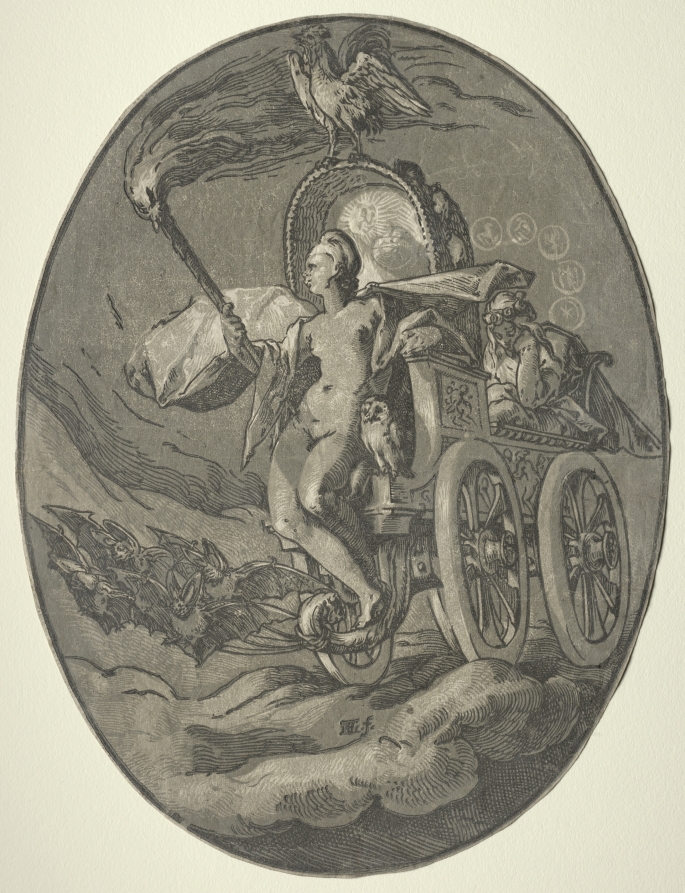
Seven Deities: Nox (Night)
Can I see it?
Not on view at present
Where is “Seven Deities: Nox (Night)” now? Collection: The Cleveland Museum of Art, Cleveland. Not on view at present. Checked September 29, 2026.

Cleveland, United States
It belongs to the collection, but is not on display at present.
- Checked
- In this state since
- Source
- The museum
About the work
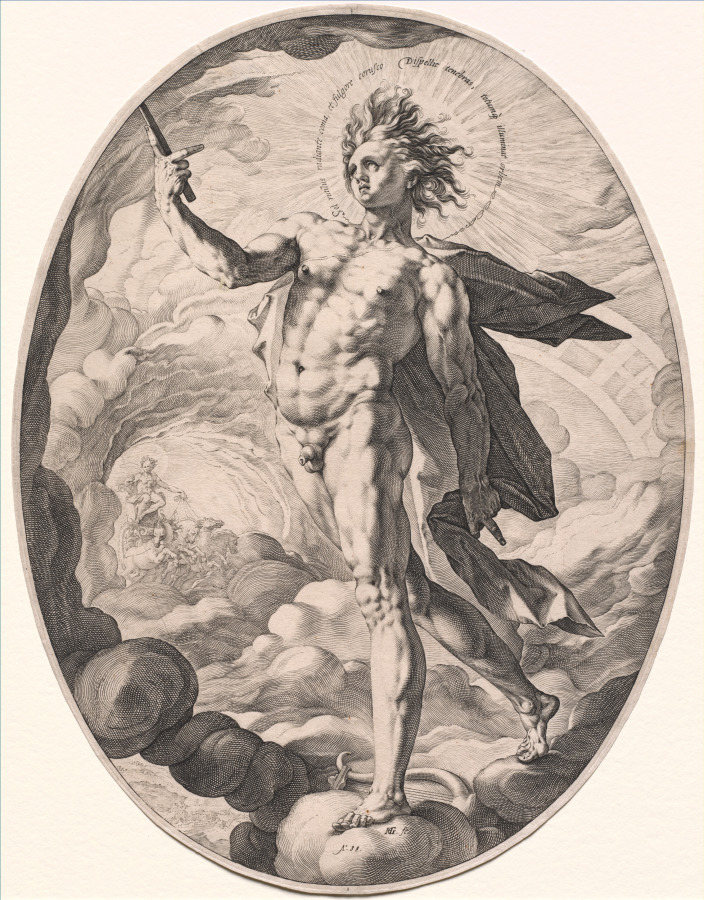
Goltzius, famous as an engraver and painter, was the most important advocate of chiaroscuro woodcuts in the Netherlands. Nox is part of a group of seven oval portraits of gods and goddesses shown in their habitats. Accompanied by an owl and rooster, Nox rides in a chariot pulled by bats. Behind her, the sun shines on the orb of the earth and the personification of Sleep dozes contentedly. Because the earliest impressions of Nox, and other Goltzius chiaroscuros, were printed in muted shades like the grays of this impression, the artist may not have had a role in later editions, in which much brighter colors were used. Due to the popularity of these colorful prints, some of Goltzius's chiaroscuro woodcuts—as well as those by other artists like Albrecht Dürer—were reprinted by the Antwerp publisher Willem Jansz, later called Blaeu.
The Cleveland Museum of Art
Details
- Accession number
- 1990.86
In the catalog
Sources
- The Cleveland Museum of Art
- Image: The Cleveland Museum of Art — Museum open access
In the life of Hendrick Goltzius
The whole life1579–1587
Pupil: Jan Saenredam
late 1580s
Depression and consumption
From the late 1580s he suffered from depression and consumption; his family life was unhappy.
1587
Founding of the Haarlem Academy
Together with Cornelis van Haarlem and Karel van Mander he founded an academy of art in Haarlem, later known as the Haarlem Mannerist Academy (some sources give 1583 or 1600). There, for the first time in the Netherlands, systematic study of anatomy and drawing from the nude model were introduced.
1590
Departure for Italy
He fled from his wife and, despite his illnesses, set out for Italy — via Hamburg and Munich to Venice, Bologna and Florence. Part of the way he traveled on foot, passing himself off as a commoner, "partly out of a love of mystification."
January 1591
Eight months in Rome
He arrived in Rome in January 1591 and stayed eight months (with a brief sojourn in Naples). He discovered Raphael, was especially impressed by Michelangelo and Giambologna, and studied art from classical sculpture to the masters of the Renaissance.
August 1591
Return to Haarlem with a collection of drawings
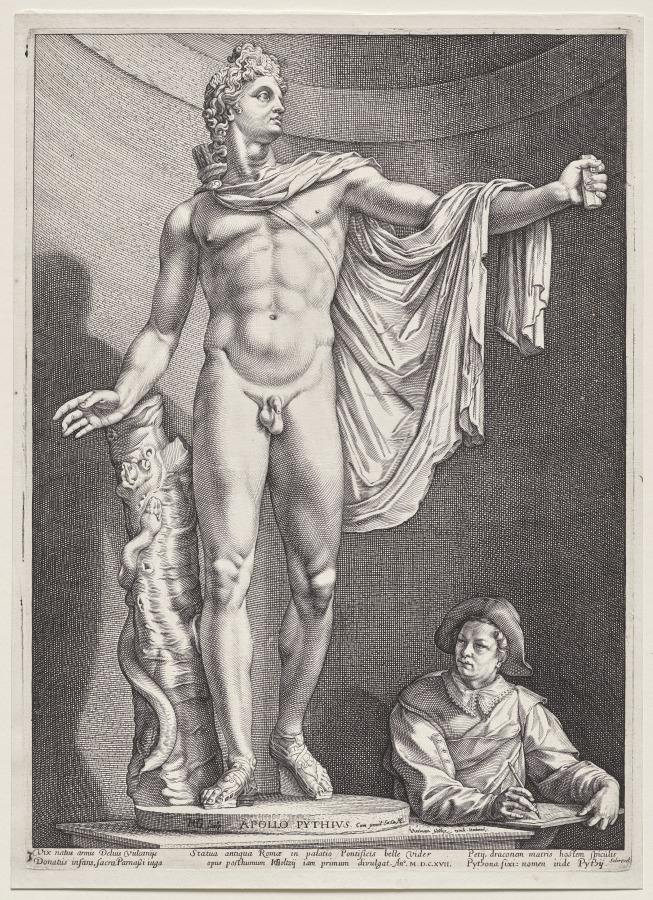
He returned to Haarlem, bringing from Italy a large collection of drawings that he used for the rest of his life; from the Roman material three engravings of classical statues are known, including the Farnese Hercules.