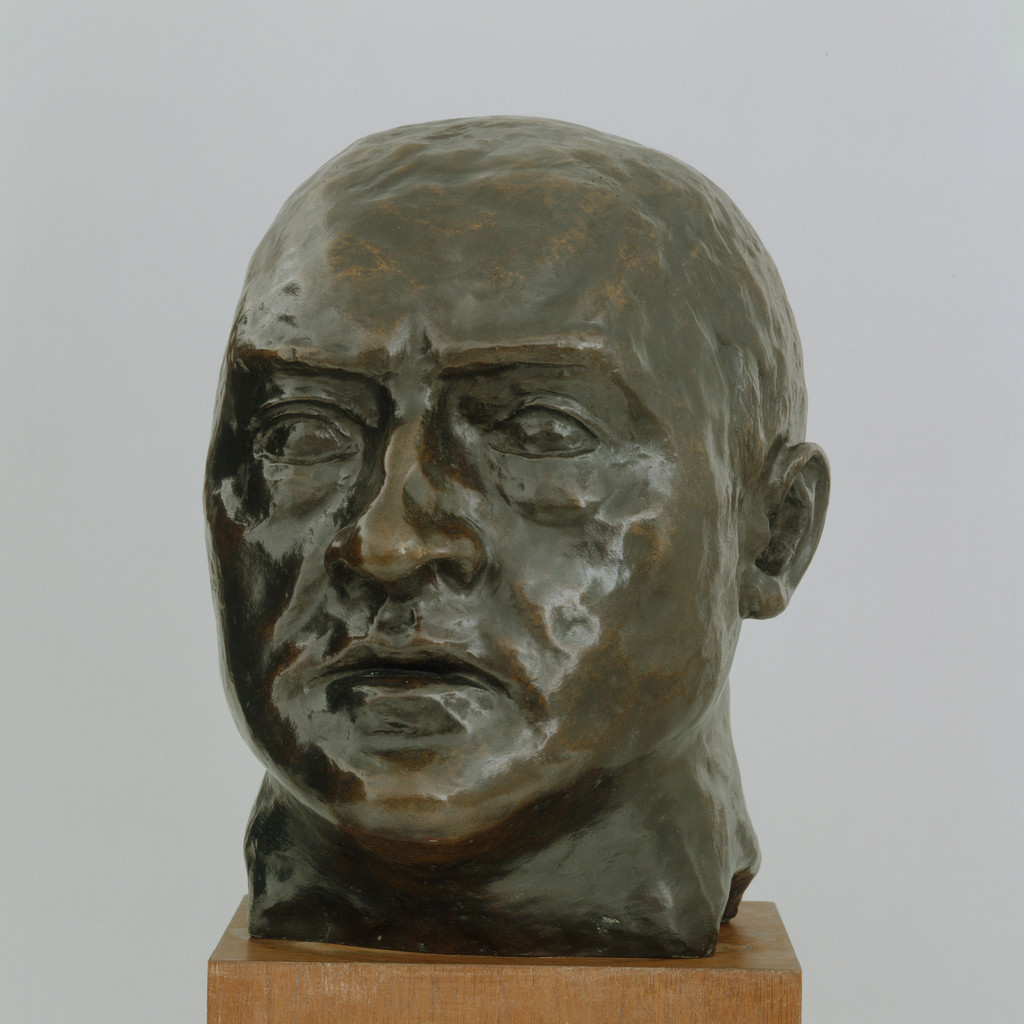
Max BeckmannGerman, 1884–1950
Self-Portrait in Tuxedo
May one see it?
Yes, receiving visitors

On public display.
- Checked
- In this state since
- Source
- The museum's own collection data
About the painting
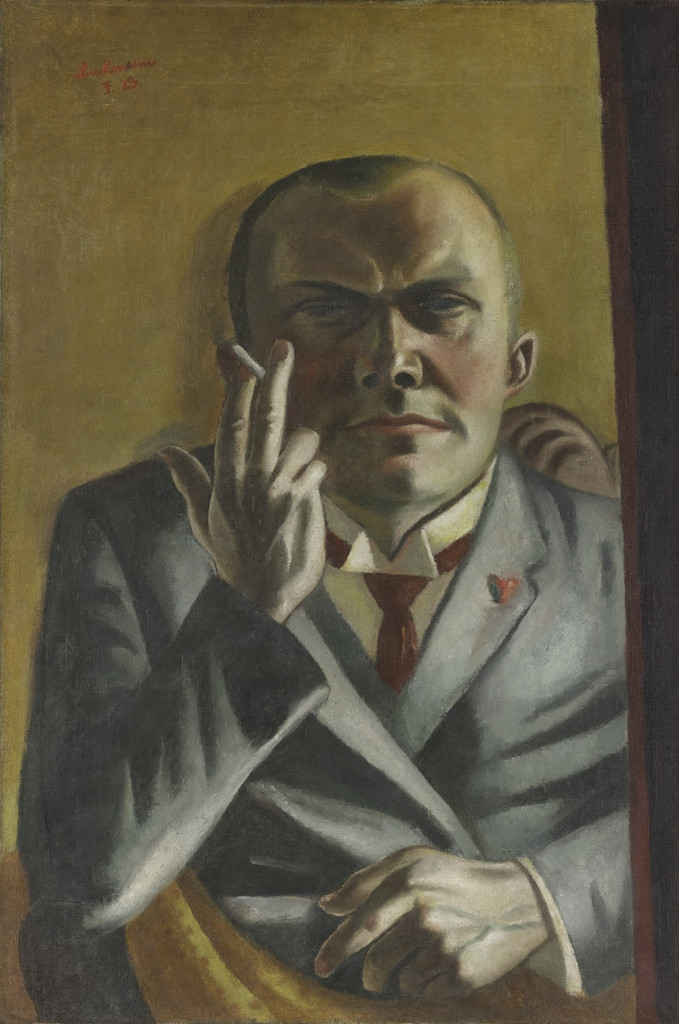
Self-Portrait in Tuxedo is an oil-on-canvas painting executed in 1927 by the German artist Max Beckmann. It now hangs in the Busch-Reisinger Museum of the Harvard University Art Museum, in Cambridge, Massachusetts.
In the museum's words
“The effect is brutal,” wrote one critic when this self-portrait by Beckmann debuted in Berlin in 1928, “but the work is surely in the spirit of the most recent art.” Since then, this now iconic painting has been understood as synonymous with the art and political uncertainty of the 1920s. It is also the work most closely associated with the Busch-Reisinger Museum, which acquiredthe portrait as its first modern painting in 1941.Half cast into deep shadow by an unseen light source, Beckmann’s face at close range resembles a mask, an effect underscored by the thick application of paint. The artist easily dons the elegant attire and “mask” of the bourgeoisie, but the question remains whether his likeness is a critique of the elite conservative circles he was known to frequent. Beckmann repeatedly refused to take an outright political stance on the artist’s role in society. “Afraid of nothing,” wrote one contemporary, “he refrains from taking up anyone position.”
Harvard Art Museums
Particulars
- Accession number
- BR41.37
In the catalog
Sources
- Harvard Art Museums: the museum's own open data · fetched 8 days ago
- Image: Harvard Art Museums — © President and Fellows of Harvard College
Meanwhile, in the life of Max Beckmann
The whole life1925
A master class at the Städelschule
In 1925 Beckmann is selected to teach a master class at the Städelschule in Frankfurt; his best-known students include Theo Garve, Leo Maillet and Marie-Louise von Motesiczky.
1927
The Honorary Empire Prize and the Gold Medal of Düsseldorf
In 1927 Beckmann receives the Honorary Empire Prize for German Art and the Gold Medal of the City of Düsseldorf, in the years of the Weimar Republic when his recognition was at its greatest.
1927–1928
The National Gallery buys “The Bark” and a self-portrait
The National Gallery in Berlin acquires his painting “The Bark” and, in 1928, purchases his “Self-Portrait in Tuxedo”.
1928
A retrospective at the Mannheim Kunsthalle
A large retrospective of Beckmann opens at the Städtische Kunsthalle Mannheim; together with the shows in Basel and Zurich and numerous publications it showed the high esteem in which he was held.