 Viktor Vasnetsov1848–1926
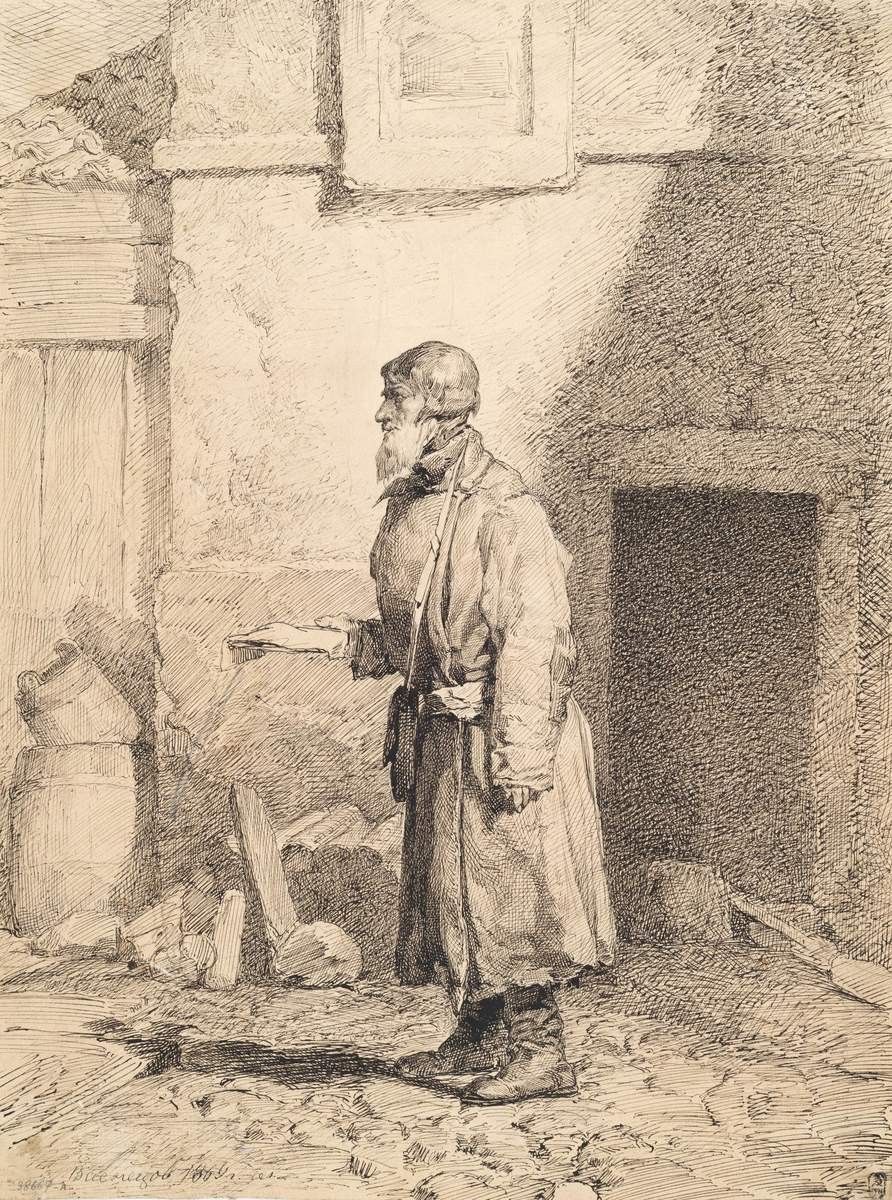
Сборщик на храм
Can I see it?
Unknown
Where is “Сборщик на храм” now? Collection: State Russian Museum, Saint Petersburg. Unknown.

Saint Petersburg, Russia
The owner is known; whether it is on view today is not.
- In this state since
- Source
- The museum
About the work
Museum text in Russian
Рисунок был литографирован. Виктор Васнецов. К 175-летию со дня рождения. СПб, 2024. С. 48.
« Все мы тогда считали себя реалистами, искали только правды в искусстве , — так позднее высказывался Васнецов об ученическом периоде, — а слово „идеал“ для нас не было пустым избитым словом без содержания …»*. Под влиянием демократических взглядов современников художник изменил свое отношение к академической исторической живописи и стал проявлять интерес к бытовому жанру. При этом он с особой теплотой вспоминал непродолжительные посещения мастерской П. П. Чистякова. Последний не был руководителем Васнецова в Академии художеств, но сумел передать ему «много света»** в понимании искусства.
Read on
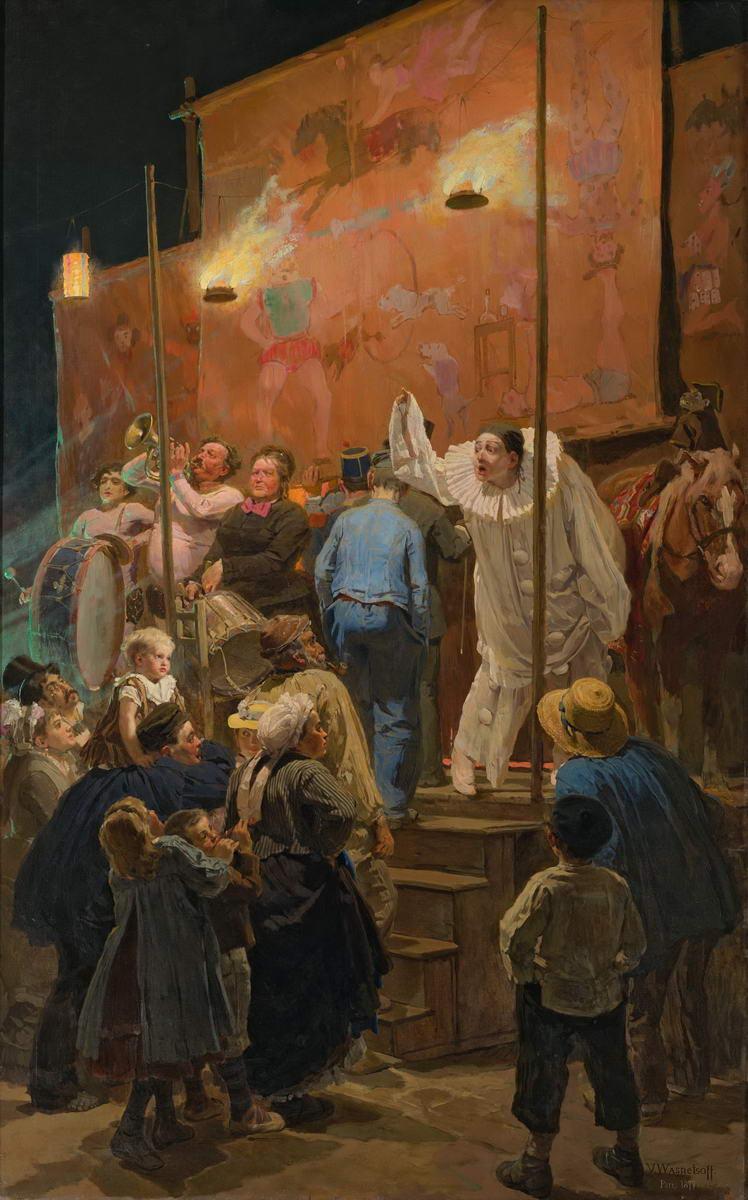
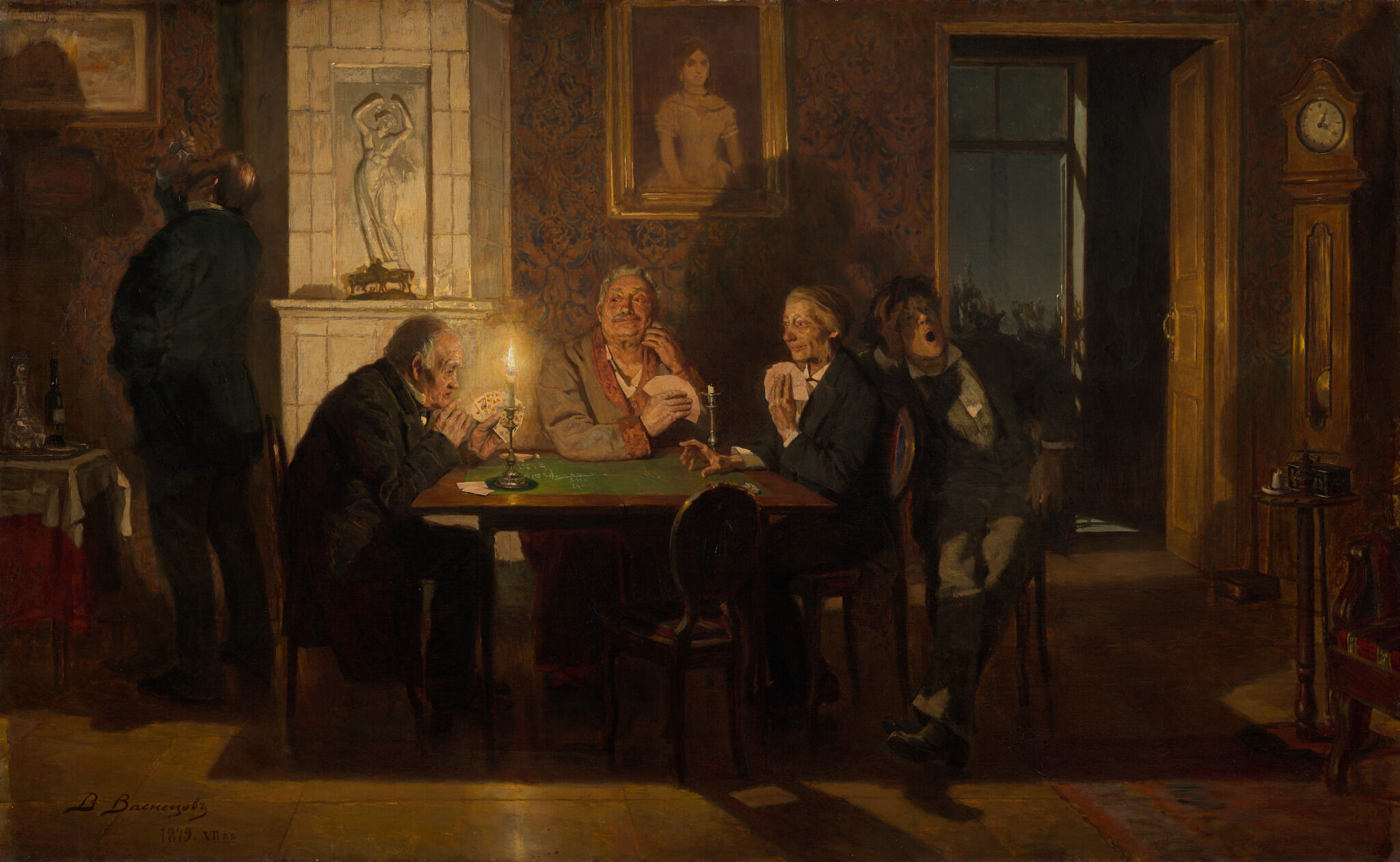
Творческие поиски «правды» и «идеала» привели Васнецова к созданию большого количества произведений на сюжеты из жизни «низов» Петербурга — «Трубочист» (ГТГ), « Сборщик на храм », «Дворник. Этюд головы» (Р-13352), « Носильщики », « Мальчик с бутылью », « Продавец кваса » и многих других. С. В. Кривонденченков. «В своем истинно национальном отразить вечное». Эволюция реалистической тенденции в творчестве В. М. Васнецова // Виктор Васнецов. СПб, 2024. С. 6.
* В. М. Васнецов — В. В. Стасову, 3 октября 1902 // Виктор Михайлович Васнецов: Письма. Дневники. Воспоминания. Суждения современников / Сост., вступ. ст. и примеч. Н. А. Ярославцевой. М., 1987. С. 190.
** В. М. Васнецов — В. В. Стасову, 20 сентября 1898 // Там же. С. 150.
State Russian Museum
Details
- Accession number
- Р-2343
What it shows
In the catalog
Sources
- State Russian Museum
- Image: State Russian Museum — © State Russian Museum
In the life of Viktor Vasnetsov
The whole life1863–1867
Elwiro Andriolli: “Give up the seminary”
The Polish artist Elwiro Andriolli, exiled to Vyatka after the uprising of 1863, noticed the young man’s talent and urged him to give up the seminary and go to the Academy of Arts — there were priests enough, good and bad, without him, but few people with such gifts; Vasnetsov helped him execute frescoes for Vyatka’s Alexander Nevsky Cathedral.
1867
He leaves the seminary for St Petersburg
In 1867, with his father’s blessing, he left the Vyatka seminary and set off for St Petersburg to enter the Academy of Arts; he raised the money for the journey by auctioning his paintings “Woman Harvester” and “Milk-maid” (both 1867).
1867–1868 · Education
Risovalnaya shkola Imperatorskogo obshchestva pooshchreniya khudozhestv
August 1868
Admitted to the Academy of Arts
In August 1868, at the second attempt, he was admitted to the Imperial Academy of Arts; the attempt a year earlier had not worked out.
1870
He meets Pavel Chistyakov
Pavel Chistyakov, back from Rome, saw Vasnetsov’s drawing “A Prince’s Icon-painting Workshop” at an Academy exhibition, asked to be introduced to its author and soon made him a regular pupil; Vasnetsov remembered his teacher as “an enemy of the formula” who could show each pupil the road to his own development.
summer 1871
He meets his future wife, Alexandra Ryazantseva
In the summer of 1871, home in Vyatka on academic leave, he met Alexandra Ryazantseva in the local library — a merchant’s daughter who would become one of the first women from Vyatka with a higher medical education; he was struck by “her eyes — stern and extraordinarily kind”.



![A Pig; Breton Peasant Kneeling [verso], Paul Gauguin, 1884-1888](https://api.nga.gov/iiif/13146db4-7e29-45f6-befe-7d3904ec97c0/full/!2400,2400/0/default.jpg)