ART WIKI32,979 on view
MapCollectionArtistsMuseumsExhibitionsJournal
Sign in

ART WIKI

Where the masterpiece hangs, and when they let you in.

Collections: Art Institute of Chicago, Getty Villa, Harvard Art Museums, Hirshhorn Museum and Sculpture Garden, J. Paul Getty Museum, Minneapolis Institute of Art, Musée du Louvre, National Gallery of Art, National Museum of Asian Art, National Portrait Gallery (Smithsonian), Pushkin State Museum of Fine Arts, Rijksmuseum, Smithsonian American Art Museum, SMK — National Gallery of Denmark, State Hermitage Museum, State Russian Museum, The Cleveland Museum of Art, The Metropolitan Museum of Art, The Museum of Modern Art, Tretyakov Gallery, Victoria and Albert Museum, Whitney Museum of American Art, State Catalogue of the Museum Fund of Russia (274 museums), Europeana (19 museums), Wikidata (6 museums), Paris Musées (12 museums), and Joconde, the French Ministry of Culture's museum database (495 museums). Images belong to their rights holders.

Sections

  • Map
  • Search
  • Collection
  • Masterpieces
  • On view now
  • Artists

More

  • Museums & galleries
  • Exhibitions
  • Journal
  • Where the data comes from
  • Privacy & cookies
HomeMapBrowse
  1. Collection/
  2. Herzog Anton Ulrich Museum/
  3. Saturnus
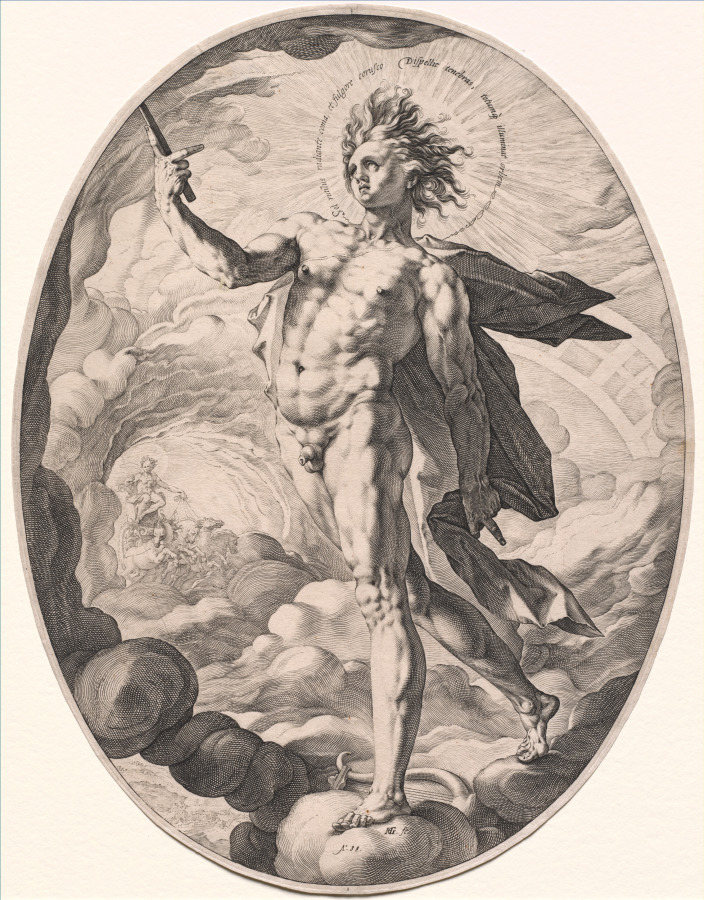
Saturnus, Hendrik Goltzius, 1592
Hendrick Goltzius, portraitHendrick GoltziusDutch, 1558–1617

Saturnus

1592 · Print

May one see it?

Unknown

Herzog Anton Ulrich Museum

Braunschweig, Germany

The owner is known; whether it is on view today is not.

In this state since
Sep 27, 2026
Source
The museum
On the mapMuseum page

Particulars

1592 · aged 34
15581617

Meanwhile, in the life of Hendrick Goltzius

The whole life
  1. 1590

    Departure for Italy

    He fled from his wife and, despite his illnesses, set out for Italy — via Hamburg and Munich to Venice, Bologna and Florence. Part of the way he traveled on foot, passing himself off as a commoner, "partly out of a love of mystification."

  2. January 1591

    Eight months in Rome

    He arrived in Rome in January 1591 and stayed eight months (with a brief sojourn in Naples). He discovered Raphael, was especially impressed by Michelangelo and Giambologna, and studied art from classical sculpture to the masters of the Renaissance.

  3. August 1591

    Return to Haarlem with a collection of drawings

    He returned to Haarlem, bringing from Italy a large collection of drawings that he used for the rest of his life; from the Roman material three engravings of classical statues are known, including the Farnese Hercules.

More by Hendrick Goltzius

All works

From the collection of Herzog Anton Ulrich Museum

Museum page

On the same theme · Gottheit (nicht christlich)

All works on the theme

What it shows

Gottheit (nicht christlich)GottSenseEngel, die jemanden krönen und/oder Palmzweige bringenSkulptur, Reproduktion einer Skulptur

In the catalog

PrintsRenaissance16th century

Sources

  • Herzog Anton Ulrich Museum
  • Image: Herzog Anton Ulrich Museum — CC BY-NC-SA 4.0
Lot and his Daughters, Hendrick Goltzius, 1616

Lot and his Daughters

1616 · Rijksmuseum

Fall of Man, Hendrick Goltzius, 1608

Fall of Man

1608 · State Hermitage Museum

Baptism, Hendrick Goltzius, 1608

Baptism

1608 · State Hermitage Museum

Dying Adonis, Hendrick Goltzius, 1609

Dying Adonis

1609 · Rijksmuseum

Vertumnus and Pomona, Hendrick Goltzius, 1613

Vertumnus and Pomona

1613 · Rijksmuseum

The Fall of Man, Hendrick Goltzius, 1616

The Fall of Man

1616 · National Gallery of Art

Apollo, Hendrick Goltzius, 1588

Apollo

1588 · The Cleveland Museum of Art

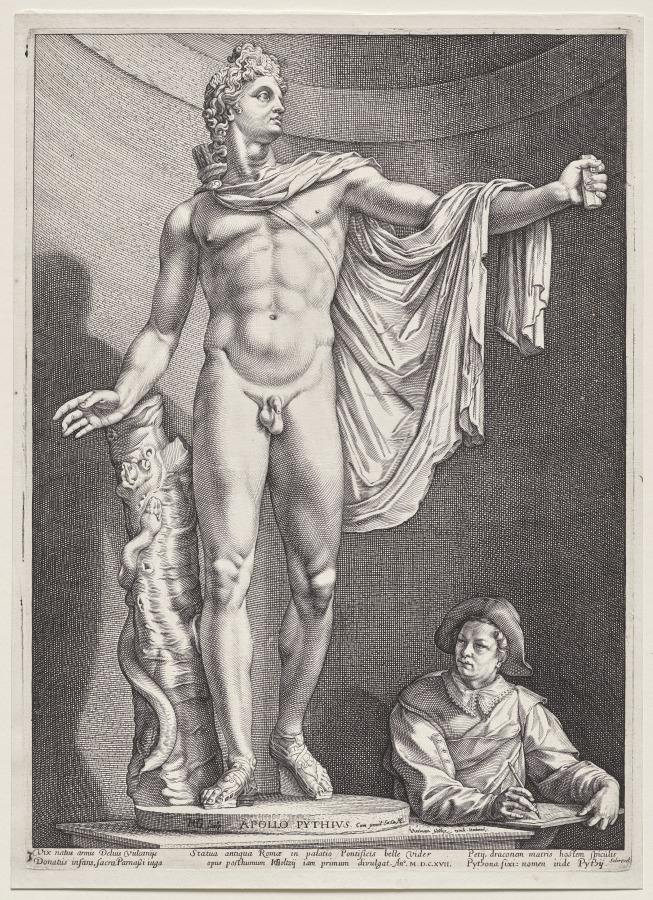
Apollo Belvedere, Hendrick Goltzius, 1592

Apollo Belvedere

1592 · The Cleveland Museum of Art

Portrait d'Adolphe de Vignacourt Grand Maître de Malthe, Caravaggio, 1704–1755

Caravaggio

Portrait d'Adolphe de Vignacourt Grand Maître de Malthe, 1704–1755

Ecce Homo, Caravaggio, 1674–1684

Caravaggio

Ecce Homo, 1674–1684

Heiliger Hieronymus, Caravaggio

Caravaggio

Heiliger Hieronymus

Bildnis eines Mannes, Rembrandt, 1839–1850

Rembrandt van Rijn

Bildnis eines Mannes, 1839–1850

Bildnis einer Frau, Rembrandt, 1839–1850

Rembrandt van Rijn

Bildnis einer Frau, 1839–1850

Tobias und seine Frau, Rembrandt, 1773

Rembrandt van Rijn

Tobias und seine Frau, 1773

Tobias und seine Frau, Rembrandt, 1773

Rembrandt van Rijn

Tobias und seine Frau, 1773

Lot mit seinen Töchtern, Rembrandt, 1771

Rembrandt van Rijn

Lot mit seinen Töchtern, 1771

[Medea oder die Hochzeit von Jason und Krëusa; Medea: Or the Marriage of Jason and Creusa; La Médée, ou le mariage de Jason et de Crëuse], Rembrandt, 1648

Rembrandt van Rijn

[Medea oder die Hochzeit von Jason und Krëusa; Medea: Or the Marriage of Jason and Creusa; La Médée, ou le mariage de Jason et de Crëuse], 1648

Herzog Anton Ulrich Museum

[Diana im Bade; Diana at the Bath; Vénus au bain], Rembrandt, 1631

Rembrandt van Rijn

[Diana im Bade; Diana at the Bath; Vénus au bain], 1631

Herzog Anton Ulrich Museum

[Medea oder die Hochzeit von Jason und Krëusa; Medea: Or the Marriage of Jason and Creusa; La Médée, ou le mariage de Jason et de Crëuse], Rembrandt, 1648

Rembrandt van Rijn

[Medea oder die Hochzeit von Jason und Krëusa; Medea: Or the Marriage of Jason and Creusa; La Médée, ou le mariage de Jason et de Crëuse], 1648

Herzog Anton Ulrich Museum

Sine Cerere et Bacchus friget Venus, Peter Paul Rubens, 1597–1640

Peter Paul Rubens

Sine Cerere et Bacchus friget Venus, 1597–1640

Herzog Anton Ulrich Museum

Venus entwaffnet Mars, Anthony van Dyck, 1619–1641

Anthony van Dyck

Venus entwaffnet Mars, 1619–1641

Herzog Anton Ulrich Museum

Thetis in der Schmiede des Vulkan, Anthony van Dyck, 1686

Anthony van Dyck

Thetis in der Schmiede des Vulkan, 1686

Herzog Anton Ulrich Museum

[Merkur tötet Argus; Mercury killing Argus], Jacob Jordaens, 1652

Jacques Jordaens

[Merkur tötet Argus; Mercury killing Argus], 1652

Herzog Anton Ulrich Museum

[Jupiter wird von der Ziege Amaltheia genährt; Jupiter nourished by the goat Amalthea], Jacob Jordaens, 1652

Jacques Jordaens

[Jupiter wird von der Ziege Amaltheia genährt; Jupiter nourished by the goat Amalthea], 1652

Herzog Anton Ulrich Museum