ART WIKI33,040 on view
MapCollectionArtistsMuseumsExhibitionsJournal
Sign in

ART WIKI

Where the masterpiece hangs, and when they let you in.

Collections: Art Institute of Chicago, Getty Villa, Harvard Art Museums, Hirshhorn Museum and Sculpture Garden, J. Paul Getty Museum, Minneapolis Institute of Art, Musée du Louvre, National Gallery of Art, National Museum of Asian Art, National Portrait Gallery (Smithsonian), Pushkin State Museum of Fine Arts, Rijksmuseum, Smithsonian American Art Museum, SMK — National Gallery of Denmark, State Hermitage Museum, State Russian Museum, The Cleveland Museum of Art, The Metropolitan Museum of Art, The Museum of Modern Art, Tretyakov Gallery, Victoria and Albert Museum, Whitney Museum of American Art, State Catalogue of the Museum Fund of Russia (274 museums), Europeana (19 museums), Wikidata (6 museums), Paris Musées (12 museums), and Joconde, the French Ministry of Culture's museum database (495 museums). Images belong to their rights holders.

Sections

  • Map
  • Search
  • Collection
  • Masterpieces
  • On view now
  • Artists

More

  • Museums & galleries
  • Exhibitions
  • Journal
  • Where the data comes from
  • Privacy & cookies
HomeMapBrowse
  1. Collection/
  2. The Cleveland Museum of Art/
  3. Saint Sebastian
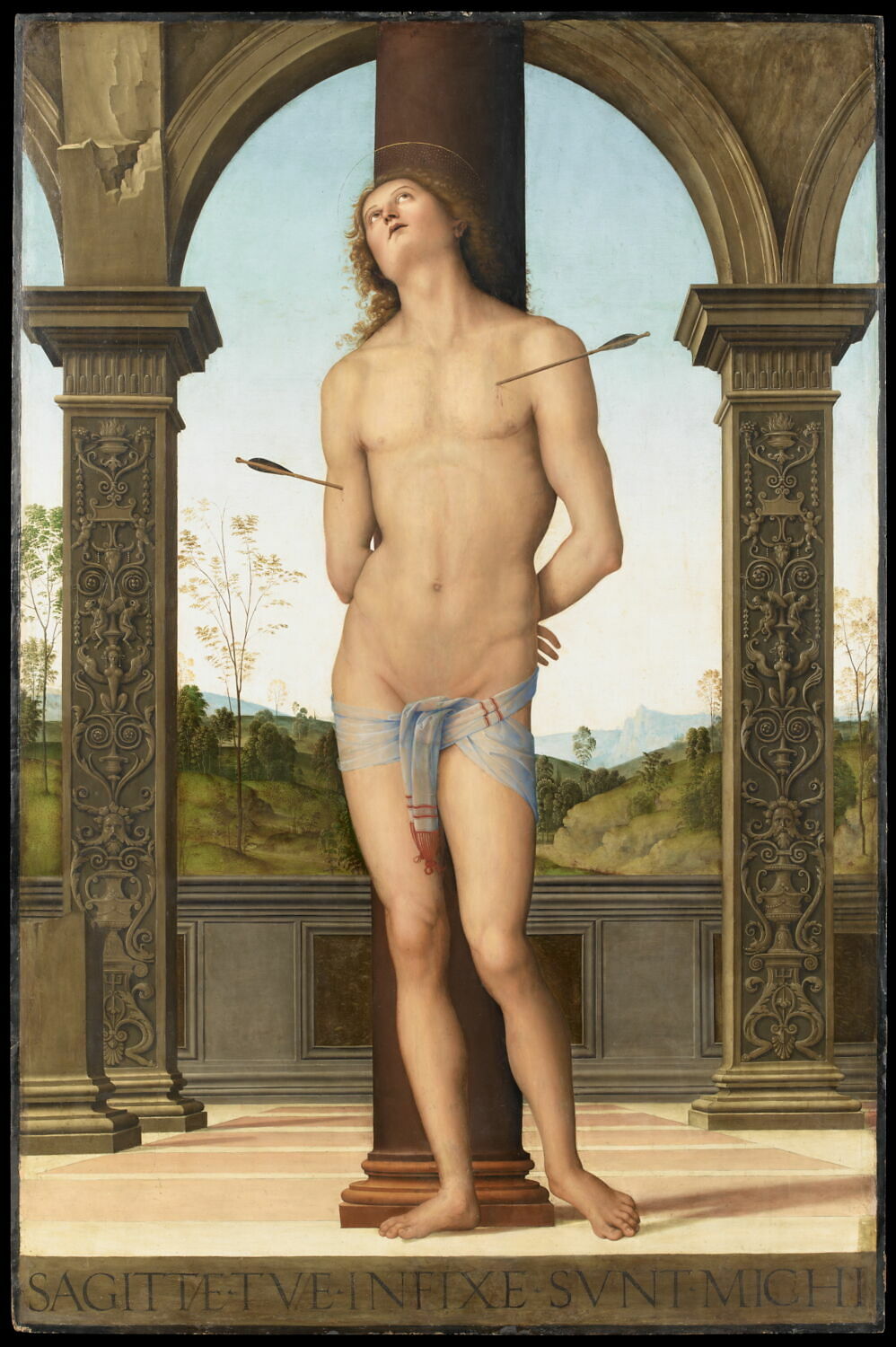
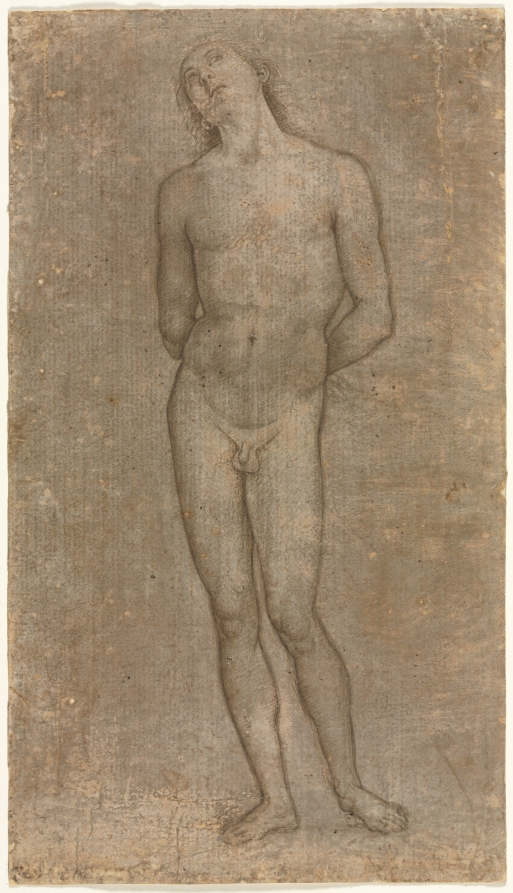
Saint Sebastian, Perugino, c. 1493
Pietro Perugino, portraitPietro PeruginoItalian, 1448–1523

Saint Sebastian

c. 1493 · Drawing

May one see it?

Not receiving at present

The Cleveland Museum of Art

Cleveland, United States

It belongs to the collection, but is not on display at present.

Checked
9 days ago
In this state since
Aug 19, 2026
Source
The museum
On the mapMuseum page

About the work

The Florentine painter Perugino made drawings to record figural types and poses that could be repeated throughout his finished paintings. He used the elegant, graceful figure seen here, with its soft athletic body and upwardly turned gaze, in at least two paintings of the 3rd-century martyr Saint Sebastian (the related paintings are now in the collection of the Galleria degli Uffizi, and the Louvre). Sebastian was shot with arrows after being exposed as a Christian convert; he was particularly revered during the Renaissance as a protector against illness such as the plague. Portrayal of the saint required Perugino to express his knowledge of human anatomy, while evoking the gentle s-curve associated with classical sculpture. Drawn with metalpoint, a typical drawing medium in the 1400s, the reinforced lines along the contour of the figure indicate that it was probably used by the artist or by one of his many studio assistants to transfer the design to another sheet.

The Cleveland Museum of Art

Particulars

c. 1493
14481523
Accession number
1958.411

In the catalog

Drawings & watercolorsSilverpointRenaissance15th centuryItaly, 15th century

Sources

  • The Cleveland Museum of Art
  • Image: The Cleveland Museum of Art — Museum open access

Meanwhile, in the life of Pietro Perugino

The whole life
  1. 1486–1499

    Two studios: in Florence and in Perugia

    Between 1486 and 1499 Perugino works mainly between Florence and Perugia, maintaining a studio in each city. In the 1480s and 1490s he is one of the most celebrated artists of Italy.

  2. 1491

    The commission on the facade of Santa Maria del Fiore

    Perugino takes part in the commission that reviews the designs for decorating the facade of Santa Maria del Fiore in Florence.

  3. September 1493

    Marriage to Chiara Fancelli and return to Florence

    According to Vasari, Perugino returns to Florence in September 1493 to marry Chiara, daughter of the architect Luca Fancelli. That same year Florence again becomes his permanent home, although he continues to accept work elsewhere.

  4. 1494

    Lorenzo di Credi paints Perugino's portrait

    Lorenzo di Credi paints Perugino's portrait (now in the Uffizi) and places in it a scroll inscribed Timete Deum — 'Fear God'; this seems odd, as Vasari is the main source stating that Perugino had very little religion and openly doubted the immortality of the soul. Perugino himself had painted a portrait of Credi in 1488.
More by Pietro Perugino

All works
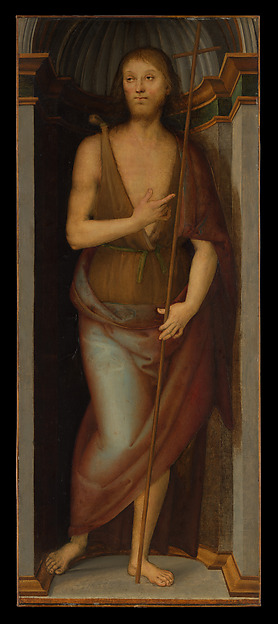
Saint John the Baptist; Saint Lucy, Perugino

Saint John the Baptist; Saint Lucy

The Metropolitan Museum of Art

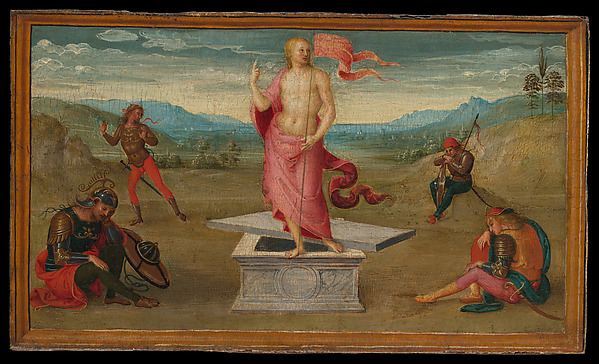
The Resurrection, Perugino

The Resurrection

The Metropolitan Museum of Art

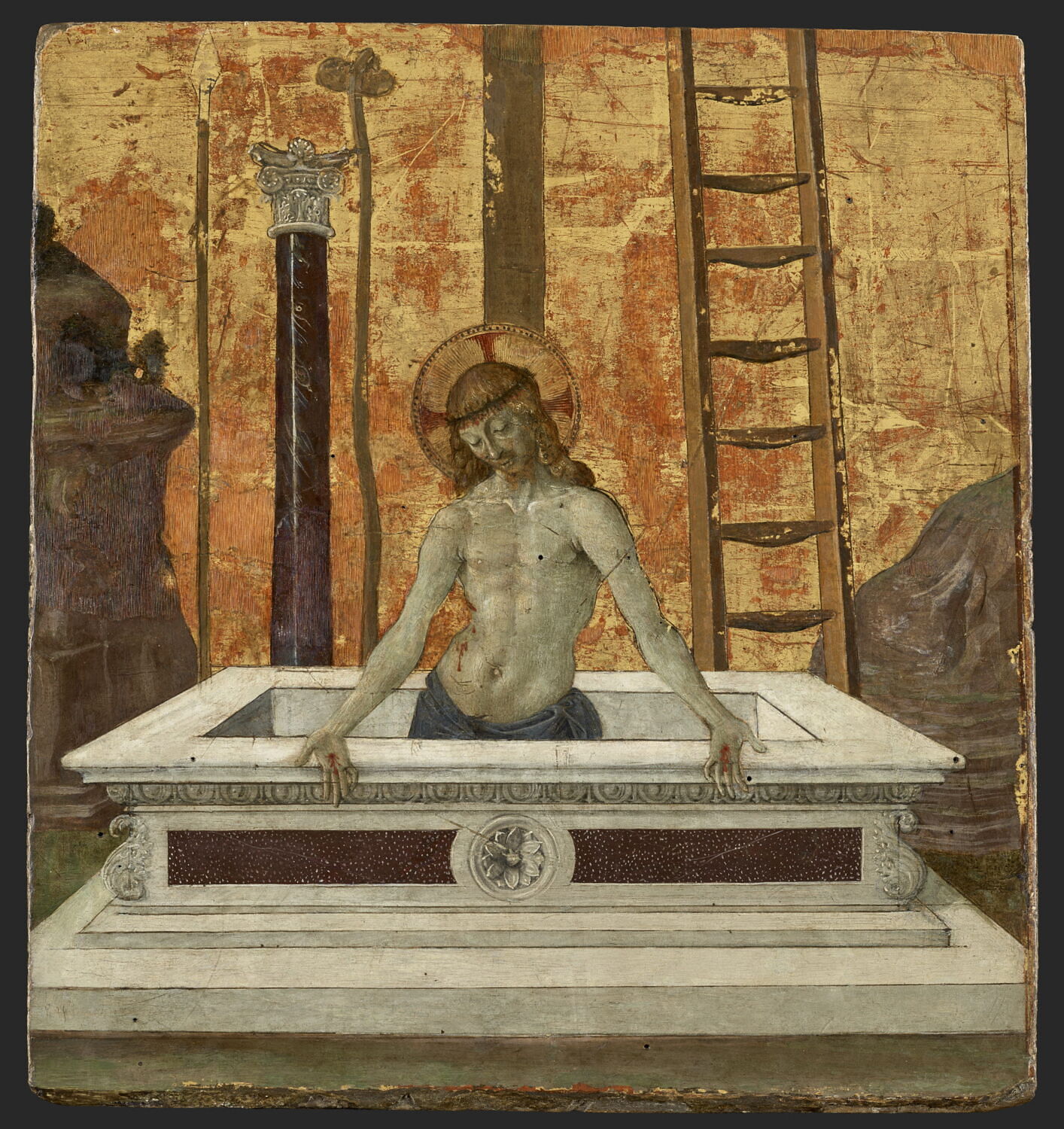
Le Christ mort au tombeau, Pérugin, 3e quart du XVe siècle (1450 - 1475)

Le Christ mort au tombeau

third quarter of the 15th century (1450–1475) · Musée du Louvre

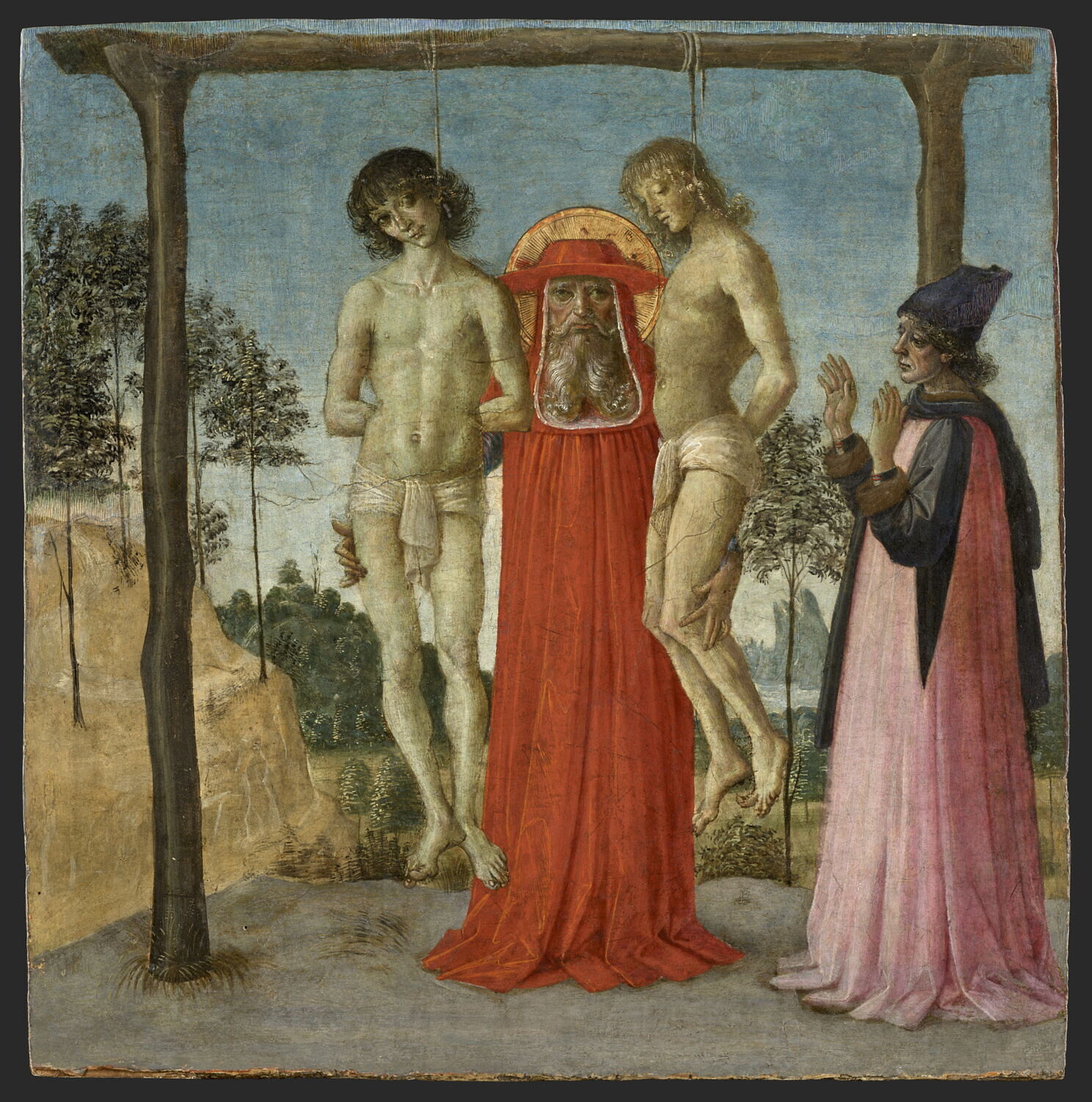
Saint Jérôme soutenant deux jeunes pendus injustement condamnés, Pérugin, 3e quart du XVe siècle (1450 - 1475)

Saint Jérôme soutenant deux jeunes pendus injustement condamnés

third quarter of the 15th century (1450–1475) · Musée du Louvre

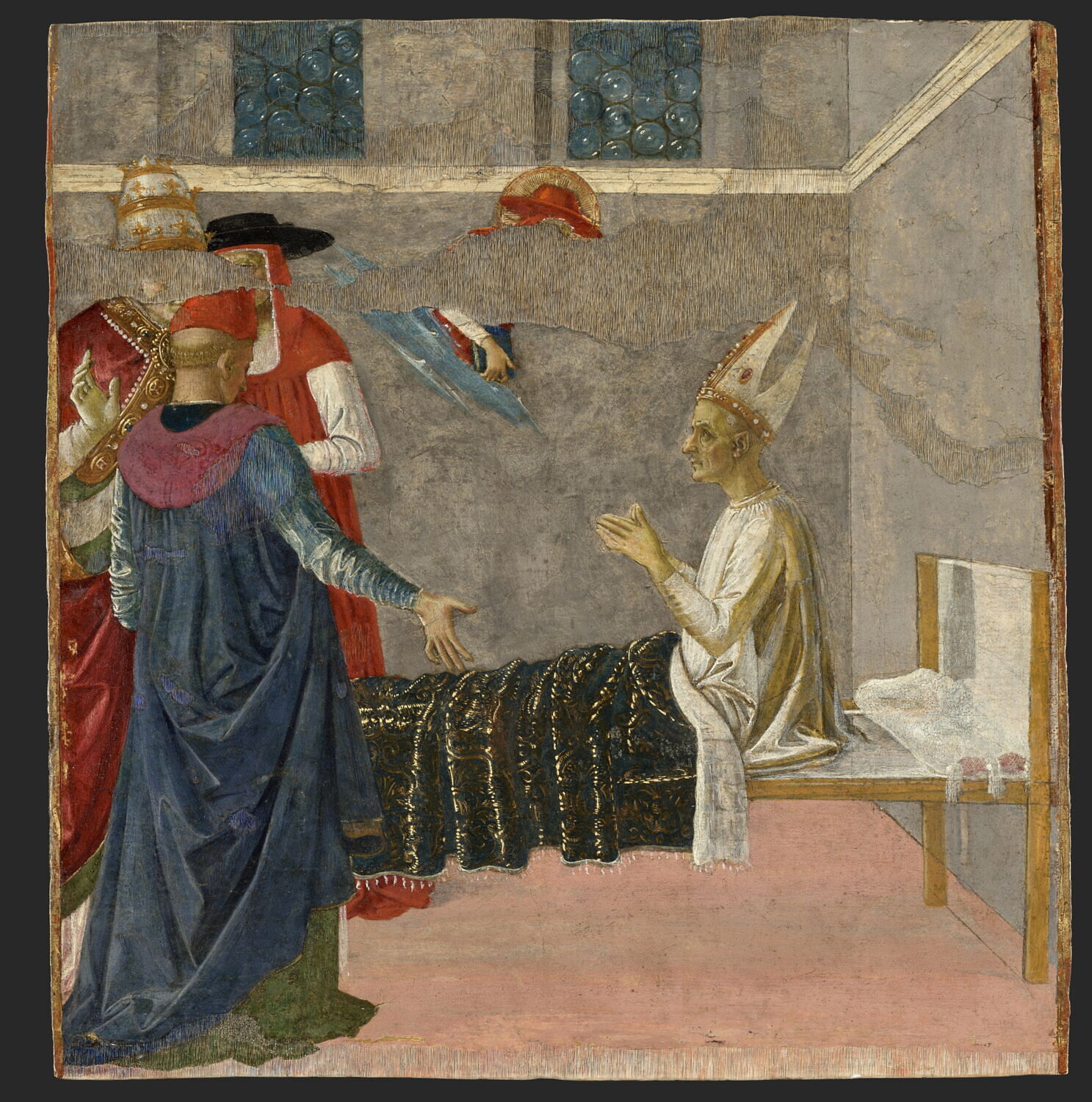
Saint Jérôme ressuscitant l'évêque Andréa, Pérugin, 3e quart du XVe siècle (1450 - 1475)

Saint Jérôme ressuscitant l'évêque Andréa

third quarter of the 15th century (1450–1475) · Musée du Louvre

La Vierge et l'Enfant entourés de deux anges, sainte Rose et sainte Catherine, Pérugin, 4e quart du XVe siècle (1475 - 1500)

La Vierge et l'Enfant entourés de deux anges, sainte Rose et sainte Catherine

last quarter of the 15th century (1475–1500) · Musée du Louvre

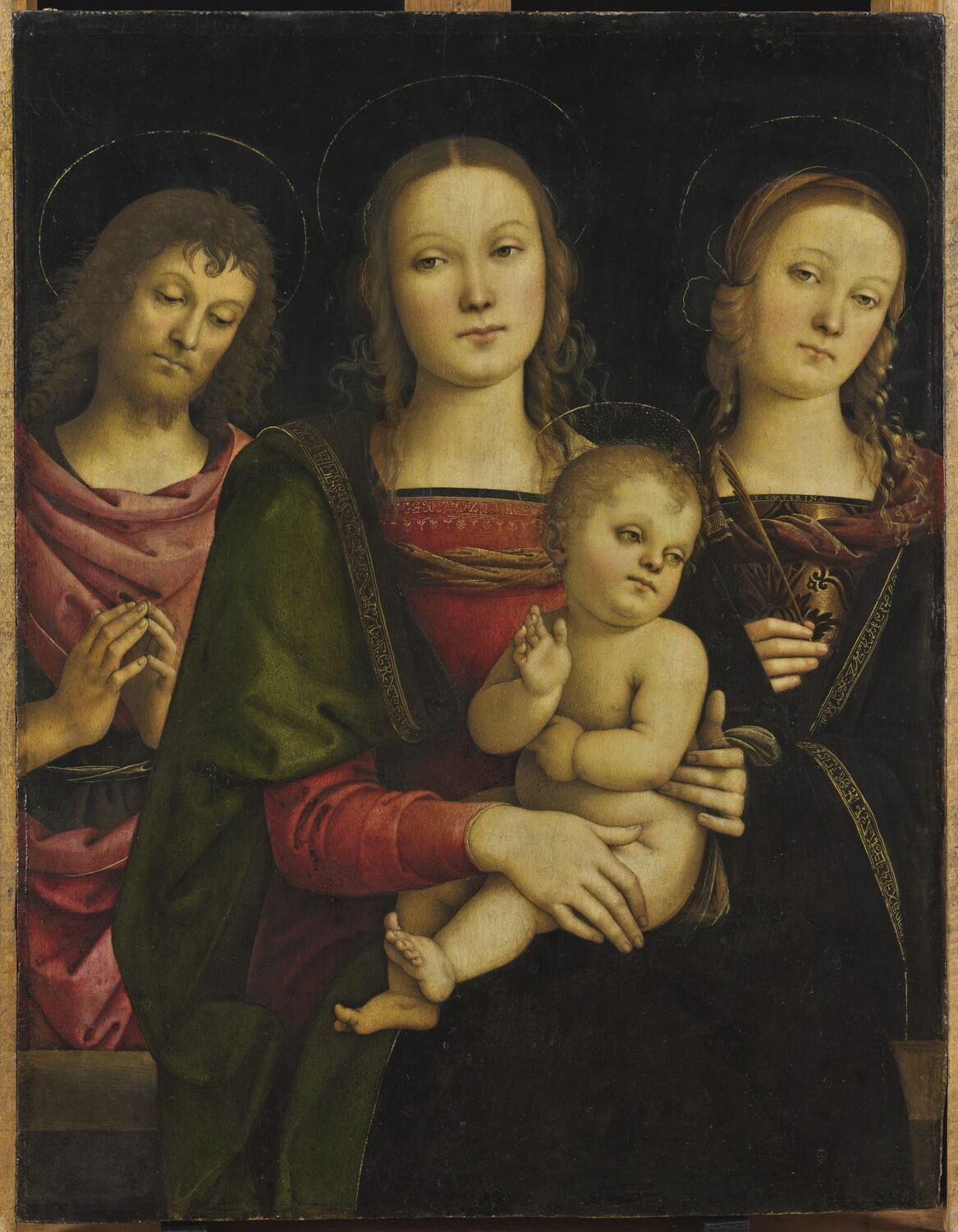
La Vierge et l'Enfant entourés de saint Jean Baptiste et de sainte Catherine d'Alexandrie, Pérugin, 4e quart du XVe siècle (1475 - 1500)

La Vierge et l'Enfant entourés de saint Jean Baptiste et de sainte Catherine d'Alexandrie

last quarter of the 15th century (1475–1500) · Musée du Louvre

Saint Sébastien, Pérugin, 4e quart du XVe siècle (1475 - 1500)

Saint Sébastien

last quarter of the 15th century (1475–1500) · Musée du Louvre

Neighbors at The Cleveland Museum of Art

Museum page
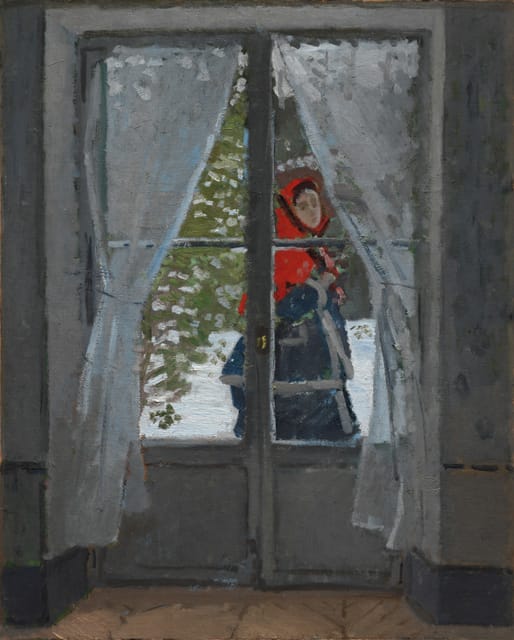
The Red Kerchief, Claude Monet, c. 1868–73

Claude Monet

The Red Kerchief, c. 1868–73

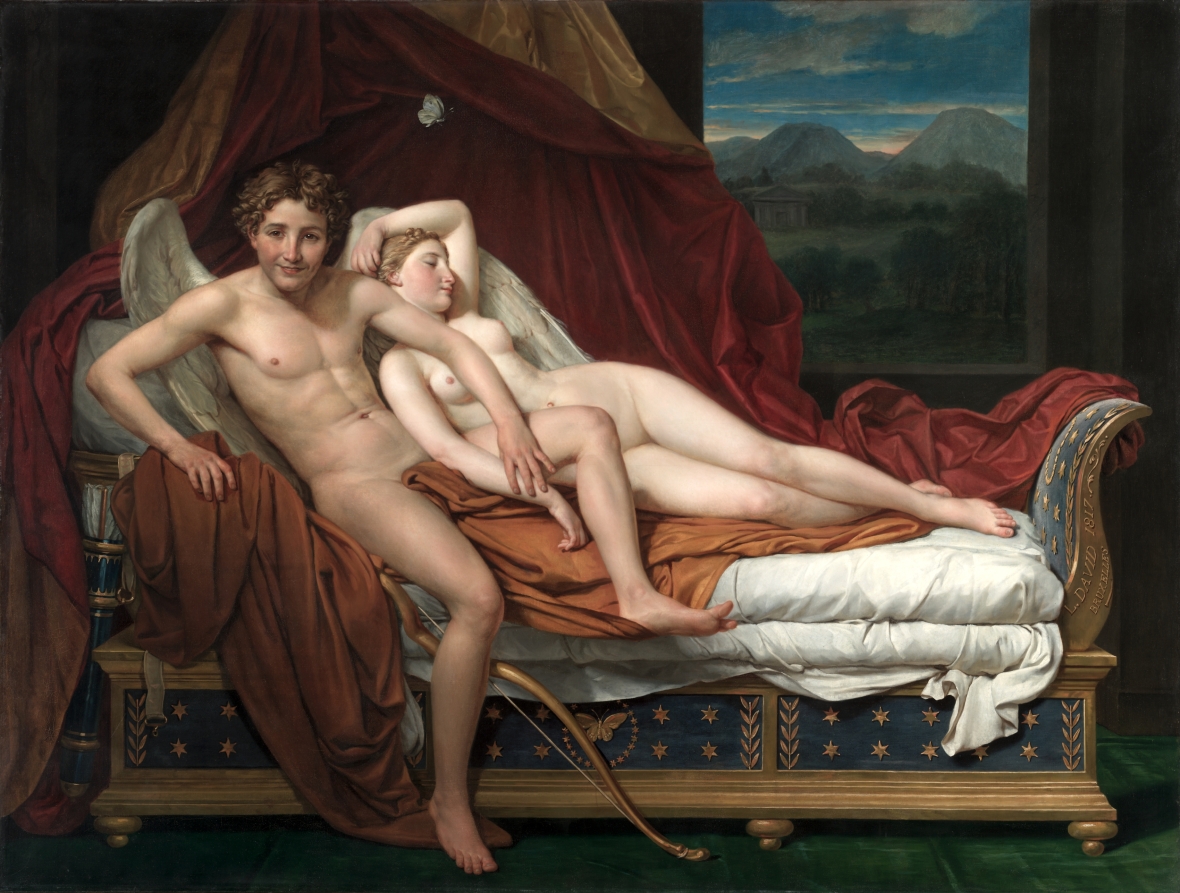
Cupid and Psyche, Jacques-Louis David, 1817

Jacques-Louis David

Cupid and Psyche, 1817

Mars, Venus, and Eros, Marcantonio Raimondi possibly after Andrea Mantegna, 1508

Andrea Mantegna

Mars, Venus, and Eros, 1508

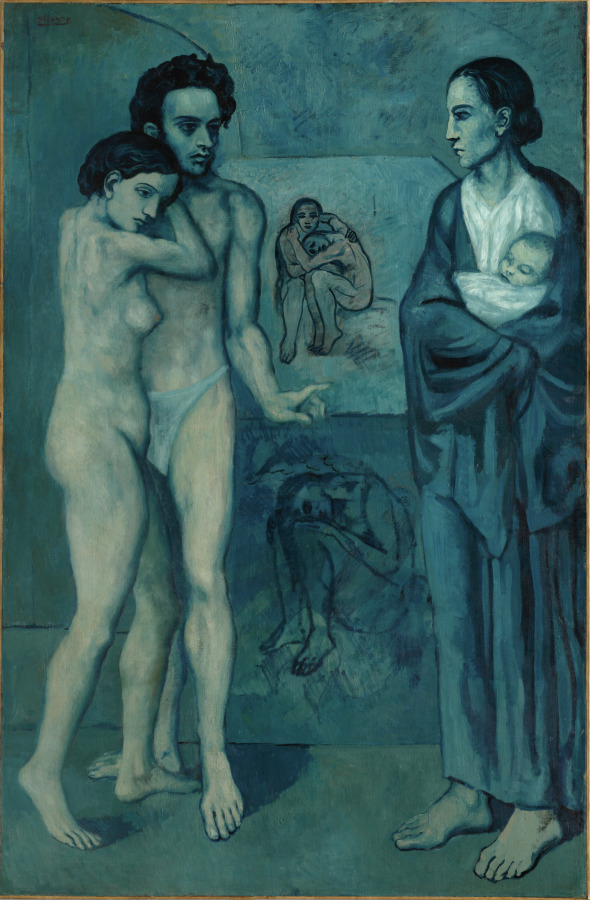
La Vie, Pablo Picasso, 1903

Pablo Picasso

La Vie, 1903

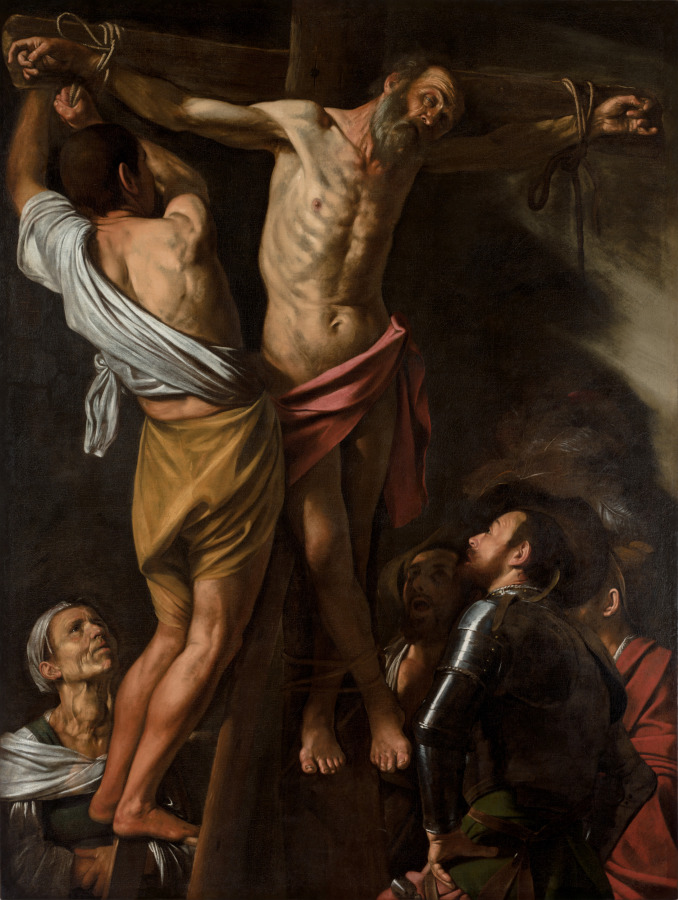
The Crucifixion of Saint Andrew, Caravaggio, 1606–7

Caravaggio

The Crucifixion of Saint Andrew, 1606–7

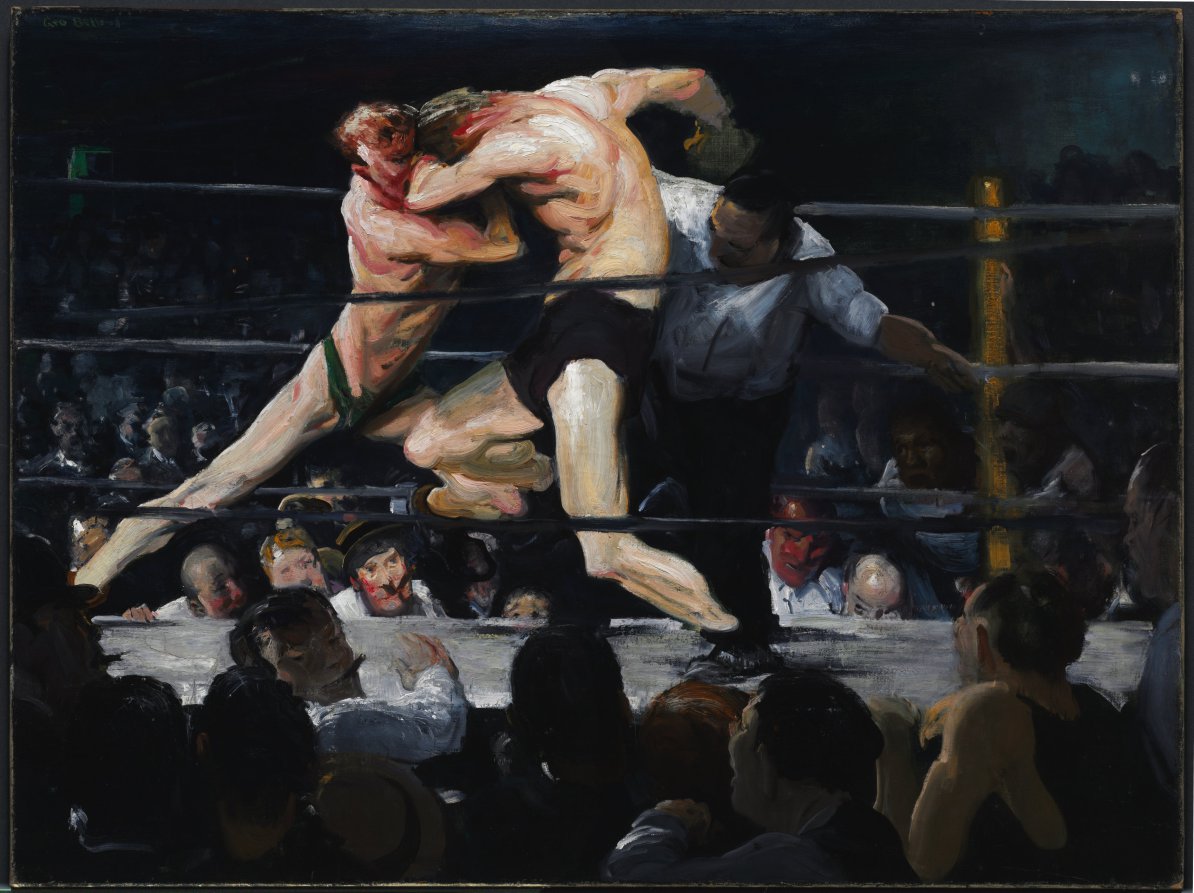
Stag at Sharkey's, George Bellows, 1909

George Bellows

Stag at Sharkey's, 1909

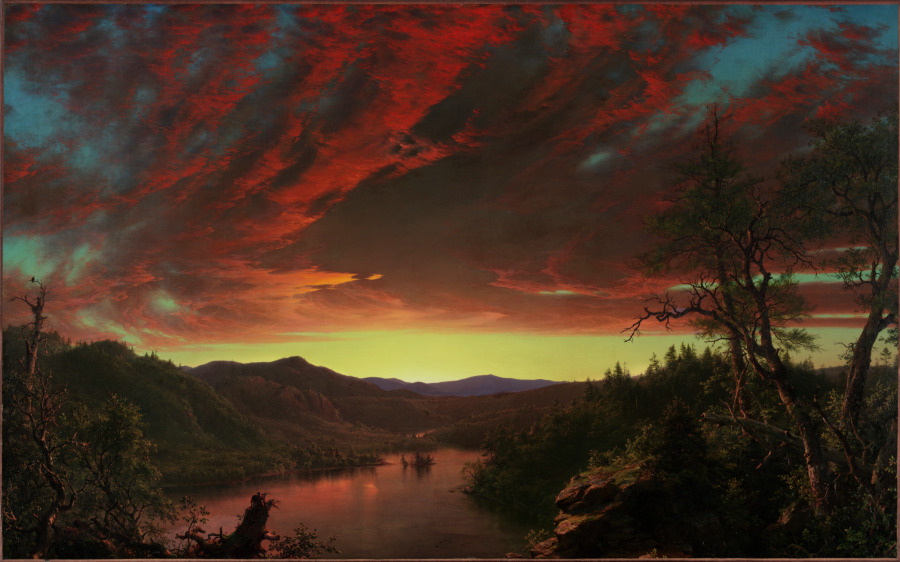
Twilight in the Wilderness, Frederic Edwin Church, 1860

Frederic Edwin Church

Twilight in the Wilderness, 1860

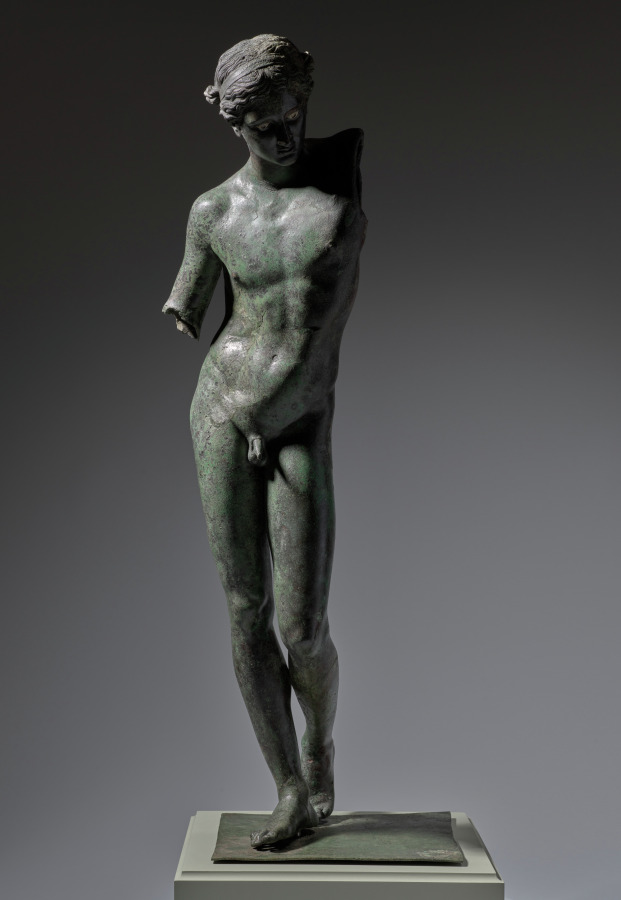
The Cleveland Apollo: Apollo Sauroktonos (Lizard-Slayer) or Apollo the Python-Slayer, Praxiteles, c. 350–200 BCE

Praxiteles

The Cleveland Apollo: Apollo Sauroktonos (Lizard-Slayer) or Apollo the Python-Slayer, c. 350–200 BCE