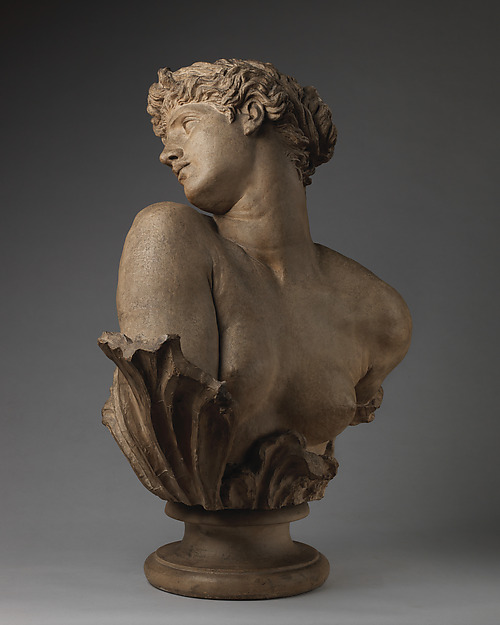
George Frederic WattsBritish, 1817–1904
Russell Gurney
May one see it?
Unknown

London, United Kingdom
The owner is known; whether it is on view today is not.
- In this state since
- Source
- The museum
Particulars
- Accession number
- NG1654
In the catalog
Sources
- Wikidata
- Image: The National Gallery — George Frederic Watts · Public domain · Wikimedia Commons
Meanwhile, in the life of George Frederic Watts
The whole life1850–1871
Lives with the Prinseps at Little Holland House
After meeting Henry Thoby Prinsep and his wife Sara in his studio, Watts enters the Prinseps’ bohemian circle, which includes Sara’s sisters and Julia Margaret Cameron; in 1850 he helps them take a 21-year lease on Little Holland House and lives there with them and their salon for those years. Of pupils he accepted only two — the hosts’ son Valentine Cameron Prinsep and John Roddam Spencer Stanhope; both remained friends, but neither became a major artist.
early 1870s
Commissions a new London home from Cockerell
With the lease on Little Holland House nearing its end and the building soon to be demolished, Watts commissions F. P. Cockerell to build a new London home nearby — New Little Holland House, backing onto Lord Leighton’s estate.
early 1870s
Buys a house at Freshwater on the Isle of Wight
Watts acquires a house at Freshwater on the Isle of Wight, where his friends Julia Margaret Cameron and Lord Tennyson already have homes. To keep up his friendship with the Prinsep family as their children begin to leave home, he builds The Briary for them nearby and adopts their relative Blanche Clogstoun.
1870s
A revised “House of Life” under Max Müller’s influence
The “House of Life” — a planned epic symbolic cycle in which the emotions and aspirations of life are expressed in one universal symbolic language — receives a revised version in the 1870s. Watts’s association with Rossetti and the Aesthetic movement changes: he combines the Classical tradition with a deliberately agitated, troubled surface, draws on the ideas of Max Müller, the founder of comparative religion, and hopes to trace the evolving mythologies of the world’s peoples, fusing spiritual ideas with modern science, above all Darwinian evolution.
1877
A friend opens the Grosvenor Gallery
In 1877 Watts’s friend Coutts Lindsay opens the Grosvenor Gallery, which will prove an ideal venue for the artist’s work over the next ten years.
1877
The decree for divorce from Ellen Terry comes through
Thirteen years after the wedding the decree nisi dissolving Watts’s marriage to Ellen Terry finally comes through.