Frank StellaAmerican, 1936–2024
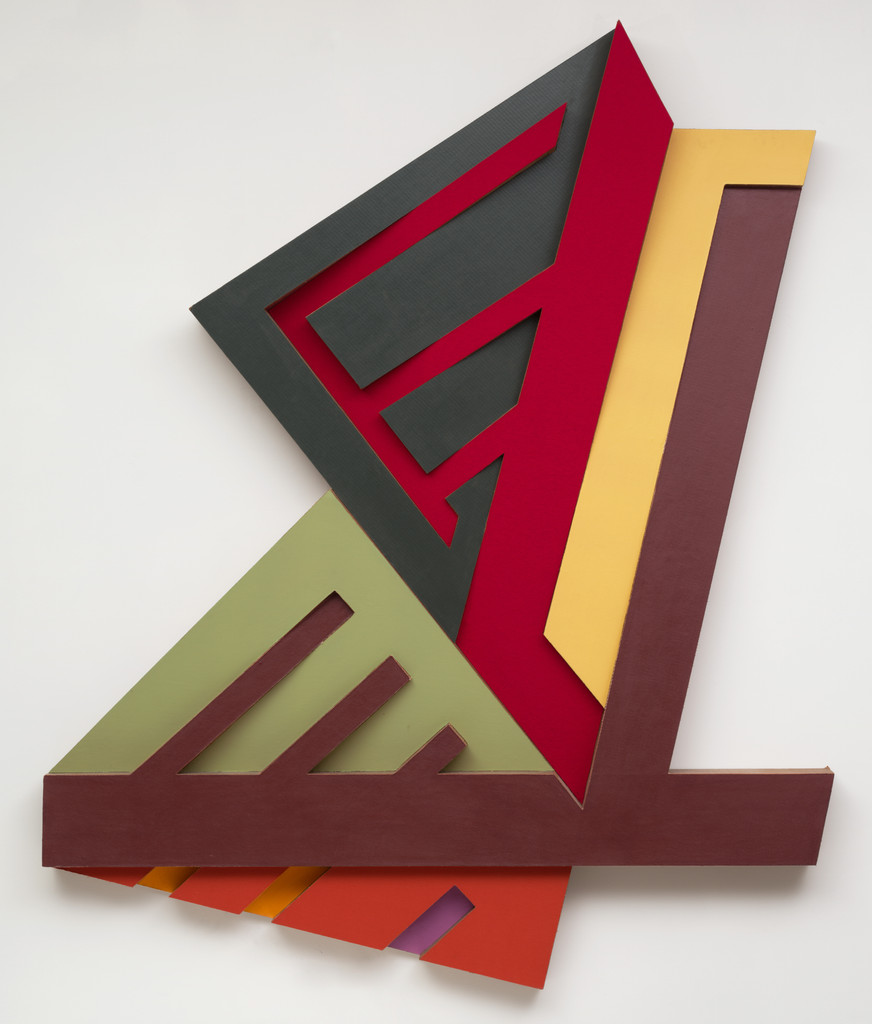
Rowley
Can I see it?
Not on view at present
Where is “Rowley” now? Collection: National Gallery of Art, Washington, D.C. Not on view at present. Checked November 23, 2026.

Washington, D.C., United States
It belongs to the collection, but is not on display at present.
- Checked
- In this state since
- Source
- The museum
Details
- Accession number
- 2004.30.17
What it shows
In the catalog
Sources
- National Gallery of Art
- Image: National Gallery of Art — © the artist or rights holder
In the life of Frank Stella
The whole life1959–1960
“Sixteen Americans” at MoMA
Four of his black pinstripe paintings are shown at the Museum of Modern Art in the exhibition Sixteen Americans, alongside works by Louise Nevelson, Ellsworth Kelly, Jasper Johns and Robert Rauschenberg. Many critics were outraged, but today the works are considered seminal in 20th-century American art.
1960
First show at Leo Castelli's gallery
His first show at the New York gallery of the dealer Leo Castelli brings few sales. Stella shares studio space with Hollis Frampton and Carl Andre, who also attended Phillips Academy, and scrounges a living by renting cold-water flats and painting houses.
1960s
Travels in the Middle East
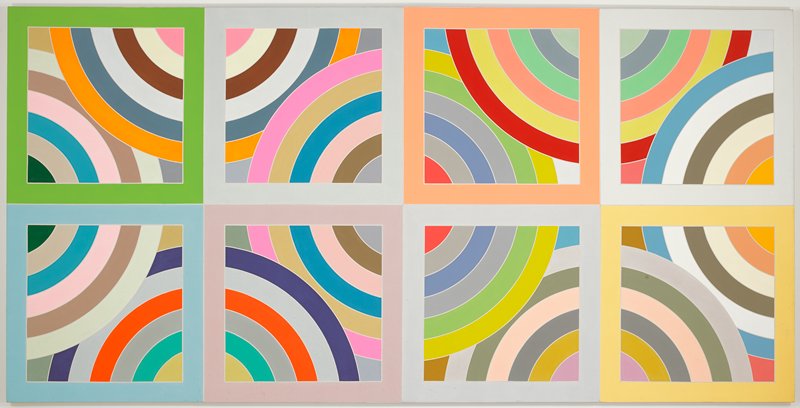
He visits circular-plan cities in the Middle East and is especially intrigued by the arches and decorative patterns he sees in the architecture and art of Iran; these cities will later give their names to works of the Protractor series.
1961
Married: Barbara Rose
1961
Follows Barbara Rose to Pamplona
Barbara Rose, later a well-known art critic, goes to Spain on a Fulbright fellowship; Stella follows her, and they marry in London that November. On their return to New York the couple move into an apartment near Union Square.
1964
Radio discussion with Judd and Flavin
In a radio discussion of contemporary art with fellow artists Donald Judd and Dan Flavin, Stella sums up his approach: only what can be seen is there — “What you see is what you see.” The tautology later became known as the unofficial motto of minimalism.