 Nicholas RoerichRussian, 1874–1947
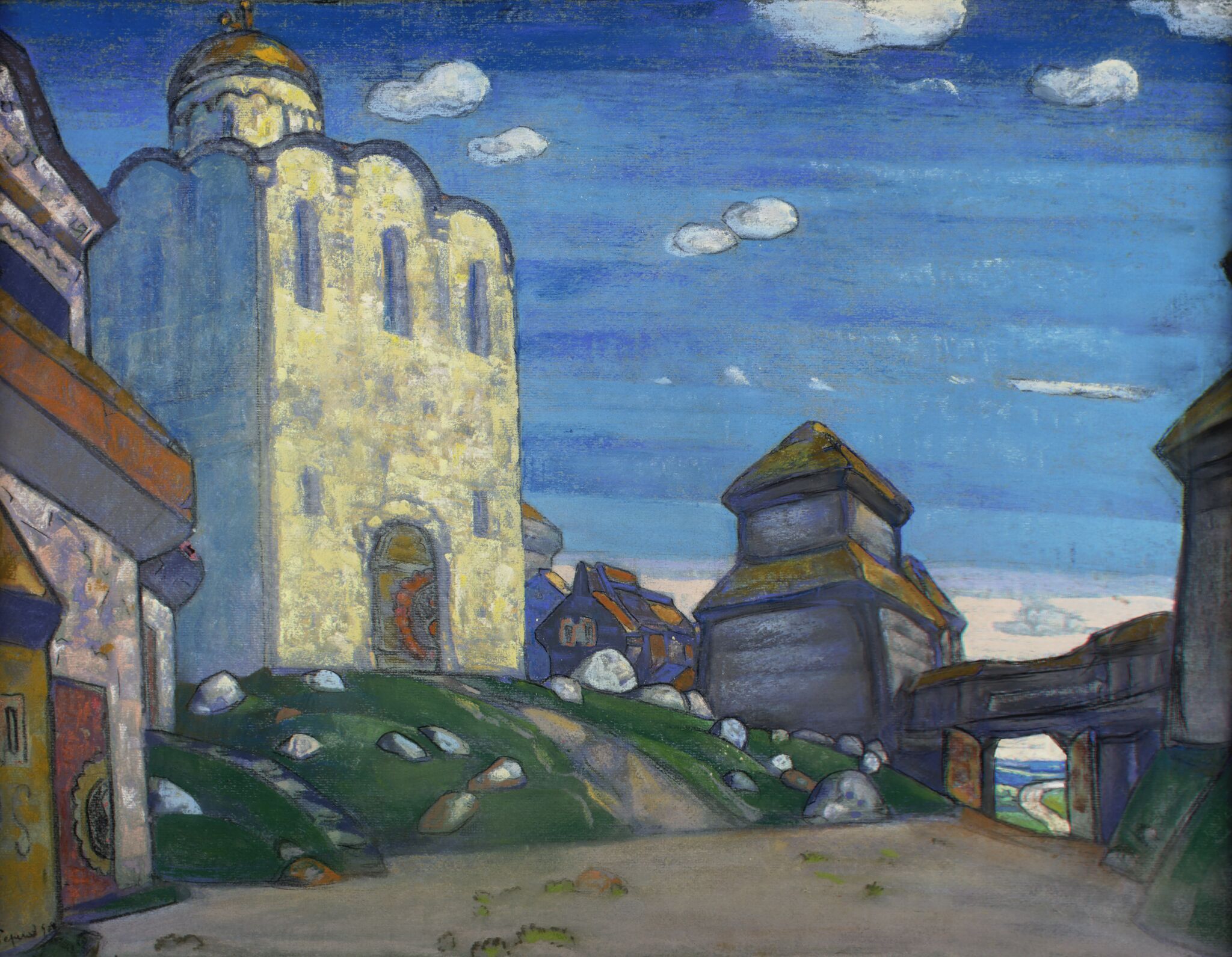
Путивль
May one see it?
Unknown

Tretyakov Gallery
Moscow, Russia
The owner is known; whether it is on view today is not.
- In this state since
- Source
- The museum
About the work
In the museum's own words — in Russian
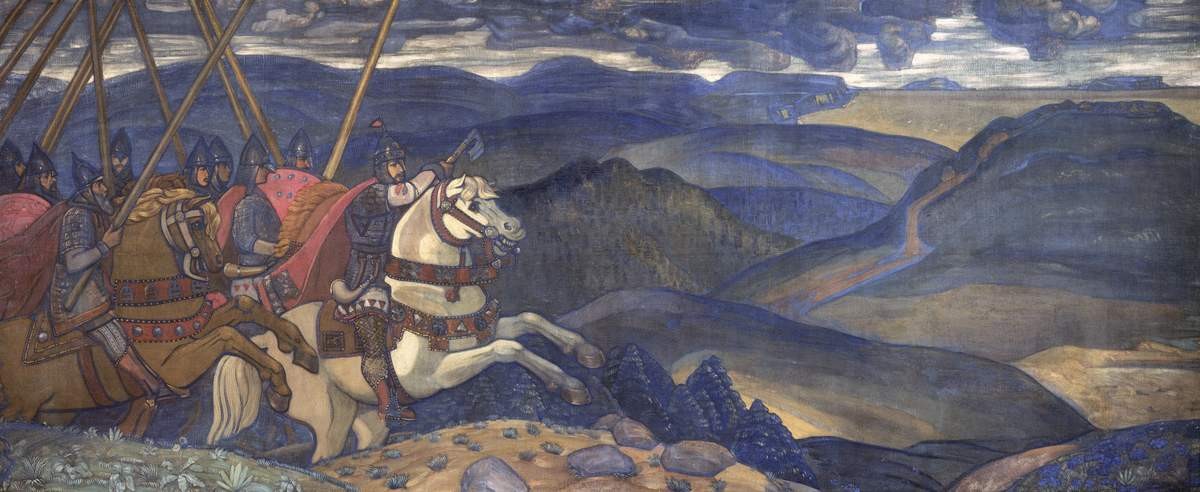
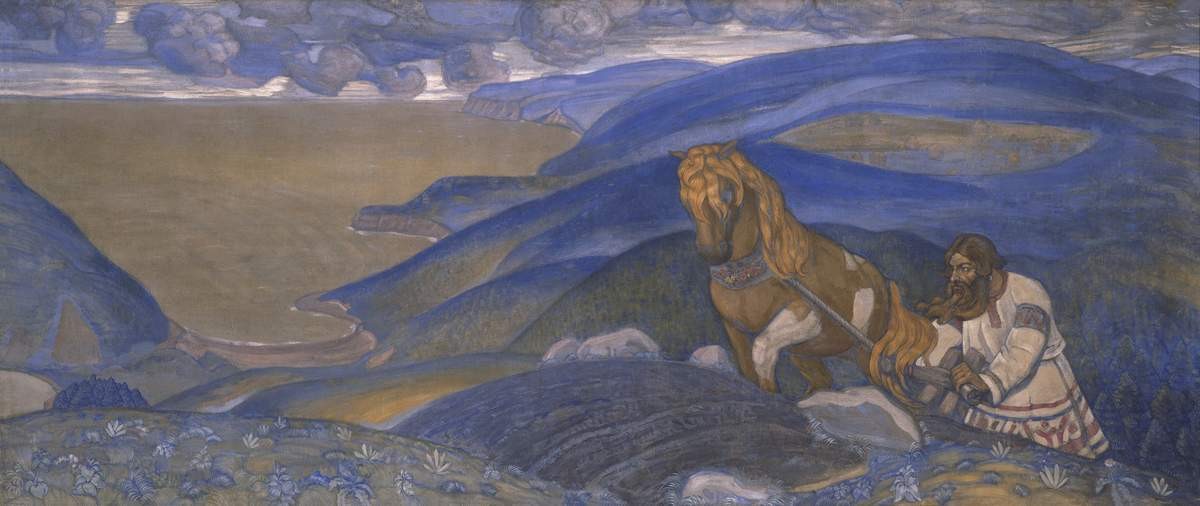
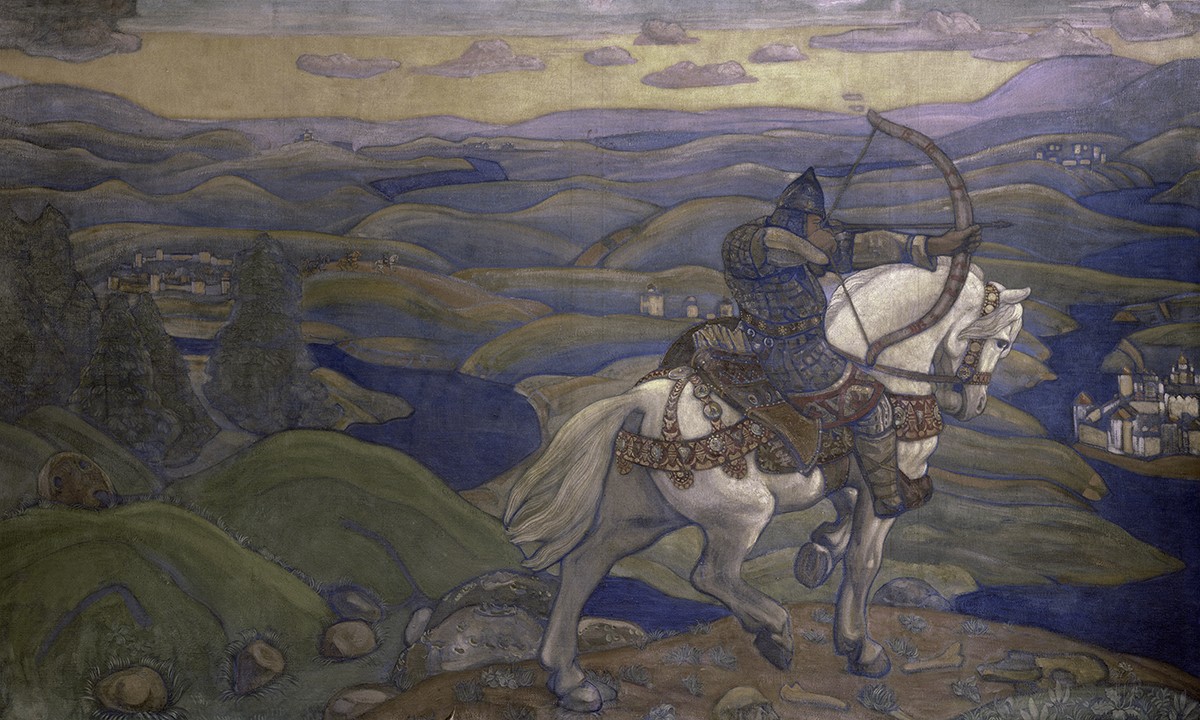
Оперы «Князь Игорь» Александра Бородина и «Псковитянка» Николая Римского-Корсакова были первыми спектаклями антрепризы Сергея Дягилева, в которых в качестве художника принимал участие Николай Рерих. К тому времени мастер зарекомендовал себя как знаток русской старины, был автором значительных полотен на исторические темы, участвовал в археологических раскопках и изучал древние города в экспедициях, что нашло отражение в работах для «Князя Игоря». И хотя Рерих подготовил эскизы декораций и костюмов ко всей опере, в театре Шатле в Париже в 1909 году были показаны только «Половецкие пляски» – балетный фрагмент второго акта.
Read on
Публика и критики высоко оценили спектакль, в том числе его художественное оформление (по эскизам Рериха декорации исполнил Борис Анисфельд). «После успеха “Игоря” с “Половецкими плясками” и удачных выставок Бенуа назвал мои выступления “барсовыми прыжками”», – позже вспоминал Рерих. На сцене удалось достичь единства музыки, танца и декораций, в совокупности служивших выражению стихии Востока.
Впоследствии постановка была востребована театрами всего мира. К работе над ее оформлением, наряду с «Весной священной» Игоря Стравинского, Рерих возвращался во все периоды творчества, так что эскизы разных лет к «Князю Игорю» позволяют наглядно проследить, как менялся художественный язык мастера. Эскизы для первой постановки во многом напоминают станковые произведения. Вскоре после создания они были показаны на нескольких выставках, в том числе «Союза русских художников» в 1909 году, с которой были приобретены для Третьяковской галереи.
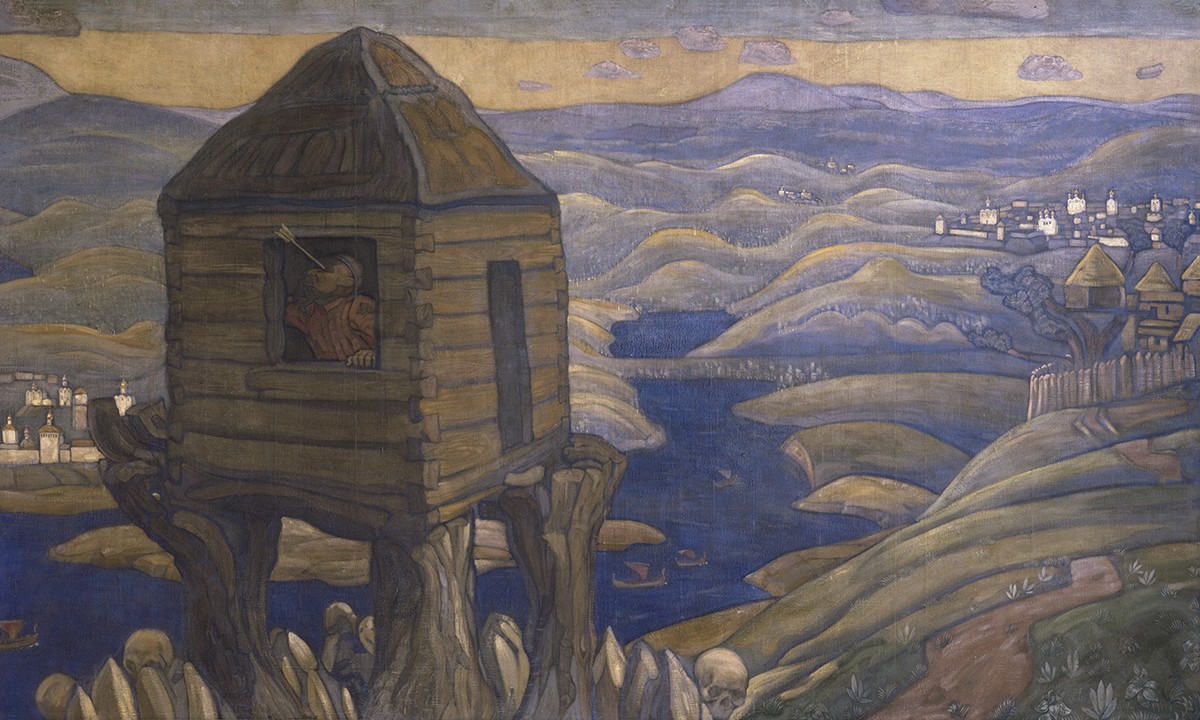
На эскизе «Путивль» к первому акту запечатлена площадь города в вотчине Игоря Святославича, князя новгород-северского. Здесь в ходе действия происходили ключевые события – сцены солнечного затмения и выступления князя на битву с половцами. Изображенная местность и архитектура не восходят к одному определенному прототипу, но в произведении очень точно воссоздан дух древнерусского города.
В эскизах к тому же акту, созданных в 1914 и 1920 годах, в образе храма с резным узорочьем угадывается Дмитриевский собор во Владимире (1190-е), а вместо ясного летнего дня изображено тревожное закатное время и солнечное затмение, то есть в них акцентируются драматические события оперы.
Tretyakov Gallery
Particulars
- Accession number
- 1621
In the catalog
Sources
- Tretyakov Gallery
- Image: Tretyakov Gallery — © State Tretyakov Gallery
Meanwhile, in the life of Nicholas Roerich
The whole life1906
Exhibitions abroad and the Salon d'Automne
From 1906 Roerich regularly takes part in exhibitions abroad: Paris, Venice, Berlin, Rome, Brussels, Vienna and London get to know his work, and his paintings are bought by the Luxembourg Museum, the National Museum in Rome, the Louvre and other museums. In 1907 he is elected a member of the Société du Salon d'Automne in France.
1906
Director of the Society's Drawing School
On taking up his post as director of the Drawing School, Roerich enlarges its premises, opens new classes and workshops — for icon painting, ceramics, chasing and weaving — restores the rights of the teaching council and founds a Museum of Russian Art at the school; he hopes to reorganise it as a Free People's Academy.
c. 1906
A new period: tempera and the search for colour
From about 1906 realism and symbolism combine in Roerich's art and his search in the field of colour intensifies; he almost gives up oil for tempera and experiments widely with the composition of his paints, laying one colour tone over another.
1909
Elected an academician
In 1909 Roerich is elected an academician of the Imperial Academy of Arts, as well as a member of the Council of the Society for the Protection and Preservation of Monuments of Art and Antiquity in Russia and chairman of the Commission of the Museum of Pre-Petrine Art and Life.
1909–1913
Diaghilev's Russian Seasons: sets and a libretto
In Paris, Borodin's “Polovtsian Dances” from “Prince Igor” and Rimsky-Korsakov's “The Maid of Pskov” are staged in Roerich's designs; for the ballet “The Rite of Spring”, to music by Stravinsky, he creates the costumes and sets and also writes the libretto.
1910
Becomes head of “The World of Art”
From 1910 Roerich heads the artistic association “The World of Art”, whose members include Benois, Bakst, Grabar, Serov, Petrov-Vodkin, Kustodiev, Ostroumova-Lebedeva, Serebriakova and others.