 Mikhail Nesterov1862–1942
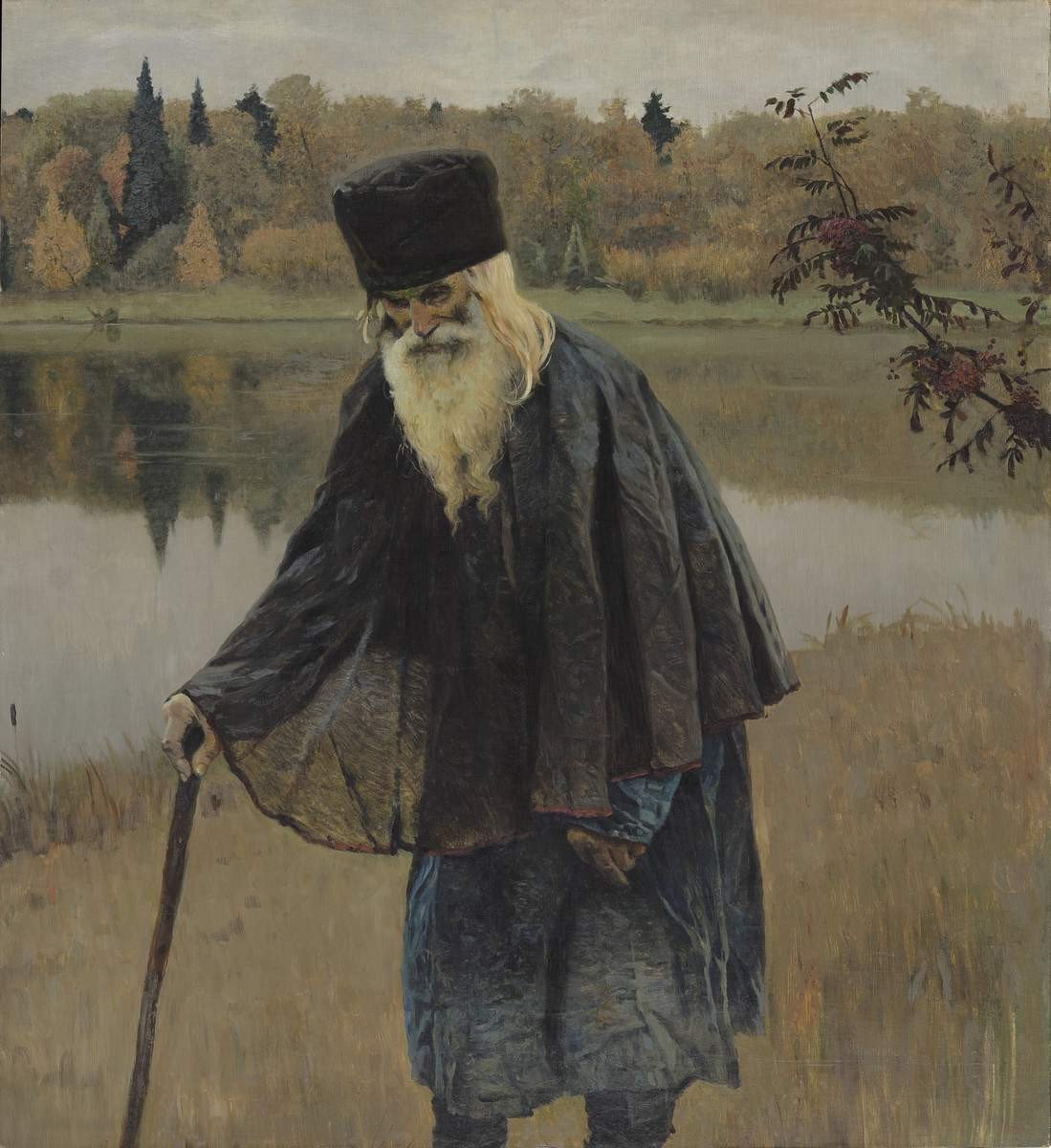
Пустынник
About the painting
In the museum's own words — in Russian
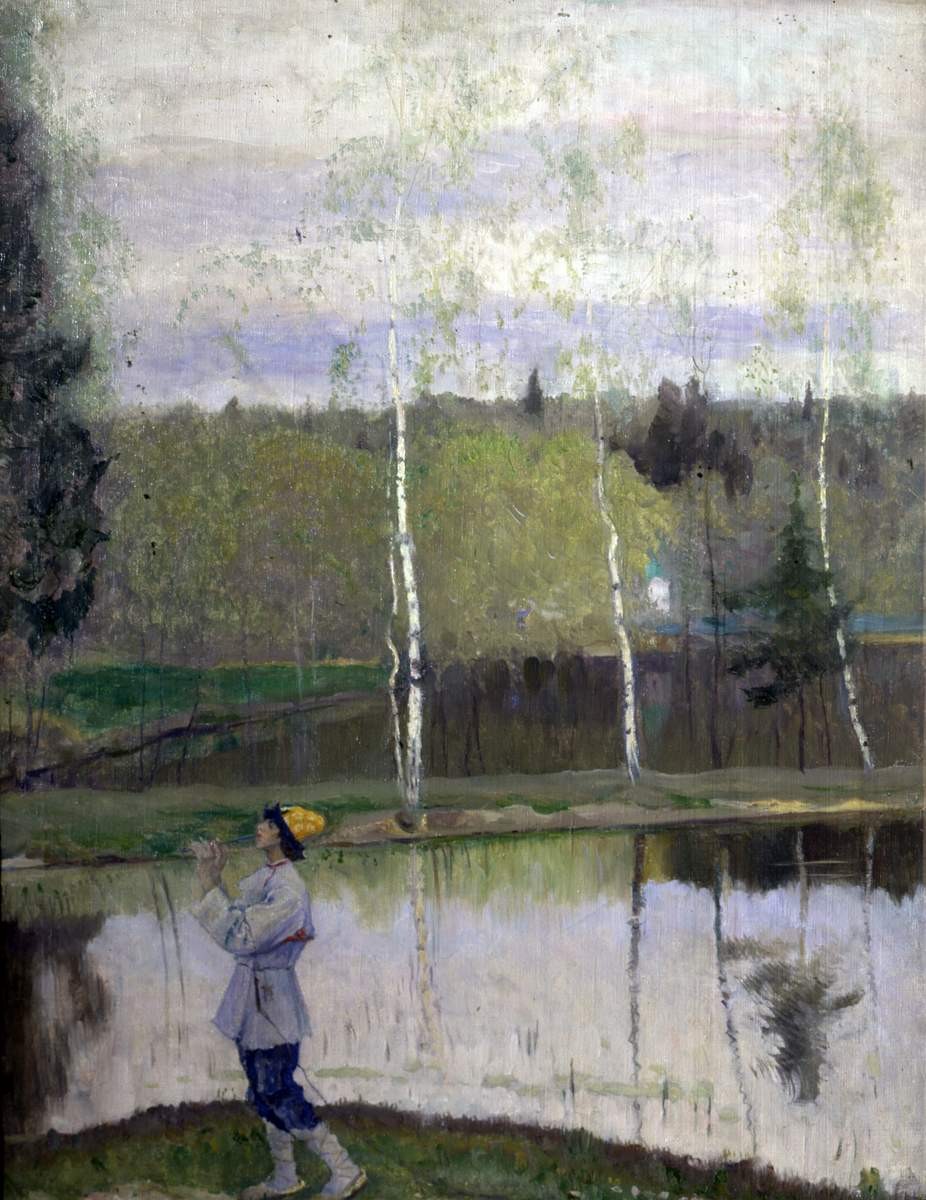
Лето 1888 года Нестеров провел в Троице-Сергиевом Посаде, где много и плодотворно работал. Жизнь монастыря и монастырских скитов, далекая от мирской суеты и исполненная сокровенного смысла, произвела на страстного, импульсивного по натуре художника чрезвычайно сильное впечатление. В Троице-Сергиевом Посаде Нестеров сделал этюды к «Пустыннику» — первой картине, принесшей художнику успех. Это произведение исполнено удивительной тишины и поэзии. В нем в полной мере сказалось свойственное Нестерову несколько пантеистическое мироощущение, растворяющее человека в бытии окружающей его природы. В этом «растворении» художник видел необходимое условие достижения той гармонии, о которой «в миру», и тем более в городах, осталось только грезить.
Read on
Другим аспектом той же темы является в картине мотив странничества, поиска «истинного пути», духовного искательства, который ранее разрабатывался, преимущественно, в русской классической литературе, а на рубеже ХIХ-ХХ века захватил и другие области, включая философию и изобразительное искусство. Каталог выставки в Малаге "ЭПОХА ДЯГИЛЕВА в русском искусстве конца ХIХ — начала ХХ столетия из собрания Русского музея". 2015.
State Russian Museum

Particulars
- Accession number
- Ж-4337
Meanwhile, in the life of Mikhail Nesterov
The whole life1874–1886 · Education
Moscow School of Painting, Sculpture and Architecture
May 1886
Daughter Olga is born; his wife dies
In May 1886 Nesterov's daughter Olga was born and his wife Maria Ivanovna died. He later carried the image of his beloved wife into many of his works.
1889
“The Hermit” at the 17th Peredvizhniki show
Shown at the 17th Peredvizhniki exhibition, “The Hermit” caused a stir and placed the young Nesterov among the most outstanding painters of the day; the word “mood” recurred in almost every review. Pavel Tretyakov bought the painting.
May 1889
First journey abroad
With the money from selling “The Hermit” to Tretyakov, Nesterov set off on his first trip abroad: Warsaw, Vienna, Venice, Florence, Rome, Naples with Pompeii and Capri, Paris, Munich, Berlin, Dresden. He brought back dozens of studies on lemon-wood panels, most of them from Capri; his travel diary (20 April – 24 July 1889) is kept in the Presidential Library.
1890
Invited to paint St Volodymyr's Cathedral
Professor Adrian Prakhov, who was in charge of decorating St Volodymyr's Cathedral in Kiev, saw “The Youth Bartholomew” and invited its author. After some hesitation Nesterov agreed — and ended up devoting more than 22 years to church murals and icons.