 Vasily Surikov1848–1916
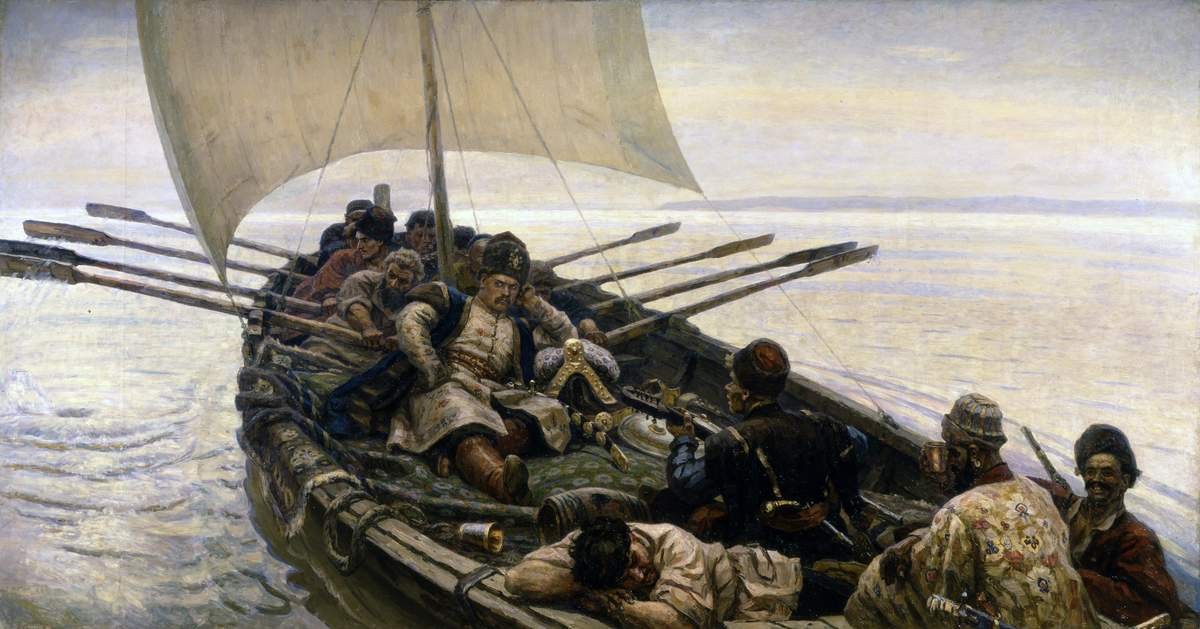
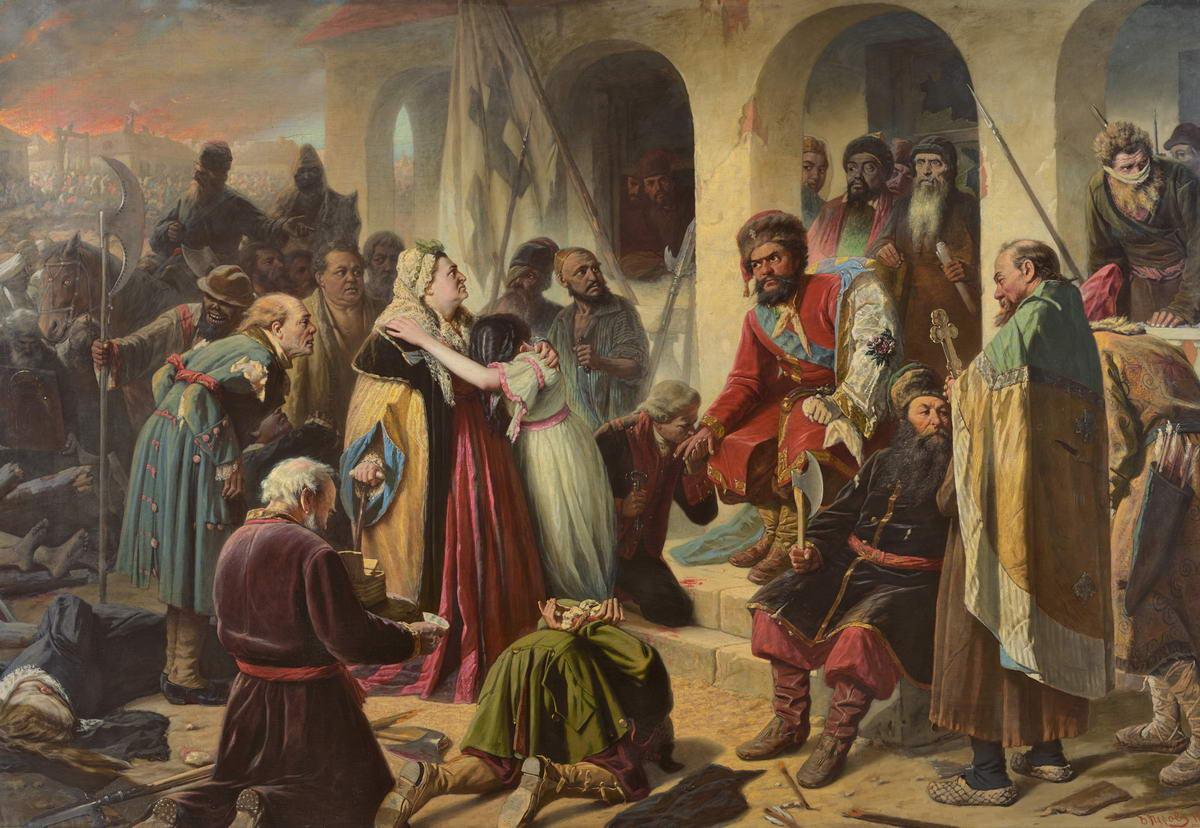
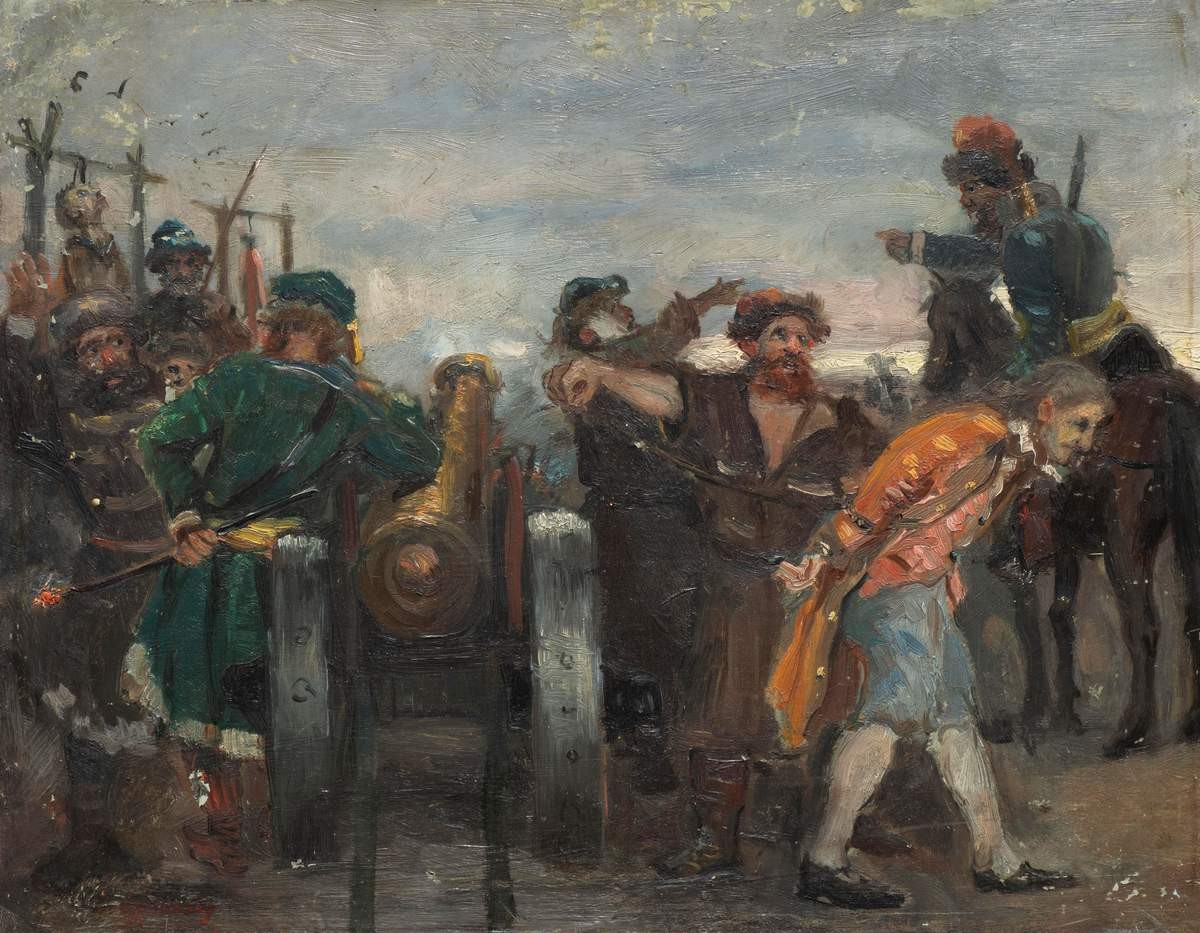
Пугачевцы
Can I see it?
Unknown
Where is “Пугачевцы” now? Collection: State Russian Museum, Saint Petersburg. Unknown.

Saint Petersburg, Russia
The owner is known; whether it is on view today is not.
- In this state since
- Source
- The museum
Details
- Accession number
- Ж-1366
What it shows
In the catalog
Sources
- State Russian Museum
- Image: State Russian Museum — © State Russian Museum
In the life of Vasily Surikov
The whole life25 January 1878
His wedding to Elizaveta Share
On 25 January 1878 Surikov marries Elizaveta Augustovna Share; the wedding takes place in the Vladimir Church in St Petersburg, after which the newlyweds leave for Moscow. The bride’s mother, Maria Alexandrovna Share, was a relative of the Decembrist Pyotr Svistunov.
1881
He joins the Peredvizhniki
In 1881, the year “The Morning of the Streltsy Execution” is completed, Surikov becomes a member of the Peredvizhniki, the Society of Travelling Art Exhibitions; he will remain in it until 1907.
1883
Tretyakov buys “Menshikov in Beryozovo”
In 1883 Pavel Tretyakov buys Surikov’s painting “Menshikov in Beryozovo”, and the money is enough for the artist to travel abroad.
after 1883
A European tour: the Dresden Gallery and the Louvre
With the money from the sale of “Menshikov in Beryozovo” Surikov travels abroad: he visits Germany, Italy, France and Austria and gets to know the collection of the Dresden Gallery and that of the Louvre.
1887
“Boyarynya Morozova” at the 15th Peredvizhniki exhibition
In 1887 “Boyarynya Morozova” is shown at the 15th Peredvizhniki exhibition. Surikov painted the laughing merchant on the left from a former church deacon, Varsanofy Zakourtsev, and the wanderer with a staff on the right from a settler he met on the road to Sukhobuzimskoye.
8 April 1888
The death of his wife, Elizaveta Augustovna
On 8 April 1888 Surikov’s wife, Elizaveta Augustovna, dies of a congenital heart defect; to support his elder brother, Alexander comes to him from Krasnoyarsk.