ART WIKI32,963 on view
MapCollectionArtistsMuseumsExhibitionsJournal
Sign in

ART WIKI

Where the masterpiece hangs, and when they let you in.

Collections: Art Institute of Chicago, Getty Villa, Harvard Art Museums, Hirshhorn Museum and Sculpture Garden, J. Paul Getty Museum, Minneapolis Institute of Art, Musée du Louvre, National Gallery of Art, National Museum of Asian Art, National Portrait Gallery (Smithsonian), Pushkin State Museum of Fine Arts, Rijksmuseum, Smithsonian American Art Museum, SMK — National Gallery of Denmark, State Hermitage Museum, State Russian Museum, The Cleveland Museum of Art, The Metropolitan Museum of Art, The Museum of Modern Art, Tretyakov Gallery, Victoria and Albert Museum, Whitney Museum of American Art, State Catalogue of the Museum Fund of Russia (274 museums), Europeana (19 museums), Wikidata (6 museums), Paris Musées (12 museums), and Joconde, the French Ministry of Culture's museum database (495 museums). Images belong to their rights holders.

Sections

  • Map
  • Search
  • Collection
  • Masterpieces
  • On view now
  • Artists

More

  • Museums & galleries
  • Exhibitions
  • Journal
  • Where the data comes from
  • Privacy & cookies
HomeMapBrowse
  1. Collection/
  2. Minneapolis Institute of Art/
  3. Prajnaparamita
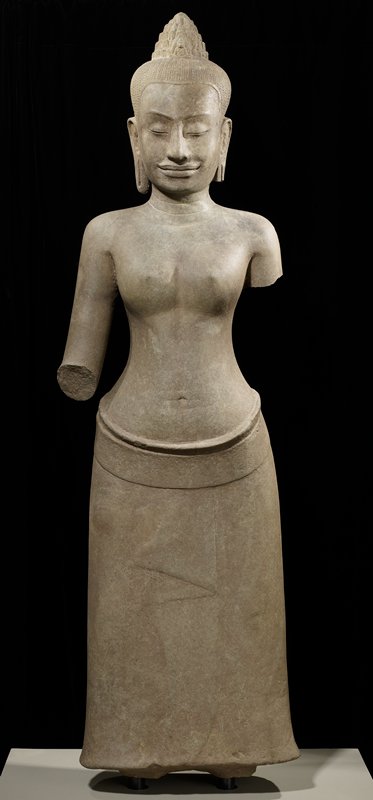
Prajnaparamita, late 12th–early 13th century

Prajnaparamita

late 12th–early 13th century · Sculpture · 130.81 × 38.1 cm

About the sculpture

The supple carving of bodily volumes lends this polished stone sculpture a levity and grace for which Khmer sculpture is renowned. It was likely created during the rule of King Jayavarman VII (reign c. 1181–1218), who identified himself with the Buddha and, in turn, equated his mother with Prajnaparamita, the mother of all Buddhas. He commissioned freestanding sculptures of the deity—the Goddess of Transcendent Wisdom—in the queen’s likeness, with a diminutive Buddha in her crown. This dual portrait demonstrates how the Khmer Empire (802–1437 CE) adopted the Indian concept of Deva-Raja (God-King) and established its rule with divine order.

Minneapolis Institute of Art

Particulars

Accession number
97.105

In the same room · G213, Minneapolis Institute of Art

Museum page

May one see it?

Yes, receiving visitors

Minneapolis Institute of Art

Minneapolis, United States

RoomG213

On public display.

Checked
3 days ago
In this state since
Sep 25, 2026
Source
The museum
On the mapMuseum page

In the catalog

SculptureStoneCambodia

Sources

  • Minneapolis Institute of Art
  • Image: Minneapolis Institute of Art — public domain
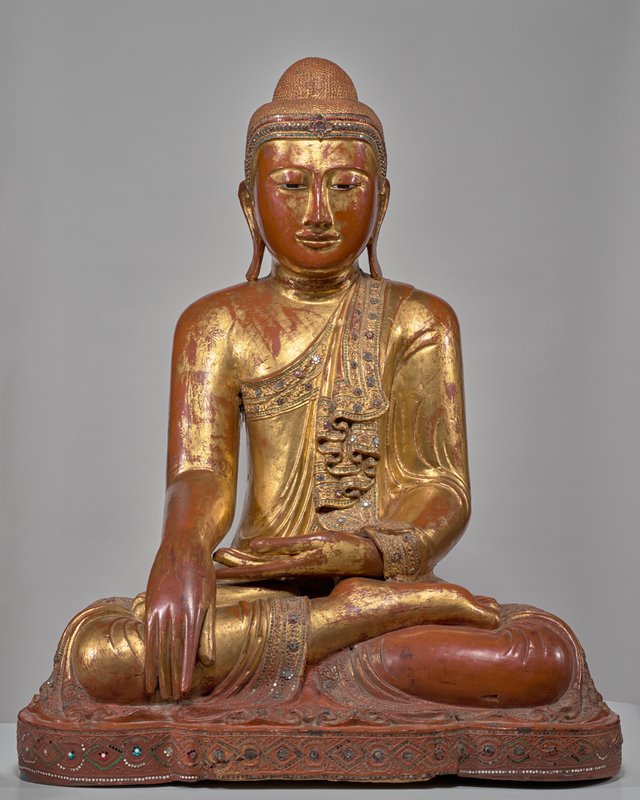
Enshrined Buddha, c. 1850

Enshrined Buddha, c. 1850

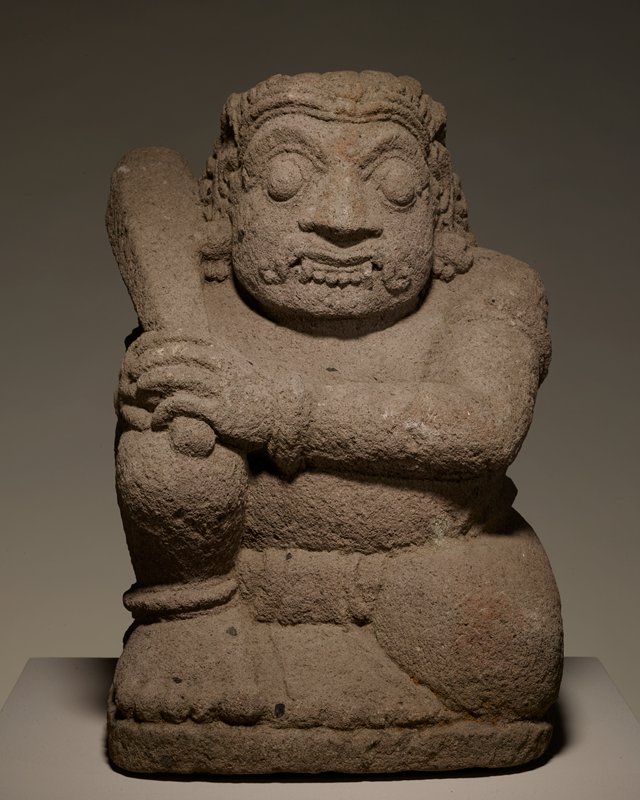
Dvarapala (Door Guardian), c. 14th–15th century

Dvarapala (Door Guardian), c. 14th–15th century

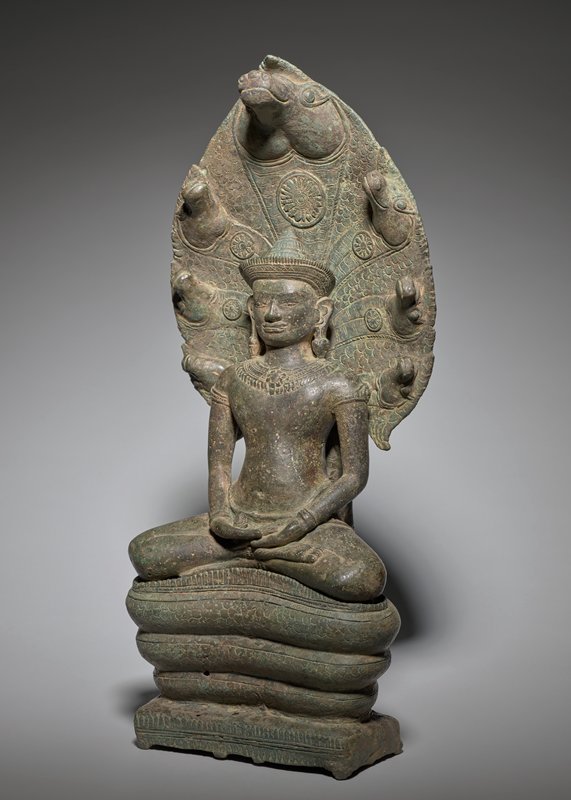
Naga-enthroned Buddha, 12th-13th century

Naga-enthroned Buddha, 12th-13th century

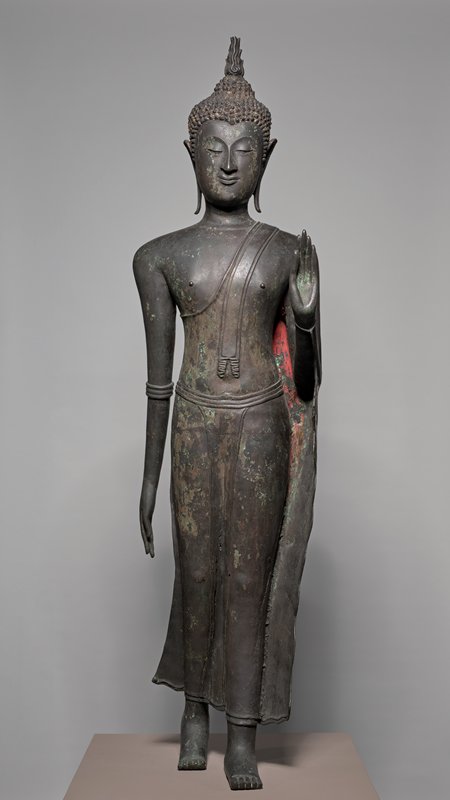
Walking Shakyamuni Buddha, 15th century

Walking Shakyamuni Buddha, 15th century

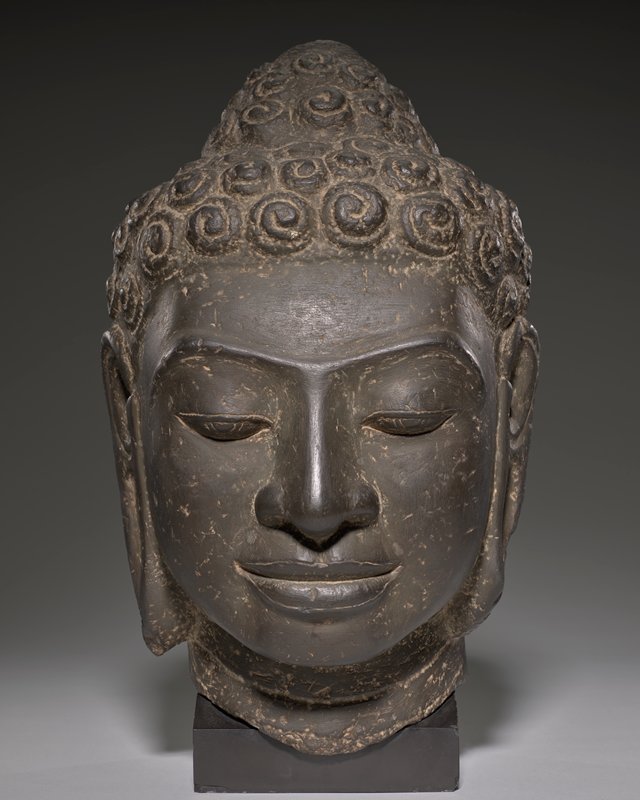
Buddha Head, or Thailand, 8th century

or Thailand

Buddha Head, 8th century

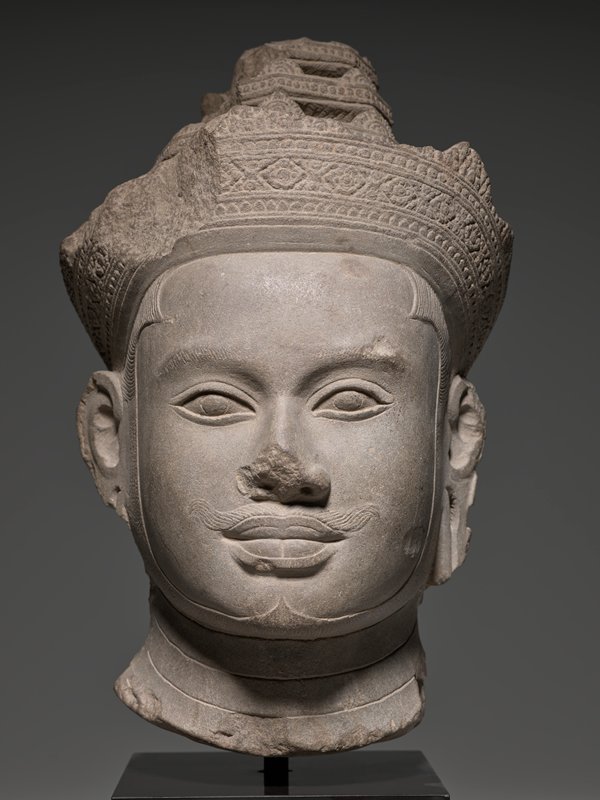
Head from an image of Vishnu or a deified king, early 9th century

Head from an image of Vishnu or a deified king, early 9th century

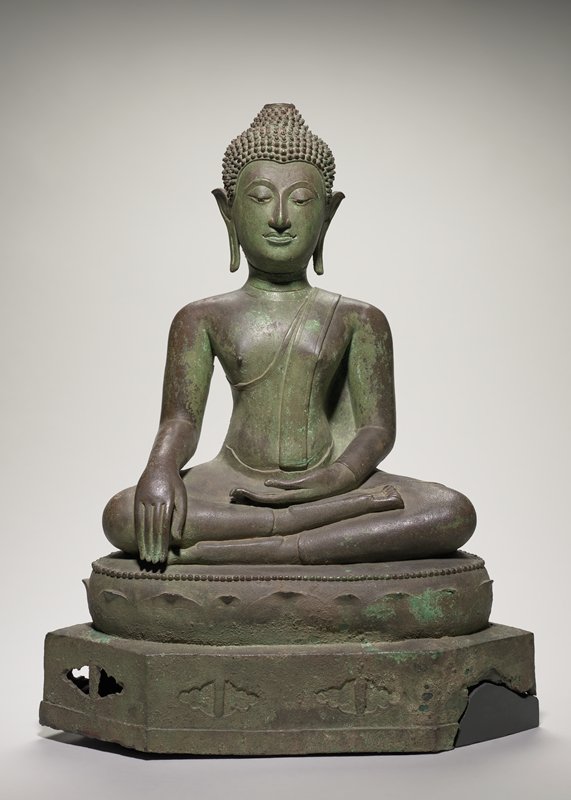
Buddha subduing Mara, 15th century

Buddha subduing Mara, 15th century

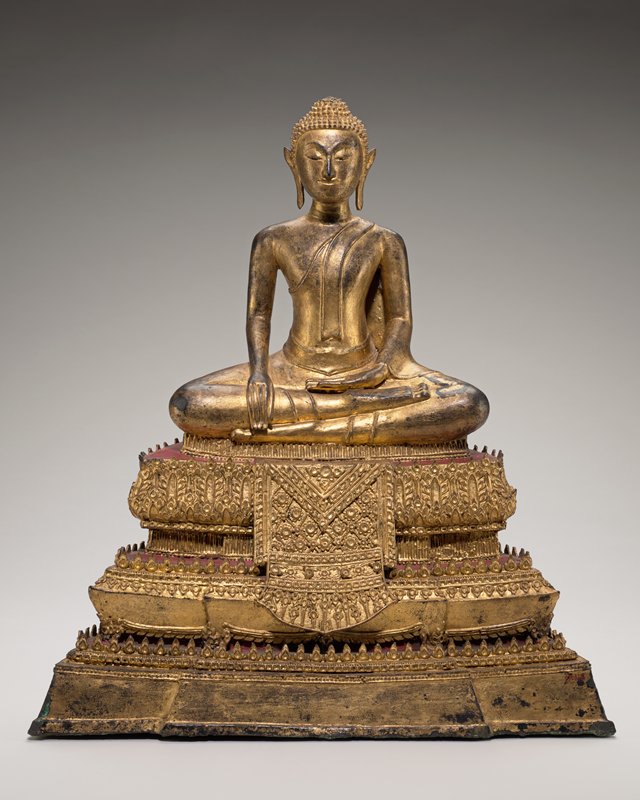
Buddha subduing Mara, late 19th century

Buddha subduing Mara, late 19th century