
 Camille CorotFrench, 1796–1875
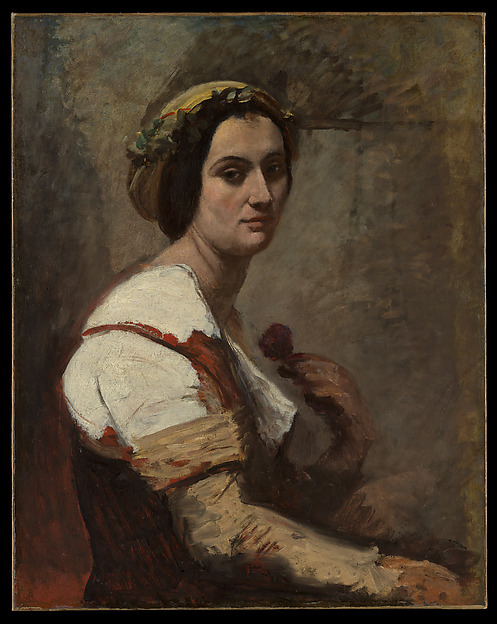
Portrait of a Young Girl
May one see it?
Yes, receiving visitors

National Gallery of Art
Room92 · West Building, Main FloorWashington, D.C., United States
On public display.
- Checked
- 4 hours ago
- In this state since
- Aug 19, 2026
- Source
- The museum's own collection data
Particulars
- Accession number
- 1963.10.9
What it shows
In the catalog
Sources
- National Gallery of Art: the museum's own open data · fetched 4 days ago
- Image: National Gallery of Art — Museum open access
Meanwhile, in the life of Camille Corot
The whole life1848
After the Revolution of 1848, a seat on the Salon jury
Corot's public treatment improved dramatically after the Revolution of 1848, when he was admitted to the Salon jury; that year he also received a second-class medal at the Salon. It brought him little state patronage, however.
1851
Death of his mother, Marie-Françoise Corot
In 1851 Corot's mother, Marie-Françoise (1768–1851), née Oberson, died.
after 1851
Freedom and pupils: Brandon and Pissarro
Corot had remained closely tethered to his family until his parents died, and then at last gained the freedom to go as he pleased. That freedom allowed him to take on students for informal sessions, including Édouard Brandon and, briefly, Camille Pissarro.
1860s
An interest in photography
In the 1860s Corot became interested in photography, taking photos himself and becoming acquainted with many early photographers. The monochrome tones of photographs suppressed his palette even further, making his paintings less dramatic but somewhat more poetic.






![Scenes from the Passion of Christ: The Descent into Limbo [right panel], Andrea Vanni, 1380s](https://api.nga.gov/iiif/4205a539-eadd-4486-89a7-3cff9c1ba428/full/!2400,2400/0/default.jpg)


