 Viktor Vasnetsov1848–1926
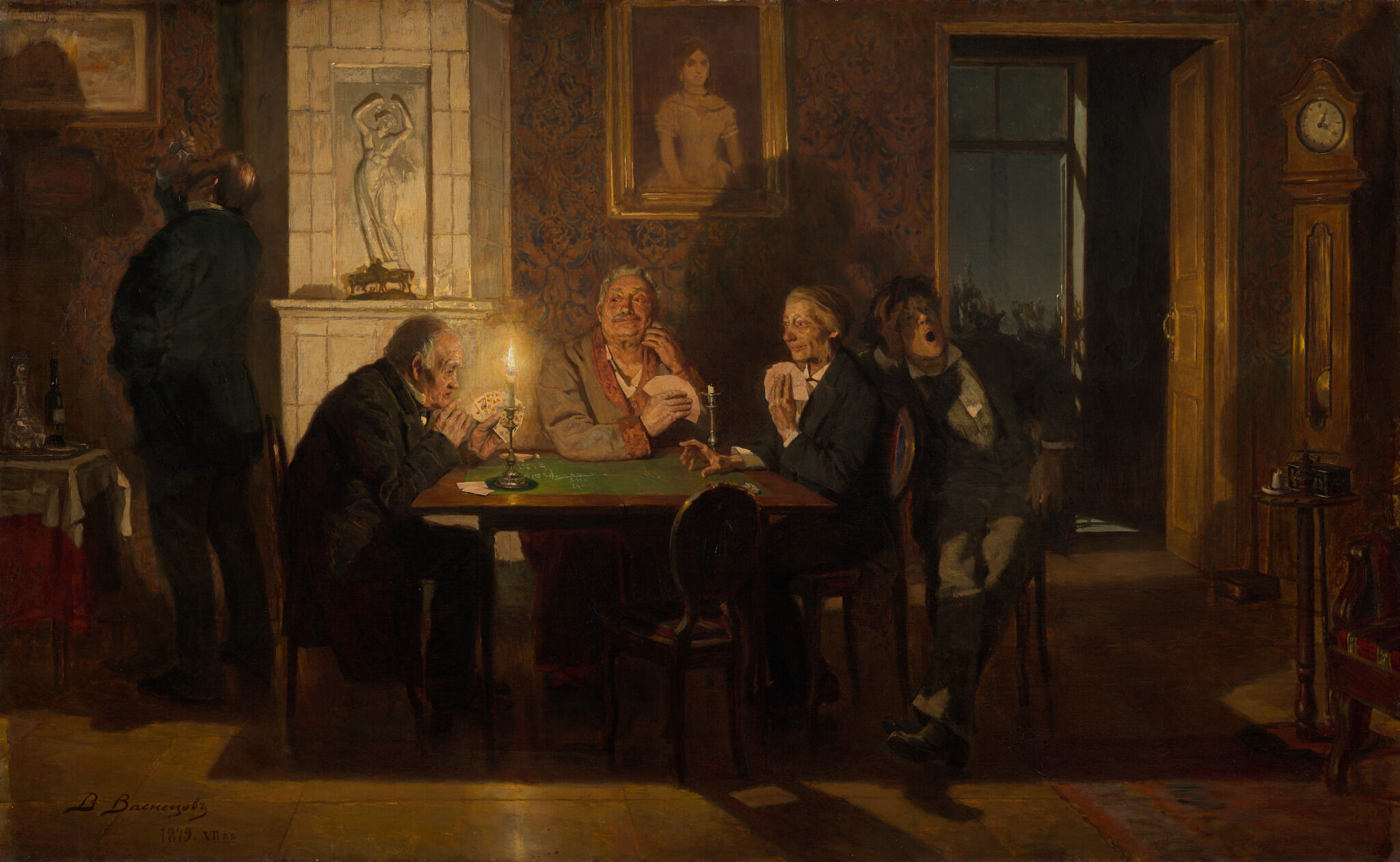
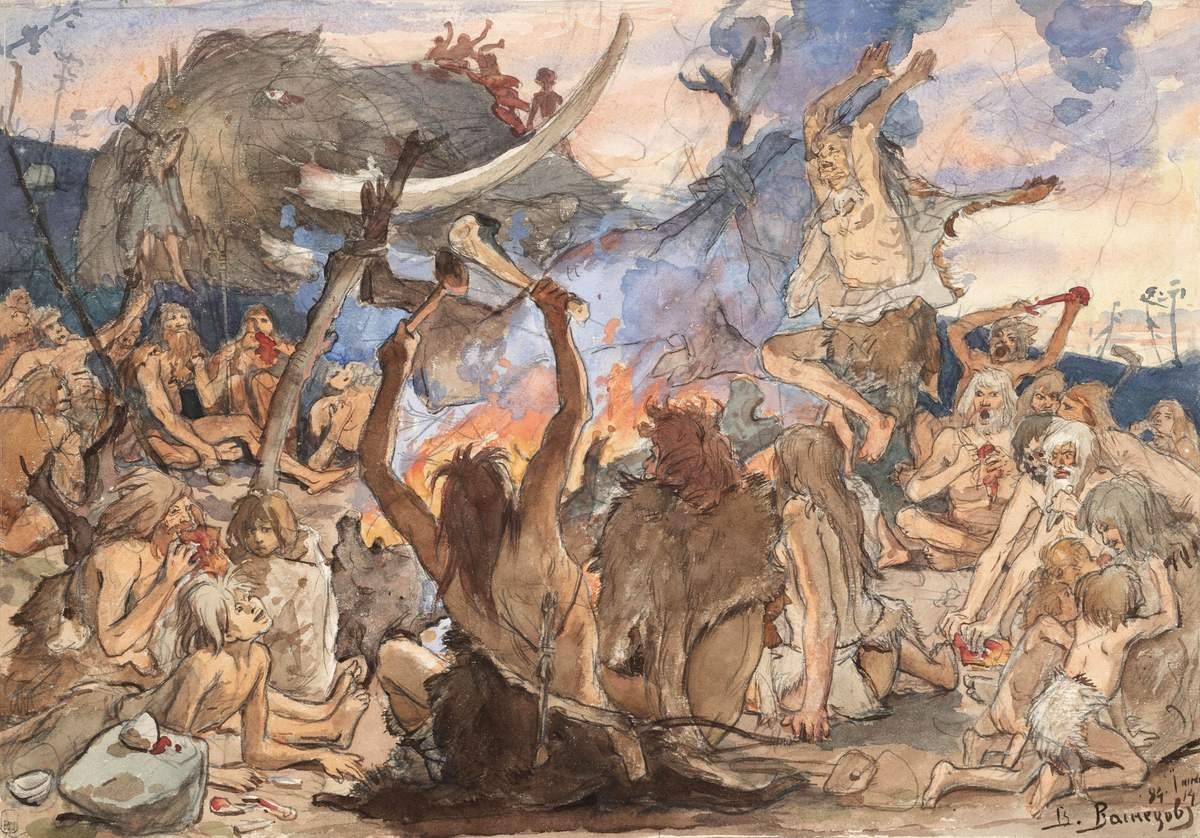
Пиршество
May one see it?
Unknown

Saint Petersburg, Russia
The owner is known; whether it is on view today is not.
- In this state since
- Source
- The museum
About the work
In the museum's own words — in Russian
Творчество Васнецова во всех его проявлениях было направлено на познание человека как « существа центрального на земле »*. Это распространялось и на монументальные работы мастера. В гигантском, почти двадцатиметровом фризе «Каменный век» для создаваемого в Москве Исторического музея художник, по словам П. П. Чистякова, выразил « все будущее человечества, ради чего стоит жить »**. Доисторическая эпоха была представлена на фризе с учетом научных археологических знаний своего времени через реконструкцию возможного ситуативного поведения первобытных людей. Васнецов стремился добиться натуралистической точности в передаче групповых сцен в эскизах (« Пиршество ») и отдельных фигур в рисунках, для которых позировал восемнадцатилетний В. А. Серов . Именно эти художественные качества монументального произведения позволили выдающимся советским исследователям творчества Васнецова — Н. С.
Read on
Моргунову и Н. Д. Моргуновой-Рудницкой — назвать «Каменный век» « исключительным вкладом в русское реалистическое искусство »***. С. В. Кривонденченков. «В своем истинно национальном отразить вечное». Эволюция реалистической тенденции в творчестве В. М. Васнецова // Виктор Васнецов. СПб, 2024. С. 10.
* Отрывок из дневника В. М. Васнецова «Что такое добро и зло?» // Виктор Михайлович Васнецов: Письма. Дневники. Воспоминания. Суждения современников / Сост., вступ. ст. и примеч. Н. А. Ярославцевой. М., 1987. С. 217.
** Цит. по: Сахарова Е. В. Василий Дмитриевич Поленов. Письма, дневники, воспоминания / Общая редакция и вступ. ст. А. Леонова. М., 1948. С. 244.
*** Моргунов Н. С., Моргунова-Рудницкая Н. Д. Виктор Михайлович Васнецов: Жизнь и творчество. 1848–1926. М., 1962. С. 260.
State Russian Museum
Particulars
- Accession number
- Р-350
What it shows
In the catalog
Sources
- State Russian Museum
- Image: State Russian Museum — © State Russian Museum
Meanwhile, in the life of Viktor Vasnetsov
The whole life1878–1890 · Career
the Peredvizhniki
From 1878 he belonged to the Society of Travelling Art Exhibitions (the Peredvizhniki): he took part in its activity in 1878–1890 and exhibited with it until 1897; he was admitted for the realism and sharp social subjects of his genre paintings.
1884
His son Mikhail becomes the model for the Christ Child in the altar image
In 1884 his son Mikhail was born; he became the model for the infant in the Virgin’s arms in the altar image of St Vladimir’s Cathedral, and later was an astronomer and then a priest of the Russian emigration in Prague.
1884–1889
Friendship with Mikhail Vrubel in Kiev
While living in Kiev he became friends with Mikhail Vrubel, who was also working on the cathedral; while they worked together Vasnetsov taught the younger artist a great deal.
1885
Rimsky-Korsakov’s “The Snow Maiden”: Berendey’s palace
In 1885 he created sets and costumes for Rimsky-Korsakov’s “The Snow Maiden” at Savva Mamontov’s Private Opera — a three-dimensional design for Berendey’s palace, whose colours came from folk festivities in Vyatka and Moscow; in 1881 he had already prepared sketches and sets for a home production of Ostrovsky’s play.
1885–1895
The controversy over the Kiev frescoes: Stasov, Benois, Filosofov
Contemporaries disagreed: Dmitry Filosofov saw in the frescoes “the first bridge over the 200-year-old gulf” between classes of Russian society, Stasov a sacrilegious play with the religious feelings of the people, and Alexandre Benois a “sumptuous and frivolous féerie”; Vasnetsov himself saw the cathedral as a “Bible for the poor”.