 Isaac Levitan1860–1900
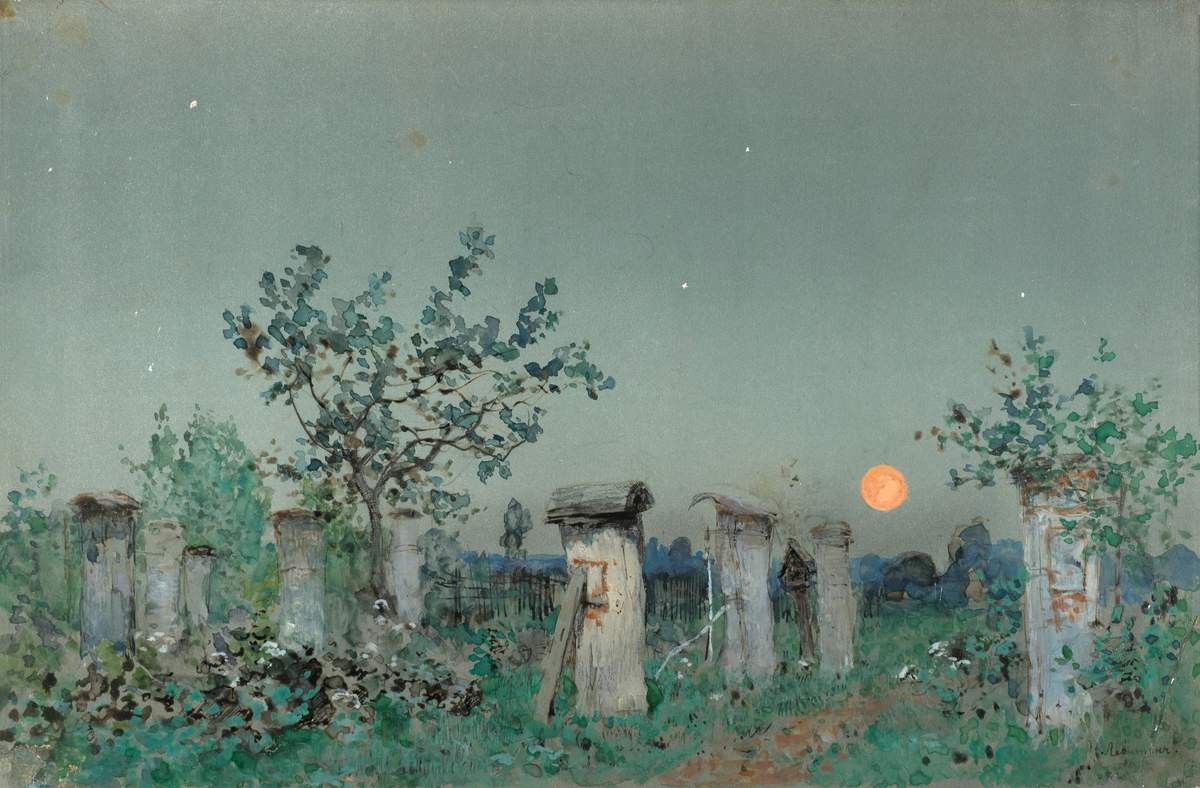
Пасека
May one see it?
Unknown: the museum keeps its counsel

State Russian Museum
Saint Petersburg, Russia
The owner is known. Whether it is on view today, the museum does not say, and we were not trained to guess.
- In this state since
- Source
- The museum's own collection data
About the work
In the museum's own words — in Russian
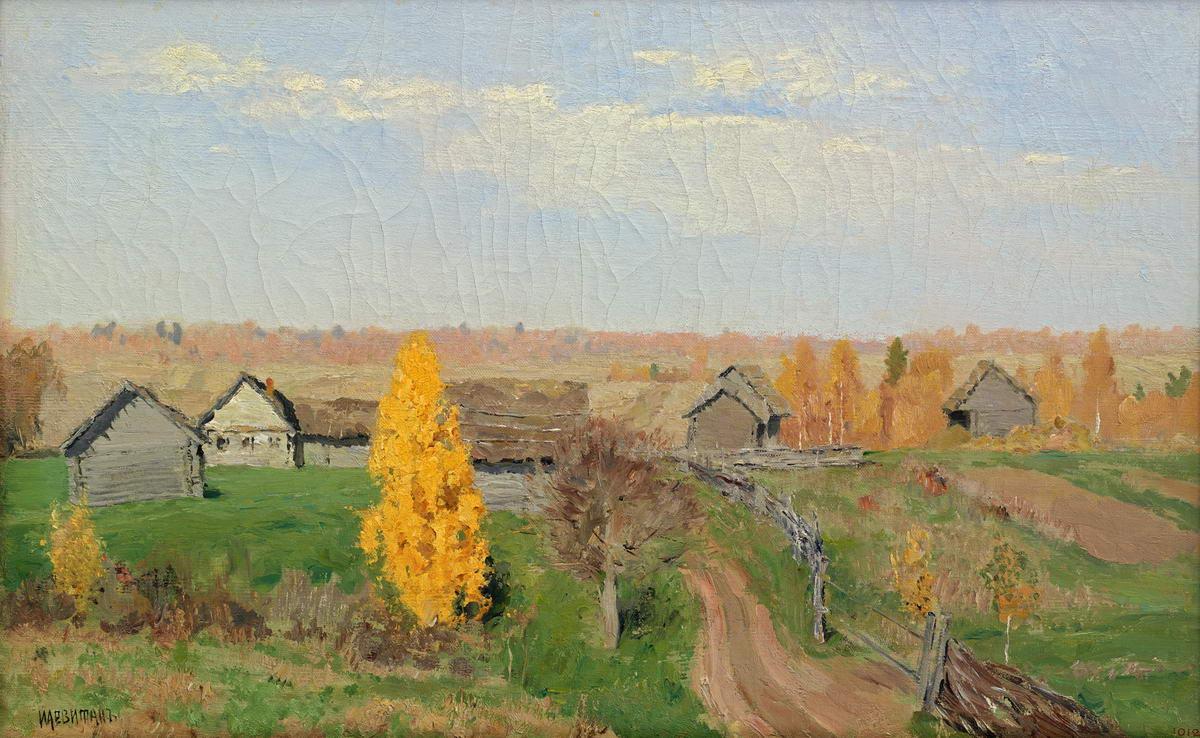
К этому мотиву Левитан обращался неоднократно. 1877 годом датирован пейзаж «Летний день. Пчельник». В ГТГ хранится картина 1880-х годов «Ульи» с дарственной надписью художника 1887 года. И каждая из этих композиций решена в особом цветовом и композиционном ключе. « Пасека » из собрания ГРМ по плотности красочного слоя тяготеет скорее к живописным работам художника. Композиция в приглушенной серо-зеленой гамме с единственным ярким пятном — оранжевым диском восходящей луны — удивительна по изысканности колористического решения и тонкости настроения. В передаче переходного «сумеречного» состояния природы она сродни таким поздним картинам Левитана, как «Стога. Сумерки» и «Сумерки».
State Russian Museum
Particulars
- Accession number
- Р-56717
What it shows
In the catalog
Sources
- State Russian Museum: the museum's own open data · fetched 7 days ago
- Image: State Russian Museum — © State Russian Museum
Meanwhile, in the life of Isaac Levitan
The whole lifemid-1880s
His heart disease sharply worsens
Levitan's material situation improves in the mid-1880s, but a hungry childhood, an unsettled life and hard work tell on his health: his heart disease sharply worsens.
spring 1885
He graduates without the title of artist
In spring 1885, at twenty-four, he graduates from the school but does not receive the title of artist: he is given a diploma as a teacher of penmanship. He has no money.
April 1885
He settles at Maximovka and meets Chekhov
In April 1885 he settles in the remote village of Maximovka near Babkino, where the Chekhovs are staying at the Kiselyov estate; his acquaintance with Anton Pavlovich Chekhov begins a friendship and rivalry that will last all his life.
1886
The Crimea and an exhibition of fifty landscapes
A trip to the Crimea in 1886 restores his strength; on his return Levitan organises an exhibition of fifty of his landscapes.
spring 1888
He discovers Plyos on the Volga
In spring 1888 he sails by steamer along the Oka to Nizhny Novgorod and on up the Volga with the artist Alexei Stepanov and Sofia Kuvshinnikova; to their own surprise they discover the small, quiet town of Plyos and decide to stay on for a while. The three summer seasons there (1888–1890) prove extremely productive: some two hundred works bring Levitan wide fame.
late 1889 – early 1890
His first trip to Western Europe
He visits France and Italy, wanting to get to know modern painting better as shown at the World Exhibition in Paris — probably above all the Barbizon school and the Impressionists. According to Nesterov, in the West he became convinced that the path he had chosen was the right one.