
 Robert FrankAmerican, 1924–2019
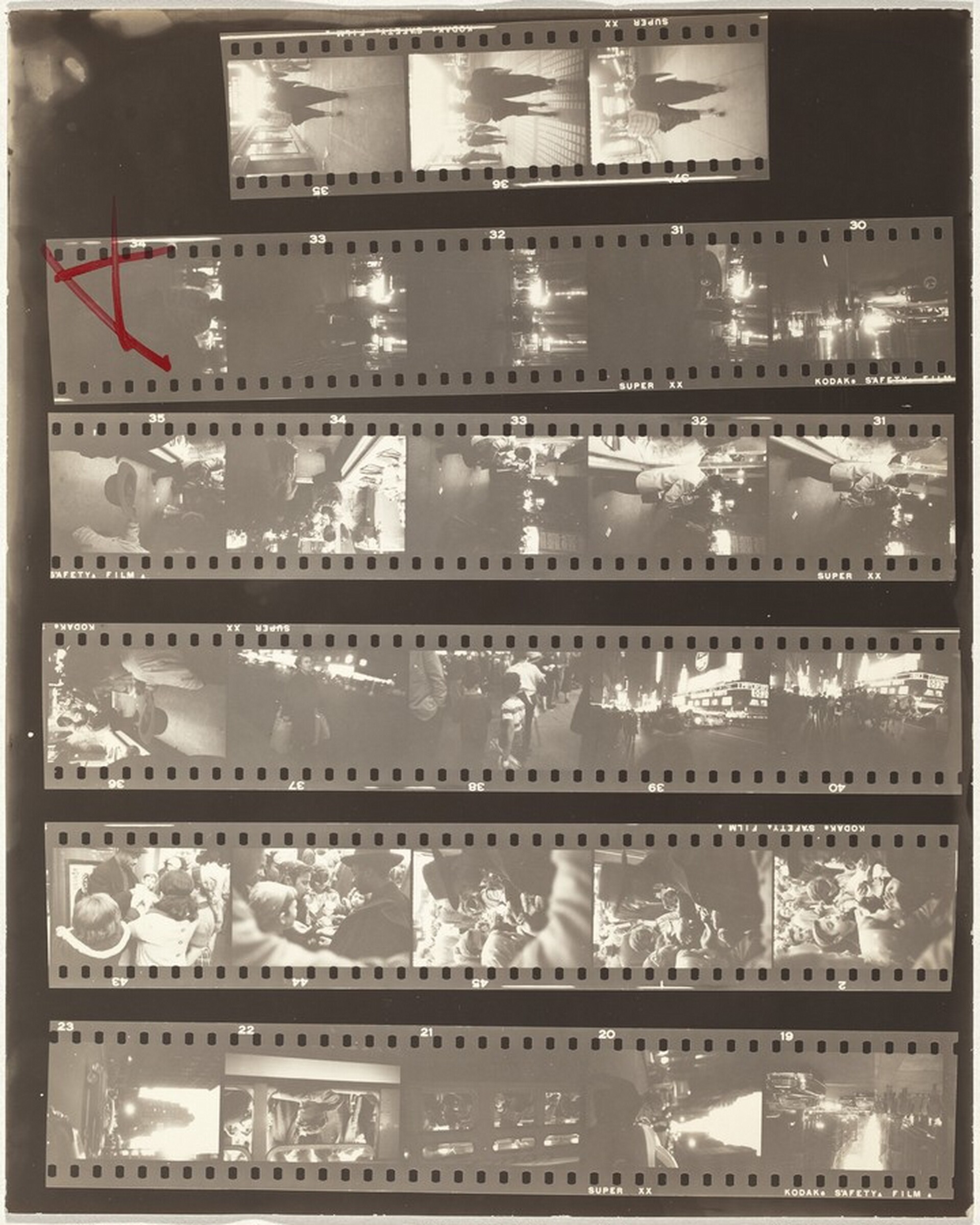
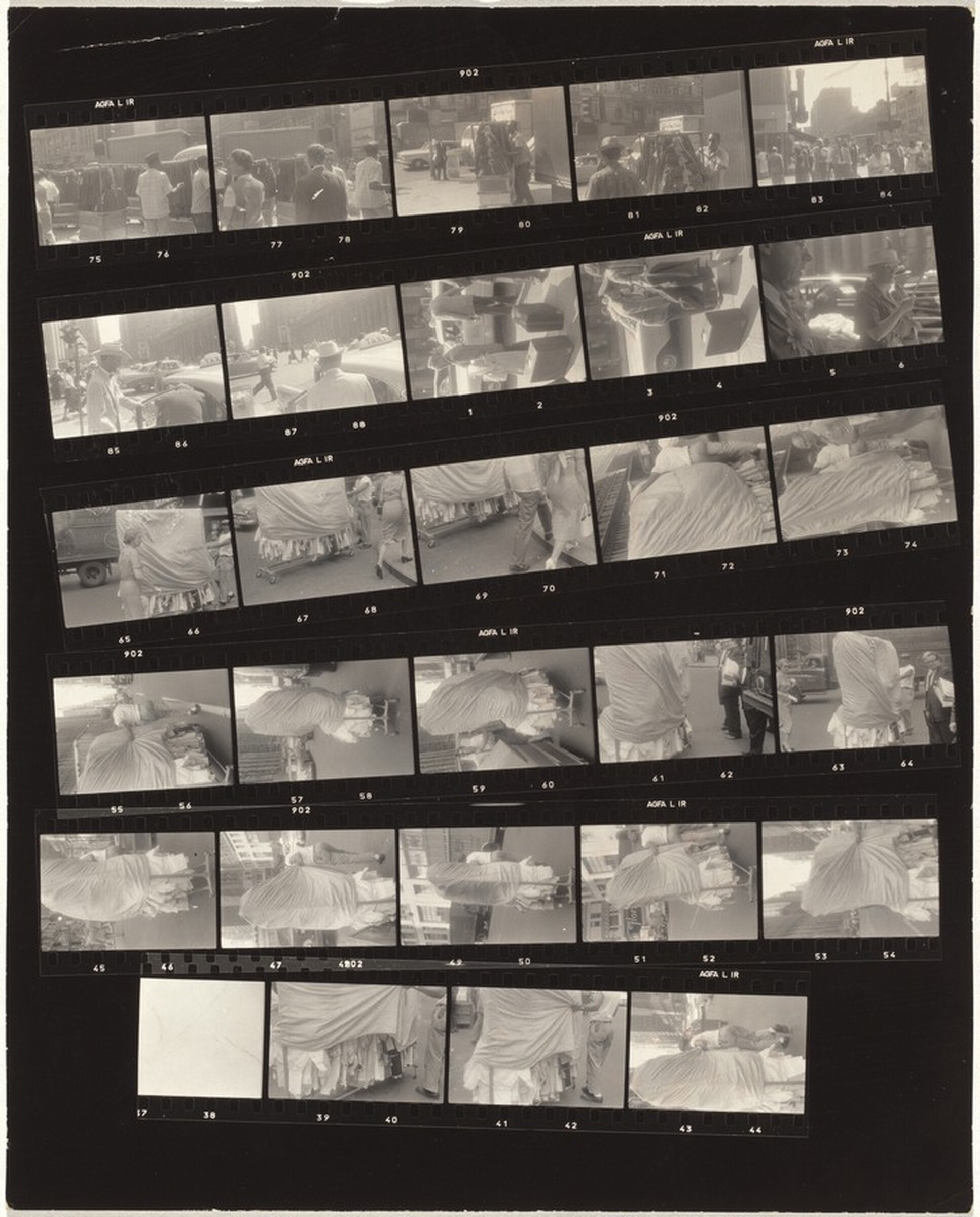
Pablo and Andrea 7
May one see it?
Not receiving at present

National Gallery of Art
Washington, D.C., United States
It belongs to the collection, but is not on display at present.
- Checked
- In this state since
- Source
- The museum
Particulars
- Accession number
- 1990.28.2853
What it shows
In the catalog
Sources
- National Gallery of Art
- Image: National Gallery of Art — © the artist or rights holder
Meanwhile, in the life of Robert Frank
The whole life1955
Seven photographs in “The Family of Man”
Edward Steichen includes seven of his photographs, many more than most other contributors, in the world-touring MoMA exhibition The Family of Man, which will be seen by 9 million visitors; they include a woman kissing her swaddled baby, a bowed old woman in Peru, a rheumy-eyed miner in Wales, and six laughing women in the window of the White Tower Hamburger Stand in New York City.
1955–1957
Across America on a Guggenheim Fellowship
Inspired by Jakob Tuggener’s Fabrik, Bill Brandt’s The English at Home and Walker Evans’s American Photographs, and on the recommendation of Evans, Alexey Brodovitch, Alexander Liberman, Edward Steichen and Meyer Schapiro, he secures a Guggenheim Fellowship in 1955 to travel across the United States and photograph all strata of its society, from Detroit and Dearborn to Savannah, Miami Beach and St. Petersburg, New Orleans, Houston, Los Angeles, Reno, Salt Lake City, Butte and Chicago. Over two years of road trips, part of them with his family, he takes 28,000 shots, of which he selects 83 for The Americans.
1955–1957
Jailed in Arkansas
In a small Arkansas town he is taken to the police station and put in jail: it comes out that he is Jewish because of a letter from the Guggenheim Foundation, and the sheriff says they will have to find somebody who speaks Yiddish. Frank later recalled that it was scary and nobody knew where he was; elsewhere in the South a sheriff told him he had “an hour to leave town”, and these incidents may have contributed to the dark view of America found in his work.
1957
Meets Jack Kerouac
Shortly after returning to New York he meets the Beat writer Jack Kerouac, by Frank’s account at a New York party where poets and Beatniks were, though by another account Joyce Johnson, Kerouac’s lover at the time, introduced them, and shows him the photographs from his travels. Kerouac immediately says he can write something about these pictures and eventually contributes the introduction to the U.S. edition of The Americans; Frank also becomes a lifelong friend of Allen Ginsberg and one of the main visual artists to document the Beat subculture.
1958
“Les Américains” is published in Paris
Because his images depart from contemporary photographic standards, Frank has difficulty at first in securing an American publisher, and the book is first published in Paris by Robert Delpire in the Encyclopédie Essentielle series, with texts by Simone de Beauvoir, Erskine Caldwell, William Faulkner, Henry Miller and John Steinbeck positioned opposite the photographs.
1959
“The Americans” in the U.S.: harsh criticism
The book is finally published in the United States by Grove Press, without the texts but with Kerouac’s introduction, and initially receives substantial criticism: Popular Photography derides the images as meaningless blur, grain, muddy exposures, drunken horizons and general sloppiness. Sales are poor at first too, but the popular Kerouac’s introduction helps it reach a larger audience, and over time The Americans becomes a seminal work in American photography and art history, the work with which Frank is most clearly identified.




![Ginevra de' Benci [obverse], Leonardo da Vinci, c. 1474/1478](https://api.nga.gov/iiif/8f29e3c9-a289-4d53-abf0-31a66e9e98fa/full/!2400,2400/0/default.jpg)
![Wreath of Laurel, Palm, and Juniper with a Scroll inscribed Virtutem Forma Decorat [reverse], Leonardo da Vinci, c. 1474/1478](https://api.nga.gov/iiif/ff62e8d0-45c4-498f-ad36-6358de827e04/full/!2400,2400/0/default.jpg)


