ART WIKI33,040 on view
MapCollectionArtistsMuseumsExhibitionsJournal
Sign in

ART WIKI

Where the masterpiece hangs, and when they let you in.

Collections: Art Institute of Chicago, Getty Villa, Harvard Art Museums, Hirshhorn Museum and Sculpture Garden, J. Paul Getty Museum, Minneapolis Institute of Art, Musée du Louvre, National Gallery of Art, National Museum of Asian Art, National Portrait Gallery (Smithsonian), Pushkin State Museum of Fine Arts, Rijksmuseum, Smithsonian American Art Museum, SMK — National Gallery of Denmark, State Hermitage Museum, State Russian Museum, The Cleveland Museum of Art, The Metropolitan Museum of Art, The Museum of Modern Art, Tretyakov Gallery, Victoria and Albert Museum, Whitney Museum of American Art, State Catalogue of the Museum Fund of Russia (274 museums), Europeana (19 museums), Wikidata (6 museums), Paris Musées (12 museums), and Joconde, the French Ministry of Culture's museum database (495 museums). Images belong to their rights holders.

Sections

  • Map
  • Search
  • Collection
  • Masterpieces
  • On view now
  • Artists

More

  • Museums & galleries
  • Exhibitions
  • Journal
  • Where the data comes from
  • Privacy & cookies
HomeMapBrowse
  1. Collection/
  2. Slovak National Gallery/
  3. Olympia
Olympia, Edouard Manet, 1856–1876
Édouard Manet, portraitÉdouard ManetFrench, 1832–1883

Olympia

1856–1876 · Print

May one see it?

Unknown

Slovak National Gallery

Bratislava, Slovakia

The owner is known; whether it is on view today is not.

In this state since
Sep 27, 2026
Source
The museum
On the mapMuseum page

Particulars

1856–1876
18321883

Meanwhile, in the life of Édouard Manet

The whole life
  1. 1859

    “The Absinthe Drinker” rejected; a final break with Couture

    In 1859 Manet decided that his education was complete and submitted “The Absinthe Drinker” to the Salon; Couture reacted negatively and Manet finally broke with his teacher. The Salon jury rejected the painting: only Delacroix voted for it, while Couture voted against.

  2. 1861

    His first participation in the Salon

    In 1861 the Salon accepted two canvases by Manet: “Portrait of Monsieur and Madame Manet” and “The Spanish Singer”. Critics received the portrait coldly, while “The Spanish Singer” was admired by Théophile Gautier and, because of its popularity, hung in a more conspicuous place; the work intrigued young artists and brought new business to his studio.

  3. 1862

    “Music in the Tuileries”: the fury of the public

    In 1862 Manet exhibited “Music in the Tuileries” (probably painted in 1860), where the strollers include the poet Baudelaire, the musician Offenbach and the artist himself. It mostly provoked fury: the thick brushstrokes looked crude and unfinished, several visitors threatened to destroy the canvas; Delacroix defended it, and the controversy made Manet a well-known name in Paris.

  4. 1863

    “The Luncheon on the Grass” at the Salon des Refusés

    The Salon of 1863 rejected “The Luncheon on the Grass” (originally “Le Bain”), and Manet exhibited it at the Salon des Refusés, a parallel exhibition initiated by Napoleon III after a public outcry, the jury having accepted only 2,217 of more than 5,000 submissions. The juxtaposition of dressed men and a nude woman and the sketch-like handling caused a scandal; one critic compared the brushwork to a “floor mop”.

More by Édouard Manet

All works

From the collection of Slovak National Gallery

Museum page
  • 1863

    Marries Suzanne Leenhoff

    In 1863, a year after his father's death, Manet married Suzanne Leenhoff at a Protestant church: a Dutch-born piano teacher two years his senior with whom he had been romantically involved for about ten years. Auguste Manet had employed her to teach his sons the piano, and she may also have been Auguste's mistress.

  • 1865

    “Olympia” at the Salon: a scandal

    In 1865 the Salon accepted “Olympia”, and the frank depiction of a self-assured prostitute created a scandal; according to Antonin Proust, only the precautions taken by the administration prevented the painting from being punctured and torn. The popular press caricatured it, while the avant-garde, including Courbet, Cézanne and Monet, championed it.

  • In the catalog

    PrintsRealism19th century

    Sources

    • Slovak National Gallery
    • Image: Slovak National Gallery — Public Domain Mark 1.0
    The Spanish Singer, Edouard Manet, 1860

    The Spanish Singer

    1860 · The Metropolitan Museum of Art

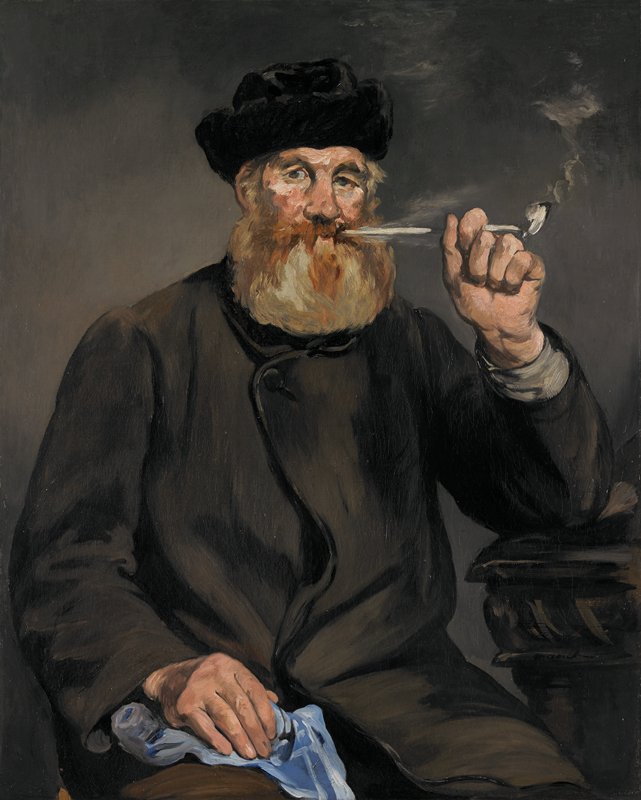
    The Smoker, Édouard Manet, 1866

    The Smoker

    1866 · Minneapolis Institute of Art

    Young Lady in 1866, Edouard Manet, 1866

    Young Lady in 1866

    1866 · The Metropolitan Museum of Art

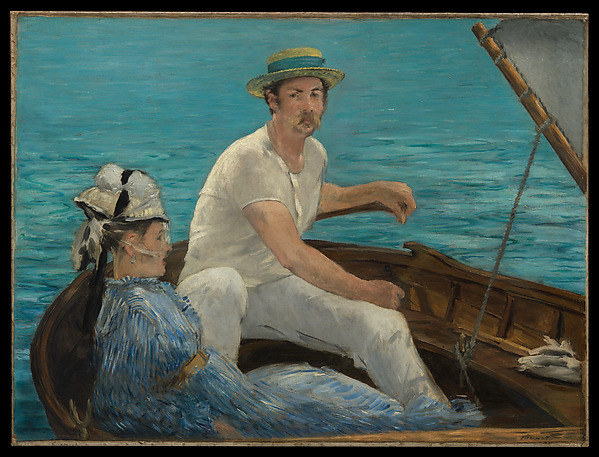
    Boating, Edouard Manet, 1874

    Boating

    1874 · The Metropolitan Museum of Art

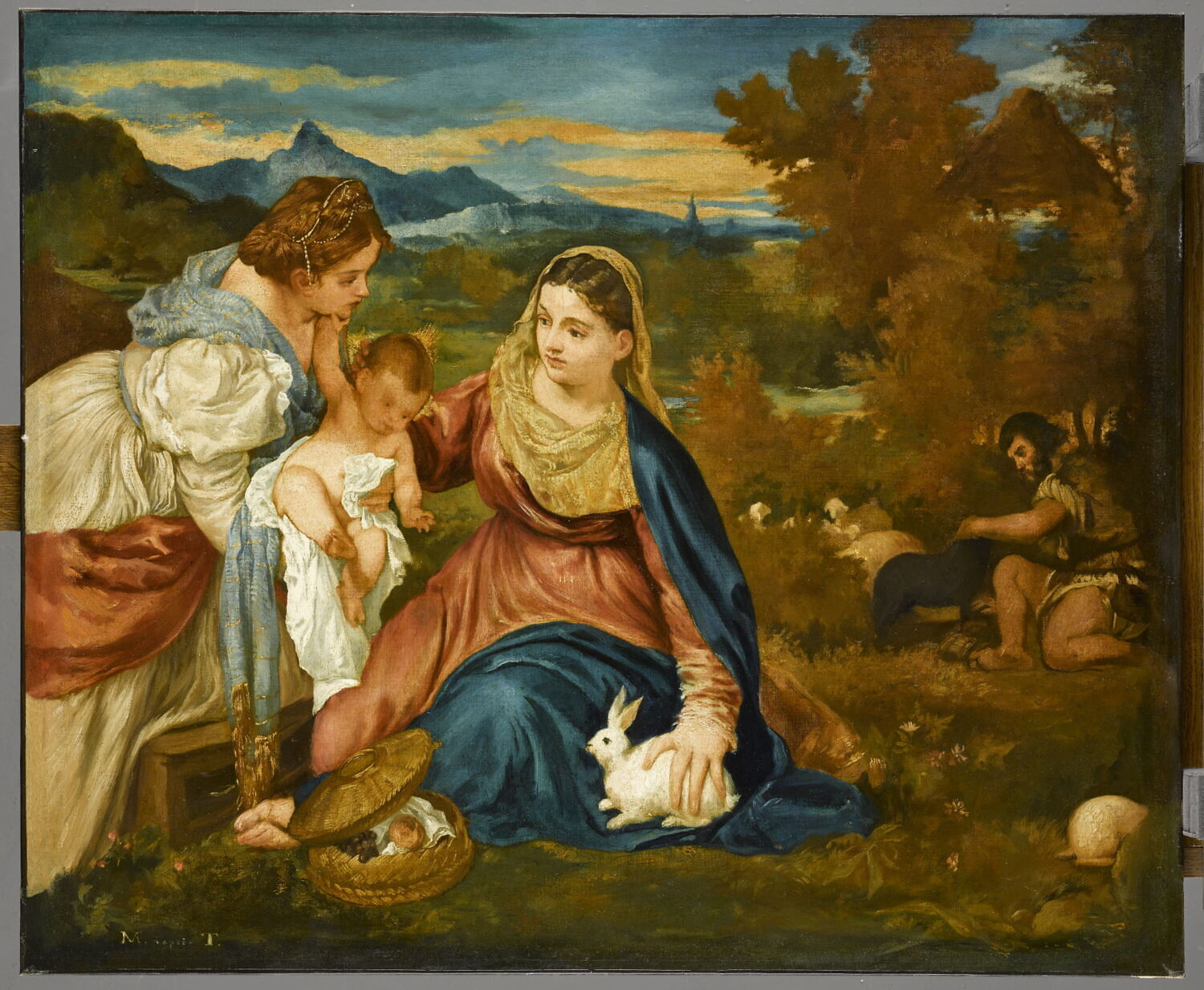
    La Vierge au lapin, Manet, Édouard, Milieu du XIXe siècle (1840 - 1860)

    La Vierge au lapin

    mid 19th century (1840–1860) · Musée du Louvre

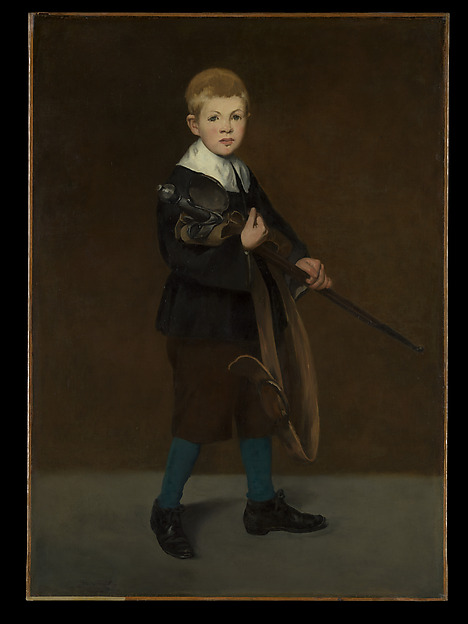
    Boy with a Sword, Edouard Manet, 1861

    Boy Carrying a Sword

    1861 · The Metropolitan Museum of Art

    Portrait of Madame Brunet, Édouard Manet, about 1861–1863, reworked by 1867

    Portrait of Madame Brunet

    about 1861–1863, reworked by 1867 · J. Paul Getty Museum

    The Old Musician, Edouard Manet, 1862

    The Old Musician

    1862 · National Gallery of Art

    Muž so zlatou helmou, Rembrandt, 20th century

    Rembrandt van Rijn

    Muž so zlatou helmou, 20th century

    Krst eunucha (Sk 8, 26-39), Rembrandt, 1641

    Rembrandt van Rijn

    Krst eunucha (Sk 8, 26-39), 1641

    Marc Agripe, Rembrandt, 1640–1660

    Rembrandt van Rijn

    Marc Agripe, 1640–1660

    Ukameňovanie svätého Štefana (Sk 7, 55-60), Rembrandt, 1635

    Rembrandt van Rijn

    Ukameňovanie svätého Štefana (Sk 7, 55-60), 1635

    Potulní muzikanti, Rembrandt, 1635–1650

    Rembrandt van Rijn

    Potulní muzikanti, 1635–1650

    Ukrižovanie, Rembrandt, 1625–1645

    Rembrandt van Rijn

    Ukrižovanie, 1625–1645

    Detail podobizne Viliama Burggraeffa, Rembrandt, 17th century

    Rembrandt van Rijn

    Detail podobizne Viliama Burggraeffa, 17th century

    Pohľad na baziliku S. Croce in Gerusalemme v Ríme, Giovanni Battista Piranesi, 1765

    Giovanni Battista Piranesi

    Pohľad na baziliku S. Croce in Gerusalemme v Ríme, 1765