 Mikhail Nesterov1862–1942
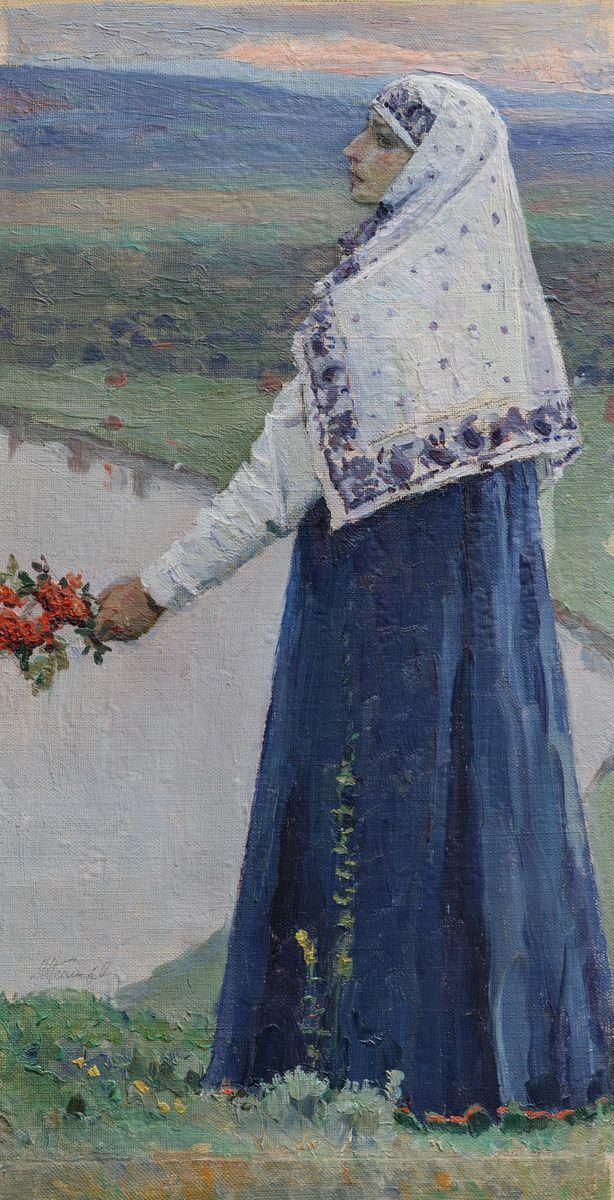
На горах
Can I see it?
Unknown
Where is “На горах” now? Collection: State Russian Museum, Saint Petersburg. Unknown.

Saint Petersburg, Russia
The owner is known; whether it is on view today is not.
- In this state since
- Source
- The museum
About the painting
Museum text in Russian
Ряд картин М. В. Нестерова посвящен жизни в старообрядческих скитах, в лесном Заволжье. Нестеров великолепно изображает костюм — складки тяжелого старинного сарафана, особую манеру носит платок, принятую у старообрядцев. Во всех ты, душенька, нарядах хороша. Традиционный праздничный костюм XVIII–XX веков. СПБ, 2015. С. 79.
Нестеров был увлечен романами Павла Мельникова (Андрея Печерского) «В лесах» и «На горах», переносивших читателя в колоритную среду заволжских староверов. Впечатление от прочитанного было столь сильно, что послужило рождению замысла «поэтического романа» в картинах, посвященного драматической женской судьбе. Этот замысел, складывался у Нестерова постепенно, по мере разработки темы, но в конечном варианте предполагал создание пяти полотен.
Read on
Картина «На горах» (КНМРИ) стала первым произведением цикла. В картине художник хотел показать страстное томление чистой, любящей, мечтательной души, чьи светлые порывы не находят взаимности. Своеобразным эквивалентом внутреннего мира девушки стал прекрасный уфимский пейзаж, покоряющий широким раздольем. Такой выбор художника имел и другую сторону, историческую: сюда, за Волгу, в Предуралье веками бежали старообрядцы, спасаясь от гонений со стороны государства и официальной Церкви. Здесь, согласно замыслу Нестерова, должны были развернуться события остальных частей драмы.
Павел Климов. Очарование Китежа // Михаил Нестеров. СПб, 2012. С. 19.
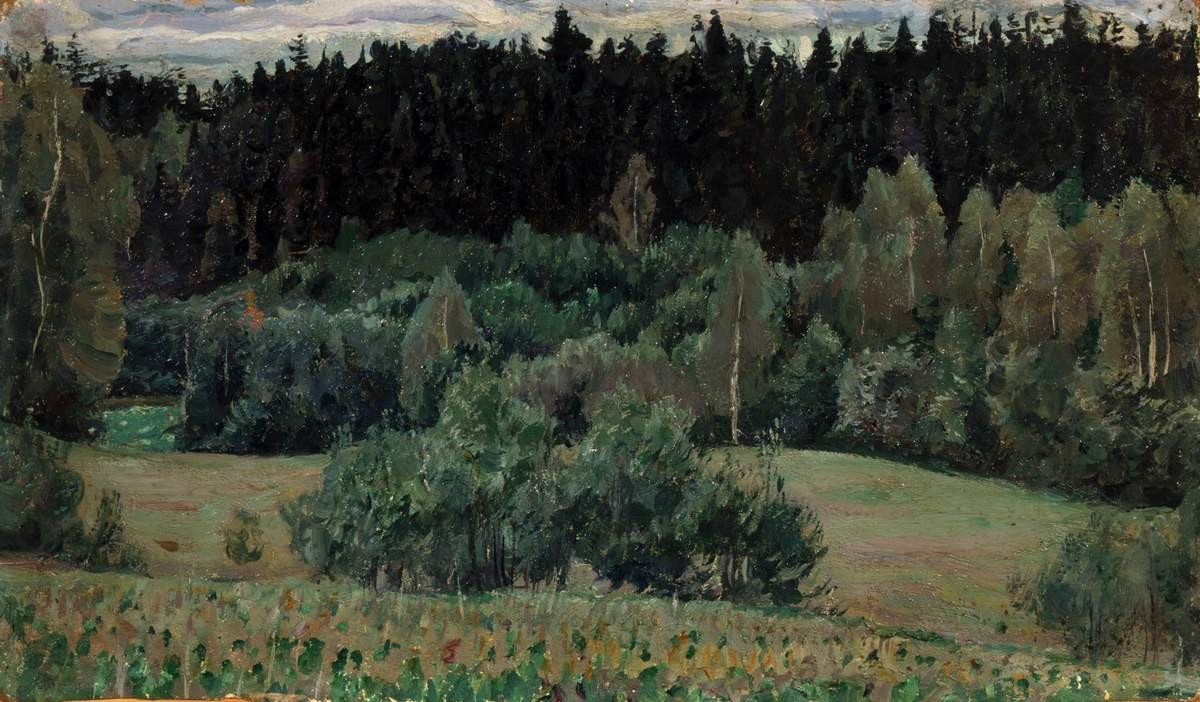
В Русском музее хранится небольшой эскиз картины «На горах».
State Russian Museum
Details
- Accession number
- Ж-4338
What it shows
In the catalog
Sources
- State Russian Museum
- Image: State Russian Museum — © State Russian Museum
In the life of Mikhail Nesterov
The whole life1890–1895
Friendship with Vasnetsov and the Prakhovs
In Kiev Nesterov grew close to Adrian Prakhov's family and to Viktor Vasnetsov, who worked alongside him in the cathedral; Vasnetsov became his teacher and friend.
1890s
Studies Byzantine art
To master monumental painting, new to him, Nesterov travelled to Rome, Palermo, Constantinople and Ravenna, where he could study the traditions of Byzantine art (other accounts name Rome and Istanbul).
1896
Elected to the Peredvizhniki Association
“Under the Church Bells” (1895; its real title is “Monks”) was warmly received at the Peredvizhniki exhibition, which became the occasion for electing Nesterov a member of the Association; he remained a member until 1901.
1898
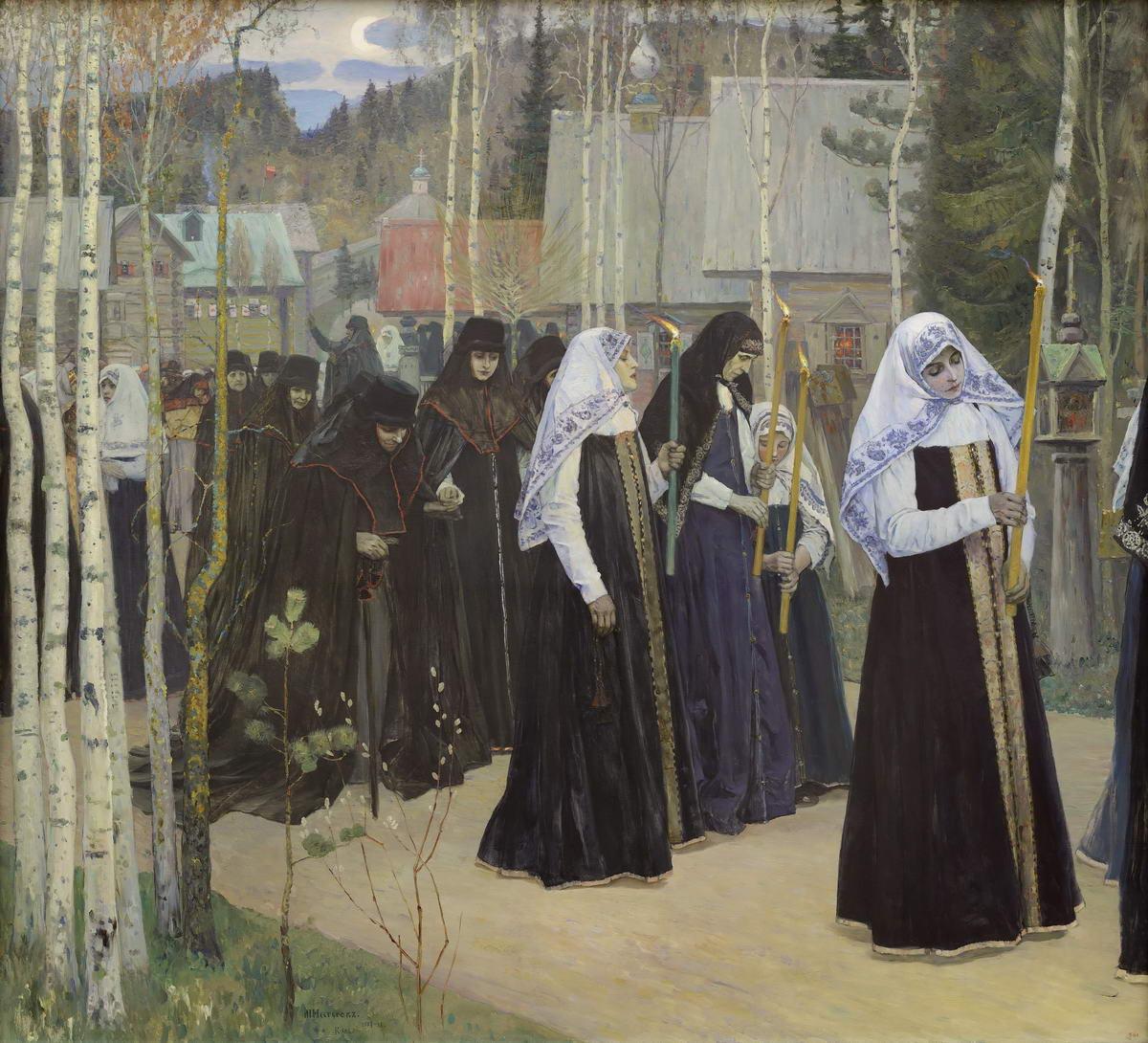
Made Academician for “The Great Tonsure”
“The Great Tonsure” (1897–1898), a young girl led by nuns to take the veil at a forest Old Believer hermitage, was warmly received by the public, and for it Nesterov was made an Academician of painting; in 1910 he became a Full Member of the Academy of Arts.
1898–1902
Life with Yulia Urusman
From 1898 until his second marriage in 1902 Nesterov was together with Yulia Nikolaevna Urusman (1877–1962). In these years the artist's daughter Vera (1899–1998) and sons Mikhail (1901–1921) and Fyodor, who lived from 23 February to 7 July 1902, were born.
1898–1904
Decorates the church at Abastumani
At the invitation of Tsesarevich George Alexandrovich, younger brother of Nicholas II, Nesterov decorated the palace church of St Alexander Nevsky at Abastumani, personally executing more than 50 compositions on the walls and iconostasis, yet he was dissatisfied with the result. By contrast, he refused to paint the Orthodox cathedral in Warsaw, unwilling to serve as “propaganda” for Russification in a Polish city.