 Frank StellaAmerican, 1936–2024
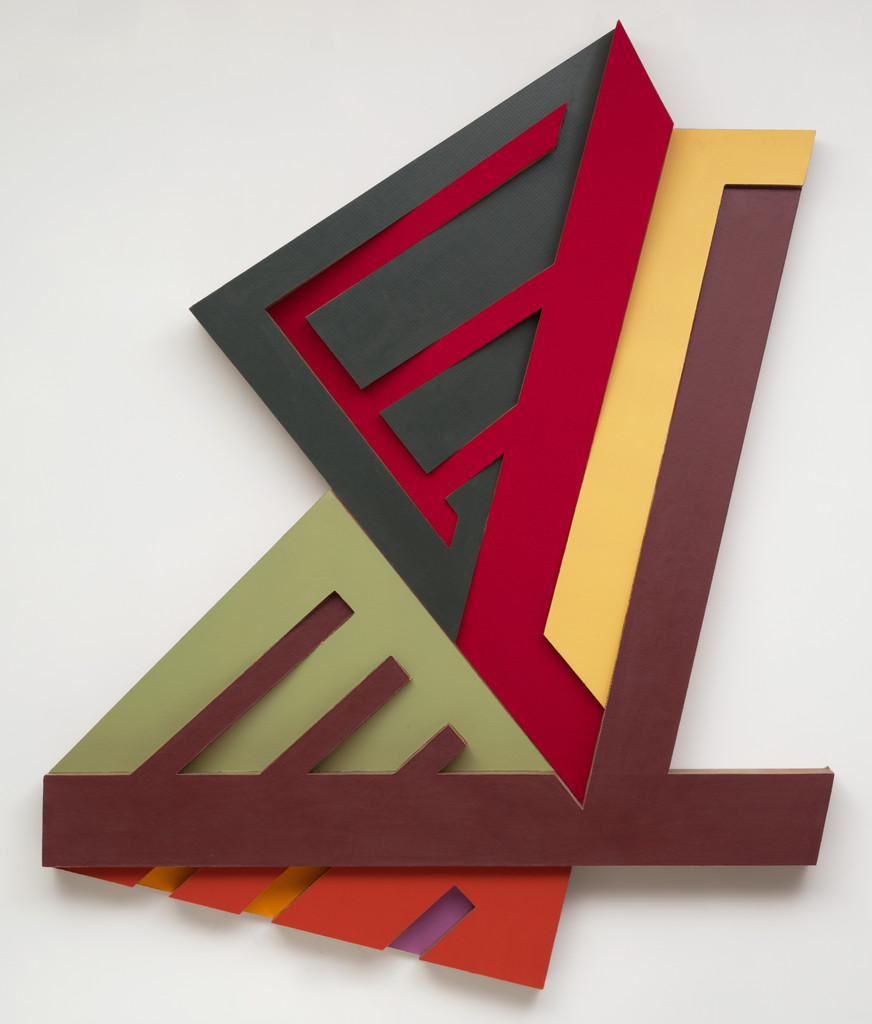
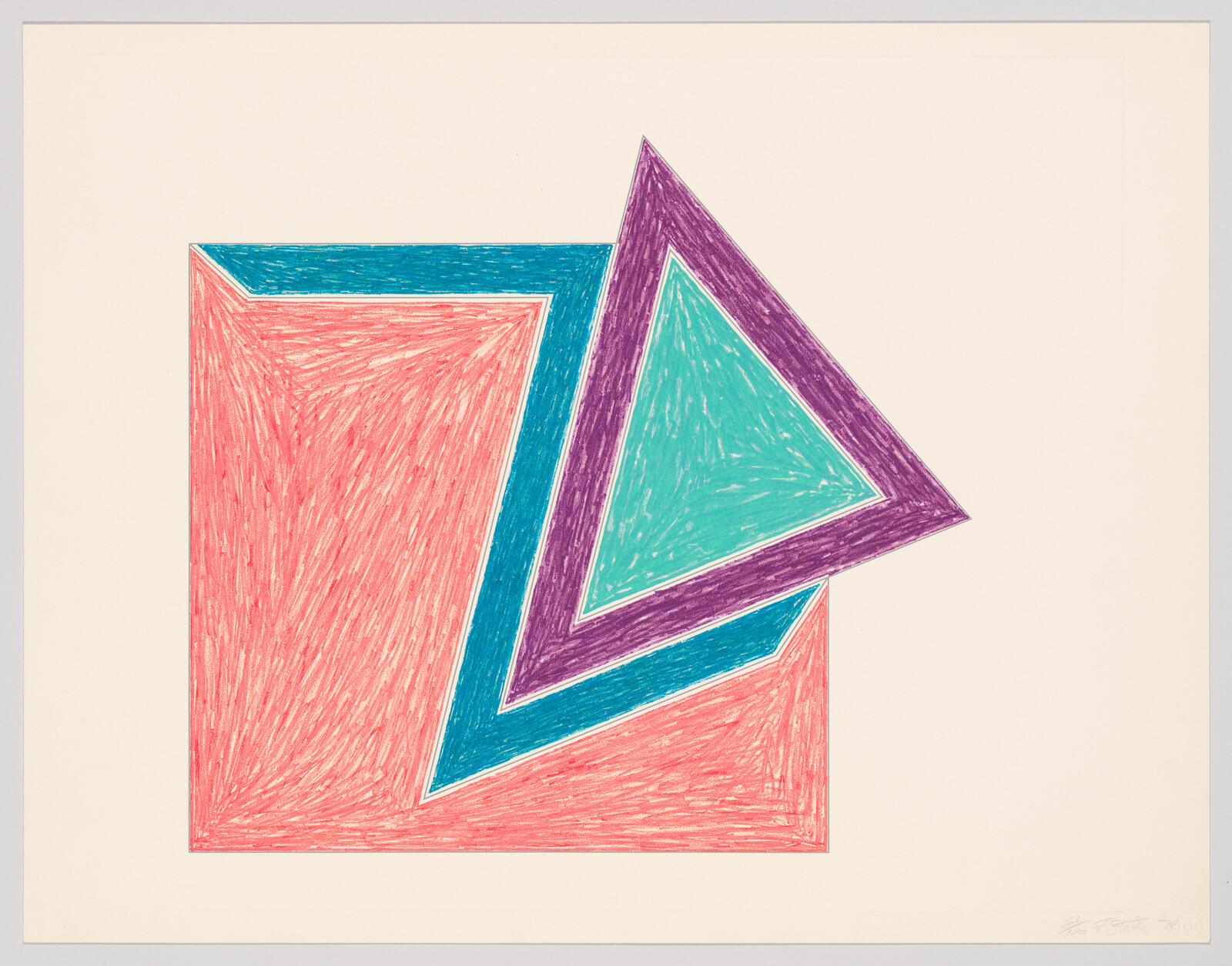
Moultonboro
May one see it?
Not receiving at present

New York, United States
It belongs to the collection, but is not on display at present.
- Checked
- Source
- The museum
Particulars
- Accession number
- 86.32
In the catalog
Sources
- Whitney Museum of American Art
- Image: Whitney Museum of American Art — © the artist or rights holder
Meanwhile, in the life of Frank Stella
The whole life1970s
Introduces relief: “maximalist” painting
He brings relief into his work and calls such painting “maximalist” for its sculptural qualities; in the Eccentric Polygon series the shaped canvases take on still less regular forms and collage elements appear, such as pieces of canvas glued to plywood, and aluminum then becomes the main support of his paintings.
1970s
Moves to NoHo in Manhattan
In the 1970s he moves to the NoHo neighborhood of Manhattan.
mid-1970s
Abandons rational structures
In the mid-1970s Stella abandons rational structures and explores new, individualistic paths: solid planes give way to squiggles, lattices and swirls of color, composite elements project from his canvases in all directions, and his wall-mounted paintings evolve into outlandish sculptures. Through the 1970s and 1980s his minimalism becomes baroque.