 James Jacques Joseph TissotFrench, 1836–1902
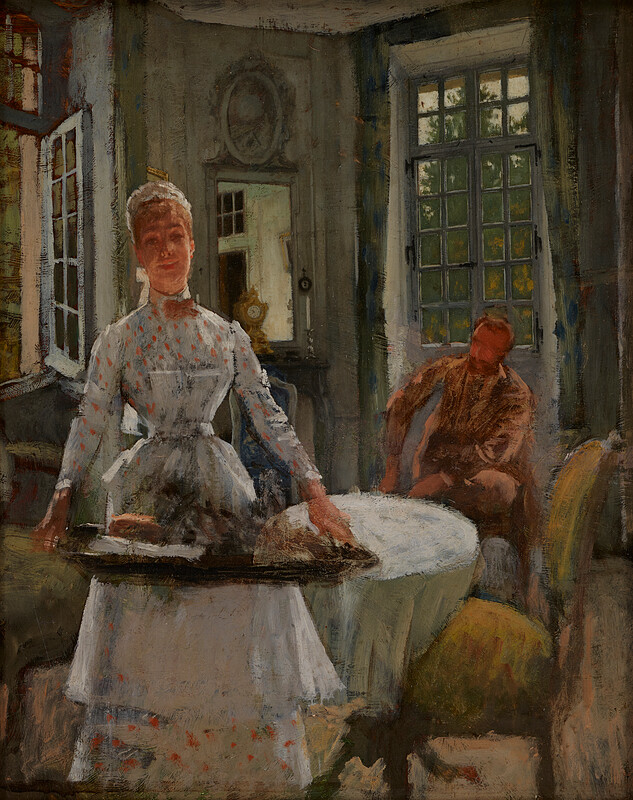
Morning Breakfast
Can I see it?
Not on view at present
Where is “Morning Breakfast” now? Collection: Minneapolis Institute of Art, Minneapolis. Not on view at present. Checked September 29, 2026.

Minneapolis, United States
It belongs to the collection, but is not on display at present.
- Checked
- In this state since
- Source
- The museum
About the painting
This rapid, light-filled sketch was painted by Tissot as a compositional study for the lost painting Le Déjeuner du matin (The Morning Breakfast). The scene shows a maid clearing a breakfast tray in a room at the Château de Buillon. The final composition of the lost painting is known through a photograph of a related watercolor, which reveals that the seated figure behind her is a hunter, with his rifle resting against the window. That sinister, almost predatory mood is evident even in the oil sketch, which is bright and cheerful at first glance, but unsettling in its ambiguity.
Minneapolis Institute of Art
Details
- Accession number
- 2026.31
In the catalog
Sources
- Minneapolis Institute of Art
- Image: Minneapolis Institute of Art — public domain
In the life of James Jacques Joseph Tissot
The whole life1885
A vision at Saint-Sulpice
Having completed “The Woman of Paris”, in 1885 Tissot experienced a religious vision at the Church of Saint-Sulpice, returned to his Catholic faith and devoted the rest of his life to paintings of biblical events, turning from modern life to traditional narrative.
1885
“Fifteen Paintings on the Woman of Paris”
The last major exhibition of this period was the 15-painting series “The Woman of Paris” at the Galerie Sedelmeyer: unlike his London society scenes, it showed women of many classes and occupations, with the unexpected angles and framing of Japanese prints. “The Shop Girl” returned to his themes of desire and gender.
1886
First journey to the Middle East
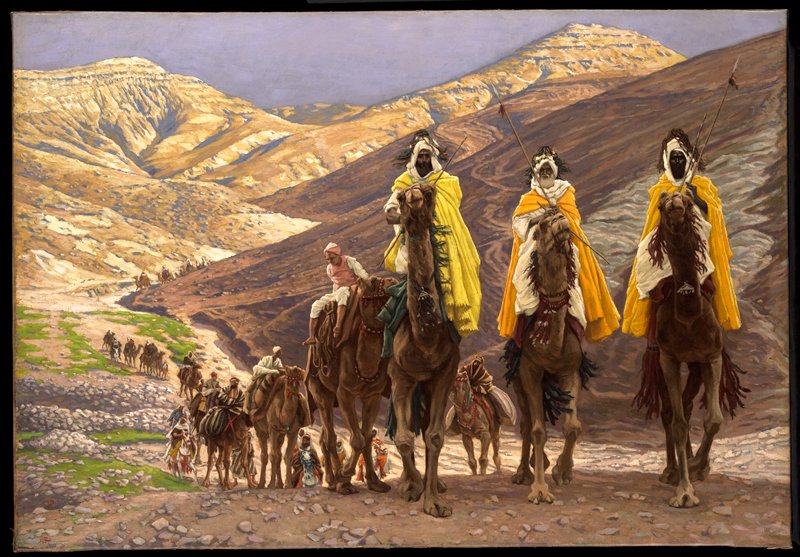
In 1886, and again in 1889 and 1896, Tissot travelled to the Middle East to study its landscapes and cultures; this “considerable archaeological exactitude” set his biblical series apart from the religious art of his contemporaries. The project ran to seven hundred watercolours on the life of Jesus and the Old Testament.