ART WIKI32,979 on view
MapCollectionArtistsMuseumsExhibitionsJournal
Sign in

ART WIKI

Where the masterpiece hangs, and when they let you in.

Collections: Art Institute of Chicago, Getty Villa, Harvard Art Museums, Hirshhorn Museum and Sculpture Garden, J. Paul Getty Museum, Minneapolis Institute of Art, Musée du Louvre, National Gallery of Art, National Museum of Asian Art, National Portrait Gallery (Smithsonian), Pushkin State Museum of Fine Arts, Rijksmuseum, Smithsonian American Art Museum, SMK — National Gallery of Denmark, State Hermitage Museum, State Russian Museum, The Cleveland Museum of Art, The Metropolitan Museum of Art, The Museum of Modern Art, Tretyakov Gallery, Victoria and Albert Museum, Whitney Museum of American Art, State Catalogue of the Museum Fund of Russia (274 museums), Europeana (19 museums), Wikidata (6 museums), Paris Musées (12 museums), and Joconde, the French Ministry of Culture's museum database (495 museums). Images belong to their rights holders.

Sections

  • Map
  • Search
  • Collection
  • Masterpieces
  • On view now
  • Artists

More

  • Museums & galleries
  • Exhibitions
  • Journal
  • Where the data comes from
  • Privacy & cookies
HomeMapBrowse
  1. Collection/
  2. Art Institute of Chicago/
  3. Montmartre, Paris
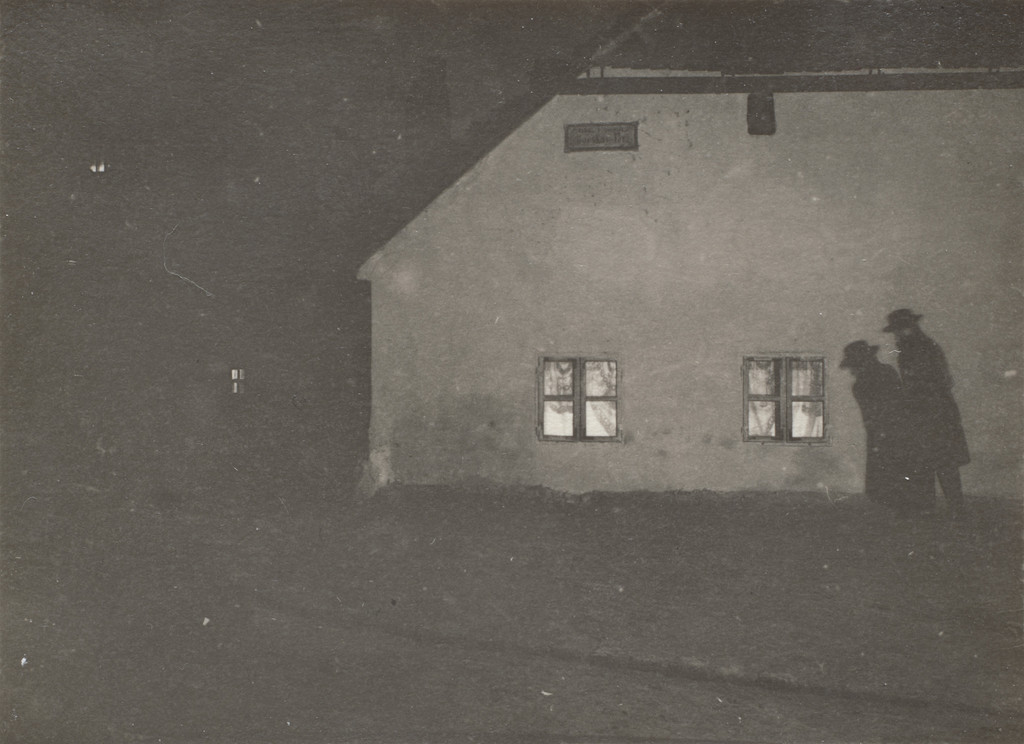
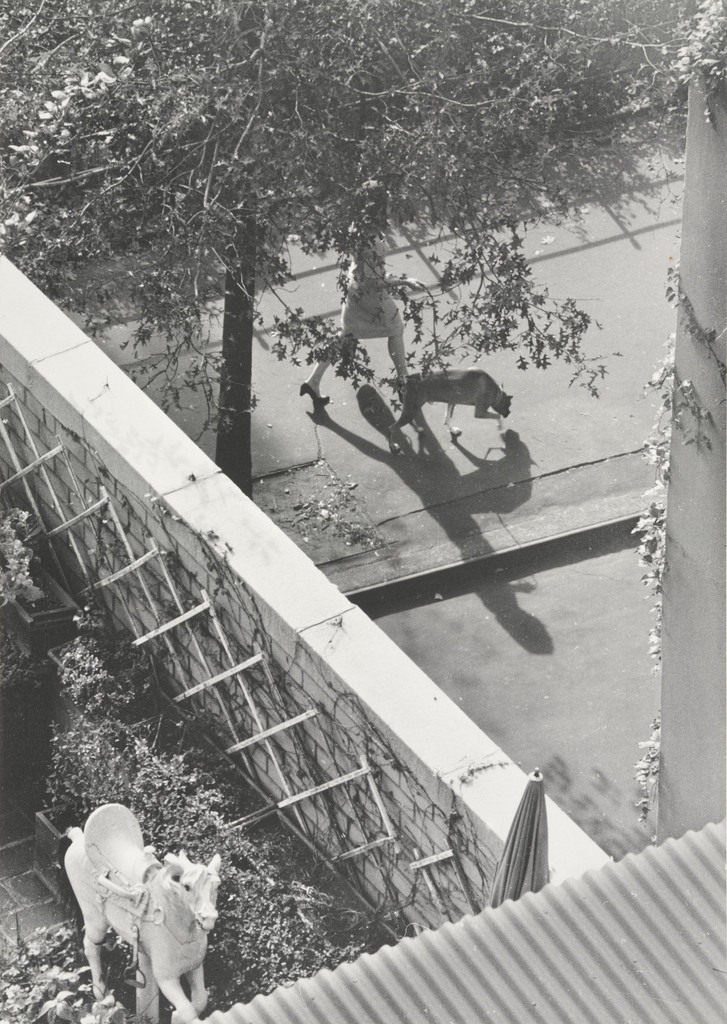
Montmartre, Paris, André Kertész, 1925, printed 1970s
André Kertész, portraitAndré KertészAmerican, 1894–1985

Montmartre, Paris

1925, printed 1970s · Photograph

May one see it?

Not receiving at present

Art Institute of Chicago

Chicago, United States

It belongs to the collection, but is not on display at present.

Checked
3 days ago
In this state since
Aug 19, 2026
Source
The museum
On the mapMuseum page

Particulars

1925, printed 1970s
18941985
Accession number
1983.934

What it shows

ParisCityscape

In the catalog

PhotographsGelatin silver printModernism20th centuryUnited States

Sources

  • Art Institute of Chicago
  • Image: Art Institute of Chicago — © the artist or rights holder

Meanwhile, in the life of André Kertész

The whole life
  1. September 1925

    Moves to Paris against his family’s wishes

    He leaves for Paris, then the artistic capital of the world, against his family’s wishes, leaving behind his mother, his unofficial fiancée Elizabeth, both brothers and his uncle Hoffmann, who dies shortly afterward; Jenő later emigrates to Argentina. Soon after arriving he changes his first name from Andor to André, which he keeps for the rest of his life; at first he takes commissions from several European magazines, in Germany, France, Italy and Great Britain, and then works for VU, France’s first illustrated magazine.

  2. 1927

    His first solo exhibition at the Au Sacre du Printemps gallery

    Jan Slivinsky presents 30 of his photographs at the “Sacre du Printemps Gallery”, and Kertész becomes the first photographer to have a one-man exhibition. At the show Paul Dermée dubs him “Brother Seer” and “Brother Seeing Eye”, alluding to a medieval monastery where all the monks were blind but one; Kertész has become connected with members of the growing Dada movement.

  3. 1928

    Switches to a Leica

    He switches from plate-glass cameras to a Leica; this period is one of his most productive, with daily photographing divided between magazine commissions through the late 1920s and his personal pieces.

  4. 15 October 1936

    Emigrates to New York

    Magazines emphasise political stories and stop publishing Kertész for his apolitical subjects; with commissions dropping and persecution of Jews increasing, he and Elizabeth decide to move, which may have saved his life, as four years later France would fall under Nazi occupation. They board the SS Washington and arrive in New York on 15 October 1936, living at the Beaux Arts Hotel in Greenwich Village; deprived of his artist friends, struggling with English and among Americans who reject having their photos taken on the street, he goes through a period he later calls the “absolute tragedy”.

  5. 1964

    A solo show at MoMA under John Szarkowski

    Soon after John Szarkowski becomes photography director at the Museum of Modern Art he features Kertész in a solo show; with his work critically acclaimed, Kertész gains recognition in the photographic world as an important artist, and his photographs go on to be shown in exhibitions throughout the world, even into his early nineties.

  6. 1977

    His wife Elizabeth dies

    Elizabeth, who had created and run a successful cosmetic business for years, dies of cancer; to deal with the loss, Kertész falls back on his new network of friends, often visiting them to talk. By this time he has learned basic English and speaks what his friends call “Kertészian”, a mixture of Hungarian, English and French.
More by André Kertész

All works
Promenade, André Kertész, 1962

Promenade

1962 · The Museum of Modern Art

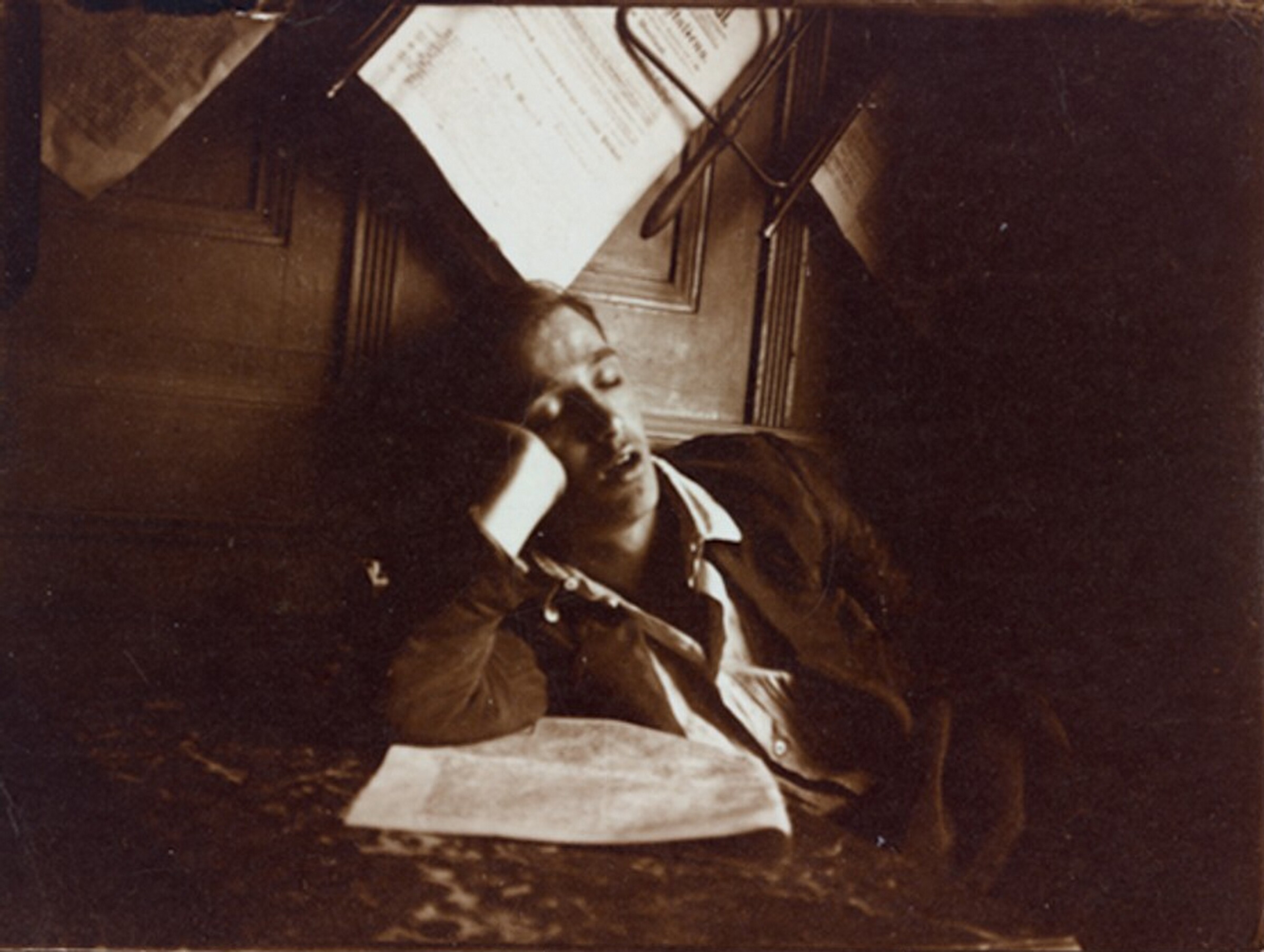
Sleeping Boy, André Kertész, 1912

Sleeping Boy

1912 · Not on view · National Gallery of Art

Bocskay-tér, Budapest, André Kertész, 1914

Bocskay-tér, Budapest

1914 · Not on view · The Museum of Modern Art

Self-Portrait at Front, André Kertész, c. 1915-1916

Self-Portrait at Front

c. 1915-1916 · Not on view · National Gallery of Art

The Fairy Tale, André Kertész, 1915

The Fairy Tale

1915 · Not on view · National Gallery of Art

Self-Portrait, André Kertész, 1915

Self-Portrait

1915 · Not on view · National Gallery of Art

Self-Portrait, Wounded, with Officer, André Kertész, January 1916

Self-Portrait, Wounded, with Officer

January 1916 · Not on view · National Gallery of Art

Esztergom Cathedral, André Kertész, 1917

Esztergom Cathedral

1917 · Not on view · National Gallery of Art

Neighbors at Art Institute of Chicago

Museum page
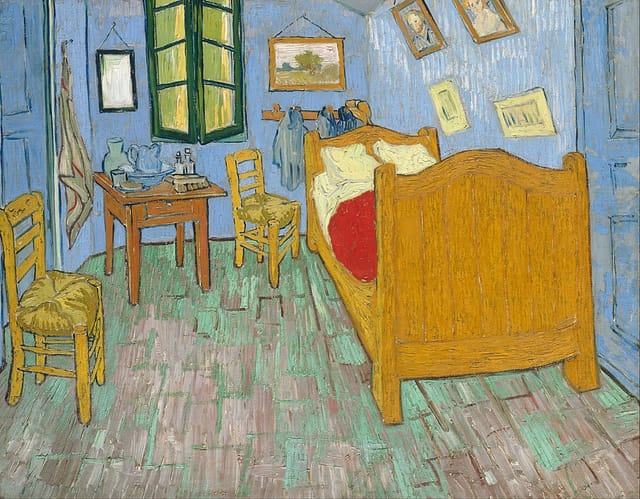
The Bedroom, Vincent van Gogh, 1889

Vincent van Gogh

The Bedroom, 1889

A Sunday on La Grande Jatte — 1884, Georges Seurat, 1884–86, border added 1888–89

Georges Seurat

A Sunday Afternoon on the Island of La Grande Jatte, 1884–86, border added 1888–89

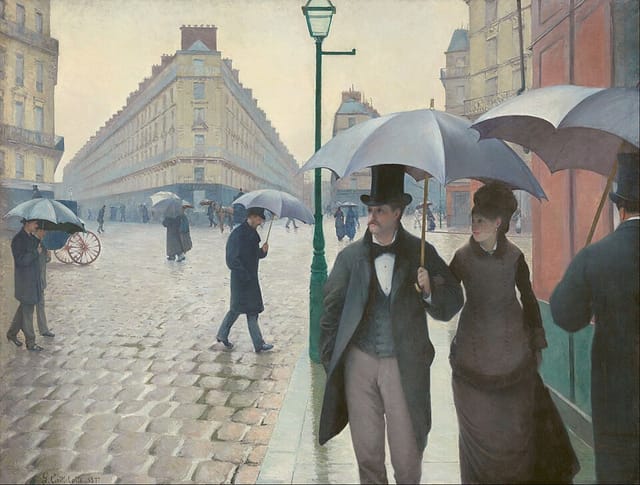
Paris Street; Rainy Day, Gustave Caillebotte, 1877

Gustave Caillebotte

Paris Street; Rainy Day, 1877

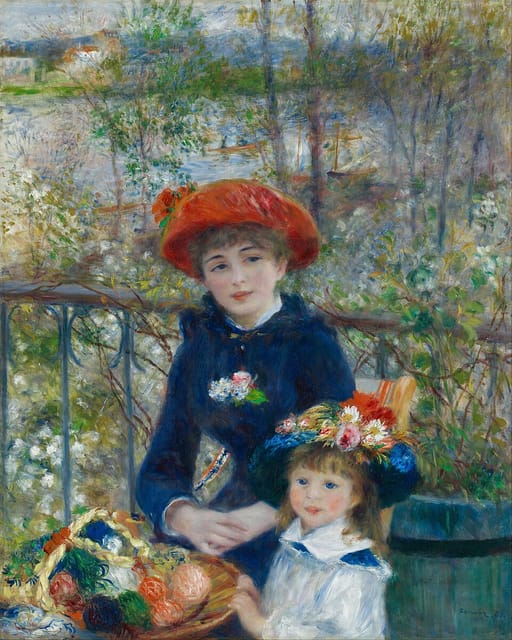
Two Sisters (On the Terrace), Pierre-Auguste Renoir, 1881

Pierre-Auguste Renoir

Two Sisters (On the Terrace), 1881

The Basket of Apples, Paul Cézanne, c. 1893

Paul Cézanne

The Basket of Apples, c. 1893

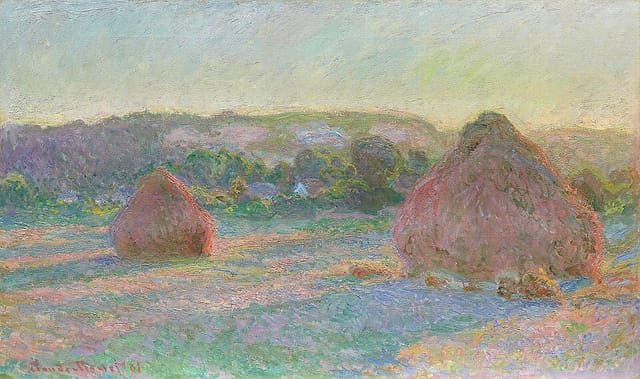
Stacks of Wheat (End of Summer), Claude Monet, 1890–91

Claude Monet

Stacks of Wheat (End of Summer), 1890–91

American Gothic, Grant Wood, 1930

Grant Wood

American Gothic, 1930

Nighthawks, Edward Hopper, 1942

Edward Hopper

Nighthawks, 1942

On the same theme · Paris

All works on the theme
Affiche voor de expositie van de serie Elles van Toulouse-Lautrec bij la Plume, Henri de Toulouse-Lautrec, 1896

Henri de Toulouse-Lautrec

Affiche voor de expositie van de serie Elles van Toulouse-Lautrec bij la Plume, 1896

Rijksmuseum

Landscape: The Parc Monceau, Claude Monet, 1876

Claude Monet

Landscape: The Parc Monceau, 1876

The Metropolitan Museum of Art

The Parc Monceau, Claude Monet, 1878

Claude Monet

The Parc Monceau, 1878

The Metropolitan Museum of Art

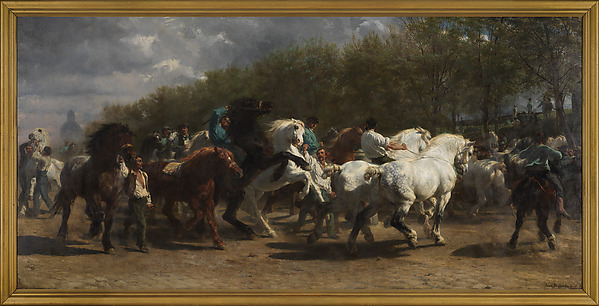
The Horse Fair, Rosa Bonheur, 1852–55

Rosa Bonheur

The Horse Fair, 1852–55

The Metropolitan Museum of Art

Paris Street; Rainy Day, Gustave Caillebotte, 1877

Gustave Caillebotte

Paris Street; Rainy Day, 1877

Art Institute of Chicago

Landscape near Paris, Paul Cezanne, c. 1876

Paul Cézanne

Landscape near Paris, c. 1876

National Gallery of Art

Titelprent voor een verzameling bladmuziek van Désiré Dihau bij gedichten van Jean Goudezki, Henri de Toulouse-Lautrec, 1893

Henri de Toulouse-Lautrec

Titelprent voor een verzameling bladmuziek van Désiré Dihau bij gedichten van Jean Goudezki, 1893

Rijksmuseum

‘Aux Ambassadeurs’, Henri de Toulouse-Lautrec, 1894

Henri de Toulouse-Lautrec

‘Aux Ambassadeurs’, 1894

Rijksmuseum